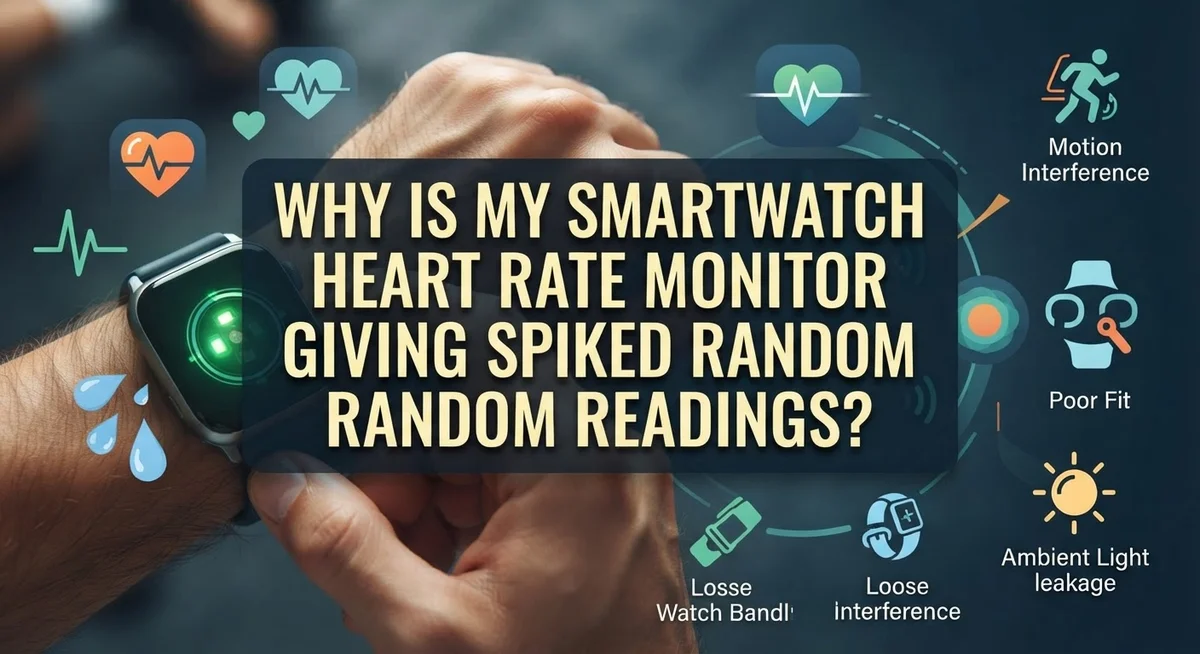
Why Is My Smartwatch Heart Rate Monitor Giving Spiked Random Readings?
Your smartwatch says your heart rate just jumped to 190 while you sit on the couch. That number feels scary. But it is probably wrong.
Most smartwatch heart rate monitors use optical sensors on your wrist. These sensors shine light through your skin to track blood flow. They work well most of the time, but they can get confused.
Sweat, loose bands, and sudden movements often cause these strange spikes. Your watch is not broken. It just needs better contact with your skin.
In a Nutshell
- Spikes are usually fake. Your smartwatch often shows a glitch, not a real heart problem. The sensor gets confused, not your heart.
- Band fit matters a lot. A loose band lets in light. A tight band blocks blood flow. Both cause bad readings.
- Sweat and moisture cause trouble. Water on the sensor can mess up the signal. It stops the watch from reading your pulse correctly.
- Sudden movements confuse the sensor. Quick sprints or fast arm swings make the watch lag behind your real heart rate. This creates weird spikes.
- Simple fixes work fast. Try tightening your band, drying your wrist, or wetting the sensor first. These small steps fix most issues.
- Give your watch time to catch up. After hard activity, let the watch settle for a minute. It usually corrects itself quickly.
- Watch for patterns, not single spikes. One weird number is normal. Repeated high or low readings deserve a closer look from a doctor.
How Smartwatch Heart Rate Sensors Actually Work
Your smartwatch heart rate monitor uses optical sensors to detect blood flow in your wrist. These sensors shine light onto your skin and measure how much light bounces back. When blood flows through your veins, it absorbs more light. When blood moves away, less light gets absorbed. Your watch uses this pattern to calculate your heart rate.
The sensor sits flat against your wrist skin. It needs consistent contact to work properly. Even tiny gaps between the sensor and your skin cause problems. Light from the sun or indoor lamps can slip into these gaps and confuse the sensor.
Wrist based optical sensors are less accurate than chest straps. Your wrist moves constantly. Your arm swings when you walk or run. This movement makes the sensor lose contact with your skin for split seconds. Your watch then tries to guess what your heart rate should be. These guesses often create the random spikes you see.
Moisture adds another layer of confusion. Sweat changes how light reflects off your skin. The sensor cannot read the signal clearly when water sits on the lens. Your watch struggles to find your actual heart rate and may jump to extreme numbers instead.
Sudden activity changes also trigger false spikes. When you sprint or stop running abruptly, your real heart rate changes fast. Your watch sensor needs a moment to catch up. During that lag time, it may show wild numbers before settling on the correct reading.
Understanding these mechanics helps you spot real problems from sensor errors. Your watch is not broken. It is simply struggling to read accurate data under less than ideal conditions.
Common Causes of Random Heart Rate Spikes
Your smartwatch heart rate monitor uses light to track blood flow in your wrist. When that light gets blocked or bounces wrong, you see fake spikes instead of real data.
A loose band is one of the biggest culprits. When your band sits too far from your skin, ambient light sneaks in and confuses the sensor. The watch then reads false signals and reports spikes that never happened. Tighten your band to a snug fit, but not so tight that it cuts off blood flow.
Moisture on your wrist causes major problems too. Sweat, water, or humidity creates a barrier between your skin and the sensor. This blocks the light beam and makes the watch struggle to read your actual heart rate. The sensor tries to guess and often guesses wrong, showing random jumps in your numbers.
Sudden activity changes trick your sensor into lag spikes. When you sprint or swing your arm fast, your real heart rate jumps instantly. Your watch takes a few seconds to catch up. During that delay, it shows inflated numbers as it adjusts to the new pace.
Poor electrode contact is another silent cause. If your wrist is dirty or the sensor sits at an odd angle, the connection weakens. The watch loses the signal momentarily and spikes appear on your screen.
Rapid temperature changes matter too. Moving from a cold room to hot sunlight confuses the optical sensor. The sensor recalibrates and sometimes shows false spikes during the transition.
Most importantly, isolated spikes are normal. Your watch isn’t broken. One weird number is just sensor lag. Watch for patterns instead. If spikes happen constantly during rest, that’s worth investigating further.
Is It a Real Cardiac Event or a Sensor Glitch?
Your smartwatch shows a spike in heart rate. You wonder if something is wrong with your heart or if the device is just acting up. The answer usually comes down to understanding how these sensors work.
Optical sensors in smartwatches are less accurate than chest straps. They read blood flow through your skin using light. When conditions change quickly, the sensor lags behind your actual heart rate. This lag creates false spikes on your screen.
Most random spikes are sensor artifacts, not real cardiac events. Your watch struggles during specific moments. These include sudden arm movements, loose band fit, or sweat on the sensor. The device catches up once conditions stabilize.
Real cardiac events look different from sensor glitches. A true abnormality shows a pattern over time, not just one random number. Isolated spikes that disappear within seconds are almost always sensor errors. Persistent elevated readings that stay high deserve medical attention.
You can tell the difference by paying attention to context. Did you just sprint? Your watch probably spiked from lag, not a heart problem. Is your band loose? Light interference likely caused the false reading. Did you finish exercising and the reading settled back down? That confirms it was a glitch.
When to worry and when to relax: One weird spike means nothing. Multiple spikes throughout the day, especially at rest, warrant a doctor’s visit. Chest pain or shortness of breath with elevated readings is serious. Isolated spikes during or after activity are normal.
Keep records of when spikes happen. Note your activity level and band fit. This information helps you separate real concerns from false alarms. Your smartwatch is a useful tool, but it has limits.
Step-by-Step Fixes to Stabilize Readings
Your smartwatch heart rate spikes often come from simple fixes. Start by checking your band fit right now.
Adjust Your Band Tightness
A loose band lets ambient light hit the sensor directly. This causes false readings. Tighten your band so it sits snugly on your wrist. You should fit one finger underneath comfortably. If the band feels too tight, it restricts blood flow and creates different spikes.
Clean and Dry Everything
Moisture is a major culprit. Sweat, water, and humidity reduce sensor conductivity. Remove your watch immediately after sweating or swimming. Dry your wrist completely with a soft cloth. Wipe the sensor area gently too.
Wet the Sensor Before Wearing
This sounds backwards, but it works. A thin layer of moisture on the sensor actually improves conductivity. Lightly dampen the sensor with a drop of water before putting the watch back on.
Let Your Watch Recalibrate
After intense activity, give your watch a break. Stop moving for one to two minutes. The sensor needs time to catch up with your actual heart rate. Readings stabilize once the watch recalibrates.
Check Your Wrist Position
The sensor must sit flat against your skin. Wear your watch slightly higher on your wrist, about half an inch above your wrist bone. This gives the sensor better contact with blood vessels.
Remove and Reposition Regularly
Take your watch off for short periods daily. This prevents constant pressure on one spot. When you put it back on, reposition it slightly. This helps the sensor get fresh contact with your skin.
These steps eliminate most random spikes quickly.
Getting the Fit Right: Band Tightness and Placement Tips
Your smartwatch band fit directly affects heart rate accuracy. The sensor needs consistent contact with your skin to read blood flow properly. Getting this right eliminates most random spikes.
A loose band is a major problem. When your band sits too far from your wrist, ambient light reaches the sensor directly. This confuses the optical reader and creates false spikes. Your watch thinks your heart rate jumped when really it just picked up interference from the room around you.
A too tight band causes different issues. Restrictive pressure cuts off blood flow to your wrist. Your sensor then struggles to detect your pulse accurately. This creates inconsistent readings that jump around unpredictably. You want snug, not strangling.
Find the sweet spot by wearing your band about one finger width above your wrist bone. The band should feel secure but allow you to slide one finger underneath comfortably. This position keeps the sensor flat against your skin without restricting circulation.
Reposition your watch regularly throughout the day. Take it off for short breaks to let your wrist breathe. This prevents sweat buildup and gives the sensor a fresh start. When you put it back on, ensure it sits in the correct position again.
Check your band material too. Some fabrics trap moisture better than others, which interferes with readings. Clean the sensor area and your wrist before wearing your watch. Dry skin and a properly positioned band work together to stabilize your heart rate data.
These simple adjustments fix the majority of random spike problems. Most users see better accuracy within a few hours of correcting their band fit.
Mistakes That Make Spikes Worse
You can actually make random spikes worse without realizing it. Here are the common mistakes that amplify these false readings.
Wearing your band too loosely is one of the biggest culprits. When your band sits too far from your wrist, ambient light sneaks past the sensor. This confuses the optical system and triggers phantom spikes. Your watch cannot read your pulse accurately if it is not in close contact with your skin.
Tightening your band too much causes the opposite problem. An overly tight band restricts blood flow to your wrist. Your sensor then struggles to detect consistent pulses, leading to erratic readings and sudden jumps. The goal is snug contact, not a tourniquet.
Not cleaning your sensor between uses makes spikes worse. Dried sweat and dead skin cells block the light from reaching your blood vessels properly. Your watch misinterprets the weak signal as sudden heart rate changes.
Ignoring moisture on your wrist during or after exercise is another mistake. Sweat reduces the conductivity between your skin and the sensor electrodes. This causes lag spikes as your watch tries to catch up with actual readings.
Changing activities too rapidly without letting your watch recalibrate creates false spikes. If you sprint immediately after walking, your sensor experiences a lag period. It cannot process the sudden intensity change instantly.
Finally, wearing your watch over clothing or tattoos reduces sensor accuracy. These barriers prevent proper light penetration to your blood vessels. Your watch cannot read your pulse reliably through barriers.
These mistakes compound each other. Fix them one at a time to see which ones affect your specific device most.
Troubleshooting Persistent or Unusual Readings
When your smartwatch shows sudden heart rate spikes that don’t match how you feel, the problem usually sits between the device and your skin. Persistent or unusual readings need a systematic approach to identify what’s really happening.
Start by checking your band fit. A band that’s too loose allows ambient light to interfere with the optical sensor. A band that’s too tight restricts blood flow to your wrist. The ideal fit lets you slide one finger underneath the band while it sits snugly on your skin.
Next, examine your wrist and sensor for moisture. Sweat, water, or even dry skin can block the sensor’s ability to read your pulse accurately. Remove your watch and dry both your wrist and the sensor completely with a soft cloth.
Clean the sensor regularly to prevent buildup. Dust and residue accumulate over time and cause erratic readings. A slightly damp cloth works best for this task.
Pay attention to when spikes occur. Random spikes during or immediately after intense activity often indicate sensor lag rather than actual heart rate changes. Your watch needs time to recalibrate once you slow down or stop exercising.
If spikes continue after you’ve checked band fit, cleaned the sensor, and allowed proper recalibration time, try removing your watch for a few minutes. This resets the sensor and lets your wrist return to normal conditions.
Keep a simple log of when spikes happen. Note what activity you were doing and the band position. This pattern helps you identify whether the problem stems from fit, moisture, or something else entirely.
Most persistent spike issues resolve once you address these physical factors. If unusual readings persist despite these steps, contact the manufacturer’s support team for further guidance.
When to Seek Medical Evaluation
Most random spikes on your smartwatch are sensor errors, not real heart rhythm problems. However, certain situations warrant a medical evaluation to rule out actual cardiac concerns.
You should see a doctor if spikes happen frequently and feel like real symptoms. Pay attention to chest pain, shortness of breath, or dizziness that coincides with high readings. These signs suggest a genuine issue rather than a sensor glitch.
Persistent irregular patterns deserve professional attention too. If your watch consistently shows erratic readings even after you’ve cleaned the sensor, adjusted the band fit, and allowed proper recalibration time, a healthcare provider can investigate further.
Track your symptoms carefully before your appointment. Note when spikes occur, what you were doing, and how you felt physically. Write down any chest discomfort, lightheadedness, or unusual fatigue. This information helps your doctor determine if readings reflect actual heart activity or device malfunction.
Age and medical history matter as well. People with existing heart conditions should be more cautious about unexplained spikes. Older adults experiencing new or worsening patterns should consult their doctor sooner rather than later.
Don’t ignore spikes if they correlate with real physical symptoms. Your body’s signals matter more than any device reading. If you feel unwell when your watch shows high numbers, seek evaluation regardless of whether you think it’s accurate.
The key is distinguishing between sensor artifacts and genuine cardiac events. Random isolated spikes during or after exercise typically pose no concern. Consistent abnormalities paired with how you actually feel warrant professional assessment. Your doctor can perform proper testing like EKGs to confirm what your smartwatch cannot.
Final Thoughts
Random spikes on your smartwatch usually come from the sensor, not your heart. Loose bands, sweat, and quick movements confuse the light based sensor. This makes it think your heart rate jumped when it did not.
The good news is that most fixes are simple. A snug band fit and a clean dry sensor solve the majority of spike problems. Give your watch time to recalibrate after intense activity too.
You now know the difference between a real cardiac event and a sensor glitch. Isolated spikes that vanish quickly are almost always technical hiccups. They do not mean something is wrong with your heart.
Still, your body gives you real clues. If a spike comes with dizziness, chest pain, or shortness of breath, treat it seriously. Pattern and feeling matter more than a single odd number on your screen.
Keep your smartwatch clean and properly worn every day. This small habit prevents most random readings before they even start. Think of it as basic maintenance, just like charging the battery.
Try not to panic over every unusual number you see. Your watch is a helpful tool, not a diagnostic machine. It gives you trends and patterns, not medical certainty.
If odd readings continue despite good habits, do not ignore them. Persistent or unusual patterns deserve a conversation with your doctor. Bring your data and describe exactly how you felt.
In the end, understanding your device helps you trust it more. You can separate normal sensor noise from genuine warning signs. This balance keeps you calm and informed, without unnecessary worry.
Frequently Asked Questions
Why does my smartwatch show sudden heart rate spikes that feel normal to me?
Your smartwatch uses optical sensors on your wrist to detect blood flow. These sensors sometimes struggle during quick changes in movement or when sweat builds up. The spike you see is often a sensor lag, not a real heart event. Your device catches up once your activity stabilizes and your skin dries.
Wrist sensors are less accurate than chest straps. They pick up motion, light interference, and moisture easily. Most isolated spikes are harmless sensor artifacts, not actual cardiac problems.
Can a loose or tight band cause false readings?
Yes, band fit matters a lot. A loose band lets ambient light reach the sensor, creating false spikes. A tight band restricts blood flow and also confuses the sensor.
Wear your band snug but not restrictive. You should fit one finger under the band comfortably. Check your fit regularly, especially during or after exercise when your wrist may swell slightly.
Should I worry about random spikes on my smartwatch?
Most random spikes are not dangerous. They happen because the sensor misreads motion or moisture. Isolated spikes need no medical attention.
However, frequent spikes paired with real symptoms warrant a doctor’s visit. If you feel dizzy, short of breath, or have chest pain alongside the spikes, contact a healthcare provider. Persistent irregular patterns also deserve professional evaluation.
How do I reduce false heart rate spikes?
Keep your sensor clean and dry. Wipe both your wrist and the sensor with a soft cloth before wearing your watch. Wet the electrodes slightly before use to improve conductivity.
Avoid rapid activity changes. Let your watch recalibrate after intense exercise before checking readings. These simple habits reduce most false spikes.

Hi, I’m Lucy Jones, a dedicated watch enthusiast and reviewer. I spend my time hunting down, testing, and evaluating the most intriguing wristwatches on the market. My goal is to guide you through the overwhelming choices with honest, hands-on insights into every timepiece.