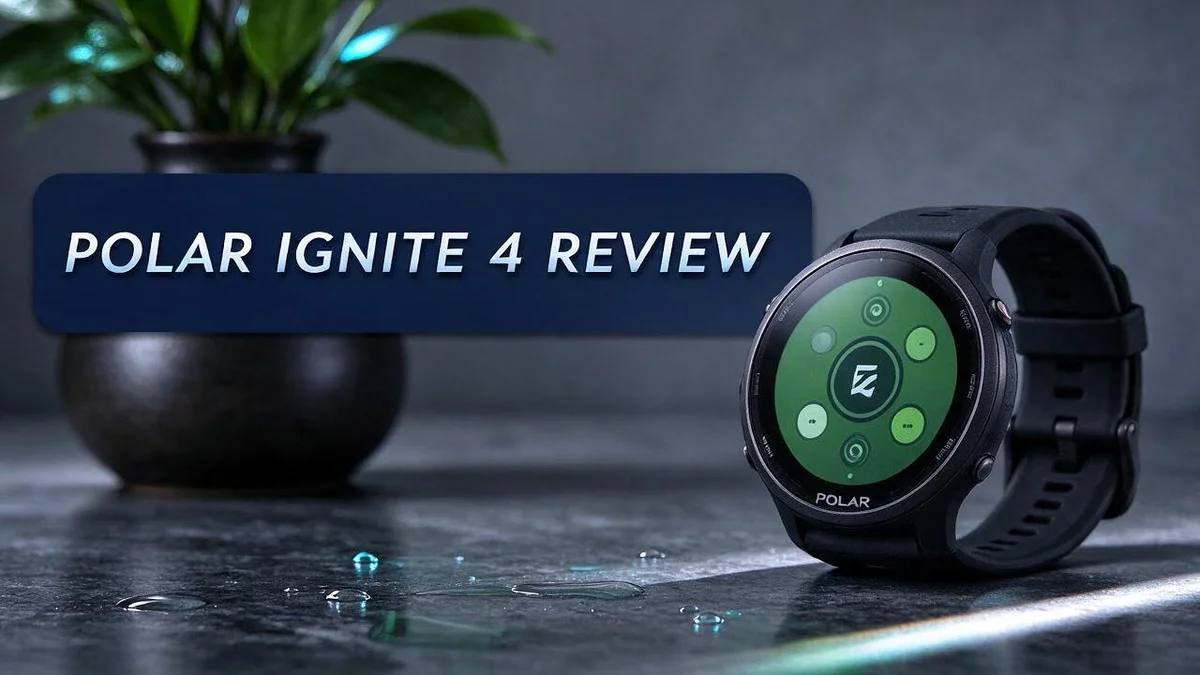
Polar Ignite 4 Review: Everything You Need to Know
Looking for a sports watch that takes your training seriously? The Polar Ignite 4 is worth a close look. Here is a quick look at what this watch brings to the table.
The Ignite line focuses on training. Runners and gym fans get plenty of metrics to track their progress over time.
You can track heart rate right from your wrist, so you may skip the chest strap on many workouts. Built in GPS and water resistance also help you train outdoors in any weather.
In a Nutshell
- Who it suits: Athletes who want a watch built around training data will find plenty to explore, especially runners and gym goers.
- Third-party apps: The watch works with AutoSleep, HRV4Training, TrainAsOne, iSmoothRun, and Fitbod, so you can build your own training setup.
- Accuracy is a concern: A detailed review from August 2019 found the watch falls short on accuracy and general usability.
- Battery life varies: Some owners enjoy good battery life between charges, while others report that it runs short during long training sessions or busy weeks away from the charger.
- Research gap: Our sources cover the original Ignite, Ignite 2, and Ignite 3 models, so the specific Ignite 4 details remain unconfirmed. Check the latest official specs before you decide.
- Successor line: Ignite 3 is the listed successor, so comparing the two models can help you decide which one fits your training goals and daily habits.
Design and Build

Last update on 2026-11-12 / Affiliate links / Images from Amazon Product Advertising API
Design is often the first thing you notice when you pick up a sports watch. You wear it for hours, so the build matters as much as the software.
The Ignite line uses a titanium casing. Titanium feels light and solid on the wrist.
Here is a quick caveat. Our sources cover the earlier Ignite models, not the Ignite 4 itself. Treat these notes as line guidance, not confirmed specs for this model.
Comfort matters most on long runs. A watch that sits too high or too tight can cause rubbing. Look for a strap that sits flat against your wrist.
The case shape also changes how the watch feels. A slim, low profile often moves less during fast runs and sprints.
Physical controls can help too. Buttons are easier to press with sweaty or cold fingers.
Water resistance matters for swimmers and rainy training days. Always check the water rating in the official specs before you dive in.
Weight plays a bigger role than many people expect. A light watch is more pleasant to wear around the clock, including during sleep.
Strap choice affects comfort and style. Softer straps handle sweat well, while metal or woven options suit everyday wear.
Try the watch on before a long session. Make sure the sensor sits snug but not tight. A steady fit helps heart rate readings stay consistent.
Good design should support your training, not distract from it. Choose a build that feels natural, and the watch will fade into the background.
Check that the buckle and attachment points hold firm when you move quickly. Loose parts can shift during intense intervals.
Wearing the watch for a few days helps you decide. Notice any pressure points, heat, or itchiness before you commit to a long training block.
Training Metrics and Heart Rate Accuracy
Training metrics give you more than a single number. They show how hard you work and how well you recover. Heart rate zones are a good place to start.
Zones split your effort into levels. Easy days stay low, while hard days push higher. Use them as a guide, not a strict rule.
Heart rate accuracy matters most during fast intervals. Wrist sensors can lag when your pace changes quickly. Arm movement during sprints can also affect the reading.
Test the watch before you trust it. Wear it on an easy run and compare the reading with a chest strap. Then try a hard interval session and check again.
Clean skin and a snug fit help a lot. Sweat, lotion, and loose straps can all throw off readings. Wear the watch a finger width above your wrist bone.
Our sources do not include Ignite 4 test results. We cannot confirm exact accuracy for this model. Expect some variation, and judge the data over several sessions.
Strength sessions can confuse heart rate readings. Heavy lifting often spikes heart rate without much cardio effort. Read the zones with that in mind, and watch how your heart rate settles between sets.
Training load ties these numbers together. It shows how much stress a week adds up to. If the load climbs too fast, ease off for a few days and let your body adapt.
Trends often tell more than one workout. Check your resting heart rate and recovery time across several weeks. A steady rise in resting heart rate can signal fatigue, so a rest day may help.
Let the numbers guide you, not run you. If the watch says recover but you feel strong, a light session makes sense. Your body still gets the final say.
Pair the metrics with a simple log. Write down how you felt after each run. Over time, the link between numbers and effort becomes clear.
Battery Life
Battery life is one of the first things many runners ask about. Our research does not list battery figures for the Polar Ignite 4. The sources only cover earlier models, so we cannot promise a specific runtime.
Your daily habits shape how long the battery lasts. Features that run all day use more power than basic tracking. Turning off features you do not need can help you stretch each charge.
GPS is often the biggest drain. Continuous satellite tracking on a long run uses a lot of energy. If you run familiar routes, you may not need GPS every single time.
Screen brightness matters too. A bright display uses more power. Lowering brightness or shortening the wake time can save battery.
Long sessions need planning. Check your battery before a race, a hike, or a long training block. A quick look at the charge level can prevent surprises during a workout.
Charge before big events. Start every race or long trip with a full battery. Keep the charger in your bag for trips that last several days.
Test the battery yourself. Track how much charge you use during one normal week. This simple check shows your real results better than any general claim.
Software updates can change results. Newer firmware sometimes improves power use. Check for updates in the companion app, then compare your battery use again.
Cold weather can drain power faster. Low temperatures reduce battery capacity in many devices. Keep the watch warm under a sleeve when you wait outdoors.
Charging routines matter. Charge the watch after each long session rather than letting it run low. Small regular charges keep the battery healthy over time.
Shorter sessions use less power. Avoid leaving the watch in workout mode after you finish. Keep notes on your habits. Write down the days when the battery drains fast. Patterns will help you choose the best settings for your routine.
Top 3 Alternatives
Garmin Venu Sq 2

Last update on 2026-11-10 / Affiliate links / Images from Amazon Product Advertising API
Looking for a smartwatch that looks stylish? The Garmin Venu Sq 2 is a strong choice. Its bright screen stays easy to read outside, even in strong sunlight.
It tracks sleep, heart rate, and stress every day. A built in GPS helps you record runs and bike rides. It also handles pool swims and light rain with ease.
Battery life is a big win here. Many owners charge it only once a week, so it fits busy schedules.
Fitbit Charge 6

Last update on 2026-11-11 / Affiliate links / Images from Amazon Product Advertising API
Fitbit Charge 6 is a slim fitness tracker for daily use. It works with Google apps, so you can check maps and use Wallet right on your wrist.
It tracks steps, workouts, and heart rate all day long. A built in GPS lets you measure your pace without your phone. Sleep tracking also shows how much deep and light sleep you get.
Daily readiness scores show when your body needs rest. This helps you plan hard workouts and easy recovery days.
Amazfit Bip 5

Last update on 2026-11-11 / Affiliate links / Images from Amazon Product Advertising API
Amazfit Bip 5 is a light smartwatch with a large, clear display. It suits people who want useful features without a complicated setup.
It supports many sports modes and tracks your sleep each night. You can also get message alerts from your phone. Pick from many watch faces to match your mood.
Its long battery life keeps it running for many days. It is a friendly option for everyday fitness goals.
Connectivity and App Integration
Connectivity decides how well a watch fits into your daily routine. A watch that syncs smoothly saves you time after every session. Nobody enjoys fiddling with settings before a run.
Our research covers the original Ignite, Ignite 2, and Ignite 3. No source gives exact connectivity details for the Ignite 4. Still, the earlier models show a clear pattern worth checking.
App integration is where the Ignite line often stands out. Users can link several third party apps to their training data. These include AutoSleep, HRV4Training, TrainAsOne, iSmoothRun, and Fitbod.
Each app covers a different need. AutoSleep tracks your rest overnight. HRV4Training focuses on heart rate variability, which helps you read recovery.
TrainAsOne and iSmoothRun support structured workouts and running plans. Fitbod builds strength training programs.
Pick the apps that match your goals. A runner may value iSmoothRun, while a lifter may prefer Fitbod. Choosing well keeps your data useful instead of scattered.
Pairing with your phone should take only a few minutes. Keep Bluetooth turned on and the companion app open during setup. Follow each prompt carefully, and restart both devices if the connection drops.
A stable link makes the whole system work. Keep your phone within normal range during workouts. A strong signal keeps your data flowing without gaps.
Sync after every workout. Frequent syncing keeps your phone showing fresh numbers. It also lowers the risk of losing a session.
Many runners also use a bike computer or gym app. Check whether the watch app can share data with your other tools. Shared data saves you from entering workouts twice.
Data privacy deserves attention too. Read what each app does with your health information. Only connect services you trust.
Check the current app list on the official Polar website before you set up. Third party support can change over time. A quick check saves frustration later.
Ease of Use
A watch should feel simple from day one. Many people want quick answers, not long manuals.
The Ignite line gives mixed signals on ease of use. Our sources cover the original Ignite, Ignite 2, and Ignite 3, so these notes come from earlier models.
The research points to a clear weak spot. An August 2019 in-depth review says the watch falls short on general usability.
That means everyday tasks may feel less smooth than they should. Read the daily experience before you commit.
The display uses sapphire glass and an AMOLED panel, according to the sources.
Bright colors help with reading. Small menus still take some patience.
Comfort matters too. A watch you dislike wearing sits unused in a drawer.
Try the strap on your wrist for a few minutes before a run. Keep it snug, but not tight. Your wrist should feel relaxed.
Loose straps can shift during a run and distract you.
The titanium casing suggests a sturdy build.
Set up the watch in a calm moment. Spend time in the settings on day one.
Choose your profile, display preferences, and training zones first. A quick setup session saves frustration later.
Taking twenty minutes now can prevent confusion during a hard workout.
Learn the basic actions before race day. Practice starting and stopping an activity at home. This builds muscle memory.
Your hands will know the steps under pressure. Some users adapt fast. Others need more time with the menus.
Clear labels make a big difference in daily use. Look for simple icons and plain words in the menu.
Ease of use depends on your patience and your comfort with technology. Check recent user reviews that mention menus and screen behavior.
Pros and Cons
Pros
- Strong training focus with a rich set of training metrics.
- Wrist heart rate tracking lets you skip a chest strap on most days.
- Some owners say the battery lasts well for their routines.
- Runners who track workouts closely get useful data from the watch.
Cons
- Accuracy falls short in one in-depth 2019 review.
- Some users say the battery does not last as long as they hoped.
- Our sources cover older models, so Ignite 4 specs are still unconfirmed.
Who Should Buy It
Not every fitness fan needs this watch. It fits best with a few clear habits in mind. Think about how you train before you buy.
Many buyers focus only on specs. Think about your daily habits, too.
Athletes who mix several sports may like having one watch for every session. Check the sport modes on the Ignite 4 before you commit. The sources do not confirm them.
Swimmers and pool lovers should confirm water resistance first. Waterproof design appears in the Ignite line notes. The Ignite 4 details are still missing. Read the official manual before a long swim.
Gym goers who train with heavy weights can use wrist readings during circuit sessions. Compare the numbers with how hard the session feels.
Shoppers who want flawless data every time should keep their expectations realistic. Test the watch against a chest strap during a few runs. Do this before you rely on it.
Beginners who want a simple start may need extra time. Plan a week of practice with the menus before race day.
Outdoor adventurers who hike may appreciate the GPS. Integrated GPS appears in the Ignite line. Route tracking may work well on trails.
Casual walkers who want basic tracking may prefer a simpler device. A simpler watch can ask less of your time.
Ask a friend who uses the Ignite line for an honest opinion. Real owner stories can reveal daily quirks that specs never show.
Use this quick test. Ask yourself three questions. Do I train most days? Do I need wrist data? Am I ready to learn new menus?
Your training goals will guide the final choice. Read the facts, compare the options, and pick the watch that fits your life. Confirm the details before you buy.
Final Verdict
Our final verdict is balanced. The Ignite line offers serious training tools, but it also brings rough edges you should weigh before buying.
Think of this verdict as a starting point. Your own testing will tell you more than any summary can.
Ask yourself three quick questions. Do you train with intensity? Do you need GPS on trails? Can you accept a short learning curve?
If you answered yes to most, the watch deserves a close look.
Think about where you will wear it most. Gym sessions, long runs, and office days all place different demands on a device.
Check the return policy before you commit. A short trial period lets you test accuracy during real workouts.
Pair the watch with your phone and sync it once. Watch how smoothly the data appears in your favorite apps.
Read recent user reviews too. Look for comments about daily use, not just first impressions.
Pay attention to the first week. Small annoyances can grow into daily frustrations, or they may fade quickly.
Serious racers may still want a chest strap nearby. Use it as a backup on race day when precise numbers matter most.
Casual users who want one simple tracker may find better fits. Simplicity often beats a long feature list for everyday life.
Our bottom line: the Polar Ignite 4 works best for committed trainers who accept some compromises. It is not a flawless everyday companion.
Keep your expectations grounded, and you will likely enjoy the experience more. Every watch comes with compromises, and knowing them early keeps surprises small.
Finally, trust your gut after testing. If the watch feels right on your wrist and motivates you to move, it may be the right pick.
Frequently Asked Questions
Does the Polar Ignite 4 have sapphire glass and a titanium casing?
Our research does not confirm the Ignite 4 specs yet. Older Ignite models used sapphire glass and a titanium casing, so the new model may follow the same design. Check the official Polar product page for the latest details before you decide.
Can I connect other training apps to it?
Older Ignite models link with AutoSleep, HRV4Training, TrainAsOne, iSmoothRun, and Fitbod. Ignite 4 support for these apps is still unverified. Pair the watch with your phone and test each app once you set it up.
Can it track recovery with heart rate variability?
The HRV4Training link points to heart rate variability tracking on older models. This feature can help you judge how well your body recovers between hard workouts. Confirm that the Ignite 4 supports the same feature before you rely on it.
How is the Ignite 4 different from the Ignite 3?
Our research does not compare the Ignite 4 with the Ignite 3 side by side. The Ignite 3 appears as a listed model in our sources. Compare the official feature lists to spot changes in the display, GPS, and battery life.

Hi, I’m Lucy Jones, a dedicated watch enthusiast and reviewer. I spend my time hunting down, testing, and evaluating the most intriguing wristwatches on the market. My goal is to guide you through the overwhelming choices with honest, hands-on insights into every timepiece.