How To Fix A Watch Clasp That Is Too Tight To Open Properly?
Have you ever tried to open your watch clasp, only to feel like it’s fused shut? You’re not alone.
Many watch owners face this frustrating problem. A tight clasp can make daily wear feel like a struggle.
The good news? This issue usually comes from simple causes. Manufacturing tolerances or normal wear over time often lead to a stiff clasp. Once you know why it happens, fixing it becomes much easier.
In this guide, we’ll walk you through practical steps to loosen a stubborn clasp. You’ll learn how to find the hidden pin notch and use the right pressure points.
In a Nutshell
- Find the hidden notch first. Most clasps have a small notch or pin that unlocks the mechanism. Spotting this early saves time and effort.
- Press both side buttons together. Many clasps release when you push both sides at once. Then gently pull the band apart.
- Use a spring bar tool for stuck pins. The forked end helps you remove pins without scratching your watch.
- Try needle nose pliers for extra grip. Gently pry the locking end open. This method works well on many different bracelets.
- Pull the band in the opposite direction. This simple trick often disengages a stubborn pin.
- Avoid brute force. Forcing a clasp can damage it permanently. If nothing works, a jeweler can bend the catch slightly for you.
Why Watch Clasps Become Too Tight to Open
Watch clasps tighten over time for several reasons. Understanding why this happens helps you fix the problem without causing damage.
Manufacturing tolerances play a big role. When watches are made, clasps are built to specific measurements. Small variations in production can make some clasps fit tighter than others. This is completely normal and doesn’t mean your watch is defective.
Wear and tear is another common cause. Every time you open and close your clasp, tiny metal parts rub together. Over months and years, this friction can cause the mechanism to stiffen. The metal may develop microscopic burrs or rough spots that resist movement.
Moisture and debris accumulate inside clasps. Sweat, dust, and lint find their way into small gaps. This buildup acts like a brake, making the clasp harder to open. Salt water from swimming makes this worse because it can cause corrosion.
Bent or misaligned parts happen more often than you’d think. A simple bump or pressure can shift the clasp’s internal components slightly. When parts move out of alignment, they bind against each other. This creates that frustrating stuck feeling.
Age and oxidation affect metal clasps significantly. Over time, metal surfaces can oxidize or corrode slightly. This chemical change makes surfaces rougher and tighter. Older watches are especially prone to this issue.
Overtightening during repairs sometimes causes problems too. If someone adjusted your clasp too aggressively in the past, it may have stayed tight. The catch mechanism might be bent inward slightly.
The good news? Most tight clasps respond well to gentle adjustment and cleaning. You don’t need expensive repairs for this common issue. Identifying the exact cause helps you choose the right fix. Some clasps just need lubrication, while others need slight mechanical adjustment. Let’s explore the practical solutions next.
Identifying Your Watch Clasp Type
Watch clasps come in several distinct types, and knowing which one you have is your first step toward fixing it. Each design opens differently, so identifying yours prevents frustration and damage.
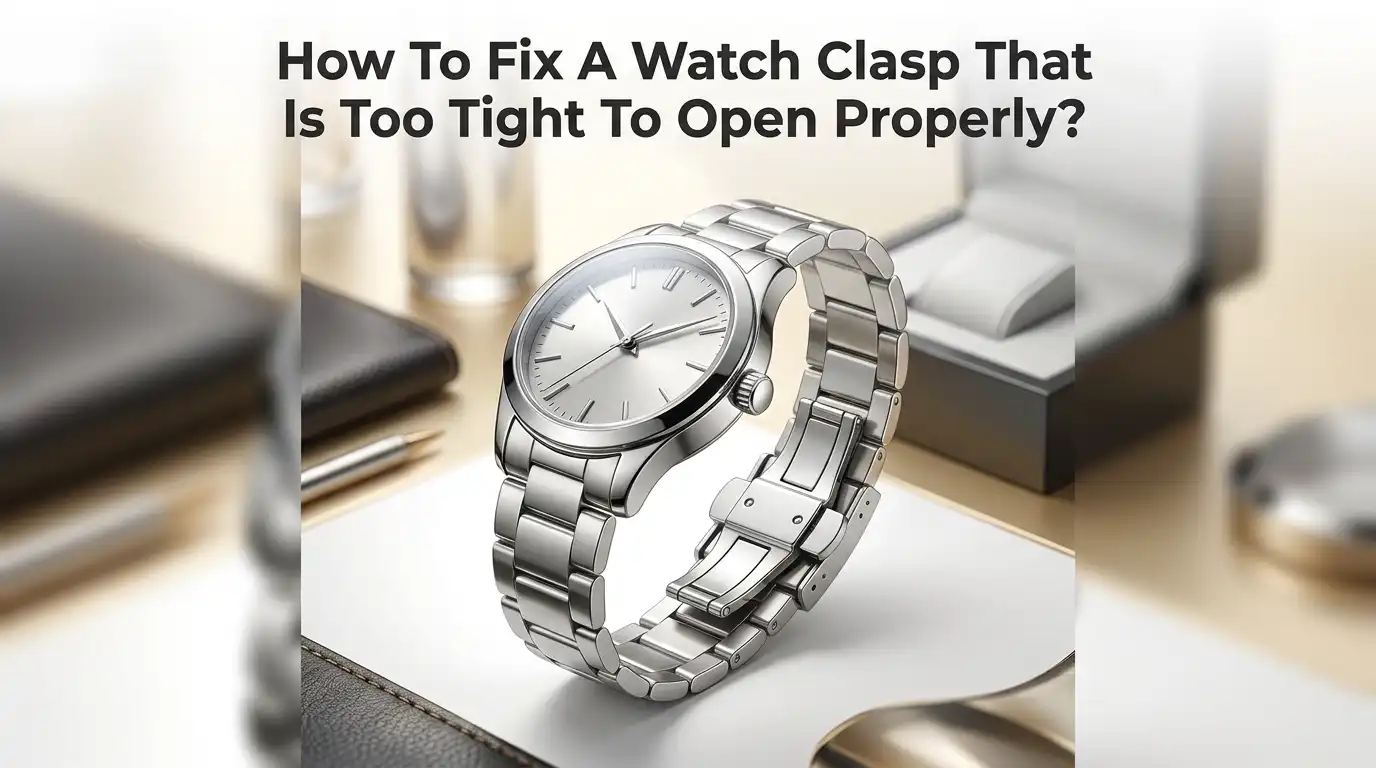
Fold over clasps are the most common style you’ll encounter. These feature a rectangular metal piece that folds down over a post. You’ll find a small button or lever on one side. Press this button while gently pulling the clasp open. The mechanism should snap back when released.
Box clasps have a more complex design with interlocking parts. Look for a small push button on the front center. This button releases the locking mechanism inside. You’ll notice two side panels that can sometimes be adjusted if the clasp feels too tight.
Barrel clasps are cylindrical and rotate to open and close. These typically have a grooved section you can grip. Twist the barrel gently in the direction indicated by any small arrows. Some barrel clasps have a button you must press before twisting.
Hook and eye clasps use a curved hook that catches on an eye loop. These are less common on modern watches but still appear on some styles. Simply unhook the curved end to open.
Deployant clasps are larger and more secure. They feature a push button on the top or side. Press firmly while pulling the two halves apart. These clasps often feel tighter because they’re designed for security.
To identify your specific clasp, examine it closely under good lighting. Look for buttons, levers, or notches. Check the watch manufacturer’s documentation if available. Understanding your clasp type helps you apply the correct opening technique without forcing anything. Take photos of your clasp from different angles. This reference helps if you need professional assistance later.
Tools You’ll Need Before You Start
Before you attempt to fix your tight watch clasp, gather the right tools. Having everything ready prevents frustration and protects your watch from damage.
A spring bar tool is your primary instrument. This small metal device has a forked end that safely removes watch pins. The fork slides under the pin without scratching your watch band or case. You can find these tools at most watch repair suppliers or general hardware stores.
Needle nose pliers are essential for gentle adjustments. These pliers give you precise control when prying open a stuck locking mechanism. The narrow tips let you work in tight spaces without damaging surrounding parts. Choose pliers with smooth jaws to avoid marking your clasp.
A magnifying glass or jeweler’s loupe helps you see small details clearly. Watch clasps have tiny notches and pressure points that are hard to spot with your naked eye. Good lighting combined with magnification reveals exactly where you need to apply pressure.
Soft cloth or microfiber material protects your watch during work. Place your watch on a soft surface to prevent scratches on the case or band. A cloth also catches any small parts that might fall loose during adjustment.
A small hex wrench or Allen key can help with certain clasp types. Some clasps have adjustment screws hidden inside. A hex tool lets you turn these screws without stripping them.
Lubricant designed for watches is optional but helpful. If debris or oxidation causes the tightness, a small amount of appropriate lubricant can improve movement. Never use household oils, as these attract dirt and damage watch mechanisms.
Start by organizing these tools on your work surface. Arrange everything within arm’s reach so you stay focused on the clasp. This preparation step takes just minutes but saves you time and prevents mistakes during the actual repair process.
Step-by-Step: Opening a Stuck Fold-Over or Push-Button Clasp
Fold over clasps and push button clasps respond well to specific opening techniques. The key is understanding where the locking mechanism sits and how to release it without forcing anything.
Start by examining the clasp closely under good lighting. Look for a small notch or groove on the side of the clasp where the pin hides. This notch is your pressure point. Once you locate it, you’re halfway to success.
For push button clasps, locate the buttons on both sides of the clasp. Press both buttons simultaneously while gently pulling the band apart. The buttons release the locking mechanism inside. This dual pressure approach works because it disengages both sides of the catch at once.
If the buttons feel stuck, try pulling the band in the opposite direction first. This simple action sometimes disengages a stubborn pin naturally. Then attempt the button press again.
Use a spring bar tool’s forked end to help separate the clasp halves slightly. Insert the fork between the two clasp pieces and apply gentle, steady pressure. Avoid sudden movements that could bend the metal.
For particularly tight clasps, needle nose pliers offer a solution. Gently grip the locking end of the clasp and pry it open just slightly. The goal is a small gap, not a large one. This minor adjustment often frees the mechanism.
Pull on the back of the clasp rather than the front. This angle provides better leverage and reduces stress on the locking components.
If the clasp still won’t budge after these attempts, stop and reassess. Continuing to force it risks permanent damage. Sometimes a professional jeweler can bend the catch slightly to reduce tension. They have specialized tools and experience with delicate adjustments that preserve clasp integrity.
Step-by-Step: Using Pliers and a Spring Bar Tool Safely
Gather your tools before you start working on your watch clasp. You’ll need a spring bar tool, needle nose pliers, a soft cloth, and good lighting. Organize everything on a clean work surface so nothing gets lost.
Begin by examining your clasp under bright light or with a magnifying glass. Look for the small notch where the pin sits. This notch is your key to opening the clasp safely without forcing it.
Hold your watch band firmly with one hand. Use the spring bar tool’s forked end to gently insert it into the notch. Apply steady, gentle pressure rather than sudden force. The goal is to lift the locking mechanism slightly, not to pry it open violently.
If the clasp still won’t budge, switch to needle nose pliers. Grip the locking end of the clasp very gently. Apply minimal pressure to open it just a fraction of an inch. This small movement often releases the tension holding everything tight.
Try pulling the band in the opposite direction while using your tool. This technique reduces strain on the clasp and helps disengage the pin from its catch point. Work slowly and deliberately.
For push button clasps, locate both buttons on the clasp sides. Press them simultaneously while gently pulling the band apart. The buttons should click as they release.
Never use excessive force with either tool. Tight clasps respond better to patience and proper technique than to brute strength. If you feel resistance, stop and reassess your approach.
Work in a well-lit area so you can see exactly what’s happening. Take breaks if you feel frustrated. Rushing leads to mistakes that can damage your watch band or clasp permanently.
Once you’ve opened the clasp successfully, you can assess whether it needs cleaning or adjustment for future use.
Common Mistakes That Make the Problem Worse
Many people make mistakes when dealing with a tight watch clasp. These errors actually make the problem worse instead of better. Understanding what not to do is just as important as knowing the right approach.
The biggest mistake is applying too much force without proper tools. When you pull hard on a stuck clasp, you risk bending the metal permanently. Your watch clasp may then never close properly again. The damage becomes irreversible, and you’ll need professional help to fix it.
Another common error is skipping the identification step. You must locate the exact pressure points on your clasp before touching anything. Many people push or pull in random spots hoping something will work. This scattered approach wastes time and can scratch your watch band or clasp.
Using the wrong tools causes serious problems too. Grabbing any pliers from your toolbox and squeezing the clasp is a recipe for disaster. Improper tools can slip and damage the clasp mechanism. They may also leave marks or dents on your precious watch.
Not preparing your workspace is another mistake people overlook. Working in poor lighting means you can’t see what you’re doing. You might accidentally press the wrong button or apply pressure to the wrong area. A cluttered workspace increases the chance of dropping your watch or losing small parts.
Rushing through the process leads to frustration and mistakes. Take your time to examine the clasp carefully. Read any instructions that came with your watch. Some clasps have specific opening methods that differ from standard designs.
Finally, many people ignore the direction of force needed. Pulling sideways instead of the correct angle puts stress on the wrong parts. Each clasp type responds to specific movements. Understanding these differences prevents unnecessary damage and gets your clasp working smoothly again.
Troubleshooting: When the Clasp Still Won’t Budge
Sometimes a watch clasp refuses to budge no matter what you try. This happens when standard techniques don’t work. Understanding what to do next prevents frustration and damage to your watch.
The first step is recognizing when you’ve reached the limit of basic methods. If gentle pulling and button pressing haven’t worked, your clasp needs a different approach. Stop applying force and reassess the situation instead.
Examine the clasp mechanism more carefully. Look for any debris, corrosion, or manufacturing defects that might be causing the resistance. Dirt and oxidation often make clasps stick worse than they should. A small amount of lubricant designed for watches can help release tension. Apply it sparingly around the clasp edges and let it sit for a few minutes.
If lubrication doesn’t help, the clasp may have a manufacturing issue. Some clasps have catches that are too tight by design. This is actually a safety feature, but it makes opening difficult.
Try adjusting your technique rather than your force. Pull the band at different angles. Sometimes the clasp opens more easily when you pull slightly upward or downward instead of straight out. Experiment with small movements rather than large ones.
When nothing works, professional help becomes necessary. A jeweler can safely adjust or replace a problematic clasp. They have specialized tools and experience handling delicate watch mechanisms. They can also identify if the clasp has internal damage causing the stiffness.
Don’t attempt extreme measures like hammering, heating, or aggressive prying. These damage your watch permanently. A professional service costs far less than repairing broken components.
Remember that some clasps simply have tight tolerances. This is normal. With patience and the right technique, most clasps eventually open. If yours truly won’t cooperate after trying multiple methods, seeking professional assistance is the smart choice.
Final Thoughts
A tight watch clasp feels frustrating at first. But now you know it’s a common problem with simple fixes.
Most tight clasps open with patience and the right technique. You don’t need fancy tools or special skills.
Start with your hands. Try the push buttons or pull the band gently. Many clasps open this way without extra tools.
If that fails, grab your needle nose pliers or spring bar tool. Use light pressure and steady hands. Never force the mechanism.
Remember to work in good light. This helps you spot the release pin and avoid scratching your watch.
Take breaks if you feel frustrated. A calm approach works better than rushing through the steps.
Most watch clasps respond well to these methods. The techniques we covered fix the majority of tight clasp issues at home.
Sometimes a clasp needs professional attention. This happens when debris, corrosion, or damage causes the problem.
A jeweler can bend the catch slightly to fix stubborn clasps. This quick fix often solves what pliers cannot.
Don’t feel bad if you need help. Watch mechanisms are small and delicate. Professionals handle these issues every day.
Your watch deserves careful treatment. Rushing or forcing the clasp can cause lasting damage.
Take your time with each step. Test different angles before increasing pressure. This protects both the clasp and the band.
Keep your tools clean and ready for future use. A well maintained toolkit makes clasp problems easier to solve.
Practice makes this process simpler over time. Once you understand your watch’s clasp type, future fixes become quick and easy.
Watch clasps naturally loosen or tighten with wear. Knowing how to handle this keeps your favorite watch working smoothly for years.
Trust your instincts here. If something feels wrong or stuck, stop and reassess your approach.
With these tips, you can handle most tight clasp problems confidently. Your watch will open smoothly again soon.
Frequently Asked Questions
Why is my watch clasp so difficult to open?
Watch clasps become tight due to manufacturing tolerances or natural wear over time. The catch and pin may fit too snugly together. This is a common issue that affects many people. Tight clasps are usually fixable without professional help if you use the right approach.
What’s the best way to open a stubborn clasp with my hands?
Start by locating the small notch on the clasp side where the pin sits. Pull the band in the opposite direction to help disengage the pin. Then gently pull the back of the clasp away from your wrist. This method works well for many clasps and requires no tools at all.
Can I use tools to help open the clasp?
Yes. A spring bar tool’s forked end can help remove the clasp mechanism. Needle nose pliers also work effectively. Grip the locking end gently and apply slight pressure to pry it open a little. This extra leverage often solves the problem without forcing anything.
What adjustment can a professional make to fix this permanently?
A jeweler can bend the catch slightly to reduce the tightness. They may also insert a hex tool and turn it counter-clockwise to adjust the mechanism. These small adjustments make the clasp easier to open while keeping it secure. Professional help is worth considering if home methods don’t work.
How do I know when I need professional help?
Stop trying if you feel resistance or fear damaging your watch. Never use hammering, heating, or aggressive prying. When gentle methods fail, a jeweler has specialized knowledge and tools. They can fix manufacturing defects safely and properly.

Hi, I’m Lucy Jones, a dedicated watch enthusiast and reviewer. I spend my time hunting down, testing, and evaluating the most intriguing wristwatches on the market. My goal is to guide you through the overwhelming choices with honest, hands-on insights into every timepiece.