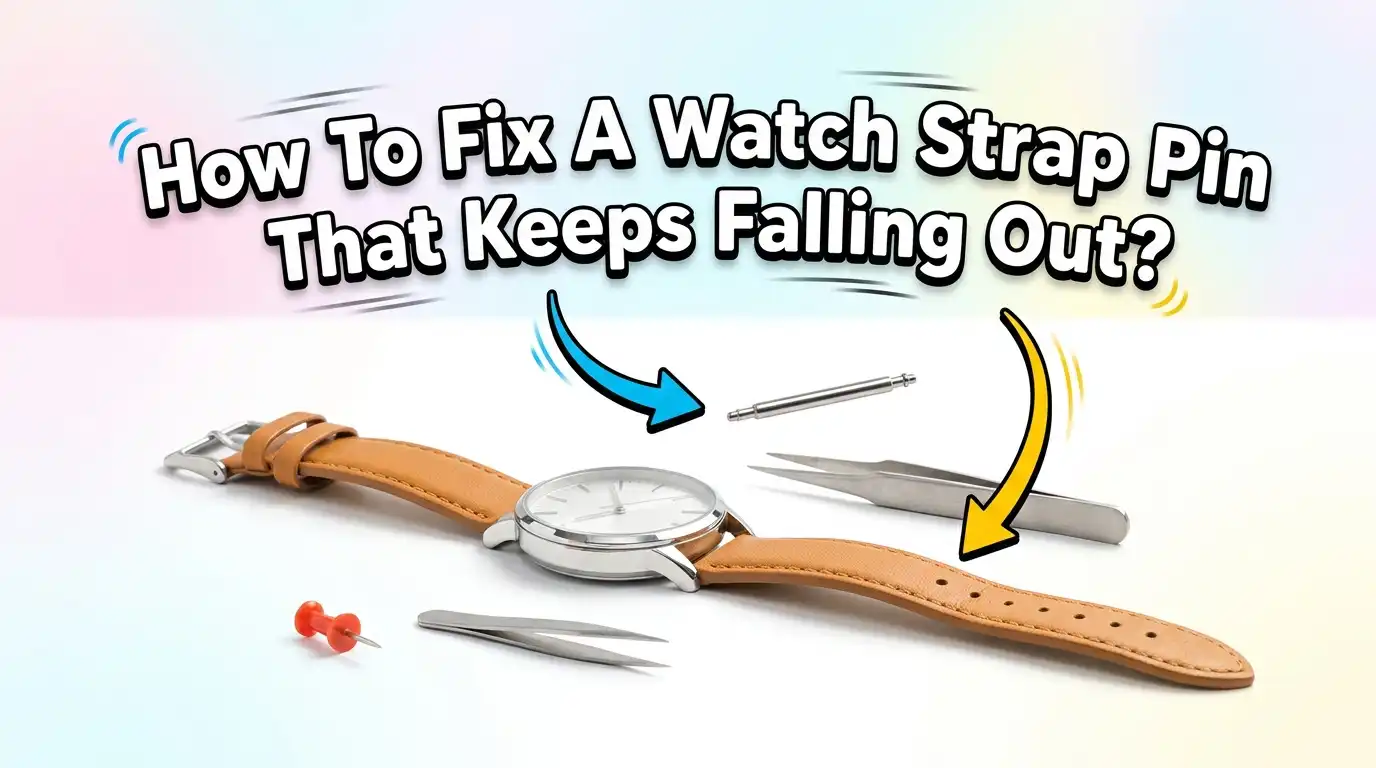
How To Fix A Watch Strap Pin That Keeps Falling Out?
A watch strap pin that keeps falling out feels like a small problem with a big cost. One minute your watch sits snug on your wrist. The next minute the strap swings loose, and your favorite timepiece dangles by a thread.
You slide the pin back in, and it pops out again within days. Sound familiar? You are not alone. This is one of the most common watch complaints, and the good news is that you can fix it yourself at home.
This guide walks you through every cause, every solution, and every tool you need. By the end, you will know exactly why the pin keeps escaping and how to make it stay put for good.
In a Nutshell:
- The pin usually falls out for one clear reason. A worn spring bar, a stretched lug hole, or a strap that is too narrow causes most cases. Find the cause first, then pick the fix.
- A fresh spring bar solves most problems instantly. Old spring bars lose their spring tension over time. A brand new bar of the correct size restores a firm, locked grip.
- The right size matters more than anything. Measure your lug width in millimeters. A pin that is even 1mm too short will keep slipping free.
- Simple bars and tubes offer a permanent fix. When lug holes wear out, solid simple bars or metal tubes fill the gap and stop sideways movement, which is the real enemy.
- A cheap spring bar tool prevents damage. Using a knife or safety pin scratches your watch and bends the bar. A proper tool makes the job safe and clean.
- A professional repair is worth it for luxury watches. If the lugs are damaged or the case is valuable, a watchmaker can rebuild the hole properly.
What Is A Watch Strap Pin And Why Does It Matter?
A watch strap pin is the small metal bar that connects your strap or bracelet to the watch case. Most watches use a spring bar, which is a hollow tube with a tiny spring and two moving tips inside.
When you press the tips inward, the bar shortens. When you release them, the tips push outward into small holes in the watch lugs. The lugs are the two horns that stick out from the case.
This spring tension is what holds everything together. Some straps use a solid pin or a cotter pin instead. Understanding your pin type is the first step, because each type fails in a different way and needs a slightly different fix. Knowing the parts helps you talk to a repair shop too.
Why Does Your Watch Strap Pin Keep Falling Out?
Before you fix anything, you need to know the real cause. A pin does not fall out by chance. There is always a reason, and often more than one.
The most common cause is a worn spring bar. Over years of use, the internal spring weakens and the tips no longer push out with enough force.
The second big cause is a stretched or worn lug hole. Constant pressure widens the hole, so the tip has nothing solid to grip.
A third cause surprised many people: a strap that is too narrow for the lugs. When the strap is 1mm to 2mm too thin, the pin slides sideways and pops free. Rough daily wear, flexing your forearm, or a snug fit can all speed up these failures.
How To Identify Your Watch Pin Type First
You cannot pick the right fix until you know what pin you have. Turn your watch over and look closely at the lugs. Spring bars have a small ridge, called a flange, near each tip, and the tips can be pushed inward. This is the most common type on both leather straps and metal bracelets.
Drilled lug watches have tiny holes on the outside of the lugs, which makes removal much easier. Cotter pins are split pins used mostly on cheaper metal bands, and they slide straight through the links.
Screw bars thread in like a tiny bolt and need a screwdriver. Take a photo with your phone and zoom in. This simple check saves you from buying the wrong part and repeating the whole job later.
How To Measure The Correct Pin Size
Wrong size is the number one reason a fix fails. You must measure before you buy anything. Grab a small ruler or a digital caliper. Measure the lug width first, which is the gap between the inside edges of the two lugs. Common widths are 18mm, 20mm, 22mm, and 24mm.
Next, measure the diameter of the spring bar itself. Most watches use 1.5mm or 1.8mm bars, while dive watches often use thicker 2.0mm or 2.5mm bars.
A thicker bar grips harder and resists popping out. If your pin keeps falling out, going up slightly in diameter often helps. Write down both numbers. When you order a replacement, match the length exactly and pick the largest diameter that fits your lug holes.
How To Fix A Loose Spring Bar Step By Step
This is the core repair, and most people can do it in ten minutes. First, gather a spring bar tool, your new spring bars, and a soft cloth to protect the case.
Lay the watch face down on the cloth. Slide the forked end of the tool between the strap and the lug until it catches the flange of the spring bar.
Push the tip inward gently to compress the bar, then lift the strap away. Remove the old bar completely. Take the new spring bar and set one tip into a lug hole.
Compress the other tip with your tool, guide it into the second hole, and release. Tug the strap firmly to confirm it locked in place. If it holds under a strong pull, your repair is done.
Pros: This method is cheap, fast, and permanent when the lug holes are healthy. Cons: It fails if the lug holes are worn out, and buying the exact size takes a little patience.
How To Fix Worn Or Stretched Lug Holes
Sometimes the pin is fine but the hole is the problem. A worn lug hole has lost its round shape, so the tip no longer sits deep and secure. You have a few home options here. The first and easiest is to switch to a thicker or longer spring bar that reaches deeper into the widened hole.
The second option uses epoxy. You fill the worn hole with a small drop of epoxy, let it cure, then carefully drill a fresh, tight hole. This rebuilds a firm inner edge for the tip to grip. A third option is a metal tube, which we cover next. Be careful with drilling, since a slip can scratch the case.
Pros: These fixes restore a watch that seemed ruined. Cons: Epoxy and drilling need a steady hand, and a mistake can be hard to reverse.
How To Use Tubes To Stop Pins From Popping Out
Tubes are one of the best kept secrets for a stubborn pin. A watch tube is a thin metal sleeve that slides over the spring bar and fills the whole gap between the lugs.
Because the tube fills every millimeter, the pin cannot drag sideways, and sideways movement is the true reason most pins escape.
Repair shops often recommend this fix when a strap sits too narrow inside wide lugs. To install, slide the tube onto the spring bar before you fit it, then mount the whole unit as normal.
The tube locks the assembly so tightly that only cutting it out will remove it. Many watchmakers have solved repeat pop-off complaints with this single trick.
Pros: This creates an almost permanent hold and cures sideways slipping for good. Cons: You must cut the tube to change the strap later, which means buying a new tube each time.
How To Fix It With Simple Solid Bars
Simple bars are the tank of the watch pin world. A simple bar has a center body that matches the exact gap between the lugs, with no flanges on the ends. Once you press it into place, it physically cannot move sideways, so it will never pop out from normal wear.
Watch experts often prefer these over tubes because they do not add any clearance problems near the case. This makes them ideal for watches where the strap already sits tight against the case. The only way a simple bar comes out is if you break it out on purpose. That sounds harsh, but it means total security for daily wear.
Pros: This offers the strongest, most reliable hold of any option. Cons: You must destroy the bar to change the strap, so keep spare bars ready before you start.
Why A Narrow Strap Causes Pins To Fall Out
This cause fools even experienced watch owners. Imagine a watch with 22mm lugs, but the strap measures only 20mm. That leaves a 2mm gap on each side. Inside that gap, the spring bar has room to shift left and right every time you move your wrist.
Each shift nudges a tip closer to slipping free from its hole. This is why a strap can pop off even when the spring bars and lug holes are in perfect shape. The fix is simple.
Match your strap width exactly to your lug width. If you love a strap that runs narrow, add tubes or simple bars to fill the space. A correctly sized strap alone often ends the problem completely.
What Tools You Need For The Repair
You do not need a full workshop to fix a watch pin. A short list of basics covers almost every job. The most important item is a spring bar tool, which has a forked end to grip the bar and a fine pin end for drilled lugs. This one tool prevents most scratches and bent bars.
You should also keep a set of assorted spring bars in common sizes, plus a few tubes and simple bars for tougher cases. A soft microfiber cloth protects your case during the work.
A small ruler or caliper handles the measuring. A magnifier helps if the parts are tiny. Avoid using knives, needles, or safety pins, since these damage the finish and rarely seat the bar correctly.
How To Prevent The Pin From Falling Out Again
Fixing the pin is only half the battle. You want it to stay fixed. Start by replacing spring bars on a schedule. If you swap straps often, change the bars every year or two, because each removal wears the spring a little more. Buy quality bars rather than the cheapest option.
Always match strap width to lug width so the pin cannot drift sideways. Check the tips every few months by giving the strap a firm tug.
A watch that passes the tug test is safe to wear. For active lifestyles or dive use, choose thick spring bars, tubes, or a secure strap style that traps the bars. These habits keep your watch on your wrist and off the floor.
When Should You Take It To A Professional?
Some jobs are better left to an expert, and there is no shame in that. If your watch is a luxury or vintage piece, the risk of scratching or drilling wrong is too high to gamble. A trained watchmaker has the correct tools, spare parts, and steady technique to fix it cleanly.
You should also seek help if the lugs are cracked or badly deformed, since these need real metalwork, not a home patch. A broken spring bar tip stuck inside a lug hole is another job for the pros, who can remove it without harming the case.
Weigh the repair cost against the watch value. For a beloved or expensive watch, a professional repair is money well spent.
Pros: A pro delivers a clean, guaranteed result and protects a valuable watch. Cons: It costs more and takes longer than a quick home fix.
Frequently Asked Questions
Why does my watch spring bar keep popping out on one side only?
One side often fails first because that lug hole is more worn, or the spring bar tip on that side is weaker. Sideways strap movement usually targets the looser end. Replace both spring bars with the correct size, and check that your strap fills the full lug width. If one lug hole is stretched, a thicker bar or a tube on that side will restore a firm grip.
Can I use glue to hold a watch pin in place?
You can use a tiny drop of watchmaker adhesive as a last resort, but use it sparingly. Too much glue can seep into the case or make future strap changes impossible. A better long term answer is a correctly sized spring bar, a tube, or a simple solid bar. These fix the real cause instead of masking it. Save glue only for emergencies when no other part is available.
How often should I replace my watch spring bars?
Replace them every one to two years if you change straps often, since each removal wears the internal spring. Watches that stay on one strap can go longer. Always replace a bar right away if the tips feel loose or the spring feels weak during the tug test. Fresh bars cost very little and give you peace of mind that your watch will stay on your wrist.
What is the difference between a spring bar and a solid pin?
A spring bar has a spring inside and two moving tips that push into the lug holes, so you can remove it by compressing the tips. A solid or simple bar has no flanges and fills the full lug gap, so it locks in permanently and must be cut out to remove. Spring bars are convenient, while solid bars are more secure. Choose based on how often you swap straps.
Will a thicker spring bar stop my pin from falling out?
Often yes. A thicker spring bar grips the lug holes with more force and resists sideways movement. If your current bar is 1.5mm, moving up to 1.8mm or 2.0mm can solve a repeat pop-off problem, as long as the thicker bar still fits your lug holes. Dive watches use thick bars for exactly this reason. Measure first so the new bar seats fully without forcing.
Is it safe to fix a watch pin myself at home?
For most everyday watches, yes, a home repair is safe and simple with the right tool. Use a proper spring bar tool, work over a soft cloth, and take your time. Avoid knives or needles that scratch and slip. For luxury, vintage, or damaged watches, however, a professional is the safer choice. When in doubt, a repair shop protects both your watch and your wallet from a costly mistake.

Hi, I’m Lucy Jones, a dedicated watch enthusiast and reviewer. I spend my time hunting down, testing, and evaluating the most intriguing wristwatches on the market. My goal is to guide you through the overwhelming choices with honest, hands-on insights into every timepiece.