
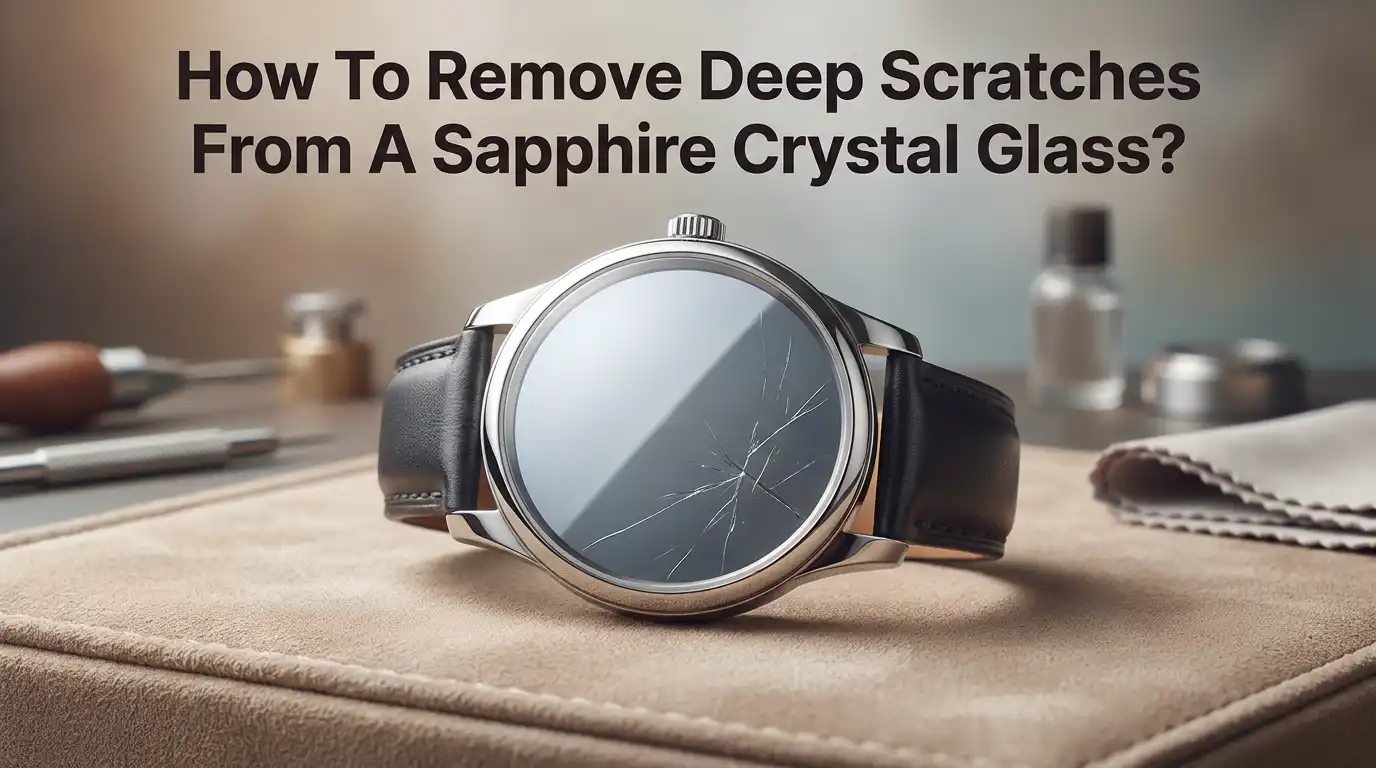
How To Remove Deep Scratches From A Sapphire Crystal Glass?
Sapphire crystal glass sits on top of many watches, phones, and camera lenses. It looks clear and stays scratch resistant for years. But it is not scratch proof.
One accidental knock against a diamond ring, a granite countertop, or a bit of grit can leave a deep mark. That mark catches the light and ruins the clean look of your watch or device.
The good news is that you have real options. Some deep scratches come out fully. Others need a professional or a full crystal swap.
Key Takeaways
- Sapphire is very hard but not unbreakable. It scores a 9 on the Mohs hardness scale, so only diamond, other sapphire, or hard grit can scratch it. This means deep scratches usually come from tough materials.
- Diamond paste is the only real DIY fix for deep scratches. Softer polishes like toothpaste or cerium oxide work on mineral glass but barely touch true sapphire. You need diamond particles to cut sapphire.
- Anti reflective coating changes everything. If your crystal has an AR coating, polishing removes it and leaves a cloudy patch. Check this first before you start.
- Deep scratches may not come out fully at home. Very deep gouges often need a professional watchmaker or a full crystal replacement, which can cost anywhere from thirty to several hundred dollars.
- Protecting the case is a must. Diamond paste and rotary tools can damage the metal, dial, and bezel. Always mask everything except the crystal.
- Go slow and use light heat control. Rotary tools build heat fast. Too much heat can crack the crystal or damage seals, so work in short bursts.
Understanding What Sapphire Crystal Glass Really Is
Sapphire crystal is not glass in the normal sense. It is a lab grown form of aluminum oxide, the same material as natural sapphire gems.
Makers grow it in a furnace, then cut and polish it into flat or domed shapes. This process makes it extremely hard and clear. You find it on luxury watches, high end phones, and premium camera covers.
Because it scores 9 on the Mohs scale, it resists almost every daily material. Steel, keys, sand, and coins cannot mark it.
Only diamond, another piece of sapphire, or silica based grit can leave a scratch. This is why sapphire scratches are rare but hard to fix. The same hardness that protects it also makes it stubborn to polish.
Why Sapphire Crystal Is So Hard To Repair
Most scratch repair guides talk about softer materials. Acrylic and mineral crystal polish out easily because your compound is harder than the surface. Sapphire flips this rule. Your polish must be harder than the crystal to cut it. Only diamond fits that description in a home setting.
This changes your whole approach. Cerium oxide, toothpaste, baking soda, and standard glass polish will not remove deep scratches from real sapphire. They may add a faint shine, but they leave the deep mark behind. Many people waste hours rubbing these on and feel frustrated.
The second problem is depth. A deep scratch removes a channel of material. To level it out, you must grind down the whole surface around it. This takes patience, the right grit, and steady hands. Rushing this ruins the finish.
Check For An Anti Reflective Coating First
This step matters more than any other. Many modern sapphire crystals carry an anti reflective (AR) coating. This thin metal based layer cuts glare and makes the dial easy to read. It is not as hard as the sapphire below it.
If you polish an AR coated crystal, you strip the coating. The polished spot turns cloudy or hazy, and it no longer matches the rest. You may fix the scratch but ruin the look.
To check, tilt the crystal under light. AR coatings often show a blue, purple, or greenish tint. No tint usually means no coating, or a coating only on the inside.
If you see a tint, think carefully. You can either accept the coating loss, polish off the whole coating for an even finish, or send the watch to a professional. Never polish only one spot on a coated crystal.
Tools And Materials You Will Need
Gather everything before you start. Stopping halfway leads to mistakes. Here is what a home sapphire polish job needs.
You will want diamond paste in two or three grits. Start coarse with around 2.5 to 3 micron paste to cut the scratch. Then move finer to 1 micron, and finish with 0.5 micron for shine. These grits do the real work on sapphire.
You also need application tools. A rotary tool like a Dremel with felt or wool polishing tips speeds things up. A wooden toothpick or applicator stick helps place paste inside the scratch. Keep clean microfiber cloths, isopropyl alcohol, and masking tape nearby.
Finally, add strong tape or plastic film to cover the case. Protect the bezel, dial, and metal fully. Wear eye protection too, since fine particles fly during polishing.
Preparing Your Watch Or Device For Repair
Preparation protects your device and improves your result. Skipping it risks scratched metal or paste in the seals. Take your time on this stage.
First, clean the crystal and case with isopropyl alcohol. Remove all dust, grit, and oil. Any stray particle can create new scratches while you polish. Dry it fully with a clean cloth.
Next, mask everything except the crystal. Use tape and film to cover the bezel, case sides, crown, and any gaps. Diamond paste and rotary tools damage metal fast. Overlap your tape so no gap stays open.
If you feel confident and have the right tools, some people remove the crystal from the case entirely. This lets you polish freely without risk to the watch. But removal needs skill and press tools, so most beginners polish it in place.
Pros: Good prep prevents new damage and gives a clean finish. Cons: It takes extra time and careful masking, which many people skip and regret.
Step By Step Guide To Removing Deep Scratches With Diamond Paste
This is the core method that actually works on sapphire. Follow each step in order and stay patient. Deep scratches can take thirty minutes or more.
Start by placing a small dab of your coarsest diamond paste (2.5 to 3 micron) directly into the scratch using a toothpick. Rub it in gently by hand first to seat it.
Next, attach a felt or wool tip to your rotary tool. Run it at a low speed to avoid heat. Work the paste over the scratch using small circular motions. Never hold the tool in one spot, as heat builds fast and can crack the crystal.
Check your progress often. Wipe the area clean and look under light. When the deep scratch fades, switch to 1 micron paste, then finish with 0.5 micron for clarity.
Pros: This method truly removes deep scratches and restores a like new surface. Cons: It carries a real risk of heat damage, uneven finish, or removing coating if you rush.
Hand Polishing Method For Beginners
Not everyone owns a rotary tool, and a rotary tool adds heat risk. Hand polishing is slower but far safer for first timers. Many watch repair fans say hand work gives better control on sapphire.
Apply your coarse diamond paste into the scratch with a toothpick. Then fold a firm microfiber cloth over your fingertip or wrap it around a flat stick. Rub the scratch in tight circular motions with steady, firm pressure.
This takes longer than a rotary tool, sometimes an hour or more for deep marks. Wipe and inspect every few minutes. When the scratch lightens, move to finer grits just like the power method.
Hand polishing keeps heat low and reduces the chance of gouging. It suits people who want control over speed.
Pros: Very low heat risk, better control, and cheap to try. Cons: It is slow, tiring on the hands, and may not fully clear the deepest gouges.
Methods That Do Not Work On Deep Sapphire Scratches
Many popular home tricks fail on real sapphire, and knowing this saves you effort. These methods work on softer crystals, not sapphire.
Toothpaste is the most common myth. It has mild abrasives that shine acrylic or hesalite, but it cannot cut a material rated 9 on Mohs. It leaves the deep scratch behind.
Cerium oxide works well on mineral glass. On sapphire, it does almost nothing because it is softer than the surface. Baking soda paste and standard metal polish fall in the same group.
Some people also try sandpaper or wet and dry paper. These leave heavy haze and micro scratches that are hard to remove. Unless you have very high grit diamond papers, avoid them.
Pros: These methods are cheap and safe on soft crystals. Cons: They waste time on sapphire and can add haze, giving false hope while the scratch stays.
When To See A Professional Watchmaker
Sometimes the smart move is to step back. Not every scratch belongs to a DIY job. A professional has proper lapping machines, fine diamond wheels, and steady experience.
Consider a pro if your crystal has an AR coating you want to keep, if the scratch is extremely deep, or if the watch holds high value. A luxury piece is not worth the gamble of a home slip. One heat crack can cost you far more than the repair.
Watchmakers can polish the crystal on a flat lap for a perfect finish. They can also reapply coatings in some cases. If in doubt, ask for a quote first.
Pros: Expert results, no risk to your case, and access to proper tools and coatings. Cons: It costs money and takes days or weeks, and shipping a watch adds its own worry.
Full Crystal Replacement As A Last Resort
Some deep scratches or chips go too far to polish out. In these cases, replacing the crystal gives the cleanest result. A new crystal looks perfect and restores full clarity.
A watchmaker pops out the damaged crystal and presses in a matching one. Costs vary widely. Simple replacements can run around thirty to sixty dollars. Branded or fitted crystals for luxury watches can reach two hundred dollars or more, plus service fees.
Replacement makes sense when the crystal is cracked, chipped, or gouged beyond polishing. It also suits AR coated crystals, since a new one keeps the coating intact.
Always use the correct size and shape for your model. A wrong fit ruins water resistance.
Pros: Perfect clarity, keeps coatings, and fixes chips that polishing cannot. Cons: It costs more than polishing and often needs a professional to fit it correctly.
How To Protect Your Sapphire Crystal From Future Scratches
Once you fix a scratch, protect your crystal so you never repeat the work. Small habits make a big difference.
Keep your watch away from diamond jewelry, granite counters, marble surfaces, and sandy environments. These hold materials hard enough to scratch sapphire. Take the watch off before rough tasks.
Store watches separately in soft pouches or a padded box. Loose watches in a drawer knock into each other and their metal parts. A little separation prevents marks.
You can also add a clear protective film made for watch crystals. It sits on top and takes the hits instead of the sapphire. Some people find it slightly reduces clarity, but it saves the crystal.
Pros: Simple habits and films greatly reduce future scratches. Cons: Films can slightly dull the view, and constant caution feels limiting for a daily watch.
Frequently Asked Questions
Can you really remove deep scratches from sapphire crystal at home?
Yes, but only with diamond paste. Because sapphire scores 9 on the Mohs scale, you need diamond particles to cut it. Softer polishes like toothpaste or cerium oxide will not work. Very deep gouges may still need a professional, but many deep scratches do come out with patient diamond paste work.
Does toothpaste remove scratches from sapphire glass?
No. Toothpaste has mild abrasives that only shine soft crystals like acrylic or hesalite. It cannot cut true sapphire. You may see a slight gloss, but the deep scratch stays. Save toothpaste for cheaper mineral or plastic crystals, not for sapphire.
Will polishing remove the anti reflective coating?
Often, yes. The AR coating is a thin, softer layer on the crystal. Polishing strips it and leaves a cloudy patch. Check for a blue or purple tint before you start. If your crystal is coated, consider a professional or a full replacement instead.
How much does professional sapphire crystal repair cost?
It varies. A simple polish or crystal replacement can start around thirty to sixty dollars. Luxury or fitted crystals cost far more, sometimes two hundred dollars or higher, plus service fees. Always ask for a quote first, since brand and model change the price a lot.
Can I use a Dremel to polish my sapphire crystal?
Yes, but with care. A rotary tool speeds up the job, but it builds heat fast. Too much heat can crack the crystal or harm seals. Use low speed, work in short bursts, and keep moving. Beginners often get safer results with slower hand polishing.
Is it worth fixing a scratched sapphire crystal or should I replace it?
It depends on the depth. Light to medium deep scratches on uncoated crystals polish out well. Cracks, chips, or coated crystals usually need replacement. For high value watches, replacement or professional work protects your investment better than a risky home fix.

Hi, I’m Lucy Jones, a dedicated watch enthusiast and reviewer. I spend my time hunting down, testing, and evaluating the most intriguing wristwatches on the market. My goal is to guide you through the overwhelming choices with honest, hands-on insights into every timepiece.