
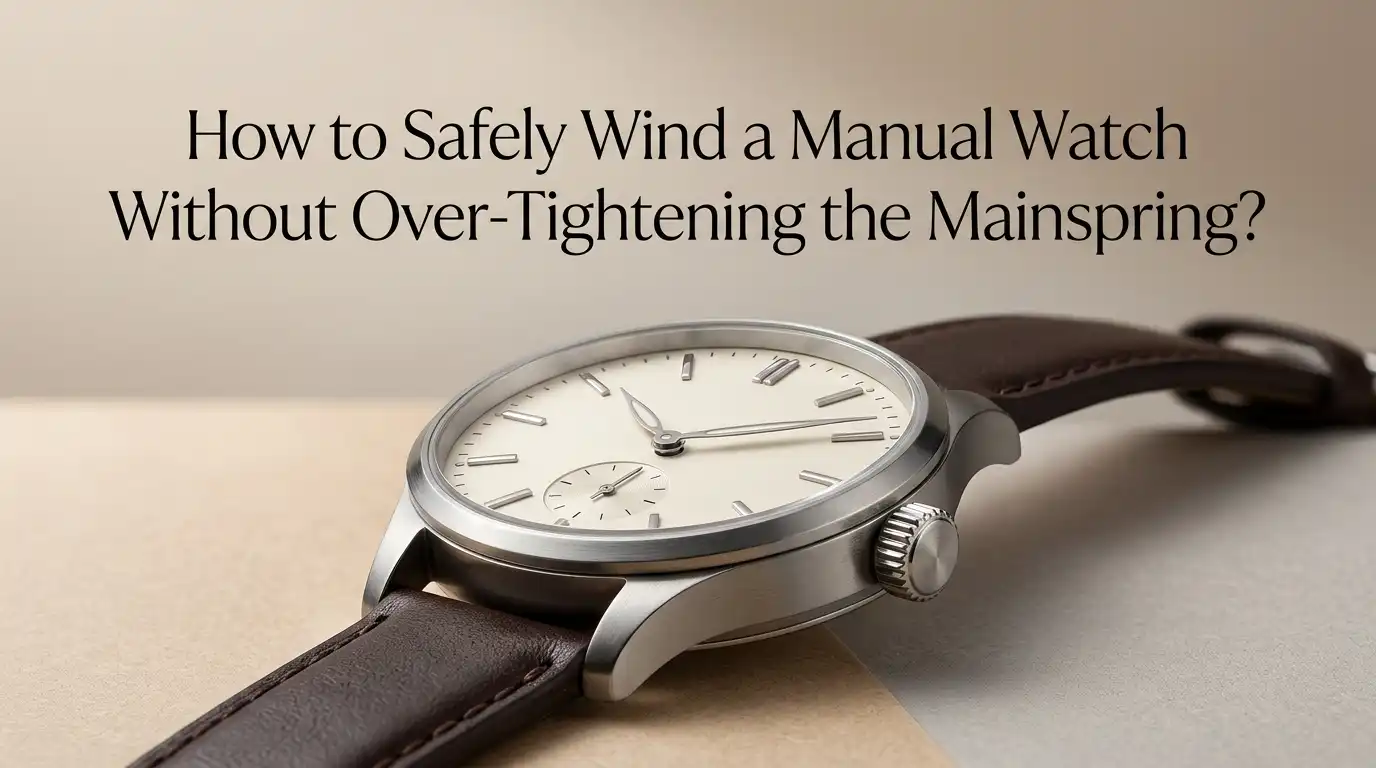
How to Safely Wind a Manual Watch Without Over-Tightening the Mainspring?
Owning a manual watch feels special. You connect with it every morning through a small ritual of winding the crown. But that same ritual makes many new owners nervous. What if you turn the crown one time too many? What if you damage the mainspring forever?
The good news is that winding a manual watch is simple once you learn the right method. The bad news is that bad habits can shorten the life of your movement and lead to costly repairs.
This guide walks you through every step. You will learn how to feel the resistance, count your turns, and protect your watch for decades of service.
Key Takeaways
- Always remove the watch from your wrist before winding. Winding it on your wrist puts side pressure on the crown stem and can bend or damage it over time.
- Stop turning the crown the moment you feel firm resistance. Modern manual movements have a stop mechanism, but pushing past resistance can still snap parts inside.
- Most manual watches need 20 to 40 full turns to reach full power reserve. Some long power reserve watches may need more, so check your manual.
- Wind the crown clockwise only, in slow and steady half turns. Fast winding creates heat and friction inside the barrel which wears parts faster.
- Wind your watch at the same time each day, ideally in the morning, to keep the mainspring tension stable and the timekeeping accurate.
- Never force the crown if it feels stuck or gritty. That feeling usually means the movement needs service, not more pressure.
What a Mainspring Actually Does Inside Your Watch
The mainspring is the power source of your manual watch. It sits coiled inside a small drum called the barrel. When you turn the crown, you tighten this spring. As the spring slowly unwinds, it releases energy through a series of gears to move the hands.
Think of the mainspring like a tightly rolled ribbon. Each turn of the crown adds more tension. The spring stores this energy and feeds it out at a controlled rate. A typical mainspring is made from a special steel alloy that can flex thousands of times without breaking.
Knowing this matters because once you understand the spring, you understand why over tightening is risky. Too much force can deform the spring or break the bridle that holds it in place inside the barrel.
Why Over Tightening the Mainspring Is a Real Concern
Modern manual watches include a safety feature. The crown becomes very stiff once the spring is fully wound. This warns you to stop. However, over tightening still happens when owners ignore this resistance and keep forcing the crown.
The damage usually shows up in three ways. The mainspring can lose its shape and fail to hold full tension. The bridle inside the barrel can snap or slip. The crown stem itself can twist or shear off near the movement.
Older vintage watches are especially fragile. Many were built before reliable slip clutches existed. A vintage piece from the 1940s or 1950s can break with surprisingly little extra force. Always treat vintage manual watches with extra care during winding.
Pros and Cons of Winding Daily Versus Letting It Stop
You have two main winding habits to choose from. Some owners wind their watch every day at the same time. Others only wind it when they plan to wear it. Both methods work, but each has trade offs.
Pros of daily winding: Your watch keeps stable timekeeping because the mainspring tension stays consistent. The lubricants inside the movement stay evenly distributed. You build a calming morning routine with your watch.
Cons of daily winding: You add wear to the crown gasket and stem over time. If you own many watches, daily winding each one becomes tiring.
Pros of occasional winding: Less wear on the crown components. Convenient if you rotate between several watches.
Cons of occasional winding: Lubricants can pool and dry out faster. Timekeeping accuracy may drift between uses.
Step by Step Method to Wind Your Manual Watch Safely
Follow this sequence every time you wind your watch. Consistency builds muscle memory and protects your movement from accidental damage.
First, take the watch off your wrist. Hold it gently in your non dominant hand with the crown facing up. Second, grip the crown between your thumb and index finger. Use only the tips of your fingers, not a full grip.
Third, turn the crown clockwise in slow half turn motions. Pause briefly between each half turn. Listen for the soft clicking sound of the ratchet wheel inside.
Fourth, count your turns. Most watches reach full wind between 20 and 40 turns. Fifth, the moment you feel firm resistance, stop immediately. Do not try one extra turn to be sure. The resistance itself is the signal.
How to Recognize the Resistance Point Correctly
Many new owners struggle to tell the difference between normal winding tension and the full stop. The crown grows progressively harder to turn as you wind. This gradual increase is normal and expected.
The true stop point feels different. It is a sudden firm wall, not a gradual tightening. The crown simply refuses to move further without significant force. Your fingers will naturally want to push harder, but that is the moment to stop.
A helpful trick is to wind slowly during the final five turns. Reduce your speed once you feel the tension building noticeably. This slow approach gives you time to feel the wall before you crash into it. Practice this on a fully unwound watch a few times to learn the feel of your specific movement.
Common Mistakes That Lead to Mainspring Damage
Several habits put your watch at risk without you realizing it. Winding the watch while it is on your wrist is the most common mistake. The angle forces sideways pressure on the crown stem.
Winding too quickly is another frequent error. Fast crown rotation creates heat through friction inside the barrel. This heat thins the lubricants and accelerates wear on tiny pivot points.
Using two fingers to grip the crown like a coin can also cause problems. This grip gives you too much leverage and makes it easy to push past resistance without noticing. Stick to a light fingertip grip for better feedback through your fingers.
Finally, never wind a watch that feels gritty or makes scraping sounds. Those signs point to dirt or dried oil inside. Forcing a sticky crown can break gear teeth that cost hundreds to replace.
The Right Number of Turns for Different Watch Types
Not every manual watch needs the same number of turns. The exact count depends on the movement and the power reserve. Most standard manual watches need 25 to 35 full turns of the crown to reach full wind from empty.
Watches with a 40 hour power reserve usually fall in this range. Longer reserve watches, such as those with 70 or 80 hour reserves, may need 40 to 50 turns. Some specialty watches with multi day reserves can need over 100 turns.
Check your watch manual or the manufacturer website for the exact number. If you cannot find it, use the resistance method instead of counting. The crown will always tell you when it is full regardless of the turn count. Trust the feel over any specific number.
Pros and Cons of Counting Turns
Pros include consistency, awareness of how worn your spring may be, and helpful tracking. Cons include miscounting easily and ignoring the resistance feel if you focus only on numbers.
Best Time of Day to Wind a Manual Watch
Morning is the best time to wind your watch. Winding in the morning sets a full power reserve for the active day ahead. Your watch will run at peak accuracy during work hours, meetings, and travel.
Winding at night has drawbacks. You sleep through several hours of the power reserve without benefiting from accurate timekeeping. The mainspring also loses tension overnight, which can affect the rate slightly.
Pick a fixed time, such as right after breakfast or before you leave the house. Routine prevents both forgetting and over winding. If you wind at the same time every day, the mainspring never reaches a fully empty state, so you only need around 10 to 15 turns to top it up.
A topped up watch is much easier to wind safely than a fully empty one because you reach the resistance point sooner.
Pros and Cons of Using a Watch Winder for Manual Watches
A watch winder is a small motorized box that rotates the watch. Most winders are designed for automatic watches, not manual ones. Manual watches need the crown turned, not the case rotated.
A few specialty winders exist that work with manual movements through a small crown rotating mechanism. These are rare and expensive.
Pros of a manual watch winder: It keeps the watch running without daily attention. It saves wear on the crown if you own many watches.
Cons of a manual watch winder: Most options on the market do not actually wind manual watches at all. The few that do are complex and prone to mechanical failure. Manual winding by hand is almost always the better choice for hand wound timepieces. The daily ritual is part of what makes owning a manual watch enjoyable.
How to Handle a Watch That Has Stopped Completely
If your manual watch has stopped after sitting unused, do not panic. Hold the watch in your hand, not on your wrist. Begin winding slowly with gentle half turns.
The first 10 turns will feel very loose. This is normal because the spring is fully relaxed. Continue at a steady pace and listen for the ratchet clicks. After around 20 turns, you should feel tension start to build.
Once you reach full wind, set the time using the second crown position. Most manual watches have only two crown positions: pushed in for winding and pulled out for time setting.
Avoid winding past the resistance point even when restarting an idle watch. The mainspring needs time to settle back into shape. Give the watch a gentle shake after winding to help the balance wheel start swinging if it does not begin on its own.
Signs Your Watch Needs Professional Service
Even with perfect winding habits, every manual watch needs service eventually. Most watchmakers recommend service every four to six years. The lubricants inside dry out over time regardless of use.
Watch for these warning signs. The crown feels gritty or rough when turning. The watch runs fast or slow by more than 30 seconds per day. The power reserve drops noticeably shorter than the rated time. The watch stops randomly even when fully wound.
Strange noises during winding are a serious red flag. Clicking that sounds rough, scraping, or grinding means something inside is wrong. Stop winding and take the watch to a qualified watchmaker immediately.
Servicing costs vary widely based on brand and complication. A simple manual watch service may cost between 150 and 400 dollars. Vintage or luxury pieces can cost much more.
How to Build Long Term Habits That Protect Your Watch
Good habits keep your watch healthy for generations. Always handle the crown with clean dry hands. Skin oils and grit can find their way into the movement through the crown gasket.
Store your watch in a dry place away from magnets. Magnetic fields from phones, speakers, and tablets can magnetize the hairspring and ruin accuracy. Keep at least six inches between your watch and electronic devices.
Wipe the case and crystal with a soft cloth after each wear. A clean watch is easier to inspect for early signs of wear on the crown or case. Pay attention to how the crown feels each day. Small changes in resistance are early warnings of problems.
Treat winding as a moment of mindfulness, not a chore. The ritual connects you to a craft that has barely changed for centuries.
Frequently Asked Questions
Can I really break a modern manual watch by over winding?
Modern manual watches have slip mechanisms or solid stop points. Casual over winding rarely causes damage. However, forcing the crown hard past resistance can still snap the bridle or stem. Always stop when you feel the wall.
How often should I wind my manual watch?
Wind it once every day at the same time. This keeps the mainspring tension stable and the timekeeping accurate. If you do not wear it for a few days, just wind it again before the next use.
Why does my crown spin freely without resistance?
A freely spinning crown usually means the mainspring has broken or detached from the barrel. This needs a watchmaker to repair. Do not keep trying to wind it because nothing will happen.
Is it bad to wind a manual watch backward?
Most manual watches only wind in the clockwise direction. Turning counterclockwise either does nothing or spins freely. It will not damage the movement, but it will not wind it either.
Can I wind a manual watch while wearing it?
It is possible but not recommended. Winding on the wrist puts angled pressure on the crown stem and can bend it over time. Always take the watch off for safer winding.
What should I do if my watch will not wind at all?
Stop trying immediately. A watch that refuses to wind has an internal problem. Take it to a qualified watchmaker for inspection. Forcing the crown can turn a small repair into a major one.
How long does a full wind last on a typical manual watch?
Most manual watches run for 36 to 48 hours on a full wind. Some modern movements offer 70 to 80 hours or more. Check your specific model for the rated power reserve.

Hi, I’m Lucy Jones, a dedicated watch enthusiast and reviewer. I spend my time hunting down, testing, and evaluating the most intriguing wristwatches on the market. My goal is to guide you through the overwhelming choices with honest, hands-on insights into every timepiece.