Why Is My Gold Plated Watch Tarnishing And Fading So Fast?
Do you love your gold plated watch, but hate how fast it loses its shine? You are not alone. Many watch owners notice fading, discoloration, or dull spots after just a few months of wear.
The good news? This is not really “tarnishing” in the traditional sense. Your watch is actually experiencing something else entirely.
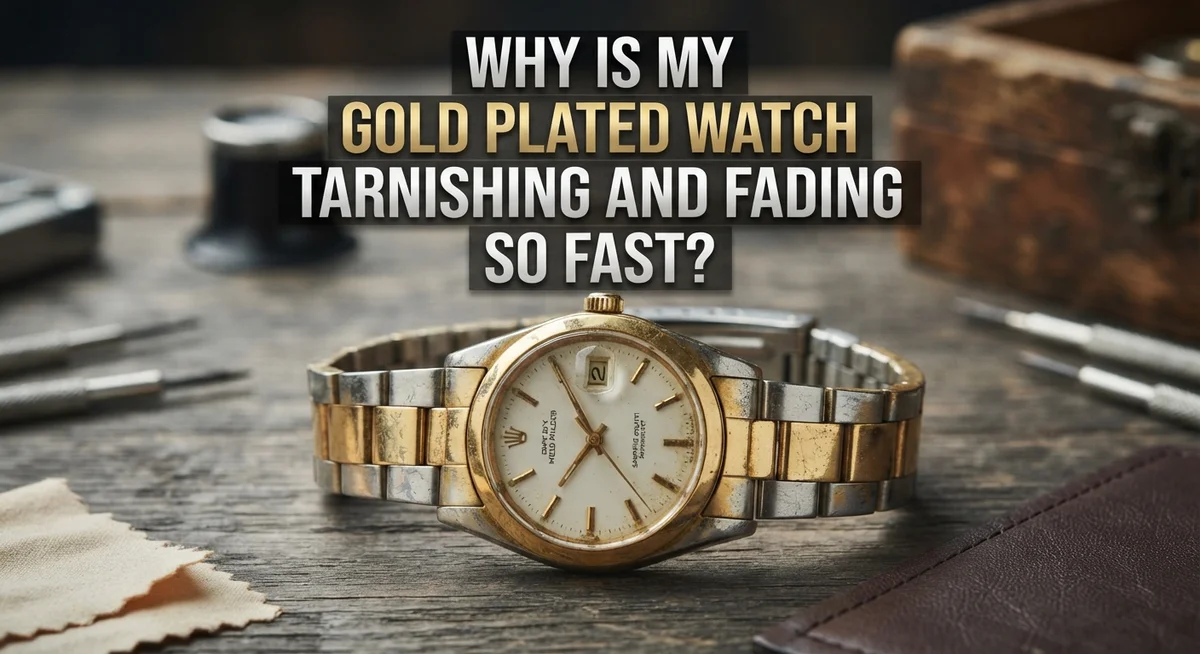
Gold plating is a very thin layer of gold applied over a base metal. Daily friction, sweat, and everyday chemicals slowly wear this layer away. Once it thins out, the metal underneath gets exposed. That base metal then oxidizes and darkens, making your watch look tarnished.
In a Nutshell
- It is wear, not tarnish. The thin gold layer rubs off over time. This exposes the base metal underneath, which then oxidizes and darkens.
- Friction is a major cause. Daily contact with your skin, clothes, and hard surfaces slowly scrapes away the gold layer.
- Moisture speeds things up. Sweat, chlorine, salt water, and even freshwater can damage the plating. Water exposure weakens the thin gold coat fast.
- Everyday products play a role. Lotions, perfume, and chemicals in soap or shampoo react with the surface. These substances eat away at the plating quietly.
- Storage matters more than you think. Tossing your watch with other jewelry causes scratches. Metal on metal contact speeds up plating loss.
- The biggest mistake is daily wear. Gold plated watches are simply not built for constant use. Treating it like a tough, everyday piece will only cause it to fade quicker.
What’s Really Happening: Plating Wear vs. True Tarnish
The confusion starts with the word “tarnish.” Most people think their gold plated watch is tarnishing, but that’s not what’s happening. True tarnish is a chemical reaction that creates a dark layer on pure silver or copper. Your watch experiences something different: physical erosion.
Here’s the key difference. Gold plating is an extremely thin layer. It sits on top of base metals like brass, copper, or nickel. When you wear your watch daily, this gold layer gradually wears away through friction. Once the base metal underneath gets exposed to air and moisture, it oxidizes and darkens. This looks like tarnish, but it’s actually the base metal showing through.
Think of it like paint on a car. When paint chips and flakes off, you see the metal underneath start to rust. That’s not the paint tarnishing. That’s exposure causing the base material to oxidize. Your watch works the same way.
The speed of this wear depends on how thin the plating is and how much friction your watch experiences. A watch worn every single day will fade much faster than one worn occasionally. Sweat, lotions, and oils speed up the process because they create moisture against the surface. This moisture helps the base metal oxidize even faster.
Understanding this difference matters because it changes how you care for your watch. You cannot stop the plating from wearing away completely. It will always happen eventually. But you can slow it down significantly by reducing friction and moisture exposure.
The real issue is not that your gold plating is defective. It is that gold plating is simply too thin for daily wear. This is a design limitation, not a quality problem. Once you accept this reality, you can make better choices about when and how to wear your watch.
The Science Behind Gold Plating and Base Metal Exposure
Gold plating is fundamentally different from solid gold. A gold plated watch has a very thin layer of gold bonded to a base metal underneath, usually brass, copper, or nickel.
When you wear your watch daily, this thin gold layer experiences constant friction. Your skin rubs against it. Your clothing brushes it. Hard surfaces scratch it. Over time, these small abrasions wear away the protective gold layer, exposing the base metal beneath.
Once the base metal becomes visible, oxidation happens fast. Base metals like copper and brass naturally darken when exposed to air and moisture. This darkening is what looks like tarnishing, but it’s actually the base metal reacting with oxygen and other elements in your environment.
Sweat plays a major role in speeding up this process. Your skin produces natural oils and salts that sit on the watch surface. These substances are acidic and can accelerate the breakdown of the gold layer. The longer sweat stays on your watch, the faster the damage occurs.
Everyday products make the problem worse. Lotions, perfume, soap residue, and shampoo all contain chemicals. When these chemicals contact your gold plated watch, they can weaken the bond between the gold layer and the base metal. Some chemicals even react directly with the base metal once it’s exposed.
Water exposure compounds everything. Chlorine from pools, salt from ocean water, and even regular tap water can penetrate the small gaps where the plating has worn away. This moisture reaches the base metal and causes rapid oxidation and discoloration.
The science is simple: thin gold plus friction equals fast wear. The base metal underneath then oxidizes quickly when exposed to air, moisture, and chemicals. Understanding this process helps you see why prevention is so much more effective than trying to restore a heavily damaged watch.
Everyday Culprits That Speed Up Fading
Your gold plated watch fades fast because it faces constant attacks from your daily life. Let’s break down the main culprits.
Friction from skin and clothing is the biggest enemy. Every time your watch rubs against your wrist, sleeve, or any surface, tiny bits of gold layer wear away. This happens gradually but adds up quickly. Your skin naturally sheds dead cells and oils, which intensify this rubbing action.
Sweat is a major accelerator. Your body produces moisture and salt throughout the day. When sweat sits on the gold plating, it creates a chemical reaction that speeds up degradation. This is especially true if you wear your watch during exercise or in hot weather.
Common personal care products cause serious damage. Lotions, perfumes, hand sanitizers, and soap contain chemicals that react with the gold layer. Shampoo and conditioner are particularly harsh. These products don’t just sit on top—they seep under the plating and attack the base metal beneath.
Water exposure compounds the problem significantly. Chlorine from pools, salt from ocean water, and even regular tap water accelerate the fading process. Humidity in your environment also plays a role, especially if you live in a damp climate.
Hard surfaces you touch throughout the day scratch the delicate coating. Countertops, doorknobs, your desk, and other objects create micro scratches that expose the base metal underneath.
The real issue is that gold plating is extremely thin—typically just a few microns. It’s designed more for appearance than durability. Daily wear subjects this fragile layer to constant stress it simply cannot handle.
Understanding these everyday culprits helps you make smart choices about when and how to wear your watch. Awareness is your first defense against premature fading.
How Moisture, Chemicals, and Water Accelerate Damage
Moisture acts like an accelerant for gold plated watch damage. When water contacts your watch, it seeps between the thin gold layer and the base metal underneath. This creates a perfect environment for oxidation to begin immediately.
Sweat is particularly problematic because it contains salt and acids. Your skin releases these compounds throughout the day, especially during warm weather or exercise. The salt corrodes the base metal faster than regular water would. Even small amounts of perspiration trapped under the watch band cause rapid deterioration.
Chemicals in everyday products penetrate the gold plating easily. Soap, shampoo, hand sanitizer, lotion, and perfume all contain compounds that react with both gold and the base metal. These products don’t just sit on the surface. They seep into tiny gaps and accelerate the oxidation process beneath the plating.
Chlorine from swimming pools is extremely damaging. Saltwater from beaches is equally destructive. Even freshwater can cause problems if your watch stays wet for extended periods. The longer moisture remains trapped against the base metal, the faster corrosion spreads.
Hard water minerals deposit on your watch and trap moisture underneath. This creates a corrosive layer that eats away at the plating from the inside out. The combination of moisture plus minerals equals faster fading.
Humidity in the air contributes to the problem too. High humidity environments allow moisture to accumulate on your watch constantly. This ongoing exposure weakens the gold layer gradually.
The solution is simple: keep your watch dry. Remove it before showering, swimming, or washing your hands. Wipe it immediately if it gets wet. Store it in a dry location away from humidity. These basic steps prevent moisture from reaching the base metal and triggering the oxidation chain reaction that causes visible fading and discoloration.
How to Properly Clean a Gold-Plated Watch
Cleaning your gold plated watch the right way helps slow down fading. Start by using gentle soap and lukewarm water. This removes dirt and oils without harsh chemicals that damage the plating.
Use your fingers to softly rub the watch with a small amount of mild soap. Pay special attention to the band and case where sweat and oils build up most. Rinse thoroughly under lukewarm water to remove all soap residue.
Pat the watch completely dry with a soft, lint free cloth. This step matters because water sitting on the surface accelerates oxidation of the base metal underneath. Use gentle dabbing motions instead of rubbing or wiping hard.
For light buildup, buff the watch with a lint free cloth using steady, light strokes. Move in one direction rather than circular motions. This removes surface oils without creating extra friction that damages the plating further.
Heavy oil buildup needs extra care. Dampen the cloth slightly with lukewarm water and add one tiny drop of mild soap. Buff gently in the same direction. Avoid scrubbing or applying pressure.
Never use toothbrushes, abrasive cloths, or harsh cleaners on gold plated watches. These remove plating faster than normal wear. Skip ultrasonic cleaners and steam cleaners entirely, as they destroy the coating.
Store your cleaned watch in a dry place away from humidity. Keep it separate from other jewelry and metal items that can scratch the surface. Avoid storing it in bathrooms where moisture levels stay high.
Clean your watch immediately after wearing it if you sweated or got it dirty. Dried sweat and oils stick harder and require more aggressive cleaning. Quick maintenance prevents buildup that forces you to clean more harshly later.
Regular gentle cleaning extends your watch’s appearance longer than waiting until heavy tarnish appears.
Best Practices to Slow Down Wear and Extend Its Life
Your gold plated watch needs protection from daily activities that speed up wear. The key is reducing the time it spends exposed to damaging conditions.
Remove your watch before activities that cause damage. Take it off before showering, swimming, or exercising. Sweat, chlorine, and fresh water all attack the plating quickly. Even washing your hands exposes your watch to soap and moisture. Make it a habit to remove your watch before these moments.
Store your watch properly when you’re not wearing it. Keep it in a cool, dry place away from humidity and sunlight. Store it separately from other jewelry and watches. Different metals can react with each other and speed up deterioration. A soft pouch or cloth bag works well for storage.
Limit how often you wear it. Gold plated watches aren’t designed for everyday use like solid gold watches are. The plating is too thin to handle constant friction from your skin and clothes. Save your watch for special occasions or wear it just a few days per week. This simple step makes the biggest difference in slowing fade.
Avoid contact with chemicals and lotions. Put on your watch after you apply sunscreen, perfume, or moisturizer. These products seep under the plating and cause corrosion. Remove your watch before using hand sanitizer or harsh soaps.
Wipe your watch dry immediately after wearing it. Even brief moisture exposure adds up over time. Use a soft, dry cloth and store it right away.
Keep your watch away from extreme temperatures and humidity. Don’t leave it in bathrooms where steam builds up. Avoid placing it near radiators or air conditioning vents.
These practices won’t stop fading completely, but they slow it down significantly. Your gold plated watch will maintain its appearance much longer when you protect it from unnecessary exposure.
Common Mistakes That Make Fading Worse
Many people make habits that speed up fading without realizing it. Understanding these mistakes helps you protect your watch better.
Wearing your watch during daily activities is the biggest mistake. Gold plating is extremely thin, usually only a few microns deep. Regular friction from your skin, clothing, and objects you touch wears it away quickly. Each day of wear removes a tiny layer. Over weeks and months, this adds up fast. Your watch loses its shine much sooner than expected.
Exposing your watch to moisture repeatedly causes serious damage. Some people wear their gold plated watches while washing dishes, doing laundry, or exercising. Water doesn’t just sit on the surface. It seeps under the gold plating and causes the base metal underneath to oxidize and darken. Even if you dry your watch afterward, moisture trapped inside continues causing problems. This happens faster than you might think.
Cleaning your watch incorrectly makes fading worse. Using harsh scrubbing motions, rough cloths, or abrasive cleaners physically removes more gold plating. You’re essentially speeding up the wear process yourself. Many people think aggressive cleaning helps, but it actually damages the watch.
Storing your watch improperly leads to faster deterioration. Leaving it in humid bathrooms, damp basements, or near windows with temperature changes causes oxidation. Storing it touching other metals can cause chemical reactions that darken the plating.
Applying products after putting on your watch is another common error. Lotions, perfumes, and sunscreen contain oils and chemicals that penetrate gold plating. These products get trapped underneath and cause discoloration. Apply everything before wearing your watch.
The key is recognizing that gold plated watches need special care. They’re not designed for the same treatment as solid gold watches. Avoiding these mistakes extends your watch’s appearance significantly.
Final Thoughts
Your gold plated watch fades fast because the gold layer is extremely thin. Daily friction, moisture, and chemicals wear it down quickly. This is not tarnish. It is physical erosion that exposes the base metal underneath.
Once that base metal shows, it oxidizes and darkens. This creates the dull, faded look you notice over time. Understanding this process helps you set realistic expectations for your watch.
Gold plated watches were never built for constant daily wear. They work best as occasional accessories rather than everyday pieces. Treating them this way slows down fading significantly.
Simple habits make a big difference. Remove your watch before swimming, showering, or exercising. Keep it away from lotions, perfumes, and harsh chemicals whenever possible.
Clean your watch gently and store it properly. These small steps protect the thin gold layer from unnecessary damage.
You cannot stop fading completely. Gold plating will wear down eventually, no matter how careful you are. But you can slow this process with proper care.
The difference between a watch that fades in months versus years often comes down to habits. Consistent care matters more than occasional deep cleaning.
Think of your gold plated watch as a delicate accessory. It deserves gentle handling, not rough daily use. This mindset shift helps you avoid common mistakes that speed up damage.
Remember that fading is natural for gold plated items. It does not mean your watch is defective. It simply means the plating is doing what thin plating does over time.
With the right care routine, you can enjoy your watch’s shine for much longer. Small precautions today mean a better looking watch tomorrow.
Frequently Asked Questions
Is the fading on my gold plated watch actually tarnish?
No, it’s not true tarnish. Gold plating wears away through physical erosion rather than chemical tarnishing. The gold layer is so thin that daily friction removes it. Once the base metal underneath gets exposed, that metal oxidizes and darkens, which looks like tarnishing but is actually a different process.
Why does my gold plated watch fade faster than my friend’s?
Your habits make the biggest difference. If you wear your watch daily during activities, it fades much quicker. Friction from your skin, clothing, and hard surfaces strips away the plating constantly. Moisture exposure speeds up the process too. Sweat, lotions, and perfume all break down the gold layer faster than you might expect.
Can I restore the shine once the fading starts?
You can clean it gently to remove oils and dirt, which may restore some shine temporarily. Wash it with mild soap and buff it with a soft, lint-free cloth using light strokes. However, once the gold layer has worn away and the base metal is exposed, you cannot reverse that damage with cleaning alone. The fading will continue unless you change your wearing habits.
What’s the main reason gold plated watches don’t last long?
Gold plating is extremely thin, usually just a few microns. It’s simply not designed for everyday wear like solid gold watches are. The plating degrades quickly with regular use, and there’s no way around this limitation. Think of your gold plated watch as a delicate accessory for special occasions rather than a daily companion.

Hi, I’m Lucy Jones, a dedicated watch enthusiast and reviewer. I spend my time hunting down, testing, and evaluating the most intriguing wristwatches on the market. My goal is to guide you through the overwhelming choices with honest, hands-on insights into every timepiece.