Tissot Seastar 1000 Swiss Quartz Chronograph 45.5mm Review 2026
Big dive chronographs are having a moment again, and the Tissot Seastar 1000 Swiss Quartz Chronograph sits right in the middle of that trend.
It is Swiss made, rated to 300 metres, and priced far below most luxury divers. On paper it looks like a steal. On the wrist, it is a very different story depending on your arm size and your taste.
This review covers everything a buyer actually wants to know. You will read about the unboxing, the case finishing, the movement, the bracelet, the lume, and the parts that disappoint.
In a Nutshell:
- Size is the deciding factor. The case measures 45.5mm wide, 12.82mm thick, and roughly 51mm lug to lug. The downturned lugs help a lot, but this watch still looks huge on wrists under 6.5 inches. Try before you commit if you can.
- The build quality punches above the price. You get a 316L stainless steel case, a screw down crown inside a protective guard, screw down chronograph pushers, a solid caseback, and flat sapphire crystal with anti reflective coating. Nothing here feels cheap.
- The movement is Swiss quartz, not mechanical. The ETA G10 family calibre is accurate, quick to reset, and handles split timing. The tradeoff is simple: it cannot be serviced, only replaced.
- Water resistance is genuine. The 300 metre rating is real, backed by the screw down system. Amazon listings still carry a conservative swimming only warning, which creates confusion for buyers.
- Legibility is excellent. Big applied markers, broad pencil hands, recessed subdials, and BGW9 lume make this one of the easiest chronographs to read at this price.
- Value in 2026 remains strong. Expect to pay roughly $525 to $675 depending on dial colour and seller, with a two year international warranty included.
Tissot Seastar 1000 Swiss Quartz Chronograph 45.5mm Overview


Last update on 2026-11-13 / Affiliate links / Images from Amazon Product Advertising API
The Seastar name goes back to 1954, though it started as a caseback technology rather than a dive watch. The modern Seastar 1000 Chronograph arrived as the quartz powered sibling of the popular Powermatic 80 diver. Tissot kept the dive credentials and added stopwatch functions.
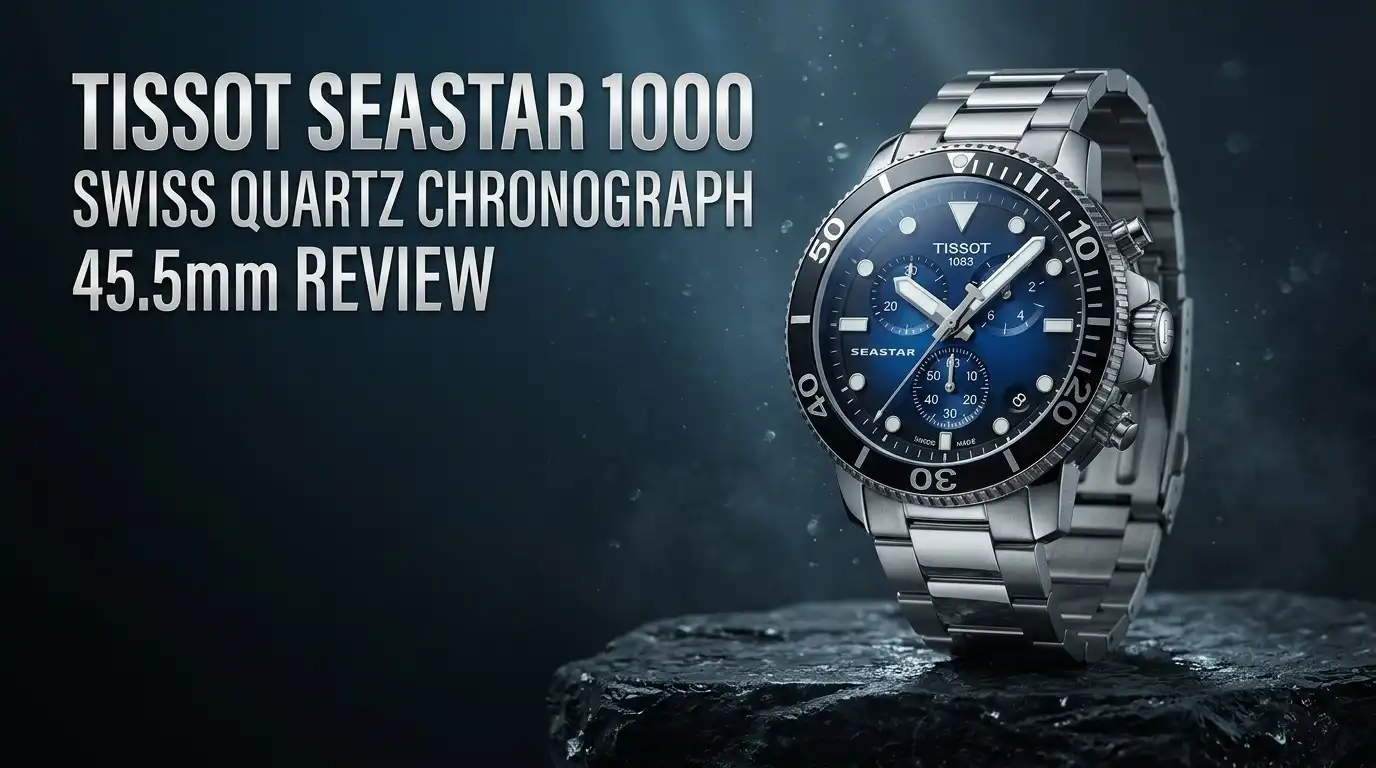
The formula is straightforward. You get a 45.5mm brushed and polished steel case, a unidirectional coin edge bezel with an aluminium insert, and 300 metres of water resistance. Dial colours include blue, black, green gradient, grey, and a red and blue bezel version that collectors call the Pepsi.
Tissot sells more than a dozen variants of this reference. Bracelet and rubber strap options both exist. The bracelet versions use a quick release system, which makes strap swaps a thirty second job.
The Unboxing Experience
Tissot ships the Seastar in a sturdy presentation box, not a flimsy sleeve. Lift the lid and you find the watch mounted on a firm cushion, with the warranty booklet and instruction manual tucked underneath or behind the pillow.
The first impression is weight. The watch feels dense in the hand, around 190 grams on the full bracelet. That heft reads as quality, though it also warns you about the size.
The plastic film on the caseback and clasp is worth peeling slowly. Underneath sits the embossed seahorse logo, a nice touch on a watch at this price.
One small annoyance appears immediately. The bracelet usually arrives far too long. You will need a pin pusher or a trip to a jeweller before the first wear. Tissot does not include a sizing tool in the box.
Case Design, Finishing and Build Quality
The case is where your money goes. Tissot mixes vertical brushing on the case sides with polished surfaces along the lug tops, the bezel edge, and a recessed chamfer in the midcase. The contrast catches light constantly.
This is not a stealthy tool watch. Enthusiasts often call the Seastar a desk diver because the polish leans dressy rather than rugged. Some buyers love that. Others want something flatter and more utilitarian.
The screw down crown sits inside a brushed guard and carries a Tissot T. The chronograph pushers also screw down, which prevents accidental activation underwater. That is a genuine dive feature, not marketing.
Build tolerances feel tight. The bezel turns with 120 clicks of firm, even action, and back play is minimal on most samples.
Top 3 Alternatives for Tissot Seastar 1000 Swiss Quartz Chronograph

Last update on 2026-11-13 / Affiliate links / Images from Amazon Product Advertising API
Tissot Seastar 1000 Powermatic 80 Automatic 43mm

Last update on 2026-11-13 / Affiliate links / Images from Amazon Product Advertising API
Tissot Supersport Chrono Swiss Quartz 45.5mm

Last update on 2026-11-13 / Affiliate links / Images from Amazon Product Advertising API
Citizen Promaster Dive Eco Drive 44mm
Dial Layout and Legibility
The dial is the strongest part of this watch. Tissot used the quartz movement to create a balanced three register layout that avoids clutter.
Running seconds sit at six o’clock. A 30 minute counter sits at ten. A fractional seconds track sits at two. All three registers are recessed and clearly printed, so you never squint to read them.
Applied markers carry thick lume blocks, and the broad pencil hands match them. Many small chronographs fail here because the subdials crowd each other. The Seastar has the surface area to spread everything out.
The gradient dials, especially the green and blue versions, shift tone as light moves. Photos rarely capture this well.
One flaw stands out. The date window sits at four thirty with a white wheel on most colourways, which breaks the dial symmetry.
The Swiss Quartz Movement Explained
Inside sits a Swiss quartz chronograph calibre from the ETA G10 family. This is a workhorse movement found across many affordable Swiss sports watches.
Accuracy is the headline benefit. Expect deviation measured in seconds per month rather than seconds per day. An automatic in this price range cannot compete on that metric.
The chronograph action feels crisp. Pushers click with real resistance thanks to the screw down design. Reset is fast, and the movement supports split timing for measuring two events, operated through the lower pusher.
Battery life runs around two to three years. The movement includes an end of life indicator, so the seconds hand starts jumping in intervals when power runs low. That warning is useful and prevents surprise stoppages.
Bracelet, Clasp and Daily Comfort
The bracelet is a solid link, three row steel design with brushed outer links and a polished centre line. It mirrors the case finishing closely.
Quick release spring bars are fitted as standard. You can swap to rubber or NATO in under a minute without tools. The 22mm lug width also opens up a huge aftermarket.
The clasp is the weak point. It is a simple milled fold over design with a push button release, three micro adjustment holes, and a diver extension. It works, but it feels basic next to the case quality.
Comfort depends on sizing. Get the links right and the watch sits well because the downturned lugs hug the wrist. Get it slightly loose and the weight starts sliding around.
Water Resistance and Real World Dive Use
Tissot rates this watch at 30 bar, which equals 300 metres or 1000 feet. The screw down crown, screw down pushers, and screw in caseback all support that figure.
Confusion exists because some retail listings advise swimming and showering only. That wording is a legal caution about operating the chronograph underwater, not a limit on the case itself.
Practical advice is simple. Always check that the crown and both pushers are fully screwed down before water contact. Never press a chronograph pusher while submerged, even if it feels tight.
The unidirectional bezel is dive specific and cannot rotate forward, so your elapsed time reading stays safe. Rinse the watch in fresh water after sea use. Salt residue damages bezel action over time.
Wrist Presence: Can You Wear 45.5mm?
Last update on 2026-11-13 / Affiliate links / Images from Amazon Product Advertising API
This is the question that decides most purchases. The honest answer depends on three measurements, not one.
Width is 45.5mm, but the bezel eats a lot of that surface. The wide aluminium insert shrinks visual dial size, which makes the watch read smaller than its spec sheet suggests.
Lug to lug distance matters more. At roughly 51mm, the watch fits a 6.75 inch wrist without overhang because the lugs curve downward sharply. Below 6.25 inches, expect the case to sit awkwardly.
Thickness helps the cause. At 12.82mm, the quartz movement keeps the profile reasonably slim for a 300 metre diver, so the watch slides under most shirt cuffs.
Try it on if possible. Photographs flatten the scale badly.
Lume Performance After Dark
Tissot uses Super LumiNova BGW9 on the hands, the applied markers, and the bezel pip at twelve. BGW9 glows blue and charges quickly under daylight or a torch.
Initial brightness is strong. After a short charge, the markers read clearly across a dark room.
Duration is where expectations need adjusting. The Seastar holds usable glow for a few hours, then fades noticeably before morning. Seiko divers in the same price band often outperform it on longevity.
The subdial hands carry no lume at all. That means you can read the time at night but cannot read the chronograph registers. For a watch marketed around timing, that omission feels odd.
Bezel lume is limited to the pip, which is standard practice but still a missed opportunity.
What the Seastar 1000 Chronograph Does Not Do Well
Every honest review needs this section. Here are the real drawbacks.
The movement is disposable. The sealed calibre cannot be repaired by a watchmaker. When it fails, the entire movement gets swapped. That reality bothers buyers who think long term.
The 1853 text on the dial feels unnecessary. This is a modern sports watch, and the heritage branding adds visual noise.
The aluminium bezel insert scratches and fades faster than ceramic. The Powermatic 80 version uses ceramic, which highlights the downgrade.
Polished surfaces collect hairline marks quickly, especially on the lug tops.
The clasp lacks on the fly adjustment, which hurts in hot weather when wrists swell.
Finally, the size excludes a large share of buyers outright. There is no smaller version of this exact chronograph.
Pros and Cons
Pros
- Genuine 300 metre water resistance with screw down crown and pushers
- Swiss quartz accuracy that beats mechanical rivals by a wide margin
- Excellent legibility with recessed subdials and large applied markers
- Flat sapphire crystal with anti reflective treatment
- Quick release bracelet and common 22mm lug width for easy strap swaps
- Strong wrist presence and premium case finishing for the money
- Two year international warranty through a global dealer network
Cons
- 45.5mm case rules out small and medium wrists
- Sealed movement cannot be serviced, only replaced
- Aluminium bezel insert scratches more easily than ceramic
- Date window at four thirty disrupts dial symmetry
- No lume on the chronograph subdial hands
- Basic clasp with limited micro adjustment
- Polished surfaces mark quickly in daily wear
Price and Value in 2026
Pricing moves depending on dial colour, strap choice, and seller. Bracelet models typically land between $525 and $675 at authorised dealers and major online retailers. Rubber strap versions usually sit lower.
Discounts appear regularly. Grey market sellers push prices down further, though warranty coverage can vary, so read the listing carefully.
Compare that to the competition. A Swiss made chronograph with sapphire, 300 metre resistance, and a screw down pusher system rarely costs this little. Most Swiss rivals start well above $1000.
The value case weakens slightly against Japanese solar chronographs, which never need a battery change. But none of those carry a Swiss made label or this level of case finishing.
For buyers who want Swiss credentials without a four figure spend, the maths still works in 2026.
Long Term Ownership and Servicing
Ownership costs stay low with this watch. Battery replacement every two to three years is the main expense, and a specialist should handle it to maintain the water resistance seals.
Always ask for a pressure test after any case opening. A cheap battery swap without resealing destroys the dive rating.
Gaskets need attention roughly every three to four years if you swim with the watch regularly. Fresh gaskets cost very little compared to water damage.
The bezel insert will pick up marks. Tissot sells replacement inserts through service centres, and the cost is modest.
If the movement fails outside warranty, expect a replacement charge rather than a repair bill. Many owners find the price reasonable, but it is worth checking with a Tissot service centre in your country before buying.
Who Should Buy This Watch
This watch suits a specific buyer. Identify yourself below.
You have a wrist measuring 7 inches or larger. Size is the single biggest filter.
You want accuracy without winding or setting. Quartz means you strap it on and it reads correctly, every time, after weeks in a drawer.
You swim, dive, paddle, or spend real time around water. The 300 metre rating and screw down pushers are built for that life.
You want Swiss build quality at an entry price and do not care about mechanical prestige.
Skip this watch if you collect mechanicals, prefer subtle watches, or have a smaller wrist. In those cases, the Powermatic 80 Seastar or a 40mm diver serves you far better.
Final Verdict
The Tissot Seastar 1000 Swiss Quartz Chronograph is a loud, well built, genuinely capable dive chronograph that delivers more than its price suggests. The case finishing, sapphire crystal, screw down pusher system, and dial legibility all belong on a more expensive watch.
The compromises are real and worth repeating. The movement is disposable, the bezel insert is aluminium, and the case size excludes many buyers.
My overall rating sits at 8 out of 10. The deductions come from the clasp, the subdial lume, and the sealed calibre, not from build quality or value.
If the dimensions suit you and quartz does not offend you, this remains one of the smartest buys in affordable Swiss watchmaking. Buy it for what it is: a fun, tough, accurate summer watch.
Frequently Asked Questions
Is the Tissot Seastar 1000 Chronograph a real dive watch?
Yes. It carries a 300 metre water resistance rating, a unidirectional dive bezel, a screw down crown, and screw down chronograph pushers. It is suitable for recreational diving when the crown and pushers are secured properly.
How big does the 45.5mm case actually wear?
It wears slightly smaller than the number suggests because the wide bezel reduces visual dial size and the lugs curve downward. Expect a comfortable fit from around 6.75 inches of wrist circumference upward.
How long does the battery last?
Typically two to three years. The movement includes an end of life indicator that makes the seconds hand jump in intervals when the battery runs low.
Can the movement be repaired?
No. The sealed Swiss quartz calibre cannot be opened for repair. If it fails, a watchmaker replaces the whole movement rather than fixing individual parts.
Does the bracelet need tools to change?
No. The bracelet uses quick release spring bars, so you can remove it by hand. Resizing the links, however, does require a pin pusher or a visit to a jeweller.
Is the quartz version better than the Powermatic 80 Seastar?
They serve different buyers. The quartz chronograph offers better accuracy, stopwatch functions, and a lower price. The Powermatic 80 offers an automatic movement, a ceramic bezel, and a smaller case.
Does it come with a warranty?
Yes. Tissot includes a two year international warranty from the purchase date, valid through its global authorised dealer network.

Hi, I’m Lucy Jones, a dedicated watch enthusiast and reviewer. I spend my time hunting down, testing, and evaluating the most intriguing wristwatches on the market. My goal is to guide you through the overwhelming choices with honest, hands-on insights into every timepiece.