Why Is My Vintage Watch Dial Bubbling And Peeling Around The Edges?
Your vintage watch dial once looked crisp and clean. Now you notice tiny bubbles forming near the edges. The finish lifts in small flakes. The paint peels away from the corners.
You feel worried, and that reaction makes sense. A dial is the face of your watch, and damage to it changes everything about how the piece looks and feels.
Here is the good news. Dial bubbling and peeling is common on old watches, and it happens for reasons you can understand. Some causes come from moisture. Some come from age.
Key Takeaways
- Moisture is the top cause. Water gets inside the case through worn seals. It sits under the finish and lifts the coating from the edges inward. Bad storage in humid rooms makes this worse.
- Old varnish breaks down naturally. Most vintage dials from the 1920s to 1970s use nitrocellulose varnish. This coating is porous. It lets air and water reach the metal below, which causes bubbling and peeling over time.
- Sunlight and heat speed up damage. UV light yellows the varnish and weakens it. Heat expands trapped moisture. Both push the finish away from the dial surface.
- Not all changes are damage. Some collectors value patina. Blisters, cracks, and yellowing can raise a watch’s appeal if they look even and natural. You must decide if you want to keep or fix the look.
- Stop the problem before you fix the surface. Fixing the dial without fixing the seal is a waste. Always seal the case first, then treat the dial.
- Professional help beats DIY for rare pieces. A skilled watchmaker can clean or refinish a dial. Home methods carry high risk. Choose based on the watch value.
What Bubbling And Peeling On A Watch Dial Actually Means
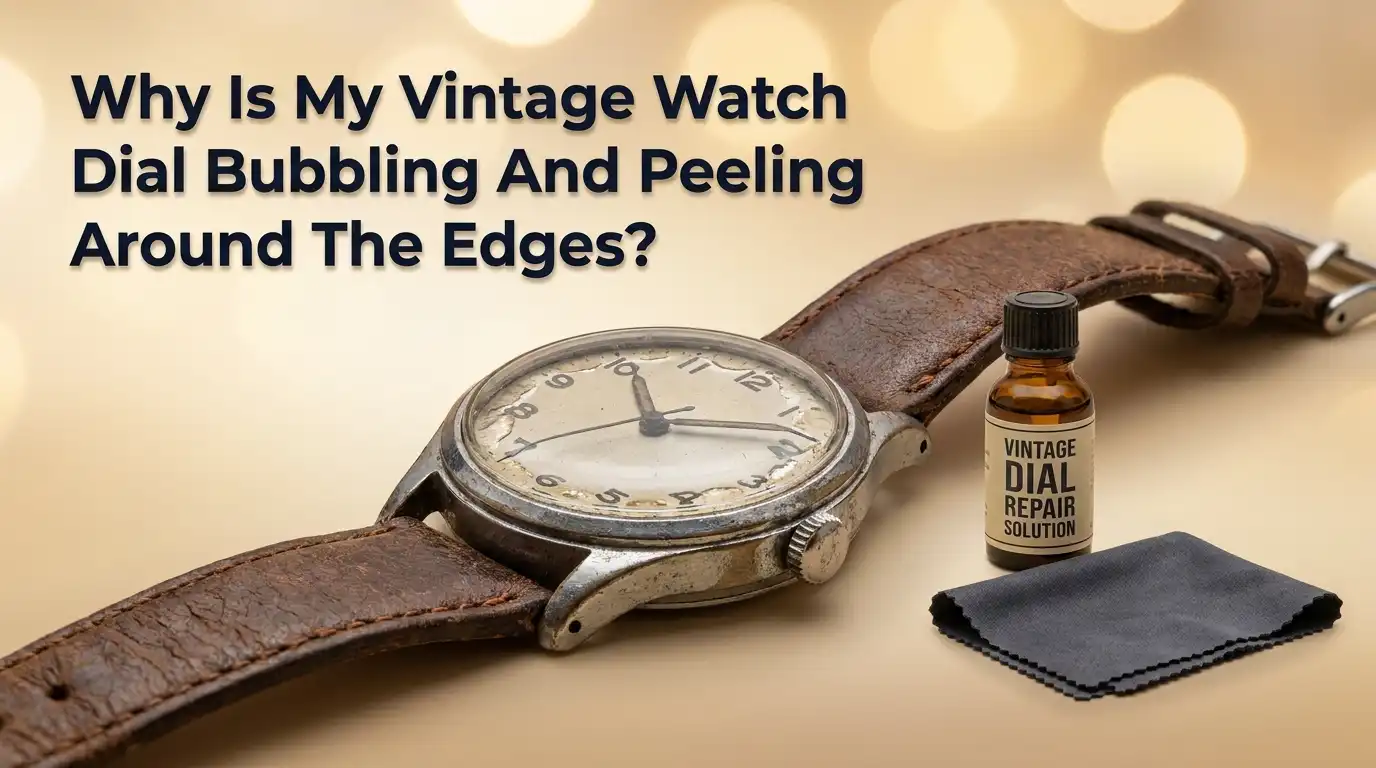
Bubbling and peeling are two stages of the same problem. Bubbling happens when the clear coating lifts away from the metal dial below. Small pockets form under the finish. These pockets look like tiny domes or blisters. Hold the dial sideways under light, and you can see the raised bumps.
Peeling is the next stage. The lifted coating loses its grip fully. It flakes off in pieces. This often starts at the edges because the edges have the least protection. The rim of the dial meets air and moisture first.
Both signs point to a weak bond between the finish and the base. The coating and the metal no longer stick together. Once you see this, you know the surface is under stress. The cause could be water, age, or heat. Your next job is to find which one hit your watch.
Why Moisture Is The Number One Cause Of Dial Damage
Moisture ranks as the biggest threat to any vintage dial. Water enters the case through worn crown seals or a loose case back. Old gaskets dry out and crack. They no longer block water and humid air. Once moisture gets inside, it has nowhere to go.
The trapped water settles on and under the dial finish. It attacks the bond between the coating and the metal. It also feeds corrosion on the metal surface. This corrosion pushes the varnish up from below, which creates the bubbles you see.
Edges suffer first because they sit closest to the case gap. Water pools around the rim. The finish there lifts and peels before the center shows damage. If you wear an old watch in the rain or store it in a bathroom, you raise the risk fast. Even small amounts of humidity add up over many years.
Pros of knowing moisture is the cause: You can act fast to dry the watch and reseal it. Cons: Water damage that already started is hard to reverse, and the movement inside may also be at risk.
How Old Nitrocellulose Varnish Breaks Down Over Time
Most vintage watches made between the 1920s and 1970s carry a coating called nitrocellulose varnish. This clear layer sits over the painted dial and protects the printing. The problem is that nitrocellulose is porous. It has tiny gaps that let air and water pass through to the metal below.
Over decades, this varnish ages. It hardens, shrinks, and loses flexibility. As it shrinks, it pulls at the edges. The bond weakens. Cracks appear. The finish then bubbles and lifts, often without any water at all. This is simple chemistry and age working together.
You cannot stop this natural process fully. Modern coatings like polyurethane resist water and air far better. But your vintage dial uses the old formula, so it will always be more fragile. Understanding this helps you set realistic goals. You aim to slow the breakdown, not to make the dial new again.
The Role Of Sunlight, Heat, And UV Exposure
Light and heat play a big part in dial damage. UV rays from the sun break down nitrocellulose varnish over time. The clear coating turns yellow or amber. Collectors sometimes call this “sunburn.” The yellowing itself is not always bad, but it signals that the finish is weakening.
Heat makes the problem worse. When a watch sits in a hot car or on a sunny windowsill, trapped moisture expands. The warm air pushes against the coating. This adds stress to an already weak bond and speeds up bubbling.
Repeated cycles of heat and cooling are the real danger. The finish expands and contracts again and again. Each cycle loosens its grip on the metal. Over years, this fatigue causes the edges to peel.
Pros of managing light exposure: It is easy and free to store watches away from sun. Cons: You cannot undo yellowing or UV damage that has already set into the varnish.
Patina Versus Damage: Knowing The Difference
Not every mark on a vintage dial counts as damage. Patina is a natural state change to the original materials. Aged varnish, even yellowing, and gentle blistering can look beautiful. Many collectors pay more for a dial with attractive, even patina.
Damage is different. Damage means foreign material entered the watch. Water stains, mold spots, and rust are damage. These marks often look uneven and ugly. They spread in random patterns rather than smooth, balanced tones.
Here is a simple test. Ask yourself if the change came from the watch itself aging or from something outside getting in. Even yellowing across the whole dial reads as patina. A blotchy stain in one corner reads as damage.
This distinction matters for your decision. If your bubbling looks even and adds character, you may want to keep it. If it looks like rot or spreads fast, you need to act. Your taste and the watch value guide the final call.
First Steps To Take When You Notice Bubbling
Act quickly when you spot bubbling. Fast action stops the damage from spreading. Step one: stop wearing the watch. Body heat and sweat add moisture and stress to the dial. Set it aside until you address the cause.
Step two: check for moisture inside. Look under the crystal for fog or droplets. If you see any, the seal has failed. Do not open the case yourself if you lack the tools and skill.
Step three: dry the watch gently. Place it in a sealed bag with silica gel packets. Some people use uncooked rice, but silica gel works better and leaves no dust. Pull the crown out to the setting position so air can move. Leave it for a few days.
Step four: keep it out of sun and heat. Store it in a cool, dark, dry place. Step five: photograph the dial. Clear photos help a watchmaker judge the damage later. These steps buy you time and prevent worse harm.
Should You Clean The Dial Yourself Or Not
The urge to clean a peeling dial at home is strong. Be very careful here. A vintage dial finish is fragile. Any wiping or brushing can lift the loose coating right off. Once it comes away, you cannot put it back.
Home cleaning carries real risk. Water, solvents, and even soft cloths can strip varnish that is already loose. Many watches lose all their value from one wrong wipe. The edges, where peeling starts, are the most delicate zone of all.
If the watch has low value, you may accept the risk. A cheap watch makes a fair practice piece. If the watch has real value, do not touch the dial surface. Leave it to a professional with the right paste and tools.
Pros of DIY cleaning: It costs little and gives you full control. Cons: The risk of permanent damage is very high, and mistakes cannot be undone. For most owners, hands off is the safe choice.
Professional Dial Cleaning: What To Expect
A skilled watchmaker can often clean a dial that looks hopeless. Some experts use their own special cleaning pastes. These formulas lift surface residue and stains without pulling up the varnish. The results can shock you in a good way.
Professional cleaning targets foreign material only. A good technician removes water stains and mold while leaving the original aged varnish in place. This keeps the vintage character and boosts the look at the same time. The work often takes just minutes in expert hands.
Ask for more than one opinion before you commit. Some watchmakers decline jobs because they lack the skill or the time. One might say the dial is “game over” while another cleans it in seven minutes. Persistence pays off here.
Pros of professional cleaning: Low risk in skilled hands, keeps original value, and often gives great results. Cons: It costs money, results are not guaranteed, and finding a true expert takes effort. Always agree on the risk level with your watchmaker first.
Dial Refinishing And Restoration Explained
When cleaning cannot save a dial, refinishing is the next option. Refinishing means stripping the old finish and rebuilding the dial from scratch. Skilled shops reproduce the original artwork, logos, fonts, and markers. They can repaint the surface and reapply the printing.
This process removes bubbling and peeling completely. The refinisher strips the damaged varnish, treats the metal base, and applies fresh paint and coating. The dial can look almost new when the work is done well.
Quality varies a lot between refinishers. The same dial layout sent to two shops can come back looking very different. One may match the original perfectly. Another may miss the fonts or colors. Research the shop carefully and study its past work.
Pros of refinishing: It fully fixes the damage and makes the dial look fresh. Cons: It removes the original finish, which lowers collector value for rare pieces. It also costs more and depends heavily on the skill of the refinisher. Choose this path only when the dial is beyond saving.
Stabilizing A Flaking Dial Without Full Repaint
Sometimes you want to stop the flaking without a full repaint. Stabilizing means locking the loose paint in place so it stops falling off. This preserves the remaining original dial while halting further loss.
One method uses a very light spray of clear lacquer. You never brush a flaking dial, because brushing pulls the paint away. Instead, you apply a fine mist from a distance. You let it dry, then add another light dusting. You repeat until the surface feels stable.
This approach keeps the vintage look while adding protection. It works best when some finish is still solid and only parts are loose. It will not restore missing paint, but it stops the spread.
Pros of stabilizing: It saves the original dial and keeps its character. It costs less than full refinishing. Cons: It needs a steady hand and real care. A heavy spray can ruin the dial. The finish will still show its age and damage. For DIY, practice on a scrap dial first.
How To Prevent Future Dial Bubbling And Peeling
Prevention beats repair every time. The single best step is to keep water out. Have a watchmaker check and replace the seals and gaskets on your vintage watch. Fresh gaskets block moisture at the source. Do this before any dial fix, or the damage returns.
Store your watch in a cool, dry place. Avoid bathrooms, basements, and windowsills. Use a watch box with silica gel packets to pull moisture from the air. Keep the box away from sun and heat.
Do not wear vintage watches in water or heavy rain. Old seals rarely hold up to modern water pressure. Even a splash can seep past a worn gasket. Take the watch off before you swim, shower, or wash dishes.
Pros of prevention: It is cheap, easy, and protects both dial and movement. Cons: It requires steady habits and regular seal checks. Set a reminder to service your watch every few years. Small, steady care keeps the dial safe for decades.
When To Repair Versus When To Leave It Alone
Deciding to fix or leave a dial is a personal call. Ask first if the bubbling counts as attractive patina or true damage. Even, natural aging often adds value and beauty. In that case, leaving it alone is the smart move.
Consider the watch value next. A rare, high value piece loses money when you refinish it. Collectors want original dials, even with honest patina. For these watches, gentle cleaning or no action is best.
For common watches, repair makes more sense. If the dial looks rotten and the watch has more sentimental than market value, refinishing can bring it back to life. The joy of wearing a clean piece may matter more than resale price.
Pros of leaving it alone: You keep originality and full collector value. Cons: The damage may spread and the look bothers you. Weigh how you use the watch. A daily wearer needs a solid dial. A safe queen can keep its scars. Trust your own goals here.
Frequently Asked Questions
Can water damage on a vintage dial be fully removed?
Not always. Surface stains and residue can often be cleaned by a skilled watchmaker. But damage that has lifted the varnish or corroded the metal below is usually permanent. The finish that already peeled cannot be reattached. Cleaning removes foreign marks, while refinishing rebuilds a ruined dial. Set your hopes based on how deep the damage goes.
Does bubbling on my dial lower the value of my watch?
It depends on the type and look. Even, natural blistering can count as patina and may raise value for collectors. Ugly, uneven bubbling from water damage lowers value. Refinishing a rare dial also lowers collector value because it removes originality. Judge each case by how the damage looks and how rare the watch is.
How do I know if the peeling comes from moisture or age?
Look at the pattern and check for water signs. Moisture damage often looks uneven and blotchy, and it starts at the edges near the case gap. Age related breakdown of varnish looks more even across the dial. Check under the crystal for fog or droplets. Fog means moisture got in. No fog with even yellowing points to age.
Is it safe to open the case back to dry the dial myself?
Only if you have the right tools and skill. Opening a vintage case wrong can scratch the dial, bend hands, or break the crystal. For most owners, the safe path is a sealed bag with silica gel and the crown pulled out. If you see standing water inside, take it to a watchmaker fast. Trapped water starts corrosion within days.
How much does professional dial restoration cost?
Costs vary by the work and the shop. Simple cleaning may cost little, while full refinishing with new artwork costs much more. Prices depend on the brand, the complexity of the dial, and the reputation of the refinisher. Always ask for a quote and study the shop’s past work first. Cheap work can ruin a good dial, so choose quality over price.

Hi, I’m Lucy Jones, a dedicated watch enthusiast and reviewer. I spend my time hunting down, testing, and evaluating the most intriguing wristwatches on the market. My goal is to guide you through the overwhelming choices with honest, hands-on insights into every timepiece.