How to Fix a Loose Deployant Clasp That Keeps Popping Open?
A deployant clasp should snap shut with a satisfying click and stay locked until you press the release buttons. When it pops open on its own, your watch can slide off your wrist and hit the floor. That single drop can crack a crystal, scratch a case, or even break the movement inside.
The good news is that most loose clasps are fixable at home. You do not need a watchmaker’s bench or years of training.
You just need a few small tools, a steady hand, and the right technique for your specific clasp style. This guide walks you through every common cause and every working fix.
In a Nutshell:
- Most popping clasps suffer from worn tension tabs, bent pin holders, or a stretched spring. A gentle bend with pliers usually solves the issue in under five minutes.
- Sizing matters more than people think. A bracelet that sits too loose puts sideways pressure on the clasp and forces it open during wrist movement.
- Spring bars wear out faster than the clasp itself. Replacing the tiny spring bar inside a deployant buckle often fixes a clasp that feels mushy or weak.
- Clean your clasp before you bend anything. Dirt, sweat salt, and lint build up inside the hinge and stop the locking tabs from seating fully.
- Know when to stop DIY work. If the metal is cracked, the hinge pin is broken, or the clasp is from a luxury watch, take it to a professional.
- Test after every small adjustment. Bend a tiny amount, close the clasp, pull it apart, and repeat. Tiny moves prevent permanent damage.
Understand Why Your Deployant Clasp Pops Open
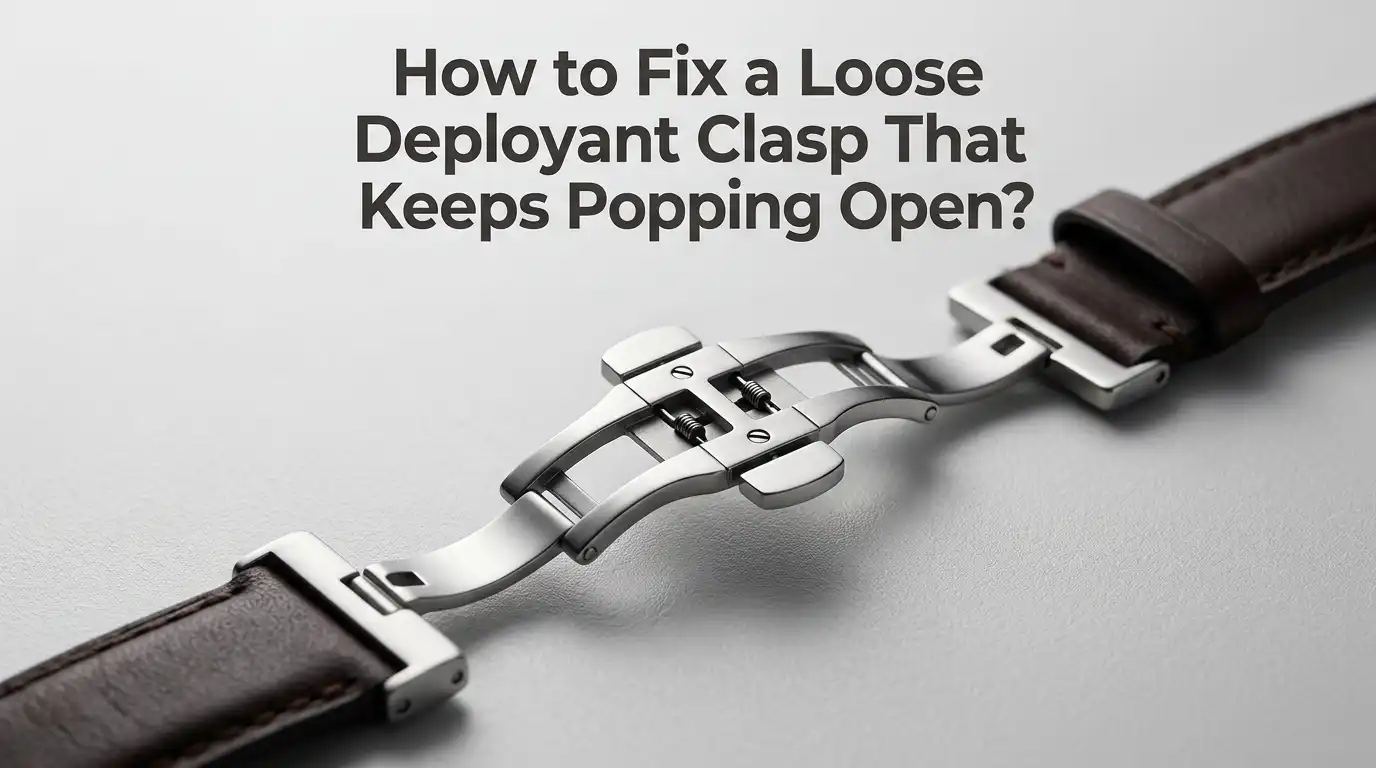
A deployant clasp uses spring tension and friction tabs to hold itself shut. Two small metal tongues press against the inside walls of the outer cover. When those tongues bend outward or wear smooth, the cap lifts with almost no force.
Other causes include a stretched internal spring, a loose hinge pin, or a bracelet that is too long. If the watch hangs low on your wrist, every arm swing yanks sideways on the clasp. That pull pops the cover open even when the tabs are still healthy.
Knowing the exact reason saves you time. Look at your clasp under bright light first. A quick inspection often tells you whether to bend a tab, swap a spring bar, or remove a link.
Gather the Right Tools Before You Start
You only need a small kit for most repairs. Grab a pair of needle nose pliers, a flathead jeweler’s screwdriver, a spring bar tool, a soft microfiber cloth, and a magnifying glass or loupe.
If your watch uses a metal bracelet with a butterfly clasp, add a link removal pin pusher to the list. For leather straps with a deployant buckle, keep a few spare spring bars in different sizes ready.
Pros of a full kit: You can handle nearly any clasp problem the first time. You avoid scratching your watch with kitchen tools.
Cons of a full kit: A basic watch toolset costs a small amount upfront. Cheap kits sometimes come with soft tools that bend or slip.
Clean the Clasp Before Any Mechanical Fix
Dirt is the most overlooked cause of a popping clasp. Sweat, hand lotion, and pocket lint pack into the hinge over months of daily wear. That buildup stops the locking tabs from clicking fully into place.
Open the clasp fully and wipe every inner surface with a slightly damp microfiber cloth. For deeper grime, use a soft toothbrush dipped in warm water with one drop of dish soap. Rinse with a barely wet cloth and dry completely.
Never soak the clasp if it is still attached to a leather strap or to a watch with low water resistance. Moisture trapped inside the hinge can rust the spring within days. A clean clasp often snaps tight again without any bending at all.
Bend the Tension Tabs Back Into Shape
This is the single most effective fix for a butterfly clasp that pops open. Open the clasp and look inside the outer cover. You will see two small metal tabs or tongues on the inner blade that meets the cover.
Grip one tab gently with needle nose pliers. Bend it outward by a hair, maybe one degree at most. Close the clasp and test. Repeat on the other tab if needed. The goal is firm resistance when you pull the cap, not a clasp you cannot open at all.
Pros: Costs nothing and works on the first try most of the time.
Cons: Over bending cracks the metal. Once a tab snaps off, the clasp is finished.
Tighten Loose Pin Holders on a Butterfly Clasp
Some butterfly clasps have outer pin holders that grip a small bar inside the cap. When those holders spread apart from years of opening and closing, the cap lifts on its own.
Find the two side walls of the outer cap. Use flat pliers and squeeze each wall very slightly toward the center. Work one side, test the clasp, then work the other. A slight squeeze produces a big change in grip strength.
Wrap the pliers’ jaws in masking tape before you start. Bare metal jaws leave marks on polished steel. If the cap still lifts after squeezing, the internal tabs are probably the real problem, not the pin holders.
Replace a Worn Spring Bar Inside the Buckle
Many deployant buckles use a tiny spring bar to hold the strap to the cap. When that spring bar weakens, the whole assembly feels wobbly and the clasp pops under light pressure.
Use a spring bar tool to compress the bar and slide it out. Measure the length and diameter with calipers or compare it side by side with replacement bars. Slip in a fresh heavy duty spring bar and snap it into place.
Pros: A new spring bar costs almost nothing and brings back factory level snap.
Cons: Finding the exact size for unusual clasps takes patience. The wrong length bar can fall out and lose your watch.
Resize the Bracelet or Strap to Fit Properly
A perfectly working clasp still pops open if the band is too loose. The watch flops around, lands on the back of the wrist, and pulls the clasp sideways with every arm motion.
For a metal bracelet, remove one link at a time using a link pin pusher. Aim for a fit where you can slide one finger between the band and your wrist. Any looser and the clasp will keep popping no matter what you do to it.
Pros: Solves the problem in five minutes with no risk of damaging the clasp itself.
Cons: Removing too many links makes the watch feel tight in hot weather when your wrist swells slightly.
Fix a Stretched or Weak Internal Spring
Some deployant clasps hide a coiled spring inside the cap that drives the locking action. When that spring fatigues, the clasp feels mushy and the click sounds dull.
Open the clasp and shake it lightly near your ear. A healthy spring gives a crisp metallic ping. A weak spring sounds dead. You can sometimes stretch the spring back into shape by removing it with tweezers and gently pulling each end outward by a millimeter.
A replacement spring is the safer route. Watch parts suppliers sell generic clasp springs in small assortments. Match the diameter and free length, drop it in, and reassemble. The clasp should click sharply again.
Adjust the Micro Adjustment Holes on a Deployant Buckle
Many leather strap deployant buckles include three or four micro adjustment holes on the cap. These let you fine tune the fit without punching new holes in the leather.
Pop the strap pin out of its current hole with a small screwdriver. Move it one slot tighter and snap it back in. Test the watch on your wrist for a full day. If it still pops open at the tightest hole, the strap itself has stretched.
Pros: Free, fast, and reversible. You can move the pin back at any time.
Cons: Cheap buckles sometimes have weak pin sockets that strip when you move the pin too often.
Replace the Entire Clasp When the Frame Is Bent
Sometimes the outer frame of the clasp gets bent from a fall or from getting caught on a door handle. Once the frame is twisted, no amount of tab bending will hold it shut reliably.
Look at the clasp from the side. The two halves should sit perfectly flat against each other when closed. If you see a gap, a curve, or a wave in the metal, the frame is deformed.
A full clasp replacement is the only real fix. Generic deployant clasps in 16mm, 18mm, 20mm, and 22mm widths fit most straps. Match the width to your strap and swap the spring bars across. Pros: A new clasp feels factory fresh. Cons: Matching the finish to your existing bracelet can be tricky.
Know When to Take It to a Professional
Some clasps should never be touched at home. Luxury watch clasps from brands with proprietary locking systems often need brand specific tools and parts. One slip with pliers can scratch a finish that costs a fortune to refinish.
Take your watch to a qualified watchmaker if the hinge pin is broken, the clasp is gold or platinum, or the clasp uses an unusual locking mechanism you cannot identify. A professional repair costs less than a replacement clasp from the brand.
Pros of professional repair: Original parts, original finish, and a warranty on the work. Cons: Higher cost and a wait time of one to four weeks depending on parts availability.
Prevent Future Clasp Problems With Simple Habits
Most popping clasp issues start with everyday wear habits rather than manufacturing defects. Opening the clasp without pressing both release buttons stretches the tabs. Pulling the strap to remove the watch stresses the hinge.
Always press both release buttons before lifting the cover. Take the watch off by holding the case and the buckle, not by yanking the strap. Wipe the clasp dry after sweaty workouts to slow corrosion.
A quick monthly inspection catches problems early. Look for loose tabs, dull springs, and lint inside the hinge. Five seconds of checking saves you from a costly drop later. Treat the clasp like a small mechanical part, because that is exactly what it is.
Frequently Asked Questions
Why does my watch clasp keep popping open even after I bent the tabs?
The tabs may have been bent too far and now spring back to their loose position. Try bending them slightly more, or check if the outer pin holders are spread apart. If both look fine, the internal spring is probably worn and needs replacement.
Can I use super glue to fix a loose deployant clasp?
No. Glue blocks the locking mechanism, attracts dirt, and makes future repairs impossible. It also looks messy and can leak onto your strap or skin. Mechanical fixes like bending tabs or replacing springs are the only real solutions.
How tight should my watch sit so the clasp does not pop open?
The watch should sit snug enough that it does not rotate around your wrist on its own. You should be able to slide one finger comfortably between the band and your skin. Any looser and the sideways pull will keep forcing the clasp open.
Is it safe to bend the clasp tabs on an expensive watch?
It is safe if you go slowly and use plier jaws wrapped in tape. Bend one degree at a time and test between each adjustment. If you feel nervous about scratching the finish, send it to a watchmaker instead.
How long does a deployant clasp normally last?
A well made deployant clasp lasts five to fifteen years with daily wear. Cheaper clasps wear out in two or three years. The internal spring usually fails first, followed by the tension tabs. Cleaning and gentle handling extend the life significantly.
Can I replace a deployant clasp with a different brand?
Yes, as long as the width matches your strap. Generic clasps come in standard sizes and use standard spring bars. The look may not match perfectly, but the function will be solid. Match the finish, brushed or polished, for the cleanest result.

Hi, I’m Lucy Jones, a dedicated watch enthusiast and reviewer. I spend my time hunting down, testing, and evaluating the most intriguing wristwatches on the market. My goal is to guide you through the overwhelming choices with honest, hands-on insights into every timepiece.