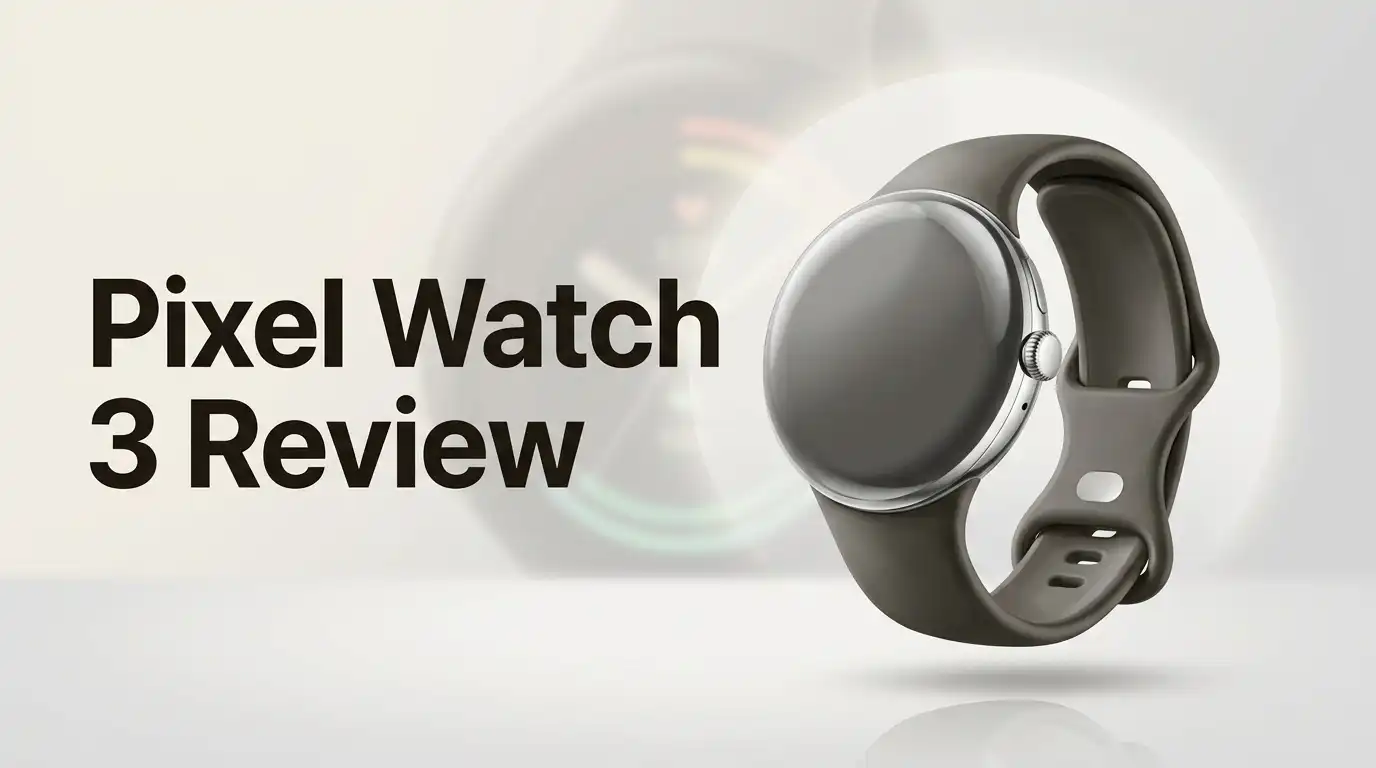
Pixel Watch 3 Review 2026: Still Worth It?
The Pixel Watch 3 launched in 2024, and it still sits on plenty of wrists in 2026. Two newer generations have arrived since then, which means prices have fallen hard.
That shift changes the whole conversation. A watch that once cost $349 now trades near the mid $200 range, and sometimes lower. So the real question is simple. Does an older Wear OS watch still deliver a good daily experience, or does it feel dated next to the Pixel Watch 4?
I wore this watch, charged it, slept in it, ran with it, and scratched it. This review covers the unboxing, the display, the battery, the fitness tracking, and the parts Google got wrong. No marketing talk. Just what the watch actually does on your arm every day.
In a Nutshell:
- The 45mm model is the one to buy. It holds a 420mAh battery and regularly reaches 36 to 48 hours with light use. The 41mm version carries 307mAh and usually needs a nightly charge, which weakens its sleep tracking value.
- The display still impresses in 2026. Google rates peak brightness at 2000 nits, and the LTPO Actua AMOLED panel scales from 1Hz to 60Hz. Sunlight readability remains excellent, and bezels look thinner than the Pixel Watch 2.
- Loss of Pulse Detection earned FDA clearance in 2025. This safety feature calls emergency services if it detects your pulse has stopped. Very few smartwatches offer anything similar, and that alone justifies the purchase for some buyers.
- Wear OS 6 reached this watch, which extends its useful life. You get the Material 3 Expressive redesign, reworked quick settings, and Gemini on your wrist. Google now ships quarterly updates instead of monthly patches.
- Fitness tracking stays mid tier. Cardio Load and Readiness scores help casual users. Serious athletes will miss muscle group logging, deep running metrics, and the analysis Garmin provides for free.
- Durability is the weak spot. The Gorilla Glass 5 dome and the aluminium frame pick up scuffs. Build quality favours looks over toughness.
Google Pixel Watch 3 (45mm)


Last update on 2026-10-07 / Affiliate links / Images from Amazon Product Advertising API
The 45mm Pixel Watch 3 is the version that fixed the biggest complaint about Google’s wearables. Battery anxiety mostly disappeared. The case measures 45mm across, weighs roughly 37 grams without the band, and uses recycled aluminium.
Google claims 40% more screen area than the Pixel Watch 2. In real use, that extra space makes maps readable, notifications easier to scan, and watch faces genuinely useful at a glance. The Snapdragon W5 Gen 1 chip handles Wear OS 6 without lag, even though it debuted years ago.
Water resistance covers IP68 and 5ATM, so swimming and showers pose no risk. The watch pairs with any Android phone running Android 10 or later, though Pixel phones gain extra features like Watch Unlock and faster setup.
The Unboxing Experience
Google keeps the box small and plain. You lift the lid and the watch sits face up in a moulded paper tray, screen protected by a thin film. Under that tray you find two band halves in your chosen size, a magnetic charging puck with a short USB C cable, and a slim paper guide.
No power brick arrives in the box. That detail annoys buyers who own no spare adapter. The bands snap into the proprietary slot with a satisfying click, and swapping them takes about five seconds once you learn the twist motion. First boot takes roughly two minutes.
The watch then asks you to install the Pixel Watch app, sign in, and grant Fitbit permissions. Setup finished in under ten minutes on a Pixel 9. The whole experience feels tidy, premium, and a little sparse.
Design and Build Quality
The domed pebble shape remains the most recognisable design in Wear OS. It looks like jewellery rather than a gadget, and it suits both a suit sleeve and a gym shirt. That beauty comes with a cost.
The curved Gorilla Glass 5 front sits proud of the frame, so corners and door frames hit the glass first. After months of wear you will likely spot light scuffs on the glass edge and tiny abrasions on the aluminium side.
The crown resists scratches better than the first two generations, which is a real improvement. Google still uses a proprietary band connector, so standard 20mm and 22mm straps do not fit. Official bands cost $40 and up. Third party bands exist now, and quality varies widely, so read reviews before buying cheap ones.
Top 3 Alternative for Pixel Watch 3

Last update on 2026-10-07 / Affiliate links / Images from Amazon Product Advertising API
Google Pixel Watch 4 (41mm)

Last update on 2026-10-07 / Affiliate links / Images from Amazon Product Advertising API
OnePlus Watch 3
![Samsung Galaxy Watch 8 44mm Bluetooth Smartwatch, Cushion Design, Rotating Bezel, Quick Button, Sleep Coaching, Now Bar, Running Coach, Energy Score,Graphite [US Version,Amazon Exclusive 2Yr Warranty]](https://smartwristvault.com/wp-content/plugins/aawp/public/image.php?url=YUhSMGNITTZMeTl0TG0xbFpHbGhMV0Z0WVhwdmJpNWpiMjB2YVcxaFoyVnpMMGt2TkRGMFZtbE9kSGQ1UlV3dWFuQm58MTc5MTY2MTE2MQ=)
Last update on 2026-10-07 / Affiliate links / Images from Amazon Product Advertising API
Samsung Galaxy Watch 8 (44mm)
Display Quality and Daily Readability
The LTPO Actua AMOLED panel is the strongest part of this watch. Pixel density sits at 320 ppi, and the refresh rate drops to 1Hz to save power or climbs to 60Hz for smooth scrolling. Peak brightness reaches 2000 nits.
That number matters in July sunshine, where many older watches wash out completely. Minimum brightness drops to 1 nit, which keeps the always on display from blinding you at 3am.
Colours look rich, blacks look truly black, and the thin bezel makes the whole front feel like one continuous dome.
Viewing angles are the only mild weakness. Because the glass curves sharply, you lose a little clarity when glancing from the side. Apple’s flat panel edges ahead there, but most owners will never notice during normal wrist glances.
Battery Life and Charging Speed
Battery life depends almost entirely on which size you buy. The 45mm model handles a full 24 hours with ease, and light users often stretch it past 40 hours. Always on display costs roughly 20% of that total. Turn it off and two full days becomes realistic.
Add a one hour GPS run plus heart rate streaming, and you will finish the day near 30%. The 41mm model with its 307mAh cell behaves differently. It reaches bedtime comfortably but rarely survives a second day, which makes nightly sleep tracking a juggling act.
Charging uses a magnetic pin puck, not wireless Qi. The 45mm reaches full in about 70 to 80 minutes, and 30 minutes of charging adds roughly half the tank. Reverse wireless charging from a Pixel phone does not work here, which still feels like a missed trick.
Performance and Wear OS 6
Google pushed Wear OS 6 to the Pixel Watch 3, and that upgrade matters for anyone buying in 2026. The Material 3 Expressive redesign reshapes app icons, quick settings, and notification cards with rounder shapes and smoother motion.
Gemini replaced Google Assistant on the wrist. You can now ask for a workout to start, a message to be summarised, or a playlist to play, all by voice. Responses take a second or two longer than on a phone, but accuracy is good.
The Snapdragon W5 Gen 1 chip plus the Cortex M33 coprocessor keeps everything responsive. Apps open instantly and swipes never stutter.
The Play Store remains the slow spot, especially during bulk app updates. Google moved this watch to quarterly updates rather than monthly patches, so expect fewer but larger releases.
Fitness Tracking with Fitbit
Fitbit powers all health data, and the app looks genuinely pleasant to use. Cardio Load scores your daily training strain, then compares it against your Target Load so you know when to push or rest. Readiness scores combine sleep, heart rate variability, and recent activity.
These metrics help casual runners and gym regulars make sensible decisions without drowning in charts. Dual band GPS locks quickly outdoors, and pace accuracy during steady runs is solid. Heart rate tracking performs well for running and cycling, though it lags during interval sets and weight training.
Strength training remains the glaring gap. You cannot log individual muscle groups, sets, or reps with any real detail. Accuracy sits mid pack overall, well behind Garmin and Polar, and roughly level with Samsung. Fitbit Premium unlocks extra insights for a monthly fee after the six month trial.
Sleep Tracking and Recovery Insights
Sleep tracking is where the Pixel Watch 3 quietly outperforms rivals. The domed case feels surprisingly comfortable against a pillow, and the watch records sleep stages, skin temperature variation, breathing rate, and blood oxygen overnight.
Morning Briefing then delivers a readable summary on your wrist. You wake, raise your arm, and see your sleep score plus your Readiness number without touching your phone. Fitbit’s Sleep Profile assigns you an animal type each month, which is fun rather than scientific.
The data accuracy holds up well against consumer trackers, and detected wake periods usually match reality. The weakness is advice. Fitbit tells you your score dropped but offers thin guidance on fixing it. The 45mm battery makes nightly wear practical, while the 41mm forces you to choose between sleep data and daytime charge.
Google Pixel Watch 3 (41mm)

Last update on 2026-10-07 / Affiliate links / Images from Amazon Product Advertising API
The 41mm Pixel Watch 3 exists for people with smaller wrists or a preference for discreet watches. It shares the same chip, the same 2000 nit display technology, the same sensors, and the same Wear OS 6 experience.
The screen is only 10% larger than the Pixel Watch 2, so the generational jump feels modest here. Battery capacity is the real compromise at 307mAh. Expect a comfortable single day, around 24 to 30 hours, and a top up every evening or morning.
Charging takes roughly 60 minutes. This size suits fashion first buyers, not fitness first buyers. If you plan to track sleep every night and run with GPS several times a week, the 45mm model solves problems that the 41mm creates. Both sizes cost less in 2026 than they did at launch.
Pros of the Pixel Watch 3
- Excellent display with 2000 nit peak brightness and strong sunlight readability
- Strong battery on the 45mm model, often reaching 36 to 48 hours
- FDA cleared Loss of Pulse Detection, a safety feature almost no rival offers
- Wear OS 6 with Gemini, which keeps the software current in 2026
- Beautiful design that looks like a real watch rather than a fitness band
- Comfortable for sleep tracking, with detailed overnight data
- Deep Google integration, including Wallet, Maps, Home, and Watch Unlock
- Big price drops now that two newer generations exist
Cons of the Pixel Watch 3
- Glass and aluminium scuff easily, so durability trails similarly priced rivals
- Proprietary band connector limits strap choice and raises accessory costs
- No wireless charging, only a magnetic pin puck
- 41mm battery life disappoints and forces daily charging
- Strength training tracking is shallow, with no muscle group logging
- Fitbit Premium paywall sits in front of several useful insights
- ECG and blood pressure features are absent, unlike some Samsung models
- Quarterly updates mean longer waits between new features
What the Pixel Watch 3 Does Not Do Well
Honest reviews name the failures, so here they are. This watch is not built for abuse. The raised dome glass takes knocks that a flat sapphire face would shrug off, and the matte frame picks up micro abrasions within weeks.
Serious athletes will find the training tools thin. There is no running power, no proper track mode, no multisport triathlon mode, and no structured workout builder. Offline maps and onboard music storage are limited compared with Amazfit or Garmin options at the same price.
The speaker gets loud enough for calls in a quiet room, but wind and traffic defeat it. Sensor accuracy during high intensity intervals drifts noticeably. Finally, repairability is poor on this generation, which Google only addressed with the Pixel Watch 4. A cracked screen usually means a full replacement.
Pixel Watch 3 vs Pixel Watch 4
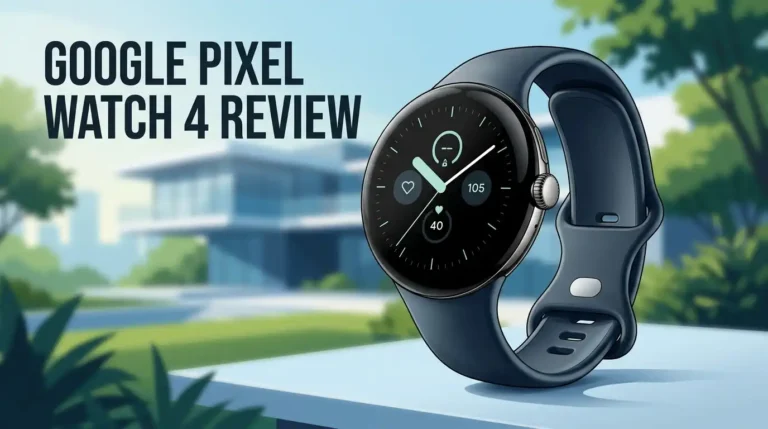
The Pixel Watch 4 arrived in 2025 with meaningful upgrades. It charges faster, runs longer, uses a brighter 3000 nit display, and crucially it can actually be repaired by a technician. Google also redesigned the charging system and improved the speaker for Gemini conversations.
Those are real gains. The catch is price. The Pixel Watch 4 still sells near $300 even during sales, while the Pixel Watch 3 frequently dips far below that. Both watches run Wear OS 6 with Gemini, so the software experience feels similar day to day.
If this is your first Pixel Watch and you plan to keep it for years, the Watch 4 is the smarter long term purchase. If you want the Pixel experience for the lowest possible outlay, the Watch 3 delivers roughly 85% of it.
Price and Value in 2026
Launch pricing was $349 for the 41mm and $399 for the 45mm. Those numbers no longer apply. Through 2026, Amazon and other retailers have repeatedly pushed the 41mm model below $250, and refurbished units from reputable sellers drop near $230.
That discount transforms the value equation completely. At $240 the shallow fitness tracking matters less, because nothing else at that price offers this display, this software, and FDA cleared pulse monitoring. Watch for open box and renewed listings, which often include a warranty.
Check carefully whether a listing is Bluetooth only or LTE, since LTE models cost more and require a separate carrier plan. Also confirm the Fitbit Premium trial status on refurbished units, as it rarely transfers. Prices shift constantly, so verify current figures before buying.
Who Should Buy the Pixel Watch 3
Buy this watch if you own an Android phone, want a good looking wearable, and care more about notifications, payments, and sleep data than about training analytics. Pixel phone owners gain the most, thanks to Watch Unlock, faster pairing, and tight Google app integration.
It also suits anyone who values the Loss of Pulse Detection safety net, particularly older users or people with known cardiac risk. Skip it if you are a serious runner, cyclist, or lifter. Garmin, Amazfit, and Polar give you deeper metrics and far longer battery for similar money.
Skip it too if you work outdoors or in a trade, because the glass will not survive. iPhone users cannot use it at all, since Wear OS requires Android. For everyone else, it remains a sensible, affordable pick.
Final Verdict
The Pixel Watch 3 is now a value buy rather than a flagship. Its strengths aged well. The display still looks modern, Wear OS 6 keeps the software fresh, Gemini works on your wrist, and the 45mm battery handles two days without drama.
Loss of Pulse Detection remains a genuine differentiator that most competitors cannot match. Its weaknesses also aged, and they did not improve. Durability stays mediocre, bands stay expensive, charging stays wired, and fitness tracking stays basic.
Score it around 8 out of 10 at current discounted prices, and closer to 7 at original pricing. Choose the 45mm version if you can. Choose the Pixel Watch 4 if your budget stretches and you want repairability. Choose something else entirely if training data drives your decision.
Frequently Asked Questions
Is the Pixel Watch 3 still worth buying in 2026?
Yes, mainly because of the price. The watch runs Wear OS 6 with Gemini, keeps a bright 2000 nit display, and offers FDA cleared Loss of Pulse Detection. At discounted prices near $250 it competes well. At full price it does not.
How long does the Pixel Watch 3 battery last?
The 45mm model typically runs 36 to 48 hours with light use and always on display disabled. With always on display active, expect 24 to 30 hours. The 41mm model usually reaches 24 to 30 hours and needs a nightly charge.
Will the Pixel Watch 3 get more software updates?
Google committed to software support through 2027 for this generation, delivered quarterly rather than monthly. It already received Wear OS 6 with the Material 3 Expressive redesign and Gemini, so it stays current for now.
Does the Pixel Watch 3 work with an iPhone?
No. The Pixel Watch 3 requires an Android phone running Android 10 or later. There is no iOS companion app, and Google has given no indication that one is planned.
Can you replace the Pixel Watch 3 screen?
Repairability is poor on this generation. Google did not offer a straightforward screen replacement programme, so a cracked display usually means replacing the whole watch. The Pixel Watch 4 improved this considerably.
Is the 45mm or 41mm Pixel Watch 3 better?
The 45mm model is better for most buyers. It holds a 420mAh battery instead of 307mAh, shows 40% more screen area, and makes nightly sleep tracking practical. Choose 41mm only if you prefer a smaller watch on a slimmer wrist.

Hi, I’m Lucy Jones, a dedicated watch enthusiast and reviewer. I spend my time hunting down, testing, and evaluating the most intriguing wristwatches on the market. My goal is to guide you through the overwhelming choices with honest, hands-on insights into every timepiece.