Why Is My Waterproof Watch Fogging Up After A Warm Shower?
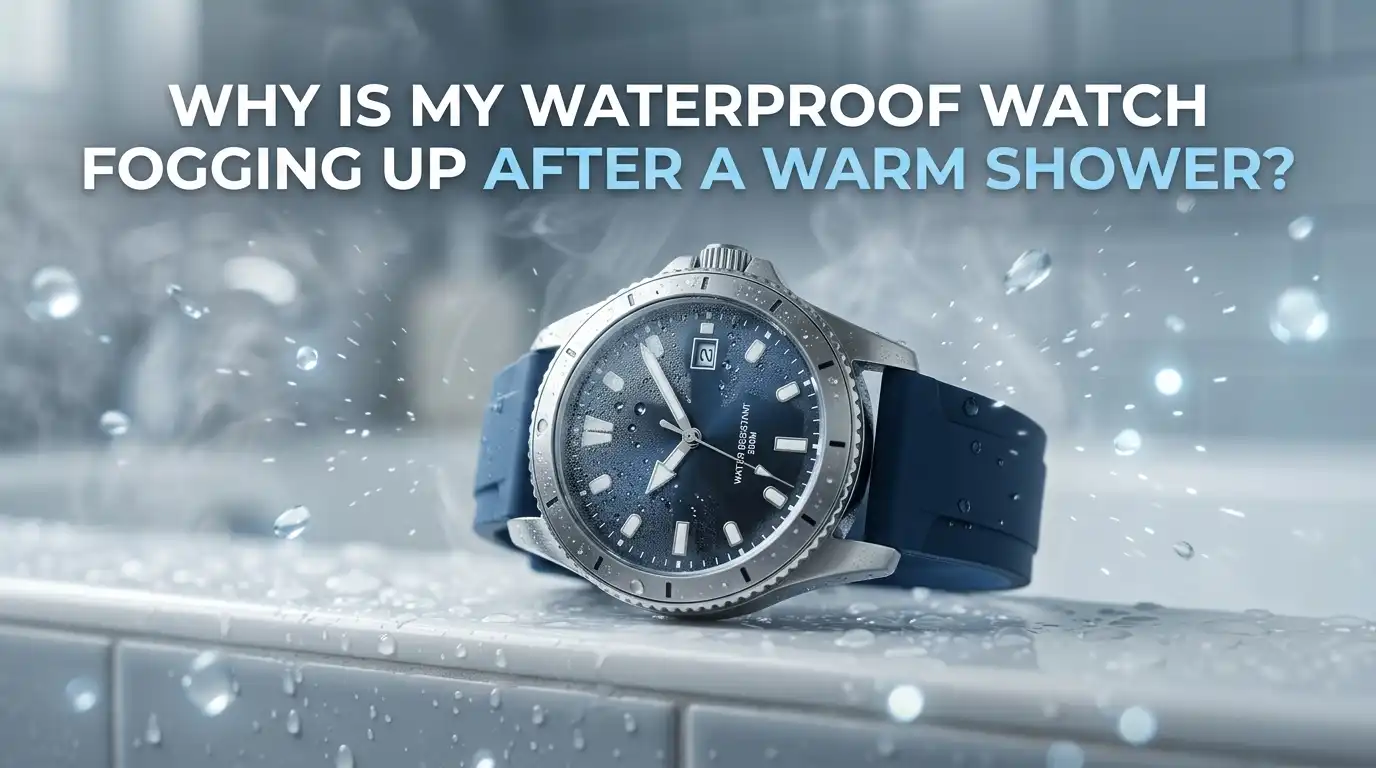
You stepped out of a warm shower, glanced at your wrist, and your stomach dropped. A thin layer of fog now sits inside your “waterproof” watch glass.
The dial looks blurry. The hands seem trapped behind mist. You feel confused and a little betrayed. The watch was supposed to handle water, right?
Take a deep breath. This problem is more common than you think, and it does not always mean your watch is ruined. Fog inside your watch is a clear signal, and once you understand what it means, you can act fast and often save your timepiece.
Key Takeaways
- Fog inside your watch means moisture got in. Your seals are no longer doing their job perfectly. Even a tiny amount of trapped air with humidity can fog up when the temperature changes fast.
- Warm showers are a top cause of watch fogging. Hot water and steam make rubber gaskets expand and contract, which creates small gaps that let humid air sneak inside the case.
- Water resistance is not the same as waterproof. A watch rated for splashes is not built for steam or hot water. Always check your ATM rating before showering with your watch.
- Act fast when you see fog. Moisture left inside too long causes rust, dial stains, and movement damage. Time is your enemy once water gets in.
- Simple home fixes often work. The crown trick, silica gel, and gentle warmth can pull moisture out without opening the case. Never use a hairdryer, as direct heat damages seals and parts.
- Prevention beats repair. Take your watch off before hot showers, close the crown fully, and service the gaskets every few years to keep water out.
What Does Fog Inside Your Watch Actually Mean
Fog inside your watch glass is not just a cosmetic annoyance. It is a message. It means moisture has entered the sealed case. Watches are built to keep their insides dry, so any mist under the crystal proves that the seal failed at some point.
Here is the simple science. Warm, humid air slips into the case through a tiny gap. When the watch cools down, the air inside cools too. The water vapor in that air then turns into tiny droplets on the cold glass. That is the fog you see.
This tells you two clear things. First, your watch is not sealed as well as it should be. Second, you need to remove that moisture quickly. Trapped water leads to rust and corrosion, which can ruin the movement over time. The fog is your early warning sign, so treat it seriously.
Why Warm Showers Trigger The Fogging Problem
Warm showers are one of the most common reasons watches fog up. The cause comes down to heat and rubber. Your watch stays water resistant because of small rubber rings called gaskets. These rings seal the crown, the case back, and the glass.
Hot water and steam make those rubber gaskets expand. When you turn off the water and step into cooler air, the gaskets shrink back. This expanding and shrinking creates tiny gaps. Humid, steamy air pushes through those gaps and into the case.
There is also a pressure factor. Heat makes the air inside your watch expand, which pushes against the seals from the inside. Then rapid cooling sucks moist air back in. Showers combine high heat, high humidity, and fast temperature swings. That mix is the perfect recipe for fogging, even on a watch that handles cold swimming just fine.
Understanding Your Watch Water Resistance Rating
Many people get fooled by the word “waterproof.” Honestly, no watch is truly waterproof. Brands use the term water resistant instead, and your watch has a specific rating stamped on the case back. Knowing your rating helps you avoid mistakes.
Here is what the numbers mean in plain terms. A 3 ATM or 30 meter rating means splash resistant only. You can wash your hands, but you should keep it away from showers and swimming. A 5 ATM or 50 meter rating handles brief showers and surface swimming. A 10 ATM or 100 meter watch can manage swimming and snorkeling.
The key truth is this. These ratings come from still, cold water lab tests. They do not account for hot water, steam, or moving water, which all add stress. So even a 5 ATM watch can fog in a hot shower because heat changes how the seals behave. Always read your rating before assuming your watch can take a shower.
Step By Step: First Things To Do When You See Fog
When you spot fog, your reaction in the first hour matters a lot. Act calmly but quickly. Here is a clear, ordered plan to follow right away.
First, take the watch off your wrist. Your body heat keeps the case warm and slows drying. Second, dry the outside completely with a soft, lint free cloth. Third, keep the watch far away from any more water. No more showers, no hand washing with it on, nothing.
Next, if your crown unscrews or pulls out, gently pull it to the time setting position. This opens a path for moisture to escape. Then place the watch in a warm, dry spot, like a sunny windowsill or a dry room. Let it sit for several hours and check on it.
Do not panic and do not open the case yourself unless you have proper tools and skill. Opening it wrong can let in dust and cause more harm.
The Crown Trick: Letting Moisture Escape Naturally
The crown trick is the easiest first fix, and it works surprisingly well for light fogging. The crown is the small knob you use to set the time. On many watches, you can pull it out or unscrew it to open a small vent.
Here is how to do it. Gently pull the crown to its outer position, the same spot you use to change the time. This breaks the seal slightly and lets the trapped moist air flow out. Place the watch in a warm, dry area while the crown stays open. Let it rest for a few hours, or even overnight.
Pros: This method is free, simple, and needs no extra tools. It often clears light fog within a day. It also requires no case opening, so the risk is low.
Cons: It does not work for heavy moisture or actual water drops. It also will not fix a worn gasket. The most important rule is this. Always push or screw the crown back in before the watch touches water again.
Using Silica Gel To Dry Your Watch Safely
Silica gel is the gold standard for pulling moisture out of a foggy watch. You have seen those little “do not eat” packets in shoe boxes and bags. Silica gel absorbs water from the air around it, which makes it perfect for this job.
Here is the method. Place your watch in a sealed container or zip bag. Add a generous handful of silica gel packets around it. Pull the crown out first if your watch allows it. Seal the bag and leave it for 24 to 48 hours. The gel slowly draws moisture out of the case.
Pros: Silica gel is gentle, effective, and safe for delicate parts. It dries the watch without heat or force. It handles moderate fogging well and is reusable.
Cons: It can be slow, sometimes taking two or three days. You may not have enough packets on hand. It also will not solve the root cause if your seals are damaged. Still, this is one of the safest and most reliable home fixes you can try.
The Rice Method: Does It Really Work
The rice method is the famous backup when you have no silica gel. The idea is the same. Uncooked rice absorbs moisture from the air. Many people swear by it for wet phones, and it can help a foggy watch too.
To try it, bury your watch fully in a bowl or bag of dry, uncooked rice. Pull the crown out first if you can, so moisture has an exit path. Seal the container and leave it for 48 hours or longer. Check the glass after two days to see if the fog cleared.
Pros: Rice is cheap and sits in almost every kitchen. It works for light to moderate fogging in many cases. It needs no special gear.
Cons: Rice is much weaker than silica gel. It can leave dust or tiny starch particles near the crown opening. It also dries slowly and may not fully clear heavy moisture. Use rice as a second choice when silica gel is not available, not as your first pick.
Why You Should Never Use A Hairdryer Or Direct Heat
When fog appears, your instinct might scream “just heat it up.” Please resist that urge. Using a hairdryer, oven, microwave, or direct flame is one of the worst things you can do to a wet watch.
Here is why. Direct, intense heat damages the rubber gaskets that keep water out. It can melt or warp them, which destroys your water resistance for good. High heat can also crack the glass and harm the delicate movement inside. You might clear the fog but ruin the watch in the process.
Heat also builds pressure inside the sealed case. That pressure can pop seals or push parts out of place. Gentle warmth from sunlight or a warm room is fine. Forced, concentrated heat is not. The safe approach is always slow and gentle. Let silica gel, the crown trick, or mild ambient warmth do the work patiently instead.
When The Fog Won’t Clear: Signs You Need A Professional
Sometimes home fixes are not enough, and that is okay. Knowing when to stop trying and call a pro can save your watch. Watch for a few clear warning signs that point to a deeper problem.
Call a watchmaker if the fog keeps coming back after drying. Recurring fog means your seals are failing repeatedly. You should also seek help if you see actual water droplets inside, not just light mist. Visible drops mean a lot of water got in, and rust may already be starting.
Other red flags include a dial that looks stained or discolored, hands that move strangely, or a watch that stops keeping time. These suggest the moisture reached the movement.
A professional can open the case safely, dry it fully, replace worn gaskets, and run a pressure test. This restores your water resistance properly. Trying to force a fix at home in these cases often makes the damage worse.
How Aging Gaskets Cause Fogging Over Time
Even if you treat your watch well, age alone can cause fogging. Gaskets do not last forever. These small rubber rings naturally break down over the years, and they are the most common hidden reason for moisture problems.
Here is what happens. Rubber dries out, hardens, and cracks as it ages. Sweat, soap, sunscreen, heat, and daily wear speed up this breakdown.
Once a gasket loses its softness, it cannot squeeze tight against the case anymore. Tiny gaps form, and humid air slips through, especially during a warm shower.
This is why a watch that survived water for years can suddenly start fogging. The seals quietly wore out. Most experts suggest checking and replacing gaskets every two to three years, or after any battery change that opens the case back.
A fresh set of gaskets is cheap compared to a ruined movement. Regular gasket care is the smartest long term defense against fogging.
Smart Habits To Prevent Watch Fogging In The Future
Prevention is far easier than repair. A few simple habits keep your watch dry and fog free for years. Build these into your routine and you will rarely face this problem again.
The biggest tip is the easiest. Take your watch off before hot showers, saunas, hot tubs, and steam rooms. Heat and steam stress the seals more than cold water ever does. Always make sure the crown is fully pushed in or screwed down before any contact with water.
Rinse your watch with clean, cool water after swimming in pools or the sea, since chlorine and salt damage gaskets. Avoid sudden temperature changes, like going from a hot shower into cold air with the watch on.
Get your gaskets checked every couple of years and after each battery change. Store your watch in a dry place, away from bathrooms where humidity stays high. These small steps protect your watch and your peace of mind.
Comparing The Best Drying Methods At A Glance
Let us put the main home solutions side by side so you can pick the right one fast. Each method has its place depending on how much moisture you see and what you have on hand.
The crown trick is best for very light fog. It is instant and free, but it only works for minor mist and needs warm, dry air to help.
Silica gel is the strongest home option. It pulls out moderate moisture safely and reliably, though it takes a day or two and you need enough packets. It is the safest choice for most people.
The rice method is your backup. It is cheap and easy, but weaker and slower than silica gel, with a small dust risk.
Professional service is the only real fix for heavy water, recurring fog, or seal damage. It costs money and takes time, yet it solves the root cause and restores true water resistance. The smart move is to match the method to the severity. Light fog gets a home fix, while serious moisture gets a pro.
Frequently Asked Questions
Is my waterproof watch ruined if it fogs up once?
Not usually. A single light fog is often fixable with the crown trick, silica gel, or rice. The key is to act fast and remove the moisture before it causes rust. If the fog clears and never returns, your watch is likely fine. But if it keeps fogging, your seals need professional attention.
How long does it take for a watch to dry out?
It depends on the method and the amount of moisture. Light fog can clear in a few hours with the crown open in a warm room. Silica gel usually takes 24 to 48 hours. Rice can take two to three days. If moisture remains after several days, see a watchmaker, because the seals have likely failed.
Can I shower with a 5 ATM or 50 meter watch?
A 5 ATM watch can handle brief, cool showers, but hot showers are risky for any watch. Heat and steam expand the gaskets and let moisture in, even at this rating. The safest choice is to take your watch off before any warm shower. Save it for cold water swimming if the rating allows.
Why does my watch fog up in cold weather too?
Cold weather causes fog through the same basic process as showers. Warm, humid air inside the case meets the cold glass and condenses. This only happens if moisture is already trapped inside, which points to a weak seal. A fully sealed watch should not fog in the cold, so treat it as a warning sign.
Should I open my watch myself to dry it?
Generally, no. Opening the case without proper tools and skill can introduce dust and damage delicate parts. It can also break the seal further. Stick to safe methods like silica gel and the crown trick. If those fail, let a professional open and dry it correctly, then pressure test the seals before you trust it with water again.

Hi, I’m Lucy Jones, a dedicated watch enthusiast and reviewer. I spend my time hunting down, testing, and evaluating the most intriguing wristwatches on the market. My goal is to guide you through the overwhelming choices with honest, hands-on insights into every timepiece.