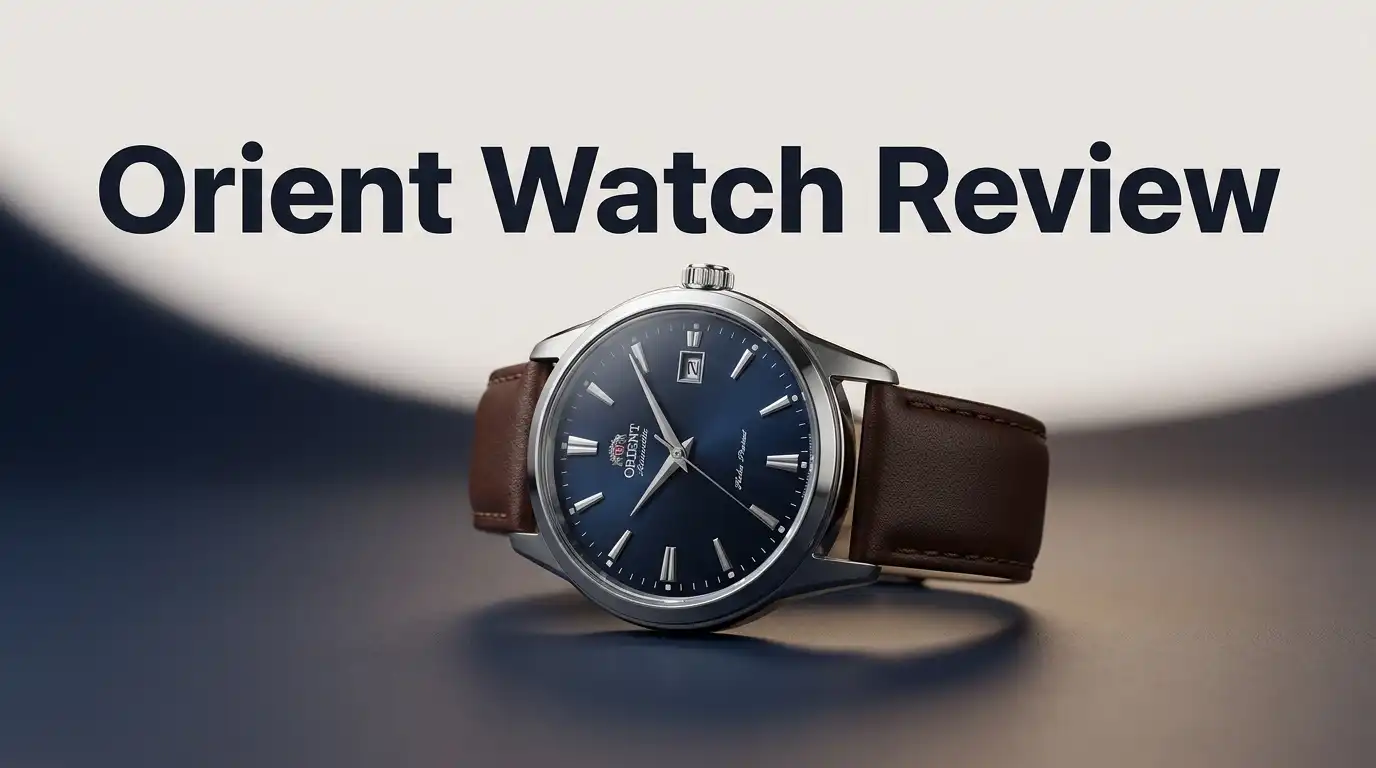
Orient Watch Review 2026: Still Worth It?
Orient sits in a strange spot. The brand builds its own mechanical movements, prices them below most Swiss competition, and still gets ignored at the watch counter.
Seiko gets the attention. Citizen gets the solar fans. Orient quietly sells automatic watches with sapphire crystals for under four hundred dollars and lets word of mouth do the work.
This review covers what these watches get right, what they get wrong, and whether the brand still deserves your money in 2026 now that Seiko has raised prices and dozens of microbrands have flooded the market.
In a Nutshell:
- Orient makes its own movements. The brand sits under the Seiko Epson umbrella but builds calibers like the F6922 and F6724 in house. Very few brands under five hundred dollars can say that. This is the single biggest reason enthusiasts recommend Orient.
- Value is the main selling point. You get an automatic movement with hacking seconds, hand winding, sapphire crystal on sports models, and 200m water resistance for roughly the price of a quartz fashion watch.
- Accuracy is loose but honest. Factory tolerance sits around minus 15 to plus 25 seconds per day. My Kamasu settled near plus 7 seconds daily. That is acceptable, not impressive.
- The bracelets are the weak point. Stock bracelets rattle. Clasps use stamped parts. Most owners swap them within a year, which adds fifty to one hundred dollars to the real cost.
- Quality control varies. Misaligned bezels, loose chapter rings, and stiff crowns show up in owner reports. Buy from a seller with easy returns.
- Best for beginners and collectors. First automatic buyers get huge value. Experienced collectors get a solid modding platform.
Why Orient Still Matters in 2026

Last update on 2026-10-01 / Affiliate links / Images from Amazon Product Advertising API
Orient started in 1950 in Tokyo. The company joined Seiko Epson in 2009 and became a fully owned subsidiary in 2017. That corporate history matters because it explains the engineering. Orient shares manufacturing knowledge with one of Japan’s biggest watchmakers while keeping its own movement factory.
In 2026 the budget watch market is crowded. Microbrands sell Seiko NH35 powered divers for two hundred dollars. Seiko itself keeps raising prices on the Prospex line.
Orient sits right between these two worlds. You get a genuine manufacture movement rather than a bought in one, and you pay less than Seiko asks for comparable specifications.
The brand does not market itself aggressively. There are no celebrity partners and no stadium sponsorships. That restraint keeps prices low and keeps resale value stable.
The Unboxing Experience
Do not expect theater here. Orient ships watches in a simple box. Mine arrived in a dark grey cardboard sleeve with the Orient logo printed in silver. Inside sat a plain plastic and foam cushion holding the watch, a small instruction booklet, and a warranty card.
That is it. No leather travel pouch. No extra strap. No tool for sizing the bracelet.
The packaging feels cheap, and I actually like that. Orient spends the money on the watch instead of the box. Compare this to brands that ship a mediocre watch inside a wooden presentation case and charge you for both.
One small annoyance. The protective plastic film on the case back and clasp is stubborn. I needed a fingernail and about two minutes of patience. The watch inside looked far better than the box suggested it would.
Orient Bambino Version 2 Review
The Bambino is the watch that built Orient’s reputation among new collectors. Version 2 measures 40.5mm across and 11.8mm thick. The domed mineral crystal creates heavy distortion at the edges of the dial, which is exactly the vintage effect buyers want.
The cream dial on my sample looks far more expensive than the price suggests. Applied indices catch light properly. The dauphine hands are polished cleanly. At arm’s length nobody can tell this is a two hundred dollar watch.
The caliber F6724 runs inside. It hacks, it hand winds, and it holds about 40 hours of power reserve.
Now the problems. The leather strap is poor. It feels stiff and plasticky and mine creased badly within six weeks. Water resistance is only 30m, so this is a desk and dinner watch. The lug width of 21mm is awkward and limits strap choices.
Orient Kamasu Mako III Review

Last update on 2026-09-30 / Affiliate links / Images from Amazon Product Advertising API
The Kamasu is the dive watch that converted me. The case measures 41.8mm wide, 46.8mm lug to lug, and 13mm thick. It wears like a Seiko SKX, which means chunky and confident rather than slim.
The headline feature is sapphire crystal at this price. Seiko still uses Hardlex on comparable models. The screw down crown and 200m water resistance make this a genuine dive watch rather than a dive styled one.
The bezel action impressed me most. It turns smoothly with almost no play and the lume pip sits recessed into the insert so it cannot pop out. That is a detail I expect on watches costing triple.
The caliber F6922 powers it with 22 jewels and a 40 hour reserve. The day wheel switches between English and French, which is odd but harmless.
Weak spot? The bracelet. We will get to that.
Top 3 Alternative for Orient Kamasu

Last update on 2026-10-01 / Affiliate links / Images from Amazon Product Advertising API
Seiko 5 Sports Automatic


Last update on 2026-09-29 / Affiliate links / Images from Amazon Product Advertising API
Citizen Promaster Dive Eco Drive

Last update on 2026-09-30 / Affiliate links / Images from Amazon Product Advertising API
Orient Ray II Automatic Diver
Inside the Movements: F6922 and F6724
Orient movements are not pretty. The finishing is industrial. Plates are plain, the rotor is stamped, and there is no decoration worth photographing. Orient knows this, which is why the Kamasu hides the movement behind a solid case back.
What matters is function. The F6922 hacks the seconds hand and accepts hand winding. The old Seiko 7S26 that powered the beloved SKX did neither. Setting an Orient to the exact second is simple. Starting it after storage takes twenty crown turns instead of two minutes of shaking.
The beat rate sits at 21,600 vibrations per hour, giving the seconds hand six ticks per second. The sweep looks slightly less smooth than a 28,800 movement, though you only notice if you stare.
Servicing costs run between one hundred and two hundred dollars. Many owners simply replace the watch instead, which is a fair economic choice.
Accuracy After Thirty Days of Wear
I tracked both watches against an atomic clock app for a full month. Here are real numbers rather than factory claims.
The Kamasu averaged plus 7 seconds per day worn daily and roughly plus 11 seconds when left dial up overnight. Over thirty days that meant resetting the watch twice. The Bambino performed worse at around plus 14 seconds per day, settling to plus 10 after a few weeks of wear.
Orient quotes a tolerance of minus 15 to plus 25 seconds daily, averaged over seven days. That is a wide window. Some owners report watches running at plus 20 seconds straight out of the box, and technically those watches are within specification.
A watchmaker can regulate most Orient movements closer to plus or minus 5 seconds for about sixty dollars. Budget for that if accuracy bothers you.
Case Finishing and Build Quality
The case work is the part that consistently surprises people. Orient uses 316L stainless steel with a mix of brushed tops and polished sides. The transition lines between finishes are crisp on both of my watches.
The Kamasu case has real heft. It feels dense in the hand rather than hollow. The crown threads engage smoothly and the knurling gives decent grip even with wet fingers.
The Bambino case is slimmer and more delicate, with a polished finish that shows fingerprints and light scratches quickly. After six months mine carries visible desk marks on the case sides.
Quality control is where Orient slips. Browse any owner forum and you will find photos of misaligned bezel inserts, slightly tilted chapter rings, and date windows that sit a hair off center. Most watches are fine. Some are not. Inspect yours on arrival.
Bracelets and Straps: The Honest Problem
This is where I stop being nice. The stock Kamasu bracelet is the worst part of the watch. It rattles when you shake your wrist. The links feel thin. The clasp uses stamped steel rather than milled components and the edges are sharp enough to notice.
It is not unusable. The clasp offers four micro adjustment positions, which is genuinely rare at this price and helps a lot in hot weather. Solid end links fit the case properly with no gaps.
But the overall feel drags the watch down. A fifty dollar aftermarket bracelet from Strapcode or similar transforms the Kamasu completely. Several owners describe the upgrade as making a four hundred dollar watch feel like a four figure one.
The Bambino leather strap is similarly disappointing. Thin, stiff, and quick to crack. Replace it immediately.
Wearing Comfort and Sizing
The Kamasu needs a wrist of at least 6.7 inches to look right. The lugs are short, which helps, but the 13mm thickness and tall bezel create real presence. On my 7.25 inch wrist it sits well and slides under a shirt cuff with a small amount of effort.
Smaller wrists can still make it work. Swapping the bracelet for a rubber strap or NATO removes a noticeable chunk of weight and tames the proportions.
The Bambino is the easier wear. At 40.5mm wide and under 12mm thick it disappears under any sleeve. The curved lugs hug the wrist nicely.
One complaint on the Kamasu. The case back is slightly domed and pressed against the top of my wrist bone during long typing sessions. A flatter profile would fix this.
Lume Performance in the Dark
Orient does not brand its luminous material the way Seiko brands Lumibrite. That led me to expect weak performance. I was wrong.
The Kamasu hour markers and hands charge quickly under a lamp and glow bright green for several hours. Initial brightness matches my Seiko 5 almost exactly. Reading the time at 3am required no squinting. The bezel pip glows too, which matters if you actually time anything underwater.
Where it falls short is longevity. By morning the glow has faded to almost nothing, while a Seiko Prospex with proper Lumibrite still shows a faint trace.
The Bambino has minimal lume. Thin strips on the hands and nothing on the indices. That is normal for a dress watch, but worth knowing before you buy. Do not expect to read it in a dark cinema.
Water Resistance in Real Use
The Kamasu carries a 200m rating with a screw down crown and ISO style construction. I swam laps with it, showered with it repeatedly, and took it snorkeling. No fogging, no moisture, no issues.
That rating is honest. Orient tests to the number rather than marketing to it. For recreational diving, surfing, or anything involving water, this watch handles it.
The Bambino is the opposite story. Its 30m rating means splash resistance only. Do not wear it in the shower. Hand washing is fine. Swimming will eventually kill it, and the pull out crown offers no real sealing.
Gaskets dry out over time on any watch. Have the Kamasu pressure tested every two or three years if you swim with it regularly. That test costs around twenty dollars at most watchmakers.
Orient Star: The Step Up Line
Orient Star is the premium line and it is a genuinely different product. Prices run from roughly five hundred to fifteen hundred dollars. The movements gain higher beat rates, longer power reserves of 50 to 70 hours, and visible finishing through exhibition case backs.
The Contemporary and Mechanical Classic collections show dial work that competes with watches at double the price. Textured dials, polished applied markers, and semi skeleton layouts look properly luxurious.
Accuracy tightens too. Orient Star movements are regulated closer to plus or minus 10 seconds daily and some models reach chronometer adjacent performance.
The catch is distribution. Orient Star is easier to buy in Japan than in the United States, and warranty service outside Japan can be slow. If you love the standard Orient line and want something better, this is the natural next step.
Pros and Cons of Orient Watches
Pros
- In house mechanical movements with hacking seconds and hand winding at a price where most rivals use bought in calibers.
- Sapphire crystal on sports models including the Kamasu, which Seiko still does not offer at this level.
- Genuine 200m water resistance with a screw down crown on the dive line.
- Excellent case finishing with clean brushed and polished transitions.
- Strong modding community with aftermarket bezels, bracelets, and inserts widely available.
- Dial quality that looks far above the asking price, especially on the Bambino and Kamasu.
Cons
- Stock bracelets rattle and use stamped clasp components.
- Accuracy tolerance is wide at minus 15 to plus 25 seconds per day.
- Quality control is inconsistent, with alignment issues appearing in owner reports.
- Leather straps on dress models crack and crease quickly.
- Lume fades faster overnight than Seiko equivalents.
- Service network outside Japan is thin and parts can take weeks.
What Orient Does Not Do Well
Let me be direct about the failures, because review sites rarely are.
Orient does not do consistency. Two identical models can arrive with noticeably different accuracy and different alignment quality. This is the cost of building watches at this price point, and you are partly buying a lottery ticket.
Customer service is weak in North America and Europe. Warranty claims require shipping and waiting. One owner I spoke with waited eleven weeks for a crown replacement.
The brand also does not innovate much. The Bambino has looked the same for over a decade. The Mako line receives new colors rather than new engineering. If you want fresh design language each year, look elsewhere.
Finally, Orient does not hold value like Seiko. Resale prices sit low because supply is plentiful and brand recognition is limited outside enthusiast circles.
Price, Value and Where to Buy
Prices in 2026 look roughly like this. The Bambino sits between 180 and 280 dollars depending on version and seller. The Kamasu and Mako III range from 280 to 400 dollars. Orient Star models start near 500 dollars.
Authorized dealers and Amazon both carry genuine stock. Grey market sellers offer lower prices but warranty coverage becomes your problem.
Watch for seasonal discounts. Orient prices drop noticeably during major sales events, and a Kamasu under 250 dollars is excellent value.
Factor in the real cost. Add fifty to eighty dollars for a decent bracelet or strap, and possibly sixty dollars for regulation. That brings a Kamasu to roughly 380 dollars all in, which still beats most alternatives.
Buy from a seller with a clear returns policy so you can reject a misaligned example.
Who Should Buy an Orient Watch
Buy an Orient if you want your first mechanical watch and refuse to spend a thousand dollars finding out whether you like them. The Bambino is probably the best introduction to automatic watches available anywhere.
Buy the Kamasu if you want a real dive watch with sapphire crystal and you are comfortable replacing the bracelet. It outperforms its price in every category except that one.
Buy an Orient if you enjoy modding. The case compatibility with SKX parts opens up hundreds of customization options.
Skip Orient if accuracy within a few seconds matters to you, if you need fast local warranty service, or if brand recognition factors into your purchase. A Seiko Prospex costs more and does some things better.
Collectors with established watch boxes will still find the Kamasu a fun beater.
Final Verdict
Orient in 2026 remains one of the smartest buys in affordable watchmaking. You get a real in house automatic movement, honest water resistance, sapphire crystal on sports models, and case finishing that embarrasses watches at twice the price.
The score lands around 8 out of 10. Points come off for the rattly bracelets, loose accuracy tolerance, and inconsistent quality control. None of these problems are hidden. All of them are fixable or forgivable at this price.
The Kamasu is the one I kept wearing. The Bambino is the one I recommend to friends buying their first mechanical watch.
Orient will not impress anyone who recognizes watch brands. It will quietly outlast and outperform most things you could buy for the same money, and for a lot of people that is the better outcome.
Frequently Asked Questions
Are Orient watches made in Japan?
Orient movements are made in Japan at the company’s own facility. Final assembly varies by model. Some watches are assembled in Japan and carry a Made in Japan dial marking, while others are assembled in China or Malaysia using Japanese movements. The movement origin stays Japanese across the range.
Is Orient owned by Seiko?
Yes. Orient became a subsidiary of Seiko Epson in 2009 and a fully owned subsidiary in 2017. The two brands share engineering knowledge, though Orient continues to design and build its own movements separately from Seiko calibers.
How accurate are Orient automatic watches?
Factory tolerance runs from minus 15 to plus 25 seconds per day, measured as an average over seven days. Most real world examples settle between plus 5 and plus 15 seconds daily. A watchmaker can regulate the movement to tighter accuracy for a modest fee.
Can you swim with an Orient Kamasu?
Yes. The Kamasu carries 200m water resistance with a screw down crown, which covers swimming, snorkeling, and recreational diving. Always confirm the crown is fully screwed down before entering water, and have the gaskets pressure tested every two to three years.
How long do Orient watches last?
With basic care an Orient movement runs for decades. Service intervals of five to seven years keep it healthy. Service costs between one hundred and two hundred dollars, which some owners consider close enough to the watch price to simply replace instead.
Is the Orient Bambino good for small wrists?
Version 2 measures 40.5mm and suits wrists from about 6.3 inches upward. Orient also sells smaller Bambino versions around 38mm, which work better on wrists under 6.5 inches. Try the lug to lug measurement rather than case diameter when judging fit.
Do Orient watches hold their value?
Resale value is modest. Expect to recover roughly half the retail price on the used market. Orient watches are better treated as watches to wear rather than investments, which honestly describes almost every watch under one thousand dollars.

Hi, I’m Lucy Jones, a dedicated watch enthusiast and reviewer. I spend my time hunting down, testing, and evaluating the most intriguing wristwatches on the market. My goal is to guide you through the overwhelming choices with honest, hands-on insights into every timepiece.