Whoop Watch Review 2026: Worth It?
The Whoop watch does something strange. It has no screen. It never tells you the time. Yet thousands of athletes wear one every single day and refuse to take it off.
That sounds like a contradiction. It is not. Whoop sells a different idea. It tracks your body 24/7, then tells you how hard to push and when to rest. No notifications. No apps on your wrist. Just data about you.
In 2026, the lineup includes the Whoop 5.0 and the Whoop MG. Battery life now stretches past 14 days. New features measure your biological age and your blood pressure trends. The hardware got smaller and smarter.
In a Nutshell:
- Battery life is the headline upgrade. The Whoop 5.0 runs 14 plus days on one charge. That is nearly three times longer than the Whoop 4.0. You charge it roughly twice a month instead of weekly.
- The subscription model defines the experience. Whoop One costs $199 per year. Whoop Peak costs $239 per year. Whoop Life costs $359 per year. Your hardware comes included, but stop paying and your band becomes a plastic bracelet.
- Recovery coaching is the real product. The Strain, Recovery, and Sleep scores are the best in the business. The app explains why you feel tired, not just that you are tired. Few competitors match this depth.
- Heart rate accuracy is the biggest weakness. Many owners report worse readings than the Whoop 4.0. Strength training and showering can trigger false heart rate spikes. Band placement matters far more than it should.
- No screen means no distractions, and no convenience. You cannot check your pace mid run. You cannot read a text. You must pull out your phone for everything.
- Best for serious trainers, not casual walkers. If you only want step counts, save your money. If you train hard and want to recover smarter, Whoop earns its spot.
What Is the Whoop Watch Exactly?

Last update on 2026-10-01 / Affiliate links / Images from Amazon Product Advertising API
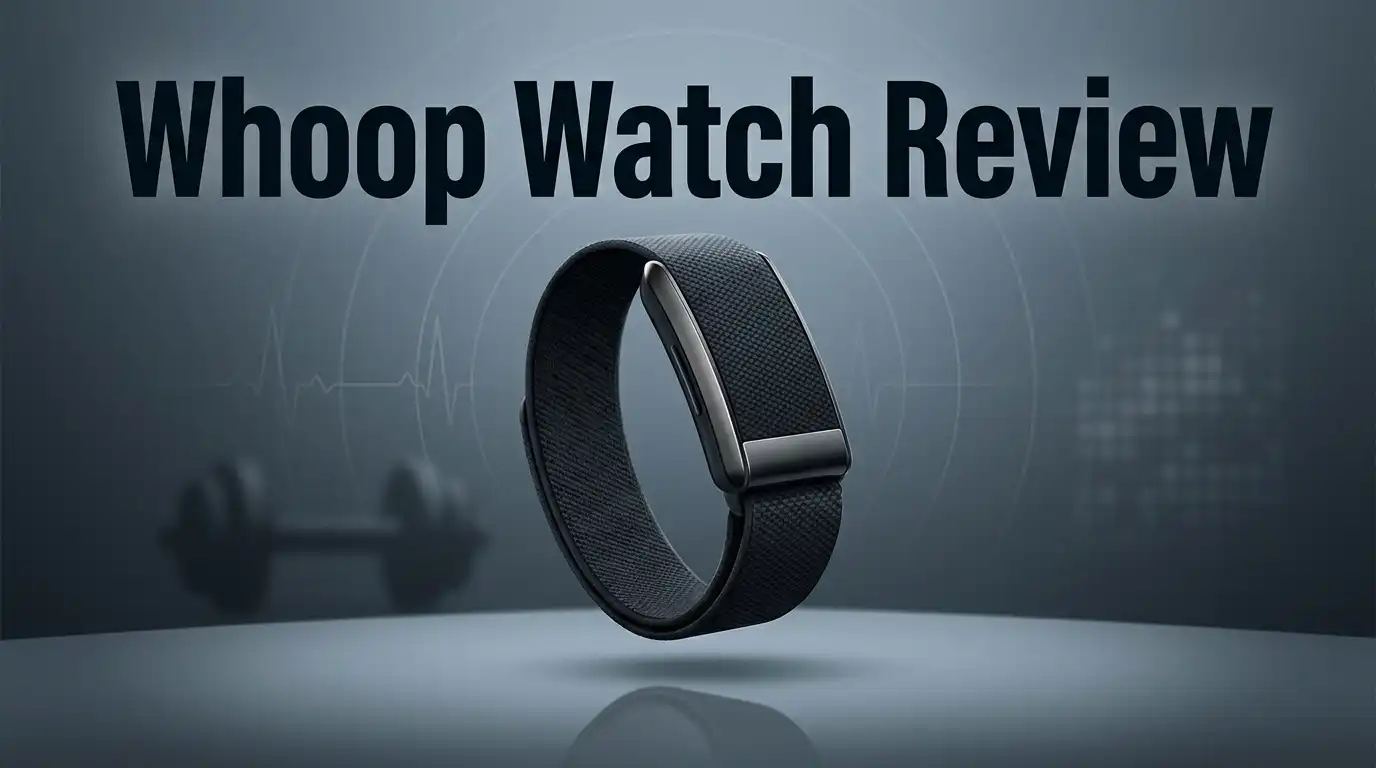
Let me clear up a common confusion first. The Whoop is not really a watch. People call it that, but it is a screenless fitness strap.
The device sits on your wrist inside a knitted band. It contains optical heart rate sensors, a skin temperature sensor, an accelerometer, and on the MG model, electrodes for ECG readings. It collects data all day and all night.
Your phone does the display work. The Whoop app turns raw sensor data into three core numbers. Strain measures how much stress your body took on. Recovery measures how ready you are. Sleep measures how well you repaired.
This is a coaching tool, not a smartwatch. It will not show you notifications, play music, or pay for coffee. It tracks your physiology and tells you what to do about it. That narrow focus is either the whole appeal or an instant deal breaker.
WHOOP Peak Bundle Review: The Sweet Spot
The Peak bundle is the version most people should consider. It costs $239 per year and includes the Whoop 5.0 hardware, a SuperKnit band, a waterproof Wireless PowerPack, and 12 months of Peak membership.
What makes Peak worth the jump over the base tier? Health Monitor with health alerts. Healthspan and Pace of Aging. Advanced sleep coaching. Women’s hormonal insights. These are the features that generate genuine conversation.
The hardware measures 34.7mm by 24mm by 10.6mm and weighs about 26.5 grams. It carries IP68 water resistance and survives submersion to 10 meters. You can swim, shower, and sweat without a second thought.
I wore this version for weeks straight. The comfort is excellent. The data depth is genuinely useful. The annual commitment is the part that stings. You pay upfront for a full year, so test your appetite for data before you click buy.
The Unboxing Experience: Simple and Clean
Whoop keeps the box small. Mine arrived in a flat rectangular package with a magnetic flap lid. No plastic clamshell. No wasted space.
Inside, the band sits pre threaded in its SuperKnit strap. The sensor pod is already clipped in place. Underneath a cardboard divider you find the Wireless PowerPack, a short USB C cable, and a tiny quick start card.
The card does one job. It points you to the app. That is the entire setup instruction.
Pairing took me under four minutes. You download the app, create an account, enter your membership code, and hold the band near your phone. It connects over Bluetooth and starts collecting immediately.
One small annoyance. The band arrives with almost no charge. You slide the PowerPack on and wait while it fills. I wanted baseline sleep data on night one, so I charged it during dinner and still made it to bed on time. Plan for that first hour.
WHOOP One Bundle Review: The Budget Entry

Last update on 2026-10-01 / Affiliate links / Images from Amazon Product Advertising API
The One bundle is the cheapest way into the ecosystem. It runs $199 per year and often appears discounted on Amazon below the official site price.
You still get the Whoop 5.0 hardware with the 14 plus day battery. You still get Sleep, Strain, and Recovery insights. You still get personalized coaching through the app.
What do you lose? The deeper health layers. No Healthspan. No Pace of Aging. Fewer advanced health alerts. No ECG features, since those belong to the MG hardware and the Life tier.
For a first time user, this is honestly enough. The core recovery coaching is the part that changes behavior. The longevity metrics are interesting, but they move slowly and most people check them once a month.
My advice is practical. Start with One. Upgrade later if you find yourself craving more. Whoop allows membership changes, so you are not locked into the entry tier forever.
Top 3 Alternative for Whoop 5.0


Last update on 2026-10-01 / Affiliate links / Images from Amazon Product Advertising API
Oura Ring 4 Smart Ring

Last update on 2026-10-01 / Affiliate links / Images from Amazon Product Advertising API
Amazfit Helio Strap Screenless Activity Tracker

Last update on 2026-10-01 / Affiliate links / Images from Amazon Product Advertising API
Garmin vivosmart 5 Health and Fitness Tracker
Design and Comfort: You Forget It Is There
The Whoop 5.0 is 7 percent smaller than the Whoop 4.0. That sounds minor on paper. On the wrist, it matters.
The SuperKnit band stretches and breathes. It does not trap sweat the way silicone straps do. I slept in mine for weeks and never woke up with a pressure mark or an itchy patch.
You can also wear it off the wrist. Whoop sells Body apparel with pockets in the bicep, torso, and shorts. Lifters love this option because a bare wrist makes barbell work easier.
Here is the trade off nobody mentions. The smaller, lighter pod moves more during hard movement. Several owners link the slimmed down design to heart rate dropouts. A looser fit reads worse than the older, heavier unit did.
So comfort improved, but stability may have slipped. You need the band snug, one finger width above the wrist bone, every single time.
Battery Life and Charging: The Best Upgrade
This is where Whoop clearly won. The Whoop 4.0 managed roughly five days. The Whoop 5.0 and MG both run 14 plus days.
That changes the ownership experience completely. Charging twice a month feels almost invisible. Charging every five days felt like a chore.
The Wireless PowerPack slides onto the top of the pod and charges it while you wear it. You never remove the band. You never lose a night of sleep data. The PowerPack itself takes about two hours to fill and holds enough juice for multiple top ups.
The PowerPack is waterproof too. You can shower with it attached, which sounds unnecessary until you realize it means zero downtime.
One honest gripe. The PowerPack is small and easy to misplace. I lost mine behind a couch cushion for two days. Keep it on your nightstand.
Sleep Tracking: Where Whoop Shines Brightest
Sleep is Whoop’s strongest category. The band stages your night into light, deep, and REM sleep, then compares it against what your body actually needed.
That second part is the magic. Whoop calculates a sleep need based on your recent strain, your sleep debt, and your naps. Then it scores your performance against that number.
The Sleep Coach tells you a specific bedtime. Not a vague suggestion. An actual time, adjusted nightly based on your goal for tomorrow.
I found the staging believable and the trends genuinely useful. After two weeks I could see exactly how alcohol wrecked my REM sleep and how a 10pm bedtime added deep sleep minutes.
Sleep staging from any wrist device is an estimate, not a lab result. Treat the absolute minutes with some skepticism. Trust the direction of travel instead. That is where the value sits.
Recovery and Strain: The Daily Decision Engine
Every morning Whoop gives you a Recovery percentage in green, yellow, or red. It blends heart rate variability, resting heart rate, respiratory rate, and sleep performance.
Then it suggests a Strain target for the day. Strain runs on a 0 to 21 scale based on cardiovascular load, not calories.
This loop is addictive in a productive way. A red recovery morning genuinely made me swap a hard interval session for an easy walk. My next day bounced back higher.
The system also tracks Strain in real time during workouts. You see your load climbing and can stop at your target instead of guessing.
The downside is overthinking. Some users start fearing red days. They cancel workouts they could have handled fine. Whoop is a suggestion, not a doctor’s order. Your own sense of how you feel still matters more than a percentage on a screen.
Heart Rate Accuracy: The Honest Problem
I cannot write a fair review without addressing this. Heart rate accuracy is the loudest complaint about the Whoop 5.0 and MG.
Scroll through the official Whoop community forums and the pattern repeats. Users who upgraded from the 4.0 report undercounted steps, missed heart rate data during workouts, and absurd readings during ordinary tasks.
One frequently cited example involved a user getting 122bpm and a Strain of 13.8 while washing a bike. Showering, cleaning, and strength training seem to be the worst offenders.
Independent testers suspect the optical sensor hardware did not meaningfully change from the 4.0 generation, despite the slimmer housing. The lighter pod may simply move more.
What can you do about it? Wear it tighter. Move it higher up the forearm. Clean the sensor weekly. For serious interval training, pair a chest strap. Whoop supports external heart rate monitors, and that single change fixes most of the problem.
Whoop Age and Healthspan: Interesting or Gimmick?
Healthspan is Whoop’s longevity feature. It produces a Whoop Age, which estimates your physiological age against your calendar age. It also shows your Pace of Aging.
The math pulls from nine behaviors and metrics, including VO2 max, sleep consistency, resting heart rate, strength training frequency, and daily steps.
Seeing a Whoop Age lower than my real age felt great. Seeing it climb after a bad week felt like a slap. That emotional hook is clearly intentional.
Is it scientifically precise? No. These composite age scores are motivational estimates built on real inputs, not clinical diagnoses. Treat the number as a progress bar, not a prophecy.
The practical value is the breakdown. The app lists which behaviors drag your score down and by how much. Mine told me strength training frequency was my weakest input. That was correct, and I fixed it.
Membership Pricing: Read This Before You Buy
Whoop pricing confuses almost everyone, so here is the plain version.
Whoop One costs $199 per year and includes Whoop 5.0 hardware. Whoop Peak costs $239 per year and adds Healthspan, Health Monitor, and advanced insights. Whoop Life costs $359 per year, includes the Whoop MG hardware, and unlocks ECG readings with AFib detection plus daily blood pressure insights.
First year promotional pricing sometimes drops One to $149. Amazon bundles occasionally undercut the official site, which is worth checking.
The hardware is effectively free, bundled into your membership. Upgrades to new hardware generations come included if your membership qualifies.
Here is the uncomfortable truth. Cancel your membership and the band stops working. There is no offline mode. No basic step counting. Over three years, Peak costs you more than $700. Compare that honestly against a one time purchase device before committing.
App Experience: Dense but Rewarding
The Whoop app is your entire interface, so it needs to be good. Mostly it is.
The home screen shows three rings: Recovery, Sleep, and Strain. Tap any of them and you fall into layers of charts, trends, and explanations.
The Whoop Coach feature uses AI to answer plain questions. I asked why my recovery dropped and got a specific answer referencing my elevated resting heart rate and short REM sleep. That beats staring at a graph and guessing.
Journal entries are the hidden gem. You log behaviors like caffeine timing, alcohol, late meals, or magnesium. After a few weeks, Whoop tells you the measured effect each one has on your recovery. Mine proved alcohol cost me 23 percent recovery.
The app can overwhelm newcomers. There is a lot to absorb. Give yourself two weeks before you judge it.
What the Whoop Watch Does Not Do Well
Authentic reviews name the flaws. Here are mine, plainly.
It has no screen, so it has no convenience. No time, no pace, no notifications, no music control, no maps, no payments. Every answer requires your phone.
There is no integrated GPS. Distance tracking relies on your phone. Leave the phone behind and your run has no route.
Heart rate accuracy during resistance training is unreliable. Weightlifting produces spiky, questionable readings. Strain for lifting sessions often feels wrong.
Step counting is weak. Multiple owners report undercounting. If steps are your main metric, this is the wrong device.
The subscription never ends. You rent your tracker permanently.
Finally, it can feed anxiety. A red recovery score can genuinely ruin a morning for people prone to overanalyzing. That is worth knowing about yourself before you buy.
Pros and Cons of the Whoop Watch 2026
Pros
- Outstanding 14 plus day battery life on the Whoop 5.0 and MG, roughly triple the Whoop 4.0
- Charge while wearing it using the waterproof Wireless PowerPack, so you never lose data
- Best recovery and strain coaching available in any consumer wearable
- Excellent sleep analysis with a specific nightly bedtime recommendation
- Comfortable SuperKnit band that disappears on the wrist, even overnight
- Journal feature reveals the measured impact of your own habits
- Hardware included with membership, plus free upgrades for eligible members
- IP68 rated and submersible to 10 meters
- ECG and blood pressure insights available on the Whoop MG with Life membership
- Supports external chest straps for accurate workout heart rate
Cons
- Subscription required forever, and the band stops working if you cancel
- Heart rate accuracy complaints are widespread, especially during lifting and chores
- No screen, no clock, no notifications, no music control
- No integrated GPS, so runs depend on carrying your phone
- Step counting is noticeably less reliable than competitors
- Band placement must be precise or data quality drops
- Annual upfront payment is a significant commitment
- Can encourage obsessive data checking in some users
- Small PowerPack is easy to misplace
- Total cost over three years exceeds most premium smartwatches
Who Should Buy the Whoop Watch?
Buy it if you train seriously and keep getting your recovery wrong. Runners, cyclists, triathletes, and CrossFit athletes get the most value. The Strain and Recovery loop genuinely changes how you plan a training week.
Buy it if you hate wearing a screen. Some people find smartwatches intrusive. Whoop gives you data without buzzing at you.
Buy it if sleep is your main problem. The Sleep Coach and Journal combination is the most practical sleep tool I have used.
Skip it if you want one device to do everything. A Garmin or an Apple Watch handles notifications, GPS, payments, and fitness in one package with no subscription.
Skip it if steps are your priority. Skip it if an annual fee bothers you. And skip it if you already know you will spiral over a red score every morning.
Frequently Asked Questions
Is the Whoop watch worth it in 2026?
It is worth it for dedicated trainers who will act on the data. The recovery coaching, sleep analysis, and 14 day battery are genuinely class leading. It is not worth it for casual users who mainly want step counts and notifications, because the subscription cost and the missing screen make it poor value for that purpose.
Does the Whoop stop working if I cancel my membership?
Yes. The device has no standalone mode. Cancel your membership and the band stops collecting and displaying data entirely. This is the single most important fact to understand before buying. You are renting a service, and the hardware is simply bundled in.
How accurate is the Whoop 5.0 heart rate sensor?
Resting and sleeping heart rate accuracy is good. Workout accuracy is the problem area, particularly during strength training, showering, and manual tasks. Many owners report it performs worse than the Whoop 4.0. Pairing a chest strap for hard sessions solves most of these issues.
What is the difference between Whoop 5.0 and Whoop MG?
Both share the same body, sensors, and 14 plus day battery. The MG adds electrodes for on demand ECG readings with AFib detection and daily blood pressure insights. The MG only comes with the Whoop Life membership at $359 per year.
Can I wear the Whoop in the shower or pool?
Yes. Both models carry IP68 water resistance and are submersible to 10 meters. The Wireless PowerPack is waterproof as well, so you can charge during a shower. Note that water on the sensor sometimes causes inaccurate heart rate spikes.
Does the Whoop have GPS?
No. The device has no integrated GPS. It uses your phone’s GPS for distance and route data, so you must carry your phone to record a mapped run or ride.
How long does the Whoop battery really last?
Whoop rates the 5.0 and MG at 14 plus days. In real use, expect roughly 11 to 14 days depending on how many workouts you log and how often you use features like ECG readings. That is still a major improvement over the five day Whoop 4.0.
Is Oura Ring better than Whoop?
They serve different users. Oura Ring 4 is better for sleep tracking, passive wellness monitoring, and all day comfort with no wrist bulk. Whoop is better for athletes who need live workout strain and detailed training guidance. Oura also charges a lower monthly fee.
Can I buy Whoop on Amazon cheaper than the official site?
Sometimes yes. Amazon bundles have appeared at $199 when the Whoop site listed the same package at $239. Prices shift frequently, so compare both before purchasing. Amazon listings are sold through authorized channels and activate normally in the app.
Does Whoop work without a phone?
Not practically. The band stores data for a few days, but you need the app to view anything, change settings, or sync. There is no screen and no standalone functionality on the device itself.

Hi, I’m Lucy Jones, a dedicated watch enthusiast and reviewer. I spend my time hunting down, testing, and evaluating the most intriguing wristwatches on the market. My goal is to guide you through the overwhelming choices with honest, hands-on insights into every timepiece.