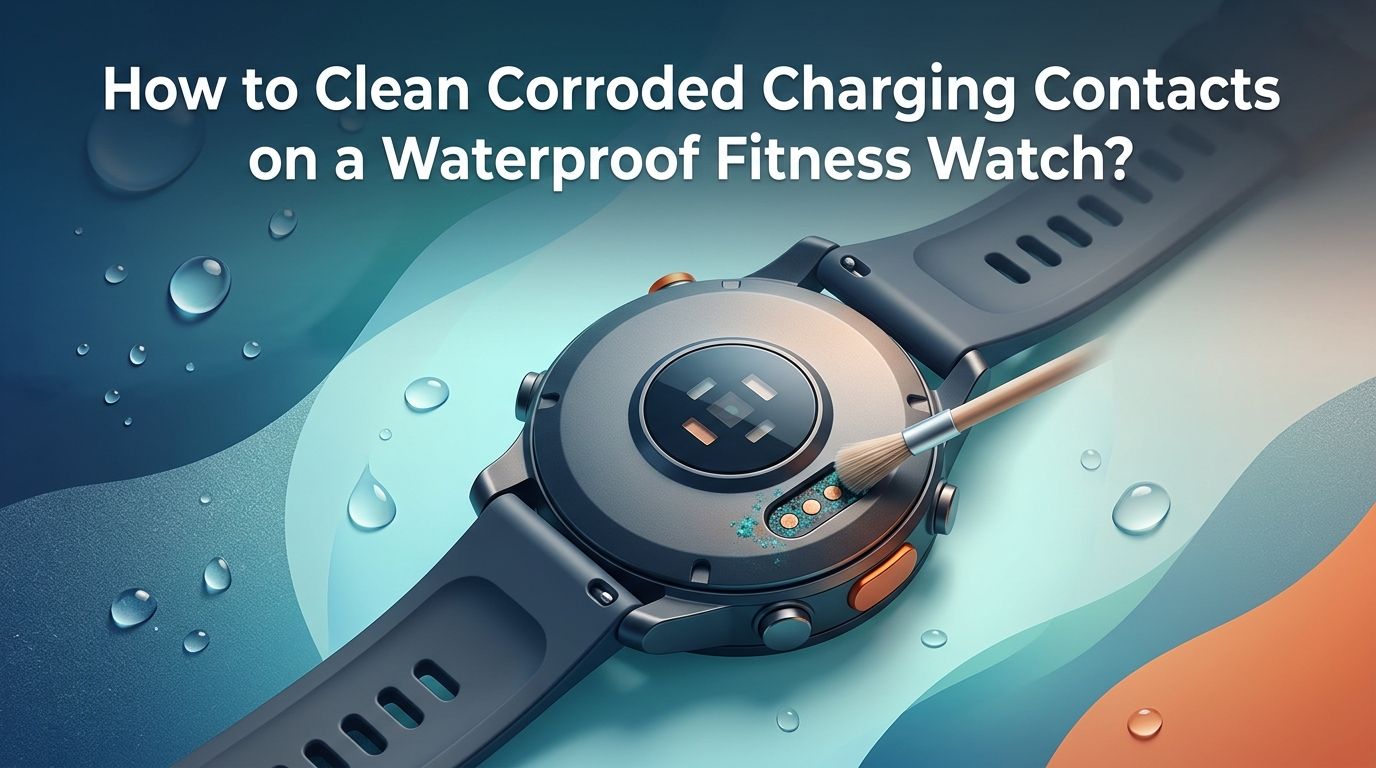
How to Clean Corroded Charging Contacts on a Waterproof Fitness Watch?
You just got back from a great swim or an intense workout. You place your fitness watch on the charger, and nothing happens.
You flip the watch over and notice a green, white, or crusty buildup on the charging contacts. Sound familiar? Corroded charging contacts are one of the most common reasons waterproof fitness watches stop charging.
The good news is that corrosion on charging pins does not always mean your watch is ruined. In most cases, you can fix this problem at home with a few simple household items.
Key Takeaways
- Corrosion on charging contacts is usually caused by sweat, salt water, or trapped moisture. These substances contain minerals and salts that react with the metal pins on your watch, forming green or white crusty deposits over time. Regular cleaning after workouts can prevent most corrosion from forming in the first place.
- Isopropyl alcohol (70% or higher) and a cotton swab are the safest and most effective first line of cleaning. This method works for light to moderate corrosion and is recommended by most watch manufacturers, including Garmin and Fitbit. It evaporates quickly and leaves no residue behind.
- White vinegar is a stronger option for stubborn corrosion. Its mild acidity helps dissolve mineral buildup and oxidation. Always follow up with isopropyl alcohol to remove any vinegar residue and dry the contacts completely.
- A pencil eraser or fine grit sandpaper (1000 grit or higher) can physically remove tough corrosion. These tools gently abrade the corroded layer and expose fresh metal underneath. Use them carefully to avoid scratching or damaging the contact pins.
- Never charge your watch while the contacts are wet or damp. Moisture on the pins during charging accelerates corrosion and can even cause a short circuit. Always dry your watch thoroughly before placing it on the charger.
- Applying a thin layer of dielectric grease after cleaning can protect contacts from future corrosion. This non conductive grease creates a moisture barrier that shields the metal from sweat and water exposure.
Why Do Charging Contacts Corrode on Waterproof Watches?
Your fitness watch may be waterproof, but its charging contacts are exposed metal. Sweat contains salt, lactic acid, and other minerals that sit on those tiny pins after every workout. Over time, these substances react with the metal and form corrosion.
Salt water exposure from swimming makes this problem worse. Chlorinated pool water can also leave deposits on the contacts. Even regular tap water contains dissolved minerals that contribute to buildup if the watch is not dried properly.
The design of most fitness watches leaves the charging pins on the back of the case, pressed against your skin. This means they are in constant contact with moisture and sweat during use. Humidity in the air adds another layer of risk, especially in tropical or coastal climates.
Signs That Your Charging Contacts Are Corroded
The most obvious sign is a green, white, or brownish crusty residue on the metal pins on the back of your watch. This discoloration indicates oxidation and mineral deposits have formed on the surface.
Your watch may also charge slowly, charge intermittently, or refuse to charge at all. You might notice the charging icon flickering on and off when the watch is placed on the cradle. Some users report that the watch only charges if they press the cable firmly against the pins.
If you see any discoloration or experience inconsistent charging, inspect the contacts closely. Use a magnifying glass or your phone’s camera zoom to get a better look. Early detection makes cleaning much easier and prevents permanent damage to the pins.
Tools and Materials You Will Need
Before you start cleaning, gather a few basic supplies. You likely already have most of these at home. Here is what works best for this job.
Cotton swabs (Q tips) are essential for applying cleaning solutions to the small contact area. A soft bristled toothbrush helps scrub away loose debris without scratching the metal. You will also need isopropyl alcohol at 70% concentration or higher as your primary cleaning agent.
For tougher corrosion, grab some white vinegar and a pencil eraser. Fine grit sandpaper (1000 to 2000 grit) is useful for severe cases. Keep a lint free cloth or microfiber cloth handy for drying. A toothpick or wooden stick can help dislodge debris from tight spaces around the pins.
Method 1: Cleaning With Isopropyl Alcohol
This is the safest and most widely recommended method. Most watch manufacturers suggest isopropyl alcohol as the go to cleaning agent for charging contacts. It dissolves oils, removes light corrosion, and evaporates quickly without leaving moisture behind.
Dip a cotton swab in isopropyl alcohol (70% or 91%). Gently rub the corroded charging contacts in small circular motions. You will see the green or white residue transfer onto the swab. Flip to a clean side and repeat until the swab comes away clean.
Use a soft toothbrush dipped in alcohol for stubborn spots. Scrub gently and then wipe with a dry lint free cloth. Allow the contacts to air dry for at least five minutes before attempting to charge.
Pros: Safe for all watch brands, fast evaporation, easy to find at any pharmacy, no risk of water damage.
Cons: May not remove heavy or deep corrosion, requires multiple passes for moderate buildup.
Method 2: Cleaning With White Vinegar
White vinegar is a mild acid that dissolves mineral deposits and oxidation more aggressively than alcohol alone. This method is ideal for moderate to heavy corrosion that isopropyl alcohol cannot fully remove.
Dip a cotton swab in white vinegar and apply it to the corroded contacts. You may notice slight bubbling, which means the acid is reacting with the corrosion. Let the vinegar sit on the contacts for 30 to 60 seconds, then scrub gently with the swab or a soft toothbrush.
After cleaning with vinegar, always follow up with isopropyl alcohol. This removes any vinegar residue and ensures the contacts are completely dry. Vinegar left on metal surfaces can cause new corrosion over time, so this follow up step is critical.
Pros: More effective against heavy corrosion, cheap and available in every kitchen, safe on most metals.
Cons: Must be fully removed after use, slight odor, requires a two step process with alcohol afterward.
Method 3: Using a Pencil Eraser
This old school trick works surprisingly well. A standard pencil eraser acts as a gentle abrasive that removes surface corrosion without damaging the underlying metal. Many electronics repair guides and even Garmin’s official support page recommend this method.
Rub the eraser firmly but gently over each corroded contact pin. The eraser material lifts away the oxidized layer and exposes clean metal beneath. You will see eraser shavings mixed with green or white residue come off the contacts.
Brush away all eraser debris with a dry toothbrush or compressed air after you finish. Then wipe the contacts with an alcohol soaked cotton swab to clean any remaining particles. This combination of physical and chemical cleaning is very effective.
Pros: No liquids required, very low risk of damage, quick and simple.
Cons: Does not work well on heavily pitted corrosion, eraser shavings can get stuck in crevices, limited reach on recessed pins.
Method 4: Fine Grit Sandpaper for Severe Corrosion
When other methods fail, fine grit sandpaper (1000 to 2000 grit) can remove deep corrosion. This is a more aggressive approach and should be used only as a last resort. The goal is to carefully sand away the corroded layer without removing too much metal.
Cut a small strip of sandpaper and fold it to fit the size of the contact pins. Rub gently across each pin with light pressure. Check your progress frequently to avoid over sanding. You want to see clean, shiny metal without going too deep.
Follow up by wiping the contacts with isopropyl alcohol to remove any metal dust or particles. Let everything dry completely before testing the charger. This method can restore contacts that looked beyond repair.
Pros: Removes the most stubborn corrosion, exposes fresh metal for a strong charging connection.
Cons: Risk of removing too much material, can void warranty if done improperly, not recommended for gold plated contacts.
How to Clean the Charging Cable or Cradle
People often forget that corrosion can also build up on the charging cable or dock. If both the watch and the cable contacts are dirty, cleaning just one side will not solve the problem. Inspect the cable’s metal connectors closely.
Use the same isopropyl alcohol and cotton swab method on the cable’s contact points. A toothpick wrapped in a small piece of cloth can reach into narrow charging cradles. Pay special attention to any spring loaded pogo pins on the cable, as debris can get trapped underneath them.
If the cable’s contacts are severely corroded or physically damaged, the cable itself may need replacement. Most manufacturers sell replacement charging cables directly through their websites.
Drying and Testing After Cleaning
Proper drying is one of the most important steps. Never place your watch on the charger while any moisture remains on the contacts. Charging with wet pins is one of the fastest ways to cause new corrosion or even short circuit damage.
After cleaning, wipe the contacts with a dry lint free cloth. Then let the watch sit with the contacts exposed to air for at least 10 minutes. You can use compressed air to speed up the drying process if you have it available.
Once everything is dry, place the watch on the charger and check for a solid charging connection. The charging icon should appear and remain steady. If the watch still does not charge, repeat the cleaning process or try a different charging cable to isolate the problem.
How to Prevent Corrosion From Coming Back
Prevention is far easier than repair. Rinse your watch under fresh water after every swim or heavy workout. This washes away salt, chlorine, and sweat before they can react with the metal contacts. Make it a habit just like you would rinse goggles after a pool session.
Dry the charging contacts with a soft cloth before placing the watch on the charger. Some users apply a thin coat of dielectric grease to the contacts after cleaning. This non conductive grease creates a waterproof barrier that blocks moisture and salts from reaching the metal.
Avoid covering the charging port with rubber caps or port covers. While this seems logical, multiple users and repair forums report that covers actually trap moisture and sweat against the contacts, making corrosion worse. Leaving the port open allows it to dry naturally.
Common Mistakes to Avoid
Do not use steel wool, metal brushes, or coarse sandpaper on your charging contacts. These tools are too aggressive and will scratch or remove the thin metal plating on the pins. Once the plating is gone, the base metal corrodes much faster.
Avoid using tap water as a cleaning agent. Tap water contains dissolved minerals that can leave new deposits on the contacts. Stick to isopropyl alcohol or distilled water if you need a liquid cleaner.
Do not blow on the contacts to dry them. Your breath contains moisture that adds to the problem. Also avoid using household cleaning sprays, bleach, or acetone. These chemicals can damage the watch case, seals, or gaskets that keep your watch waterproof.
When to Seek Professional Repair or Replacement
Sometimes corrosion goes too deep. If the metal contact pins are visibly pitted, flattened, or eaten away, home cleaning will not restore a reliable connection. This usually happens after months or years of neglected corrosion.
Some watches allow you to replace the back panel that contains the charging contacts. Garmin Fenix models, for example, have user replaceable back plates available through third party repair suppliers. This can be a cost effective fix compared to buying an entirely new watch.
If your watch is still under warranty and the corrosion appeared under normal use conditions, contact the manufacturer’s support team. Some brands will replace the device or offer a discounted repair. Document the corrosion with clear photos before reaching out.
How Often Should You Clean the Charging Contacts?
A good rule of thumb is to wipe the contacts with a dry cloth every time you charge your watch. This takes only a few seconds and removes fresh sweat and moisture before they cause any damage.
Do a deeper clean with isopropyl alcohol once a week if you swim regularly or sweat heavily during workouts. Users who exercise daily in humid environments should clean even more frequently. Monthly deep cleaning is sufficient for casual users who wear the watch primarily for step tracking.
Garmin’s official support page recommends cleaning the contacts after every workout session. Fitbit suggests regular cleaning to maintain proper charging performance. Following these simple maintenance routines can extend the life of your watch by years.
Frequently Asked Questions
Can I use baking soda to clean corroded charging contacts on my fitness watch?
Baking soda mixed with a small amount of water creates a mild abrasive paste that can help remove corrosion. However, it leaves residue that is difficult to remove from small contact pins. If you use it, rinse thoroughly with isopropyl alcohol afterward and dry completely. Isopropyl alcohol alone or white vinegar are generally better choices for the small scale of watch contacts.
Will cleaning corroded contacts void my watch warranty?
Cleaning with isopropyl alcohol and a cotton swab is the manufacturer recommended method and will not void your warranty. Using sandpaper or opening the watch case, however, may void the warranty depending on the brand. Always check your warranty terms before using abrasive methods.
Why do my charging contacts keep corroding even after I clean them?
Repeated corrosion usually means moisture or sweat is sitting on the contacts regularly. Make sure you rinse the watch with fresh water after workouts and dry the contacts before charging. Applying a thin layer of dielectric grease after cleaning creates a protective barrier that slows down future corrosion significantly.
Is it safe to use rubbing alcohol on my waterproof fitness watch?
Yes. Isopropyl alcohol is safe for waterproof fitness watches and is recommended by most manufacturers. Use 70% or higher concentration for best results. It evaporates quickly, leaves no residue, and will not damage the watch seals or gaskets. Avoid pouring large amounts directly on the watch. Apply it with a cotton swab instead.
Can corroded charging contacts damage my fitness watch permanently?
If left untreated for a long time, severe corrosion can eat through the metal plating and damage the underlying circuitry. This can lead to permanent charging failure. In most cases, early to moderate corrosion is fully reversible with the cleaning methods described in this guide. Regular maintenance is the best way to avoid permanent damage.
Should I use a charging port cover to prevent corrosion?
Most repair experts and user communities recommend against using rubber port covers. These covers tend to trap sweat and moisture directly against the metal contacts, which speeds up corrosion rather than preventing it. Leaving the port open allows natural airflow to dry the contacts between uses.

Hi, I’m Lucy Jones, a dedicated watch enthusiast and reviewer. I spend my time hunting down, testing, and evaluating the most intriguing wristwatches on the market. My goal is to guide you through the overwhelming choices with honest, hands-on insights into every timepiece.