Why Is My Watch Making A Loud Grinding Noise When Shaken?
You shake your watch and hear a loud grinding or rattling sound. Your first thought? Something must be broken.
But here is the good news — that noise is usually completely normal.
Most automatic watches make this exact sound. The grinding or rattling you hear comes from a small spinning part inside the watch called the rotor. It moves freely when the watch is shaken or worn, and that movement is what winds the watch automatically.
The loudness of the noise depends on how the rotor is built. Some watches use precision bearings that run quietly. Others use a different bearing design that creates a more noticeable sound during movement.
In a Nutshell
- The grinding noise is almost always normal. It comes from the self-winding rotor spinning freely inside your automatic watch.
- The rotor is a small weighted piece that rotates when your wrist moves. It winds the mainspring and keeps the watch running.
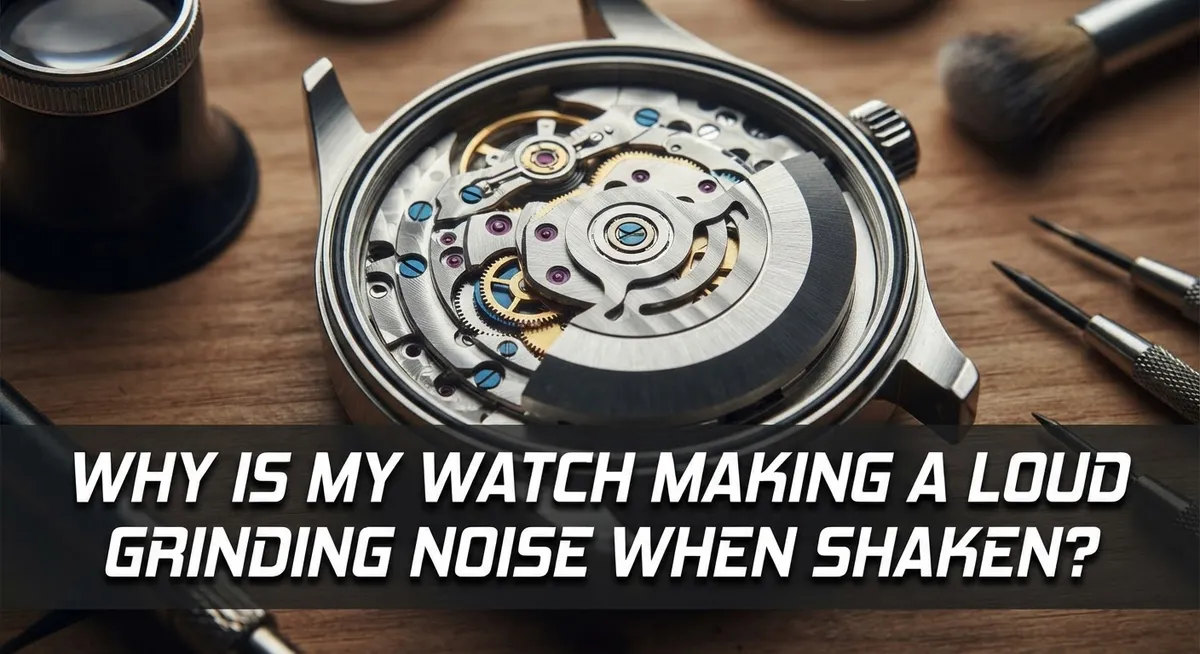
- You can often see the rotor through a clear exhibition case back on the rear of the watch.
- The loudness of the noise depends on the rotor’s bearing design. Some watches use ball bearings, which produce a louder sound. Others use precision jewelled bearings, which run much quieter.
- High-quality automatic watches commonly make this noise. It is a sign of a working mechanical movement, not a defect.
- The only time to be concerned is if the noise is new, suddenly louder, or paired with other problems like the watch stopping or losing time.
What Is That Grinding Noise Inside Your Watch?
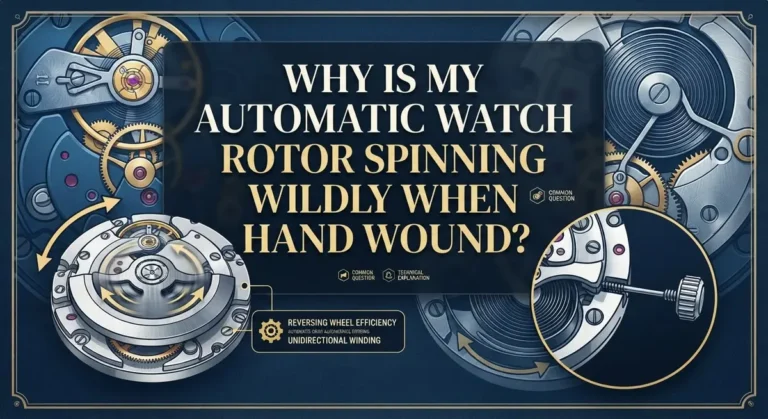
That grinding noise you hear is the self-winding rotor doing its job. Inside your automatic watch sits a weighted metal disc. This disc spins freely whenever you move your wrist. The spinning motion winds the mainspring, which powers your watch throughout the day.
Think of it like a tiny turbine. Every time you shake or move your arm, the rotor swings around. It catches the energy from your movement and converts it into stored power. This is what makes automatic watches so clever—they wind themselves without any batteries or manual winding needed.
The noise intensity varies greatly between watch models. Some watches produce barely a whisper. Others sound like marbles rolling inside a tin can. This difference comes down to how the rotor sits. Watches with precision jewelled bearings tend to spin quietly. Watches with ball bearings often sound louder because the balls allow more movement and vibration.
You can actually see this rotor in action if your watch has a clear exhibition case back. Look through the transparent window on the rear of the watch. You’ll spot a weighted disc rotating as you move your wrist. Watching it spin is fascinating and confirms the noise is completely normal.
The grinding sound becomes more obvious when you shake your watch deliberately. You’re forcing the rotor to spin faster than normal movement would. This amplifies the noise. It’s similar to how shaking a mechanical toy makes it rattle more than steady use would.
High quality automatic watches commonly make this noise. It’s not a sign of damage or poor craftsmanship. Instead, it proves your watch’s mechanical movement is working perfectly. The noise shows the rotor is free to move and wind your watch efficiently. This is exactly how the system was designed to function.
How the Automatic Watch Rotor Works
An automatic watch rotor is a small, weighted metal component that sits inside your watch movement. It spins freely whenever your wrist moves. This spinning motion winds the mainspring, which stores energy to keep your watch running.
The rotor typically weighs between 2 and 4 grams. It rotates on a central pivot point called a bearing. When you shake your watch or move your arm, gravity and momentum cause the rotor to spin rapidly in all directions.
The bearing design determines how much noise you hear. Some watches use jewelled bearings, which are tiny synthetic rubies or sapphires. These bearings reduce friction and create minimal grinding sounds. Other watches use ball bearings made from steel or ceramic. Ball bearings allow the rotor to spin more freely, which produces louder noise.
The rotor spins at high speeds, sometimes reaching 300 to 400 rotations per minute during normal wear. When you shake your watch deliberately, you can accelerate this spinning even more. This increased speed makes the grinding noise more noticeable and dramatic.
You can actually watch this process happen if your watch has an exhibition case back. The clear glass or sapphire back panel lets you see the rotor spinning in real time. This visual confirmation helps many watch owners understand that the noise is completely normal.
The grinding sound serves an important purpose. It tells you that your automatic movement is functioning properly. A silent rotor might actually indicate a problem, like a seized bearing or broken pivot.
Different watch brands produce different noise levels. Luxury manufacturers often use precision bearings that minimize sound. Mass-produced automatic watches typically have louder rotors. Neither option is wrong. The noise simply reflects different engineering choices and bearing materials used during manufacturing.
Why the Noise Gets Louder When You Shake the Watch
When you shake your watch, the grinding noise gets louder because the rotor moves faster. The rotor is a small weighted piece inside your automatic watch that spins freely. Shaking your wrist causes this rotor to rotate at higher speeds than normal wear does.
Think of it like this: during regular arm movement, the rotor spins gently and steadily. When you deliberately shake the watch, you create sudden, rapid movements. These movements force the rotor to spin more aggressively, and that’s when you hear the noise increase.
The bearing design matters a lot here. Watches with ball bearings produce louder grinding sounds compared to those with jewelled bearings. This is because ball bearings allow more movement and create more friction noise when the rotor spins quickly. When you shake the watch, this friction becomes very noticeable.
Your watch movement is also more active during shaking. The rotor can spin at 300 to 400 rotations per minute during normal wear. Shaking pushes it even faster, so the mechanical sounds become amplified. You’re essentially hearing the full power of your watch’s self winding system.
This louder noise is completely normal and expected. You’re simply exposing what the rotor does all the time. Many owners never notice this sound because they don’t shake their watches deliberately. Once you start listening for it, you realize how active the mechanism truly is.
The increased volume tells you your rotor is working properly. It’s moving freely without restrictions. If the noise suddenly stopped or changed dramatically, that would be a concern worth investigating. But louder grinding during shaking? That’s just your automatic watch functioning exactly as designed.
How Rotor Bearing Design Affects Noise Level
The bearing system inside your watch’s rotor plays a huge role in how much noise you hear. Different bearing designs create different sound levels, and understanding this helps you know what’s normal for your specific watch.
Jewelled bearings use tiny synthetic rubies or sapphires to support the rotor’s spinning motion. These bearings reduce friction significantly. The result is a much quieter operation. Watches using jewelled bearings produce minimal grinding sounds, even during vigorous shaking. This design costs more to manufacture, which is why premium watch brands often use it.
Ball bearing designs take a different approach. They use small metal balls to allow the rotor to spin freely. Ball bearings are less expensive to produce than jewelled alternatives. However, they create more friction and generate louder noise during operation. Many respected watch manufacturers use ball bearings successfully. The grinding sound you hear is simply the balls rolling as the rotor moves.
The bearing quality directly affects noise levels. A well made bearing system keeps friction low and sound minimal. A looser or worn bearing system creates more rattling and grinding. This is why two automatic watches can sound completely different when shaken, even if both are functioning perfectly.
Your watch’s bearing design was chosen intentionally by the manufacturer. It reflects their engineering priorities, cost structure, and brand philosophy. A louder grinding noise doesn’t mean your watch has inferior bearings. It simply means your particular watch uses a bearing system that produces more audible sound.
When you shake your watch and hear grinding, the bearing design determines how pronounced that sound becomes. Jewelled bearings keep it subtle. Ball bearings make it obvious. Both approaches work reliably for years. The noise you’re hearing is just the bearing system doing exactly what it’s designed to do.
When Is a Grinding Noise Normal vs. a Warning Sign?
A grinding noise from your watch during shaking falls into two categories: normal operation and actual warning signs. Understanding the difference saves you from unnecessary worry or missed maintenance needs.
Normal grinding noise happens in almost all automatic watches. The rotor inside your watch spins constantly as you move your arm. When you deliberately shake your watch, this spinning becomes more aggressive and creates louder sound. This is expected behavior, not a defect. The noise simply indicates your rotor is doing its job to wind the mainspring.
You can tell the noise is normal if it only appears during movement or shaking. The sound should be consistent and rhythmic. It typically stops or quiets down when the watch sits still. This pattern confirms the rotor is functioning as designed.
Warning signs are different. Listen for grinding that happens even when your watch is stationary. Notice if the noise sounds rough, irregular, or metallic in a concerning way. A true problem often includes grinding plus other symptoms like the watch running slow, stopping unexpectedly, or the second hand jumping instead of sweeping smoothly.
Another warning sign is grinding that suddenly appears after years of normal operation. If your watch never made this noise before and now it does, something may have changed inside the movement. Sand or debris entering the case could cause this. A damaged bearing might also create unusual grinding sounds.
The key difference is context. Normal grinding happens during and immediately after movement. Warning sign grinding persists or occurs independently of shaking. If you’re uncertain, keep a log of when the noise happens. Note whether your watch keeps accurate time and winds properly. This information helps you determine if professional service is actually needed or if you simply have a normally functioning automatic watch.
How to Tell If Your Watch Noise Indicates a Real Problem
A grinding noise from your watch during shaking is usually normal. Most automatic watches make this sound because the rotor spins freely inside the movement. The real question is whether your specific noise indicates a genuine problem or just typical operation.
Start by listening carefully to when the noise occurs. Normal grinding happens only during movement or when you shake the watch. If the noise appears constantly, even when the watch sits still on a table, something may be wrong. A watch that grinds while stationary could have a loose component or debris inside the movement.
Pay attention to how the sound has changed over time. A watch that suddenly develops grinding after years of silent operation deserves investigation. If your watch has always made this noise since you first got it, that’s typically a sign it’s normal for that particular model. Different manufacturers design rotors differently, so some watches naturally sound louder than others.
The quality of the grinding matters too. A smooth, consistent grinding sound is usually fine. A harsh, metallic grinding with irregular patterns might suggest internal damage. Listen for any clicking, popping, or scraping sounds mixed in with the grinding. These additional noises can indicate problems that need professional attention.
Test the watch’s performance as well. Does it keep accurate time? Does it wind properly when you wear it? A watch that functions perfectly while making noise is almost certainly operating normally. Performance issues combined with new grinding noises suggest a real problem.
If you’re still unsure, have a professional watchmaker listen to it. They can compare your watch’s sound to others of the same model and tell you immediately whether the noise is expected or problematic. Most watch grinding is completely harmless, but getting expert confirmation gives you peace of mind.
Common Misconceptions About Watch Noises
Many watch owners worry that grinding noises mean something is broken. This misconception causes unnecessary stress and confusion about automatic watch behavior.
The biggest myth is that grinding equals damage. Most people assume any unusual sound signals a defect. In reality, grinding from an automatic watch during shaking is completely normal. Your watch is simply doing what it was designed to do.
Another common false belief is that only cheap watches make grinding noises. High quality timepieces produce these sounds too. The difference lies in how loud the grinding becomes, not whether it happens. Expensive watches with precision jewelled bearings sound quieter. Budget friendly watches with ball bearing designs sound louder. Both are functioning correctly.
People often think grinding noise means the rotor is broken or loose. The rotor is supposed to move freely and spin during shaking. That movement creates the noise you hear. A loose rotor would actually rattle differently and cause real problems. Normal grinding has a consistent, smooth quality to it.
Many owners believe the noise gets worse over time as the watch deteriorates. This misunderstanding leads them to seek unnecessary repairs. Grinding noise doesn’t indicate wear or aging. Your watch sounds the same way it did when new because the rotor operates the same way.
Some people think they should never shake their watch because of the noise. This worry is unfounded. Shaking your watch doesn’t harm the rotor or any internal parts. The rotor is built to handle this movement.
The truth is simple: grinding during shaking is expected automatic watch behavior. It’s not a warning sign. It’s not a defect. It’s not a reason to worry. Understanding this difference helps you enjoy your watch without unnecessary concern about its health.
Final Thoughts
A grinding noise when you shake your automatic watch is almost always normal. The rotor inside is simply doing its job, spinning freely to wind the mainspring as you move.
Understanding this saves you unnecessary worry. Most watch owners who hear this sound for the first time assume something is broken. In reality, they are hearing the watch working exactly as it was designed to.
The intensity of the sound depends on the bearing design inside your specific watch. Some watches use precision jewelled bearings that run quietly. Others use ball bearing systems that produce a noticeably louder sound during movement.
Neither design is inferior to the other. Manufacturers choose bearing systems based on engineering goals, not to create a quieter or louder experience. The noise level is simply a byproduct of that choice.
High-quality watches from respected manufacturers can and do produce loud grinding sounds when shaken. Noise level alone tells you nothing about the quality or health of your watch.
What actually matters is consistency. A grinding noise that has always been present is a good sign. A grinding noise that suddenly appears or changes character after years of quiet operation deserves professional attention.
You should also pay attention to whether the watch keeps accurate time. A watch that sounds normal and performs well is a healthy watch, regardless of how loud the rotor sounds.
The simple rule is this: shake your watch, hear grinding, and carry on with your day. That sound means the automatic movement is alive and responding to motion.
If you ever feel uncertain, a qualified watchmaker can inspect the movement and give you a clear answer in minutes. Peace of mind is always worth a quick professional check when genuine doubt exists.
Frequently Asked Questions
Is the grinding noise from my automatic watch normal?
Yes, it is. The grinding sound you hear when shaking your automatic watch comes from the self-winding rotor spinning inside. This rotor moves freely whenever your wrist moves. It winds the mainspring automatically. This noise is expected behavior for most automatic watches.
Why do some watches make louder grinding sounds than others?
The noise level depends on how the rotor’s bearings are designed. Some watches use precision jewelled bearings that produce minimal sound. Others use ball bearing designs that create louder operation. Neither type is defective. The difference is simply engineering choice by the manufacturer.
Should I be worried if the grinding noise is very loud?
Loud grinding alone does not mean something is wrong. High quality watches commonly produce loud grinding sounds when shaken. What matters more is consistency and performance. If your watch has always made this noise and keeps accurate time, you have nothing to worry about.
When should I actually be concerned about watch noise?
You should seek professional help if the grinding noise suddenly appears after years of normal operation. Also watch for performance changes like poor timekeeping or the watch stopping unexpectedly. A noise that has always been present is a good sign.
Is it bad to shake my watch because of the grinding?
No. Shaking your watch does not damage it. The rotor is designed to spin freely during normal movement. Gentle shaking or wearing your watch normally will not cause harm. The grinding noise is simply the rotor doing its job.

Hi, I’m Lucy Jones, a dedicated watch enthusiast and reviewer. I spend my time hunting down, testing, and evaluating the most intriguing wristwatches on the market. My goal is to guide you through the overwhelming choices with honest, hands-on insights into every timepiece.