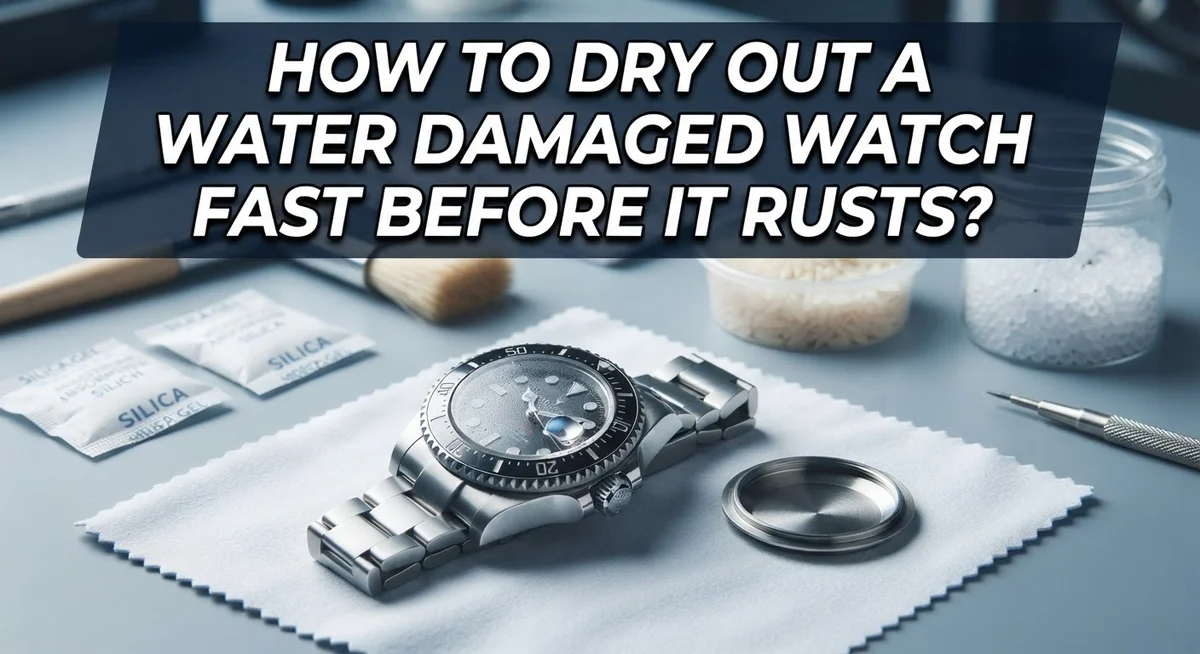
How To Dry Out A Water Damaged Watch Fast Before It Rusts?
Water splashed on your watch. Maybe you jumped in a pool with it on, or got caught in the rain. Now you see fog under the crystal, and panic sets in fast.
Here’s the truth: time matters more than anything else right now. Water damage can turn into rust within hours, not days.
The good news? You can take smart steps right now to save your watch. This guide shows you exactly what to do the moment you notice moisture inside.
We will walk through immediate actions you must take before doing anything else. You will learn safe drying methods that pull moisture out without causing more harm.
In a Nutshell
- Act fast, but stay calm. Take the watch off your wrist right away. Don’t wind the crown or press any buttons.
- Dry it gently. Use a soft cloth to wipe away surface moisture. A hair dryer on medium heat works well if you keep it moving across the case.
- Let air do its job. Pull the crown out slightly. Place the watch crystal side down on a dry towel or flat surface.
- Skip the heat traps. Never use high heat, ovens, or direct sunlight. Too much heat can damage seals and internal parts.
- Call a watchmaker soon. Professional cleaning with isopropyl alcohol removes hidden moisture before rust sets in. This step often saves watches that seem hopeless.
- Watch for rust signs. If you spot rust, soaking parts in vinegar and rinsing with baking soda can help. But this only works for external, minor spots.
Signs Your Watch Has Water Damage
Water damage shows up in different ways depending on how much moisture got inside your watch. You need to spot these signs early so you can act fast.
Fogging on the crystal is the most obvious warning. You’ll see a cloudy mist or small water droplets under the glass face. This happens when moisture settles on the inside of the crystal. It may come and go depending on temperature changes throughout the day.
Discoloration on the dial tells you water reached the inside. The numbers, hands, or background may look stained, spotted, or faded. Sometimes you’ll notice rust colored marks appearing where they weren’t before.
Sticky or stiff movement means moisture is affecting the internal gears. Your watch may run slow, fast, or stop working entirely. The hands might move in jerky motions instead of smoothly.
Corrosion on the case or back shows up as white, green, or reddish spots. Metal parts start changing color when oxidation begins. This happens fast once water gets inside, so don’t wait to address it.
A musty or metallic smell coming from your watch indicates rust is forming. This smell means corrosion has already started eating away at metal components inside.
Battery leaking or circuit board damage appears in digital watches. You might see liquid pooling inside the case or the display acting strangely.
The key point is simple: any visible moisture or unusual behavior means you need to dry your watch immediately. Don’t ignore even small signs. Water damage gets worse quickly. Professional help becomes necessary the longer you wait. Act today, not tomorrow.
Immediate Steps to Take Within the First Few Minutes
Your watch just got wet. The first few minutes are critical. Here’s exactly what to do right now.
Stop everything and remove the watch immediately. Take it off your wrist the moment you realize it’s wet. Don’t wind it. Don’t press any buttons. Don’t adjust the crown yet. Movement creates pressure inside the case and pushes water deeper into the mechanism.
Gently wipe the exterior with a soft, lint-free cloth. Pat the case, back, and sides dry. Be gentle. You’re removing surface moisture, not scrubbing. Work around the crown and any openings. Don’t rub the crystal hard.
Pull the crown out to its first position. This small action allows air to flow inside the case. Leave it in this pulled-out state. This simple step helps moisture escape before it causes serious damage.
Place the watch crystal-down on a flat, dry surface. Find a spot with good air circulation. A desk near an open window works well. Avoid direct sunlight or heat sources. The goal is natural air movement, not forced drying.
Leave it undisturbed for at least 24 hours. Patience matters here. Don’t open the case yourself. Don’t shake it or move it around. Let gravity and air do the work.
Watch for any changes. Check every few hours for fogging inside the crystal or unusual smells. These signs mean moisture is still trapped inside.
The next step is calling a watchmaker. Professional service with isopropyl alcohol removes hidden moisture before rust forms. Don’t skip this. Acting fast now prevents permanent damage later.
Step-by-Step Guide to Drying Your Watch at Home
Start by removing all moisture from the outside surfaces. Use a soft, lint-free cloth and gently pat down the case, back, and sides. Don’t rub hard or use rough materials that could scratch the finish.
Next, pull the crown out to its first position. This simple step opens a pathway for air to circulate inside the case. Leave it in this position throughout the drying process.
Place your watch crystal-down on a completely flat, dry surface. Choose a location with good air flow, like a shelf in a low-humidity room. Avoid placing it near windows where sunlight could create heat.
If you want to speed up the process, use a hair dryer on a medium setting. Keep it at least 6 inches away from the watch. Move it slowly across the case, back, and sides for even coverage. Never use high heat, as this can damage internal components.
Let the watch sit undisturbed for at least 24 hours. Patience is critical here. Rushing the process or applying excessive heat will cause more damage than help.
Check your watch every few hours for fogging inside the crystal or unusual odors. These signs indicate moisture is still trapped inside. If you notice either of these, continue the drying process for another 24 hours.
The most important thing is acting fast. Moisture causes corrosion quickly, and rust can destroy your watch permanently. Even if the drying process seems to work, contact a professional watchmaker within a few days. They can inspect internal components and apply professional cleaning methods that you cannot do at home. This extra step prevents hidden rust from forming later.
When and Why to Seek Professional Watchmaker Service
A professional watchmaker becomes necessary when home drying methods don’t stop internal moisture. You should seek expert help if fogging remains after 24 hours of air drying. Discoloration on the dial or hands signals water reached deep inside the case.
Speed matters most here. Corrosion begins within hours of moisture exposure. A watchmaker has tools and techniques you cannot replicate at home. They use isopropyl alcohol to remove internal moisture before rust forms permanently.
The professional process involves complete disassembly of your watch. Each tiny component gets cleaned individually. The watchmaker inspects gears, springs, and the movement for early corrosion signs. This catches damage before it spreads to other parts.
Seal replacement is often necessary after water damage. Your watch’s gaskets and seals may have failed, allowing water entry. A professional replaces these parts to restore water resistance. New seals prevent future moisture problems.
You should visit a watchmaker immediately if your watch smells musty or metallic. These odors mean rust is already forming inside. Waiting longer makes repair costs higher and success rates lower.
Don’t attempt case opening yourself. You risk damaging delicate components or letting more moisture inside. A professional works in a controlled environment with proper equipment.
After professional service, your watchmaker will reassemble everything and apply fresh lubrication. This ensures smooth movement and protects against future corrosion. They also test water resistance to confirm the repair worked.
Think of professional service as insurance for your watch’s future. The cost now prevents expensive repairs or total loss later. A damaged movement cannot always be fixed, even by experts. Getting help quickly gives your watch the best chance of survival and long term reliability.
How to Remove Existing Rust Safely
Rust forms when moisture sits inside your watch for too long. The metal components start to oxidize, creating that reddish brown discoloration. If you spot rust early, you can still save your watch from permanent damage.
Vinegar is your first tool for rust removal. Soak the affected parts in white vinegar overnight. The acid breaks down rust buildup without harming the metal underneath. This works best for small rust spots on the case or visible components.
After soaking, rinse everything thoroughly with clean water. Mix baking soda with a little water to create a paste. Gently scrub the rusted areas with a soft brush or cloth. This combination neutralizes any remaining vinegar and lifts away loose rust particles.
Pat the parts completely dry with a paper towel. Don’t use heat to speed this up. Let them air dry in a warm, dry room instead.
Here’s the critical part: don’t open your watch case yourself. Internal rust is far more dangerous than external rust. The tiny springs, gears, and pivots inside corrode quickly. Once they rust, your watch stops working properly.
If you see rust on the crystal or caseback, this signals moisture got inside. Visit a professional watchmaker immediately. They have the tools and expertise to disassemble your watch safely. They’ll clean each component individually using proper solvents.
Your watchmaker will inspect every part for corrosion damage. They’ll replace seals and gaskets that failed. Then they’ll reassemble everything with fresh lubrication.
Act fast when you spot rust. The longer you wait, the more damage spreads. Professional service now prevents expensive repairs or total watch loss later.
Common Mistakes That Worsen Water Damage
Many people accidentally make water damage worse when trying to save their watch. Understanding these mistakes helps you protect your timepiece better.
Opening the case yourself is the biggest error. Your watch has tiny seals and gaskets that keep moisture out. When you pry open the caseback, you break these seals permanently. Even if you manage to open it, you risk damaging internal parts. The movement inside contains delicate springs and gears that need professional handling.
Applying too much heat causes serious problems. Some people use high heat settings on hair dryers or place watches near radiators. Extreme heat warps the internal components and can damage the crystal. It also speeds up corrosion instead of preventing it. Medium heat for short periods works much better than intense warmth.
Waiting too long before seeking help is another critical mistake. Rust begins forming within hours of moisture exposure. Every moment you delay, corrosion spreads deeper into the mechanism. What starts as surface moisture becomes permanent damage quickly.
Using the wrong drying materials creates additional issues. Paper towels with rough textures scratch the crystal and case. Cloth with lint particles leaves debris inside the watch. Always use soft, lint-free materials only.
Winding or adjusting the watch while wet is damaging too. Moving the crown or hands pushes moisture deeper into the movement. This forces water past protective barriers that would normally keep it out.
Ignoring warning signs like fogging, odors, or discoloration wastes precious time. These signals mean internal moisture is present. Act immediately when you notice anything unusual. The faster you respond, the better your chances of preventing permanent rust and mechanical failure.
Troubleshooting Persistent Moisture or Fogging Issues
When moisture or fogging persists inside your watch after initial drying attempts, you need a different approach. Persistent fogging means water is trapped deep within the case. This situation requires immediate attention because the moisture will continue causing damage.
First, try the hair dryer method on medium setting. Hold it 6 inches away from the watch case, moving it slowly across the front, back, and sides. Work for 10 to 15 minutes total. This gentle heat can help evaporate stubborn internal moisture without damaging delicate components.
Next, place your watch crystal side down on a flat, dry surface in a warm room. Position it where air can circulate freely around it. Leave it there for several days. This position lets gravity help pull moisture away from the movement while allowing air to reach trapped areas.
Pull out the crown slightly if your watch has one. This small action creates an opening for air circulation inside the case. Never force it or pull it completely out. Just extend it enough to break the seal.
If fogging remains after these steps, professional service becomes essential. A watchmaker has specialized equipment and isopropyl alcohol that removes internal moisture effectively. They can access areas you cannot reach safely.
Watch the crystal carefully during this process. If fogging gets worse or appears in new spots, stop home drying immediately. Worsening fogging indicates moisture is spreading deeper into the movement. Your watchmaker needs to see this progression because it affects their treatment plan.
Time matters enormously here. Every day you wait allows corrosion to advance further inside your watch’s delicate parts.
Preventing Future Water Damage to Your Watch
Water damage prevention starts with understanding your watch’s limits. Most watches have water resistance ratings that tell you how much exposure they can handle. A rating of 30 meters means splash resistance only. Ratings of 50 meters or higher offer better protection during daily activities.
Check your watch manual regularly. You need to know exactly what your model can withstand. Some watches lose their water resistance over time as seals wear out. Have your watchmaker test the seals annually if you wear your watch near water.
Remove your watch before swimming or showering. Even water resistant watches can fail if seals degrade. Salt water is especially harmful because it corrodes metal faster than fresh water. Rinse your watch with fresh water immediately after any salt water exposure.
Avoid sudden temperature changes. Taking a cold watch into a hot shower creates condensation inside the case. This moisture can get trapped and cause rust. Wait for your watch to reach room temperature before exposing it to heat or water.
Store your watch in a dry location. Humidity damages watches over time, even when they’re not being worn. Keep your watch in a cool, dry place away from bathrooms and kitchens.
Dry your watch promptly after any moisture contact. Use a soft, lint free cloth to wipe the exterior. Never ignore warning signs like fogging on the crystal or a musty smell coming from the case.
Have your watchmaker inspect seals every two years. Preventive maintenance costs far less than rust repair. Replace worn gaskets before they fail. This simple step keeps moisture out and protects your investment from expensive damage.
Final Thoughts
Water damage does not have to ruin your watch. Quick action makes all the difference between a simple fix and permanent damage.
Remember the basics. Remove your watch from water right away. Skip the winding and adjusting until it is fully dry.
Dry it gently with a soft cloth first. Then use a hair dryer on medium heat, keeping it moving across the case.
Place your watch crystal side down on a flat, dry surface afterward. This position helps trapped moisture escape naturally.
Speed matters more than anything else here. Corrosion starts within hours, not days. Every minute counts when moisture gets inside your watch.
Never open the case yourself, no matter how tempting it seems. You risk pushing moisture deeper or damaging delicate parts.
A professional watchmaker has the right tools and training. They can clean, inspect, and rebuild your watch correctly.
If fogging or odors persist after your first drying attempt, do not wait around. Book a watchmaker appointment right away.
For visible rust spots, some people try a vinegar soak on removable parts. Rinse thoroughly and dry with paper towels afterward.
But internal rust almost always needs professional attention. A watchmaker can disassemble, clean, and lubricate every component properly.
Think of your watch as an investment worth protecting. A few dollars spent on professional service saves you from costly replacements later.
Stay calm but move quickly when water damage happens. Follow these steps, seek help fast, and your watch has a real chance at full recovery.
Prevention still beats every drying method. Keep your watch away from water when possible, and check its seals regularly.
Frequently Asked Questions
Can I use a regular oven or heat gun to dry my water damaged watch?
No. Excessive heat damages internal components and accelerates corrosion. A hair dryer on medium setting works better because it provides gentle, controlled airflow. Heat guns and ovens can warp gaskets, crack the crystal, and ruin delicate movements inside.
Stick with moderate temperatures. Air circulation matters more than high heat.
How long should I wait before taking my wet watch to a professional?
Don’t wait. Visit a watchmaker within 24 hours if possible. Rust begins forming almost immediately when moisture sits inside your watch. The longer you delay, the more internal damage spreads.
Speed prevents permanent harm. Even if your watch looks fine on the outside, internal corrosion may already be starting.
What should I do if my watch smells bad or has visible fogging after drying?
These are warning signs that moisture remains trapped inside. The hair dryer and crystal down method should help, but if the smell or fogging persists after a few hours, professional service is necessary.
Your watchmaker will disassemble the watch, clean individual parts with isopropyl alcohol, and reassemble everything properly. Don’t ignore these signs.
Is vinegar safe for cleaning rust off my watch?
Vinegar can help with rust on removable metal parts you can access. Soak the affected piece overnight, then rinse with water and baking soda. Air dry with a paper towel.
However, internal rust almost always requires professional attention. Never attempt to open your watch case yourself to treat rust inside.

Hi, I’m Lucy Jones, a dedicated watch enthusiast and reviewer. I spend my time hunting down, testing, and evaluating the most intriguing wristwatches on the market. My goal is to guide you through the overwhelming choices with honest, hands-on insights into every timepiece.