Fitbit Edge Review 2026: Worth Buying?
Google replaced the Charge series with something new, and the name change surprised plenty of people. The Fitbit Edge arrived on October 27, 2026, priced at $179.99, and it carries the biggest hardware jump the tracker line has seen in years. Bigger screen. Real button. Working GPS. A battery you can swap yourself.
I spent time with this tracker, read through the spec sheet, and dug into how it behaves in real workouts. The short version is simple.
The Edge fixes the two things people hated most about the Charge 6, yet it also drops a feature many users loved. This review covers the good, the bad, and the parts Google clearly rushed.
In a Nutshell:
- GPS finally works properly. Google claims 40% better accuracy than the Charge 6, and real world route tracking now sits close to bike computers that cost four times more. The old problem where you had to choose between heart rate or GPS is gone.
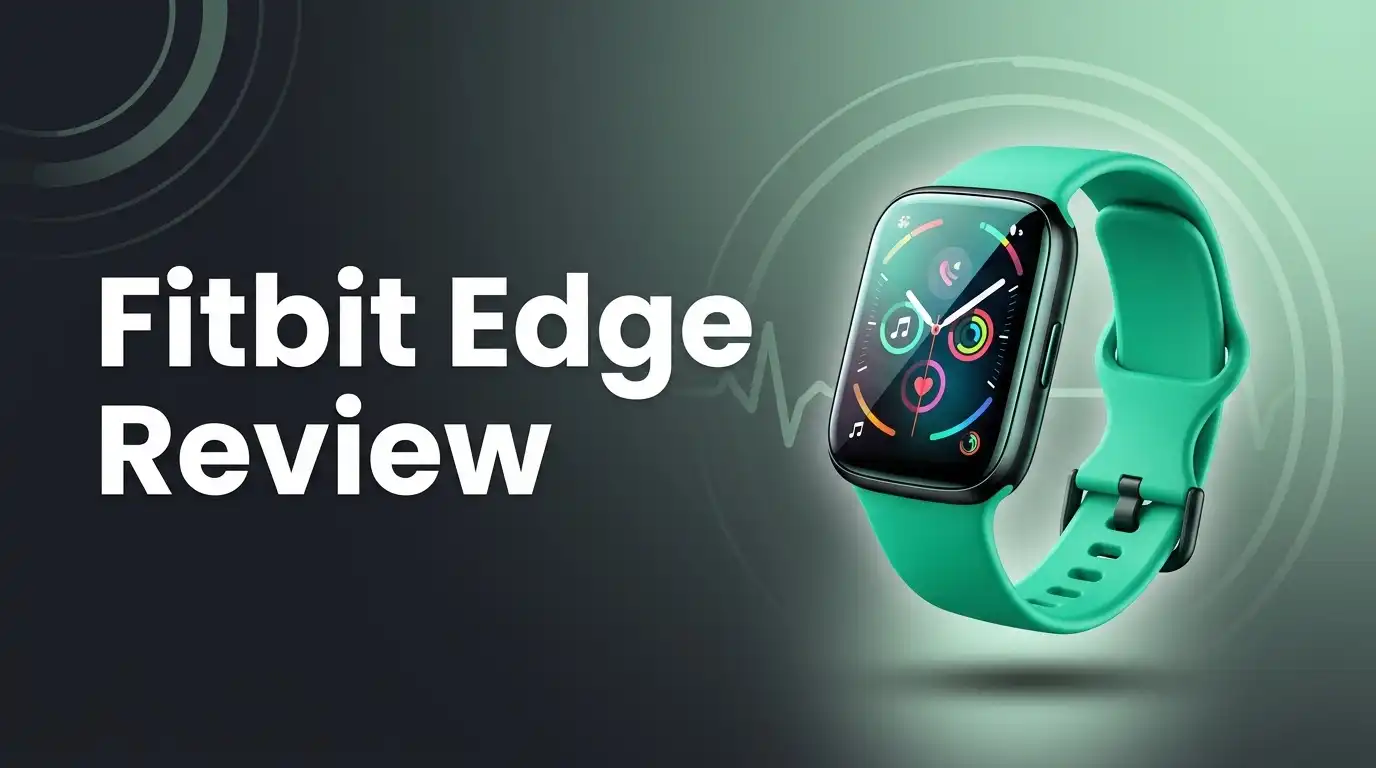
- The display grew by 46%. You get a 1.34 inch AMOLED panel that stays readable in direct sunlight. A physical side button replaced the old touch pad, and it clicks with real feedback.
- Google Pay is dead on this device. No NFC. No contactless payments. Google says fewer than 1% of Charge 6 owners used it, but that will still sting if you tapped your wrist at the coffee shop every morning.
- Automatic workout detection covers roughly 100 sports. The Edge logs your walk, ride, or gym session even when you forget to press start. Google claims detections are twice as accurate as before.
- Battery lasts 7 days, but only in gesture mode. Switch to an always on screen and you drop to about two days. Fast charging gives a full day from five minutes on the magnetic puck.
- It is the first repairable Fitbit. The modular build and user replaceable battery mean this tracker should outlive its predecessors.
Google Fitbit Edge Review


Last update on 2026-11-11 / Affiliate links / Images from Amazon Product Advertising API
The Fitbit Edge sits between the screenless Fitbit Air and the Pixel Watch 5. It targets people who want health data on their wrist without carrying a full smartwatch. The case uses 100% recycled aluminum, measures 11.5mm thick, and weighs 17.7g without a band.
Inside you get an Ambiq AP5 processor, Bluetooth 5.4, and a sensor stack that includes an altimeter, gyroscope, SpO2 sensors, a skin temperature sensor, and electrical sensors for ECG. Water resistance reaches 5ATM, and dust protection hits IP68.
The whole package feels like a Pixel Watch that went on a diet. The interface matches Google’s smartwatch, the charger matches the Fitbit Air, and the health features pull from Google Health. That consistency is new for Fitbit, and it is welcome.
Unboxing the Fitbit Edge
The box is small, flat, and plain. Google ships it in a recycled cardboard sleeve with the tracker shown on the front. Lift the lid and the Edge sits in a molded tray, already attached to its Active Band.
Underneath you find a second band size, the magnetic charging cable, and a thin paper quick start guide. That is everything. No wall adapter. No extra accessories.
The first thing you notice is how light it feels in your hand. It almost feels empty. The second thing is the screen, which looks genuinely large for a tracker once you power it on.
Setup takes about five minutes through the Google Health app. You scan a code, pair over Bluetooth, and wait for a firmware update. The process is painless, which has not always been true for Fitbit hardware.
Design, Build, and Comfort
The Edge curves along your wrist instead of sitting flat on it. That shape makes a real difference during sleep, when flat trackers tend to dig in. At 11.5mm thick it stays slim enough to slide under a shirt cuff.
Google offers four core finishes. Matte Black with an Obsidian band, Polished Silver with Fog, Satin Pyrite with Olive, and Champagne Gold with Canyon. A Stephen Curry Special Edition runs $219.99 with a water repellent woven band.
Band options expand well beyond the basics. You get Active Sport, Performance Loop, Magnet, and Metal Links styles. The Magnet band snaps shut in one motion and feels great. The Metal Links band has one flaw worth knowing about. Its clasp release button can press accidentally during the day, which risks dropping the tracker.
Top 3 Alternative for Fitbit Edge

Last update on 2026-11-11 / Affiliate links / Images from Amazon Product Advertising API
Fitbit Charge 6

Last update on 2026-11-11 / Affiliate links / Images from Amazon Product Advertising API
Google Fitbit Air

Last update on 2026-11-11 / Affiliate links / Images from Amazon Product Advertising API
Garmin vivosmart 5
Display and Daily Interface
The 1.34 inch Hybrid OLED screen is the headline upgrade. Brightness adjusts automatically, and an always on mode exists if you accept the battery cost. Text stays legible outdoors in bright sun.
The new interface copies the Pixel Watch 5 layout. Swipe down for quick controls like flashlight, do not disturb, and heart rate broadcast. Swipe right for your recent workout profiles. Swipe left for focus metrics, weather, timers, and media controls.
Here is where polish runs thin. You cannot tap most metrics for more detail. Want to know your sleep start time or why your readiness score dropped? You pull out your phone. The data sits on your wrist but refuses to explain itself.
Roughly a dozen watch faces exist, and you customize complications through the app. It looks modern, yet it feels half finished in places.
GPS Accuracy in Real Workouts
This is the biggest fix. The Charge 6 had its GPS antenna on the underside edges, which meant a tight band killed location tracking and a loose band killed heart rate. You picked one.
The Edge uses a new chipset plus nano molded aluminum housing. In the United States it tracks GPS and Galileo. Elsewhere it adds GLONASS, BeiDou, and QZSS.
On road rides, the resulting tracks line up with dedicated bike computers costing hundreds more. On a fast descent the Edge held the road line better than a $550 cycling unit. On trail runs through trees it stayed close to a Garmin Fenix and a Suunto Run 2.
The built in altimeter also tracks elevation within a couple of meters. GPS went from unusable to genuinely good.
Heart Rate Performance
Heart rate is the weaker sensor story. The Edge handles steady efforts well. Walks, hikes, easy runs, and long rides all produce sensible data.
Intervals expose the limits. On an indoor trainer session the sensor struggled badly at the start before locking on during the main set. On a mixed road and gravel ride it trended in the right direction but looked prickly throughout.
The reason comes down to space. The Edge case cannot fit the larger optical sensor found in the Pixel Watch 5, so Google used a smaller one.
For casual training this is good enough. For structured interval work or racing, pair a chest strap. The Edge can also broadcast heart rate over Bluetooth, though that feature only talks to partners like Peloton and Zwift, not Garmin devices.
Automatic Workout Detection
The Edge inherits the detection engine from the Fitbit Air, then expands it hugely. Roughly 100 activity types now get recognized automatically. Google claims detection is twice as accurate as before and misses half as many sessions.
Detection works at two levels. About fifteen core activities get identified from movement alone, including outdoor run, outdoor bike, swim, rowing machine, elliptical, golf, basketball, and strength training.
Everything else needs context. The system looks at your history, your schedule, and your past confirmations, then makes an educated guess. That covers things like trail running, pickleball, yoga, mowing the lawn, and gardening.
Workouts must run at least 15 minutes to register. Detected sessions carry no GPS track, so if route data matters, start the workout manually.
Health Tracking and Health Guardian
The health feature set is strong for the price. You get an FDA cleared ECG app, background atrial fibrillation detection, continuous heart rate monitoring, SpO2 readings, skin temperature, and heart rate variability.
Health Guardian runs quietly in the background. It watches blood pressure trends, insulin resistance trends, and high or low heart rate alerts. Those reports flag shifts you might otherwise miss.
Daily metrics include steps, distance, Active Zone Minutes, VO2 Max, floors climbed, and Cardio Load. Cardio Load works as a weekly training load score that resets every seven days and adjusts your target based on your own history.
One note on the EDA Scan feature from the Charge 6. It is gone. Continuous background stress monitoring replaced it, which most people will consider a fair trade.
Sleep Tracking Quality
Sleep tracking is accurate where it counts. Sleep and wake times land correctly night after night. The skin temperature sensor adds nightly fluctuation data, and HRV feeds into a morning recovery score.
The curved case helps here too. A flat tracker presses into your wrist when you sleep on your side, and the Edge avoids that.
One flaw stands out and it is genuinely irritating. There is no automatic sleep mode for the display. Set a sleep schedule and a do not disturb window, and the screen will still light up every time your sheets brush it.
You have to tap a bed icon manually each night, then remember to untap it each morning so raise to wake works again. Other wearables solved this years ago. Google hints a firmware fix is coming.
Battery Life and Charging
Google rates the Edge at 7 days. That number holds if you leave the display in gesture mode and keep GPS use modest.
Turn on the always on display and real life drops to roughly two days. Outdoor GPS workouts with the always on screen burn about 15% per hour. In gesture mode that falls to around 8% per hour, so a five hour mountain ride costs about 40%.
Charging uses the same magnetic puck as the Fitbit Air, which is a small win for anyone owning both. Five minutes gives a full day of use. A complete charge takes 90 minutes.
The battery itself is 65mAh and fully user replaceable. That makes the Edge the first repairable Fitbit, with a modular internal design meant to extend its life.
What the Fitbit Edge Does Not Do Well
Honest reviews need this section, so here it is.
No contactless payments. NFC is gone entirely, and since the Pixel Watch does not support iOS, iPhone owners have no Google wearable payment option at all.
No music storage. You control your phone’s playback and nothing more.
No customizable workout data screens. The pages are what they are.
No on device detail for your metrics. Everything deeper lives in the app.
No automatic sleep display mode. You toggle it by hand twice a day.
No quick replies on iOS. Android users get them, iPhone users read and dismiss.
The price also climbed hard. The Charge 6 sat between $99 and $129 most of the year. The Edge asks $179.99. That is a real jump for a device still missing software polish.
Pros and Cons
Pros
- GPS accuracy improved around 40% and now matches dedicated sports devices on most routes
- Display grew 46% to 1.34 inches and stays readable in bright sunlight
- Physical clicking side button replaced the vague touch area on the Charge 6
- Automatic detection covers roughly 100 sports with no button pressing required
- Altimeter added for stair counting and elevation during outdoor workouts
- User replaceable battery and modular repairable design, a first for Fitbit
- Fast charging delivers one full day from five minutes on the puck
- ECG, afib detection, SpO2, skin temperature, and Health Guardian trends included
- Structured workout support added, which the Charge 6 never had
- Shares a charger with the Fitbit Air and pairs with Pixel Watch setups
Cons
- Google Pay and NFC removed completely
- Price rose to $179.99 from street prices near $99 on the Charge 6
- Always on display cuts battery from 7 days to roughly 2 days
- Heart rate wobbles during intervals and fast changing efforts
- No automatic sleep mode for the screen
- Metrics cannot be tapped for detail on the device itself
- Workout data pages cannot be customized
- Structured workouts must be controlled from your phone
- EDA Scan feature dropped
- Heart rate broadcasting fails with many third party devices
Price and Value
At $179.99, the Edge costs more than any Charge model ever did in practice. You also get three months of Google Health Premium included with purchase.
That subscription matters more than it should. Raw data stays free, including steps, sleep, readiness, and Cardio Load. The written analysis and coaching guidance sit behind the paywall.
So the question becomes whether the hardware justifies the price on its own. For most buyers, it does. Working GPS, a real altimeter, a much larger screen, and a replaceable battery add up to a meaningful upgrade.
If you own a Charge 6 and mostly count steps, skip it. If you run, ride, or hike and the Charge 6 GPS frustrated you, the Edge solves your problem.
Who Should Buy the Fitbit Edge
Last update on 2026-11-11 / Affiliate links / Images from Amazon Product Advertising API
Buy it if you want health tracking without a full smartwatch on your wrist. Buy it if you run or cycle and need route data that holds up. Buy it if Charge 5 or Charge 6 GPS made you give up on outdoor tracking.
Buy it if you value sleep data, ECG, and background health trends in a small package. Buy it if a replaceable battery changes how long you expect a device to last.
Skip it if you tap to pay from your wrist every day. Skip it if you train with precise interval targets and want wrist based accuracy. Skip it if you already own a Pixel Watch 5 and need nothing smaller.
Skip it too if you only want a step counter, because cheaper trackers handle that just fine.
Final Verdict
The Fitbit Edge is the upgrade Charge owners waited three years for. Google fixed the GPS, added an altimeter, grew the screen, and made the thing repairable. Those are substantial wins.
The software tells a different story. Missing sleep display automation, metrics you cannot tap, locked workout pages, and phone dependent structured workouts all point to a rushed holiday launch. None of it breaks the device, but all of it feels unfinished.
Rating: 4 out of 5.
For a tracker under $180 aimed at wellness rather than hardcore athletics, the Edge does its job well. It tracks your days, your nights, and your workouts in a form factor you forget you are wearing. Just know that Google left some polish on the table, and firmware updates will decide how good this device eventually becomes.
Frequently Asked Questions
Does the Fitbit Edge have Google Pay?
No. Google removed NFC and contactless payments from the Edge. The company said fewer than 1% of Charge 6 owners used the feature, so it prioritized the slimmer design, altimeter, and battery life instead.
How long does the Fitbit Edge battery last?
Google rates it at 7 days. That figure assumes gesture based display wake and limited GPS use. With the always on display enabled, expect closer to two days. Five minutes of fast charging returns a full day of use.
Is the Fitbit Edge GPS accurate?
Yes. Google claims a 40% improvement over the Charge 6, and real world testing supports that. Route tracks match dedicated bike computers and multisport watches on roads, trails, and tree covered sections.
Does the Fitbit Edge work with iPhone?
Yes. It requires iOS 16.4 or newer, or Android 11 or newer. iPhone users lose quick replies to messages, and notification integration runs deeper on Android.
Can you replace the Fitbit Edge battery?
Yes. The Edge is the first Fitbit branded product with a fully user replaceable battery and a modular internal architecture built for repair.
Is the Fitbit Edge waterproof?
It carries 5ATM water resistance, rated to 50 meters, plus IP68 dust protection. Swimming and showering are fine. Pool swim and open water swim profiles both exist on the device.
How many sports does the Fitbit Edge track?
You can start more than 50 workout profiles manually on the device. Automatic detection recognizes roughly 100 activity types, though many of those require historical context from your own habits.

Hi, I’m Lucy Jones, a dedicated watch enthusiast and reviewer. I spend my time hunting down, testing, and evaluating the most intriguing wristwatches on the market. My goal is to guide you through the overwhelming choices with honest, hands-on insights into every timepiece.