Samsung Galaxy Ring Review 2026: Still Worth It?
Smart rings stopped being a novelty a while ago. They now sit quietly on your finger and collect more data overnight than most people check in a week.
The Samsung Galaxy Ring arrived in July 2024 as Samsung’s first attempt, and two years later it is still on sale, still getting software updates, and still fighting Oura for shelf space.
So the real question in 2026 is simple. Does a ring Samsung launched in 2024 still deserve your money, especially now that it costs less than it did at launch?
In A Nutshell:
- Comfort is the strongest selling point. The Galaxy Ring weighs between 2.3g and 3.3g and measures just 2.6mm thick. You forget it exists within two days, which is exactly what a sleep tracker should do.
- No subscription, ever. Oura charges $5.99 a month for full features. Samsung charges nothing. Over three years that gap alone is worth roughly $216, and it changes the value maths completely.
- Sleep tracking is good, not elite. It catches bedtime and wake time reliably. It sometimes misses the last stretch of morning sleep, and sleep stage data varies widely from device to device.
- Battery life starts strong and fades. Expect six to seven days when new. Several long term users report a drop to two or three days after a year of daily wear.
- Android only, and best on Samsung. iPhone owners cannot use it at all. Pixel and other Android owners lose Double Pinch and Find My Ring.
- It now detects sleep apnea risk. The Galaxy Ring became the first smart ring with FDA clearance for sleep apnea risk screening, rolling out through fall 2026.
What Is The Samsung Galaxy Ring?

Last update on 2026-11-11 / Affiliate links / Images from Amazon Product Advertising API
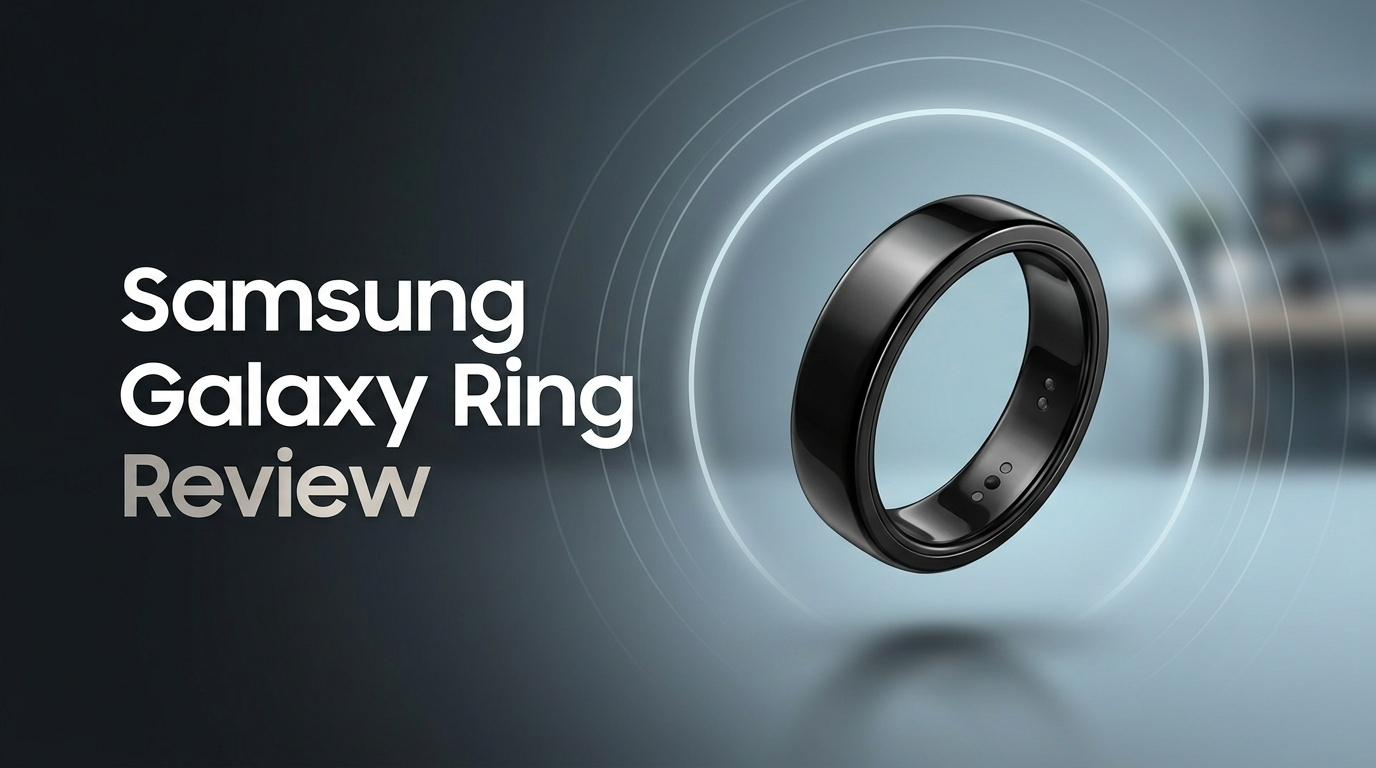
The Galaxy Ring is a screenless health tracker shaped like jewellery. Samsung built it from grade 5 titanium and packed three sensors inside: an accelerometer, an optical bio signal sensor, and a skin temperature sensor. Those three feed everything you see in the Samsung Health app.
It tracks sleep, heart rate, heart rate variability, blood oxygen, skin temperature, steps, stress, and menstrual cycles. It does not have GPS, a screen, a speaker, or a microphone.
Samsung sells it in sizes 5 through 15 and in three titanium finishes: black, silver, and gold. The launch price was $399. In late 2026 it regularly sells closer to $325, and it qualifies for FSA and HSA spending in the US.
Unboxing Experience And First Impressions
The unboxing happens in two stages, which surprises most buyers. You first receive a plastic sizing kit with a dummy ring in every size. You wear your chosen size for 24 hours, then confirm it. Only then does the real ring ship.
The actual box is small, white, and almost suspiciously light. Inside sits the charging case, which looks like a chunky earbuds case with a clear dome on top. The ring rests inside it, glowing faintly when you open the lid.
There is a short USB C cable and a folded paper guide. That is the entire contents. It feels less like opening a gadget and more like opening an engagement ring, which is clearly the intention.
Design, Build Quality, And Comfort
This is where Samsung clearly won. The ring measures 7.0mm wide and 2.6mm thick, which makes it noticeably slimmer than the Oura Ring 4. The outer surface uses a concave curve, so the ring rolls past door frames and dumbbell handles instead of catching on them.
After months of daily wear, the titanium shows barely any damage. Black models develop light abrasion on the outer edge where the coating thins. Silver hides wear best.
Water resistance is rated at 10ATM plus IP68. You can shower, wash dishes, and swim in it without thought. Scuba diving is still off limits. Comfort wise, it beats most fashion rings I own, which is not something I expected to write.
Top 3 Alternatives For Samsung Galaxy Ring

Last update on 2026-11-13 / Affiliate links / Images from Amazon Product Advertising API
Oura Ring 4

Last update on 2026-11-11 / Affiliate links / Images from Amazon Product Advertising API
RingConn Gen 2 Smart Ring


Last update on 2026-11-11 / Affiliate links / Images from Amazon Product Advertising API
Amazfit Helio Smart Ring
Sizing And Fit: Getting It Right
Samsung recommends wearing the ring on the index finger of your non dominant hand. That feels strange for the first week if you have never worn a ring there. Your index finger has better blood flow for optical sensing, so the advice is worth following.
The sizing kit matters more than people expect. Finger size changes with heat, salt, and time of day, so wear the dummy for a full day including a night of sleep.
A ring that spins loosely produces junk heart rate data. A ring that leaves a red mark is too tight. Aim for snug enough that it resists sliding, loose enough that it moves with a small tug.
Sleep Tracking Performance
Sleep is the headline feature, and the Galaxy Ring handles the basics well. It logged my bedtime and sleep onset within a few minutes of a smart mattress on most nights. Total sleep time was consistently close.
The weakness appears in the morning. On several nights it declared me awake at 6:40am when I actually woke at 7:30am, which dragged my sleep score down unfairly.
Sleep stage data deserves scepticism from every brand. On one identical night, four trackers gave me four different scores: 80 from the Galaxy Ring, 90 from a Garmin watch, 87 from a smart mattress, and 41 from another ring. Treat stage breakdowns as trends, not facts.
Energy Score And Daily Readiness
Samsung’s Energy Score works like Garmin’s Body Battery. It blends sleep duration, sleeping heart rate, overnight HRV, and the previous day’s activity into a single number out of 100.
Scores from 0 to 59 need attention, 60 to 74 count as fair, 75 to 84 are good, and 85 to 100 are excellent. The number tracked my real energy levels closely across weeks of testing.
There is one odd quirk. Rest days often lower your score because the algorithm reads low activity as a negative, even when resting was the correct choice. Samsung’s AI advice sits underneath the score and ranges from genuinely useful to generic sleep hygiene reminders.
Workout And Activity Tracking
The Galaxy Ring automatically detects walks and runs with good reliability. You do not have to tag sessions afterward, which beats the manual tagging other rings rely on. Manual workouts start from your phone.
Heart rate gets tracked during running, walking, and cycling. It does not get tracked during circuit training, weights, or many other activities, which is a real gap.
There is no built in GPS. The ring borrows your phone’s GPS for distance and route maps, so you need your phone in a pocket.
Activity rings display steps, active time, and active calories against targets you set yourself. Those targets stay static and never adapt to your recent performance.
Heart Rate Accuracy And Sensor Quality
Resting and sleeping heart rate numbers held up well against a chest strap. On an easy run with rolling hills, the ring reported an average of 108 BPM and a max of 129 BPM. The chest strap recorded 108 BPM average and 131 BPM max.
That is close enough for steady effort training. Intervals are a different story. Optical sensors on fingers struggle with fast heart rate swings, and no ring on the market solves that yet.
Blood oxygen and skin temperature readings are taken overnight rather than continuously. Skin temperature feeds menstrual cycle prediction, which uses overnight trends to estimate fertile windows. If you want live heart rate during a hard session, wear a strap.
Sleep Apnea Detection And FDA Clearance
The biggest 2026 upgrade arrived through software, not hardware. Samsung announced FDA cleared sleep apnea risk detection for the Galaxy Ring at Unpacked in July 2026, and the feature began rolling out through the fall.
It works by analysing two nights of sleep within a ten day window, then placing you in a risk category. The Galaxy Ring became the first smart ring to carry that clearance.
This is screening, not diagnosis. A high risk result means you should book a proper sleep study, not panic. Still, it is a meaningful advantage over competitors that measure the same breathing signals without regulatory sign off.
Battery Life And Charging Case
Battery capacity changes with ring size. Sizes 5 to 7 use a 17mAh cell, sizes 8 to 11 use 18.5mAh, and sizes 12 and 13 use 22.5mAh. Samsung quotes up to seven days.
Real world results land at five to six days for most people. My size 12 burned roughly 12 percent per 24 hours and around 7 percent overnight. A full charge takes about 80 minutes.
Here is the uncomfortable part. Long term owners report serious degradation. One reviewer went from seven days at purchase, to five days at six months, to two days after a year. The case itself holds up better, delivering around 1.5 extra charges.
Samsung Health App Experience
All your data lives in Samsung Health. Setup also requires the Galaxy Wearable app and a Samsung account, so you juggle two apps for one device.
Samsung Health is clean and readable, with large score cards on the home screen and deeper graphs one tap down. It syncs with Google Health Connect, and workout data can reach Strava through that pipeline.
The app lacks Oura’s conversational coaching tone. Oura explains why your readiness dropped in plain language. Samsung shows you the number and a short tip.
Find My Ring exists, but it only flashes a green LED with no sound. That helps under a sofa and fails inside a cushion.
Compatibility: Who Can Actually Use It
This section eliminates a lot of buyers. The Galaxy Ring requires Android 11 or later with at least 1.5GB of memory. iPhone owners cannot use it at all, and no workaround exists.
Non Samsung Android phones, including Pixels, get core health tracking but lose Double Pinch gestures and Find My Ring.
Pairing it with a Galaxy Watch creates another wrinkle. When you wear both, the watch becomes the primary sensor, ring heart rate and sleep measurements switch off, and gestures default to the watch. The upside is up to 30 percent longer ring battery life. The ring makes most sense if you already live inside Samsung’s ecosystem.
What The Galaxy Ring Does Not Do Well
Honest reviews list the failures, so here they are. Battery degradation over twelve months is the most serious complaint, and it is not rare.
Morning wake detection slips regularly, which skews sleep scores. Heart rate tracking disappears during strength training and most gym classes. There is no GPS, no blood pressure, no ECG, and no continuous daytime heart rate.
The app shows you data without much interpretation. Energy Score penalises deliberate rest days.
Only three finishes exist, and the black coating wears. The price still sits near the cost of a full smartwatch. If you want depth of insight, Oura remains ahead.
Pros And Cons Of The Samsung Galaxy Ring
Pros
- Extremely light and slim at 2.3g to 3.3g with a 2.6mm profile, so it stays comfortable overnight
- Zero subscription fees, which saves hundreds over the life of the device
- Durable grade 5 titanium with 10ATM and IP68 water resistance for swimming and showering
- Charging case doubles as a power bank and is harder to lose than a small puck
- Accurate resting heart rate, sleep timing, and step counting for everyday use
- FDA cleared sleep apnea risk detection, a first for smart rings
- FSA and HSA eligible in the United States
Cons
- Battery capacity drops sharply for many users after roughly a year
- Completely incompatible with iPhone, and reduced on non Samsung Android phones
- No GPS, no continuous daytime heart rate, no blood pressure, no ECG
- Heart rate is not recorded during weights or circuit training
- Only three colour finishes, and black shows wear
- App insights are shallow compared with Oura
- Wearing it with a Galaxy Watch disables several ring sensors
Price, Value, And Who Should Buy It
At $399 the Galaxy Ring was hard to justify. At roughly $325 the maths improves a lot, and the absence of a subscription becomes the deciding factor.
Compare three years of ownership. The Galaxy Ring costs around $399 total. An Oura Ring 5 costs about $615 once you add the membership. That gap buys a lot of running shoes.
Buy it if you own a Samsung phone, want effortless sleep and recovery tracking, and dislike wearing watches in bed. Skip it if you train seriously, use an iPhone, or want detailed coaching. Wait for a sale if you can.
Should You Wait For The Galaxy Ring 2?
Samsung confirmed in June 2026 that a next generation ring is in development, without naming it or dating it. Korean reporting points to a reveal in early 2027 alongside the Galaxy S27 line.
Rumours suggest a thinner body, a silicon carbon battery targeting nine to ten days, and improved temperature sensing. None of it is confirmed.
There is also an ongoing patent dispute between Samsung and Oura that adds uncertainty to timing.
Early 2027 is far enough away that waiting means going a full year without data. If the current ring fits your needs and the price is low, buying now is reasonable. Do not pay full retail this close to a successor.
Final Verdict

Last update on 2026-11-11 / Affiliate links / Images from Amazon Product Advertising API
The Samsung Galaxy Ring is a comfortable, durable, subscription free health tracker that nails the basics and stops short of greatness. It tells you how you slept, how recovered you feel, and how much you moved. It does those things without annoying you.
It will not replace a running watch. It will not satisfy data obsessives. The battery degradation reports are a genuine concern, and iPhone owners are locked out entirely.
Score it 7.5 out of 10. For Samsung phone owners who want health insight without a monthly bill or a screen on their wrist, it remains one of the easiest recommendations in wearables.
Frequently Asked Questions
Does the Samsung Galaxy Ring need a subscription?
No. Every feature, including sleep tracking, Energy Score, heart rate, and cycle tracking, is included with the purchase. Samsung has made no announcement about future paid tiers.
Does the Samsung Galaxy Ring work with iPhone?
No. It requires an Android phone running Android 11 or later, plus Samsung Health and the Galaxy Wearable app. There is no iPhone support and no workaround.
How long does the Galaxy Ring battery last?
Samsung quotes up to seven days. Most users see five to six days when the ring is new. Some owners report a drop to two or three days after about a year of daily wear.
Which finger should I wear the Galaxy Ring on?
Samsung recommends the index finger of your non dominant hand. That position gives the optical sensor the cleanest signal and improves heart rate accuracy.
Can I swim or shower with the Galaxy Ring?
Yes. The ring carries a 10ATM and IP68 rating, so showering, hand washing, and swimming are all safe. Avoid scuba diving and hot tubs.
Can the Galaxy Ring detect sleep apnea?
It can flag sleep apnea risk after analysing two nights of sleep. The feature has FDA clearance in the US. It is a screening tool and does not replace a medical diagnosis.
Does the Galaxy Ring have GPS?
No. It uses your paired Android phone’s GPS to record distance and routes, so you need the phone with you during outdoor workouts.
Is the Galaxy Ring better than the Oura Ring 4?
The Galaxy Ring is thinner, lighter, and cheaper over time thanks to zero subscription fees. The Oura Ring 4 offers deeper insights, a friendlier app, and iPhone support. Your phone brand usually decides it.

Hi, I’m Lucy Jones, a dedicated watch enthusiast and reviewer. I spend my time hunting down, testing, and evaluating the most intriguing wristwatches on the market. My goal is to guide you through the overwhelming choices with honest, hands-on insights into every timepiece.