Garmin Fenix 8 Pro Review 2026: Worth It?
The Garmin Fenix 8 Pro is the watch Garmin built for people who walk away from cell towers on purpose. It sends texts from a mountain ridge. It calls for help without a phone. It maps your route home when the trail disappears. It also costs more than a used motorcycle, and that single fact makes most buyers pause.
I spent weeks with this watch on trails, roads, pools, and airport queues. I tested the satellite link under open sky. I watched the battery drop during long runs. I noticed the moments Garmin got right and the moments it clearly did not.
This review covers everything you need before you spend four figures on a smartwatch. You will get the unboxing details, honest battery numbers, subscription costs, the features that frustrated me, and three cheaper watches worth your attention. No marketing copy.
In a Nutshell:
- Satellite and cellular messaging is the headline feature. The Fenix 8 Pro sends texts, shares your location, and triggers SOS without a phone nearby. This is the first Garmin smartwatch with inReach technology inside the case. It changes what a watch can do in the backcountry.
- You must pay a monthly plan. Garmin charges from roughly $7.99 per month for a standby tier and around $14.99 per month for a full plan. Without a plan, the connectivity hardware sits idle. Apple and Google include free satellite SOS on their watches, so this cost stings.
- Satellite coverage is not global. Garmin uses Skylo and geostationary satellites, not the Iridium network found in handheld inReach units. Coverage works well in mid latitudes and weakens near the poles. This is not a full replacement for an inReach Mini.
- Battery life stays strong until LTE wakes up. Expect around 8 days on the 47mm with the always on screen, and up to 15 days on the 51mm. Turn on continuous LTE and daily drain jumps to roughly 35 to 40 percent.
- Everything else is best in class. GPS accuracy, routable maps, training analysis, sleep scores, and the flashlight all perform at the top of the market.
- Price is the real barrier. The 47mm AMOLED starts near $1,199 and the 51mm near $1,299. The cheaper Fenix 8 gives you 95 percent of the experience.
Garmin Fenix 8 Pro: First Impressions

Last update on 2026-11-12 / Affiliate links / Images from Amazon Product Advertising API
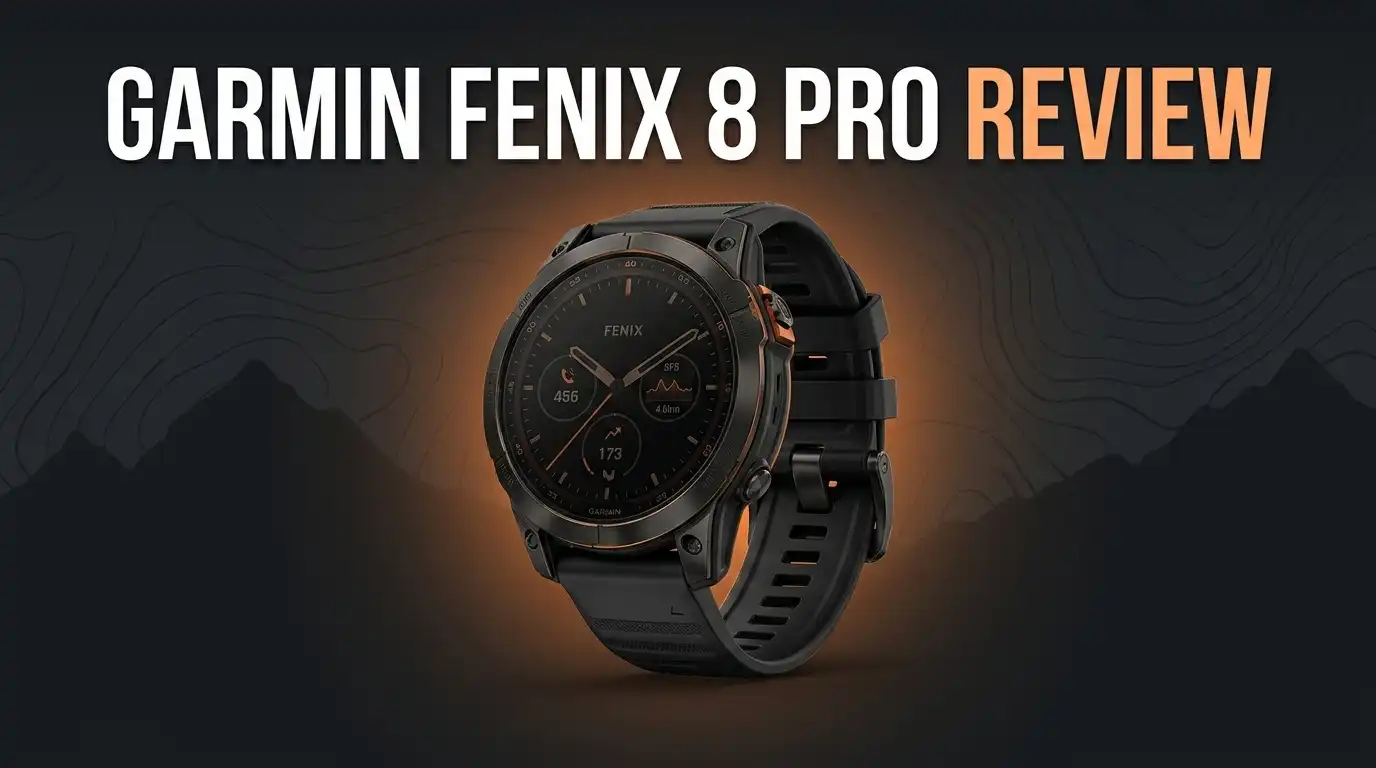
The Fenix 8 Pro feels serious the moment you strap it on. The titanium bezel has weight. The sapphire lens catches light like jewelry. The buttons click with a firm, mechanical snap that cheap watches never manage.
My test unit was the 47mm Sapphire model in DLC titanium. It weighs about 56 grams with the silicone band. The 51mm version pushes 65 grams and feels like a tool strapped to your arm.
This is a big watch. Garmin skipped the 43mm size entirely for the Pro line, which is a real problem for smaller wrists. My partner tried it and the case overhung her wrist bone by a visible margin.
The screen woke instantly on my first wrist raise. Colors looked saturated and text looked sharp. The brightness genuinely surprised me, even indoors under office lighting.
The Unboxing Experience
Garmin keeps the packaging simple. The box is a slim cardboard sleeve in muted grey and black, printed with a photo of the watch face. There is no plastic window and no glossy excess.
Lift the lid and the watch sits face up in a molded tray. Underneath you find a short USB C charging cable, a quick start leaflet, and warranty paperwork. That is the entire contents. No power brick, no extra band, no screen protector.
The cable uses Garmin’s familiar four pin connector that clips into the back of the case. It plugs into any 5 watt or higher adapter.
My unit arrived with roughly 60 percent charge, enough to start setup immediately. Pairing with Garmin Connect took about six minutes, including a firmware update that ran over WiFi. The setup wizard walks you through inReach activation separately, which is where the subscription decision arrives fast.
Design and Build Quality
Garmin builds the Fenix 8 Pro like gear, not jewelry. The case uses a fiber reinforced polymer body with a titanium bezel and titanium rear cover. The lens is sapphire crystal on the models most people buy.
Water resistance is rated to 10 ATM. The watch also carries a dive rating to 40 meters, so it handles recreational scuba with the dive apps onboard.
The five button layout survives from previous Fenix generations and still beats touch only controls when your hands are wet or gloved. The touchscreen handles map panning well.
One honest complaint: the Pro is noticeably thicker than the standard Fenix 8. The 51mm measures around 16.5mm deep compared to 14.7mm on the regular model. That extra bulk comes from the satellite and cellular radios.
Sleeping with it on the wrist takes adjustment. It catches on sleeves and snags on backpack straps more than slimmer watches.
Top 3 Alternative for Garmin Fenix 8 Pro

Last update on 2026-11-11 / Affiliate links / Images from Amazon Product Advertising API
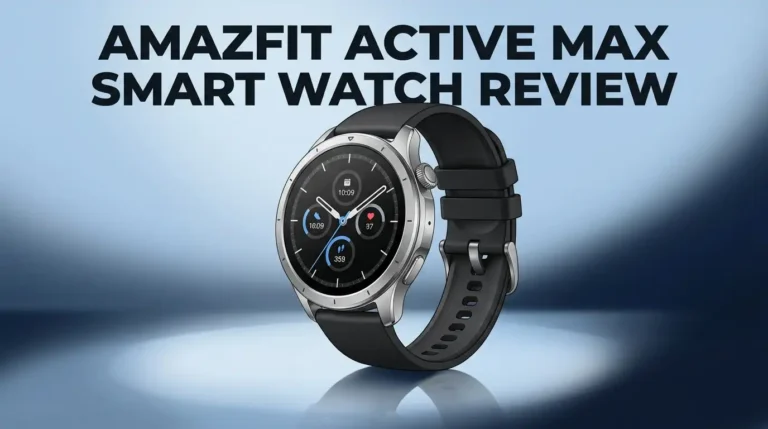
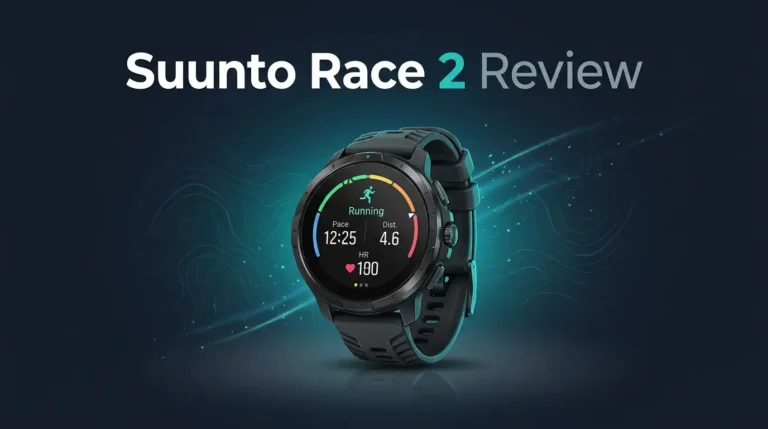
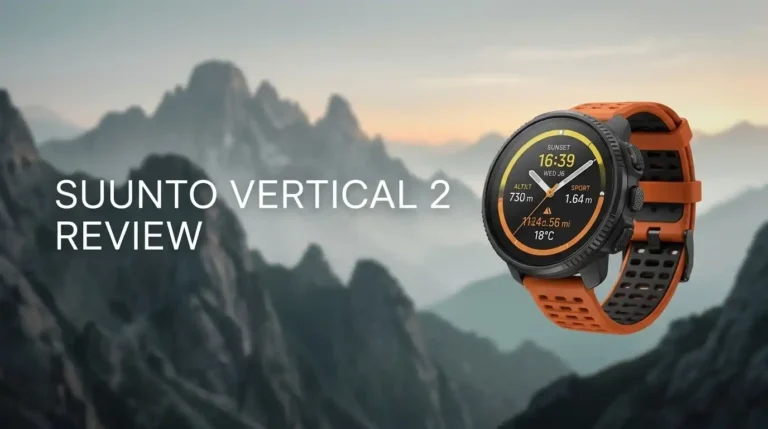
Garmin Fenix 8


Last update on 2026-11-11 / Affiliate links / Images from Amazon Product Advertising API
Garmin Forerunner 970

Last update on 2026-11-11 / Affiliate links / Images from Amazon Product Advertising API
Garmin Enduro 3
Display Quality: AMOLED and MicroLED
The AMOLED panel measures 1.4 inches on both the 47mm and 51mm models. Garmin pushes it to roughly 2,000 nits, which is double the output of the standard Fenix 8.
In direct summer sun the screen stays readable without squinting. I never once had to shade it with my hand during midday runs.
Garmin also sells a 51mm MicroLED version. That panel reaches around 4,500 nits and looks genuinely unlike any other watch on the market. It launched near $2,000 and Garmin quietly trimmed the price by about $300 during 2026.
Is MicroLED worth the premium? For most buyers, no. Battery life drops, the price climbs sharply, and the AMOLED already looks excellent.
One missing option bothers me. There is no memory in pixel version of the Fenix 8 Pro. Ultra runners who want three weeks of GPS tracking have no low power screen choice here.
Satellite Messaging Tested
This is the feature Garmin built the whole watch around. The Fenix 8 Pro connects to geostationary satellites through the Skylo network, which relay through ViaSat and Inmarsat hardware.
To send a message you raise your wrist and rotate until an alignment indicator locks on. Then you hold still. The watch guides you with a simple visual target.
Messages did go through in my testing under clear sky. They also failed more often than I expected. I had sessions at 33 degrees north with no clouds where the watch sat on “searching” for several minutes before giving up.
Here is the limitation nobody mentions in the ads. Geostationary satellites sit fixed above the equator roughly 22,000 miles up. Traditional inReach uses Iridium satellites in low orbit that constantly move across the sky.
If you cannot connect from where you stand, waiting will not help. The satellite is not coming. You have to move.
LTE Calls, Texts, and Voice Notes
LTE is the feature I used most. The watch connects through a low power cellular network built for wearables. You get texting, location sharing, and voice calls without carrying a phone.
Voice notes are the standout. You record a short clip, the recipient hears your voice, and they also receive an automatic text transcription. It feels futuristic in the best way.
Calls work only between Garmin Messenger users, not to any phone number. The microphone and speaker both performed well on quiet trails.
LTE reliability was my biggest frustration. In areas with solid coverage the Fenix 8 Pro sometimes failed to connect while a cellular watch on the same network linked up instantly.
The default Auto LTE setting also catches people out. The watch only checks for messages when you trigger it. Someone can message you at 9am and you may not see it until lunchtime.
Subscription Plans and Real Costs
Garmin bundles LTE and satellite into its inReach plan structure. Entry pricing sits near $7.99 per month for a standby tier, with full plans around $14.99 per month.
LTE data is unlimited across all tiers. The tiers differ mainly in how many satellite messages you get each month.
Garmin offers a 30 day free trial. One warning: starting the trial cancels an existing inReach plan on your account, so check that before you tap accept.
Roaming works if you travel outside your subscription country. You do not need a separate carrier plan or SIM.
My honest view on value: paying $1,199 for the watch and then another $180 per year feels heavy. Apple and Google both include satellite emergency messaging at no extra cost on their flagship watches. Garmin charging for SOS access on a four figure device is the weakest part of this package.
Battery Life in Daily Use
Real numbers matter more than spec sheets. On the 47mm with the always on display active, I averaged close to 8 days of normal wear with one workout daily.
The 51mm stretches that to around 15 days under the same conditions. Gesture mode adds several more days on both sizes.
GPS tracking without LTE drained roughly 1.9 percent per hour, matching Garmin’s published figures. Turn on LiveTrack over LTE during a run and that climbs to about 4.7 percent per hour.
Always on LTE is the battery killer. Daily drain jumped to 35 to 40 percent, which drops the Fenix 8 Pro to roughly the same endurance as a mainstream cellular smartwatch.
That trade feels strange on a watch marketed for multi day expeditions. You either accept delayed messages or accept charging every two to three days.
GPS Accuracy and Navigation
Garmin remains the benchmark here and the Fenix 8 Pro proves it. Multiband GNSS tracked my routes cleanly through tree cover, between tall buildings, and along river valleys.
I compared tracks against known distances repeatedly. Deviation stayed inside a few meters in nearly every test.
The mapping is the real advantage. Full routable topographic maps live on the watch with 32GB of storage behind them. You can search a destination and the watch builds turn by turn directions on the spot.
Round trip routing creates loop courses from your current location based on distance. It saved me twice in unfamiliar towns.
Map panning feels slightly sluggish compared to a phone, and the processor shows its age during heavy zooming. Navigation accuracy never let me down though, and that is what counts when light fades.
Health, Sleep, and Recovery Tracking
The Elevate heart rate sensor on the back tracks pulse continuously and performed well against a chest strap during steady efforts. Hard intervals still produce occasional lag, which is normal for wrist optical sensors.
Sleep tracking produces a nightly score with stage breakdowns, skin temperature trends, and respiration data. The Morning Report greets you with recovery guidance, training readiness, and weather.
ECG is available on the watch for compatible regions, along with blood oxygen spot checks and all day stress monitoring.
Body Battery remains my favorite Garmin metric. It shows energy draining through the day and refilling overnight in a way that genuinely matches how I feel.
Sleep comfort is the catch. A 56 gram watch on your wrist all night is not for everyone, and the thicker Pro case makes it more noticeable than slimmer trackers.
Sports Tracking and Training Tools
Every sport profile Garmin makes lives here. Running, cycling, swimming, skiing, golf, diving, rucking, and dozens more load straight from the menu.
Training analysis is the deepest available anywhere. You get training load balance, acute load ratio, VO2 max estimates, race predictors, endurance score, and hill score.
Garmin Coach builds adaptive plans for 5K through marathon distances. The daily suggested workouts adjust based on your recovery state.
Rucking support expanded with pack weight entry and dedicated metrics. Dive modes cover single gas, multi gas, gauge, and apnea.
The flashlight deserves its own mention. It has multiple brightness levels plus a red mode that protects night vision. I used it constantly for pre dawn runs and tent fumbling. It is the single most useful hardware feature Garmin has added in years.
What the Fenix 8 Pro Does Not Do Well
Honest reviews need this section. The satellite link is not dependable enough that I would rely on it as my only emergency tool in remote terrain. A handheld inReach still connects more reliably.
LTE performance was inconsistent in areas with clear coverage. That points at radio or software issues rather than network gaps.
Firmware stability has been uneven across the Fenix 8 family. Checking the Garmin forums before buying is genuinely worth your time.
The watch only comes in 47mm and 51mm. Smaller wrists have no option in this line.
There is no solar model and no memory in pixel model, both of which previous Fenix generations offered.
Third party app support remains thin compared to Apple and Wear OS. Connect IQ exists, but the quality gap is wide.
Pros and Cons
Pros
- Satellite and cellular messaging built into the watch removes the need to carry a separate communicator on most trips.
- Outstanding GPS accuracy with multiband tracking that holds up under tree cover and in cities.
- Full routable maps with round trip routing and on device search, stored on 32GB of space.
- Brightest screen Garmin has shipped, easily readable in direct sunlight at roughly 2,000 nits.
- Deep training analysis covering load, recovery, readiness, and race predictions that genuinely improves how you train.
- Excellent build with titanium, sapphire, 10 ATM rating, and a 40 meter dive rating.
- The red mode flashlight is more useful in daily life than it sounds.
Cons
- Subscription required for every connectivity feature, including SOS, starting around $7.99 monthly.
- Satellite coverage is regional, not global, and uses fixed position satellites instead of Iridium.
- LTE connection failed in areas with solid coverage during side by side testing.
- Always on LTE cuts battery life to roughly a third of normal.
- No 43mm size, no solar option, no memory in pixel option.
- Price near $1,199 to $1,299 places it far above strong rivals.
- Thicker and heavier than the standard Fenix 8.
Fenix 8 Pro vs Fenix 9 Pro in 2026
Garmin launched the Fenix 9 and Fenix 9 Pro in August 2026, which changes the buying picture. The Fenix 9 Pro starts near $1,099 and brings a titanium case, 3,000 nit AMOLED panels, and 64GB of storage.
The Fenix 9 Pro also offers inReach connectivity across all three sizes, including a 43mm option the 8 Pro never had. Solar charging returns on select models with up to 57 days of battery.
Garmin added stamina zones, a stamina curve, indoor rowing power metrics, and a faster map engine with 50 percent more RAM.
So why consider the 8 Pro now? Price. Retailers discount the Fenix 8 Pro heavily, and it has dropped below $950 during sales.
If you want current hardware, the 9 Pro is the better buy. If you want flagship capability at a discount, the 8 Pro suddenly makes sense.
Who Should Buy the Garmin Fenix 8 Pro
Last update on 2026-11-11 / Affiliate links / Images from Amazon Product Advertising API
Buy this watch if you spend real time away from cell coverage and want messaging on your wrist without carrying a second device. Hikers, trail runners, backcountry skiers, and sailors get genuine value from it.
Buy it if you already live in the Garmin ecosystem and want the most capable watch in that family at a discounted price.
Skip it if you need dependable backcountry emergency coverage. A standard Fenix 8 paired with an inReach Mini costs similar money and connects more reliably through Iridium.
Skip it if you have smaller wrists. The 47mm is the minimum and it is still large.
Skip it if the monthly plan annoys you on principle. That feeling will not fade, and you will resent the watch every renewal.
Final Verdict
The Garmin Fenix 8 Pro is the most capable smartwatch Garmin has ever built. It tracks better, maps better, and lasts longer than almost anything on the market.
The connectivity story is genuinely new and genuinely useful in the right conditions. Voice notes from a trail with no phone still feels remarkable.
But the execution has gaps. Satellite reliability needs work. LTE drops where it should not. The subscription on a four figure watch feels wrong.
My score sits around 8 out of 10. The core watch deserves a 9. The connectivity promise pulls it down.
Wait for a discount, understand the coverage limits, and go in knowing what the monthly plan costs. Do that and you will love this watch. Buy it expecting a wrist mounted inReach replacement and you will feel let down.
Frequently Asked Questions
Does the Garmin Fenix 8 Pro work without a subscription?
Yes, as a standard smartwatch. All fitness tracking, GPS, maps, and sensors work with no plan. You lose satellite messaging, LTE calling, LiveTrack over cellular, and SOS. Without a plan the watch acts as a Bluetooth remote for the Garmin Messenger app on your phone.
How much does the inReach plan cost each month?
Garmin plans start around $7.99 monthly for a basic standby tier and reach roughly $14.99 monthly for a full plan. LTE usage is unlimited on every tier. The difference between tiers is satellite message allowance. A 30 day free trial is available for new users.
Is satellite SOS available worldwide on the Fenix 8 Pro?
No. Coverage is regional and depends on the Skylo satellite network. Performance is strongest in mid latitude areas and weakens near the poles. Handheld inReach devices use Iridium satellites with full global coverage. Always check Garmin’s coverage map for your destination before relying on the watch.
What is the battery life of the Fenix 8 Pro?
The 47mm delivers around 8 days with the always on display and up to 15 days in gesture mode. The 51mm reaches up to 15 days always on. GPS tracking gives roughly 23 hours on the 47mm and 41 hours on the 51mm with dual band accuracy enabled.
Can I swim and dive with the Fenix 8 Pro?
Yes. The watch is rated to 10 ATM for swimming and water sports. It also carries a 40 meter dive rating with dedicated dive apps for single gas, multi gas, gauge, and apnea modes. The leakproof button design supports underwater use without damage.
Is the Fenix 8 Pro better than the regular Fenix 8?
Only if you want connectivity. The processor, software, sensors, and navigation performance are nearly identical. The Pro adds satellite and cellular radios plus a brighter screen. The standard Fenix 8 is thinner, lighter, cheaper, and lasts longer during GPS activities.

Hi, I’m Lucy Jones, a dedicated watch enthusiast and reviewer. I spend my time hunting down, testing, and evaluating the most intriguing wristwatches on the market. My goal is to guide you through the overwhelming choices with honest, hands-on insights into every timepiece.