How to Measure Wrist Size for a Watch and Find the Perfect Fit?
Have you ever ordered a watch online only to find it looks too big or too small on your wrist? You are not alone. Thousands of watch buyers face this exact frustration every year.
The good news is that measuring your wrist size for a watch is a quick and simple process. You just need the right method.
A well fitted watch does more than look good. It feels comfortable, stays in place, and complements your personal style. Whether you are buying your first timepiece or adding to a growing collection, knowing your exact wrist measurement is the first step to getting it right.
In a Nutshell
- Your wrist circumference is the most important measurement. Wrap a flexible tape measure or a strip of paper around your wrist just below the wrist bone. Record the number in both inches and millimeters for the most accurate comparison across brands.
- A flexible tape measure gives the fastest and most reliable result. If you do not have one, a strip of paper or a piece of string works just as well. Mark where it overlaps, then lay it flat against a ruler.
- Wrist size directly determines the best watch case diameter for you. Small wrists (under 6.5 inches) generally look best with 34mm to 40mm cases. Medium wrists (6.5 to 7.5 inches) pair well with 40mm to 44mm cases. Large wrists (over 7.5 inches) can comfortably carry 44mm and above.
- Lug to lug distance matters just as much as case diameter. If the lugs of a watch extend past the edges of your wrist, the watch is too large regardless of the case size number.
- Always measure at the right time of day. Wrists can swell slightly due to heat, exercise, or water retention. Measure in the afternoon for the most consistent and realistic result.
- Case thickness affects the overall look on your wrist. A thin case (7 to 9mm) sits flat and looks sleek. A thick case (12mm and above) makes a bolder statement but can feel bulky on smaller wrists.
How to Measure Your Wrist with a Flexible Tape Measure
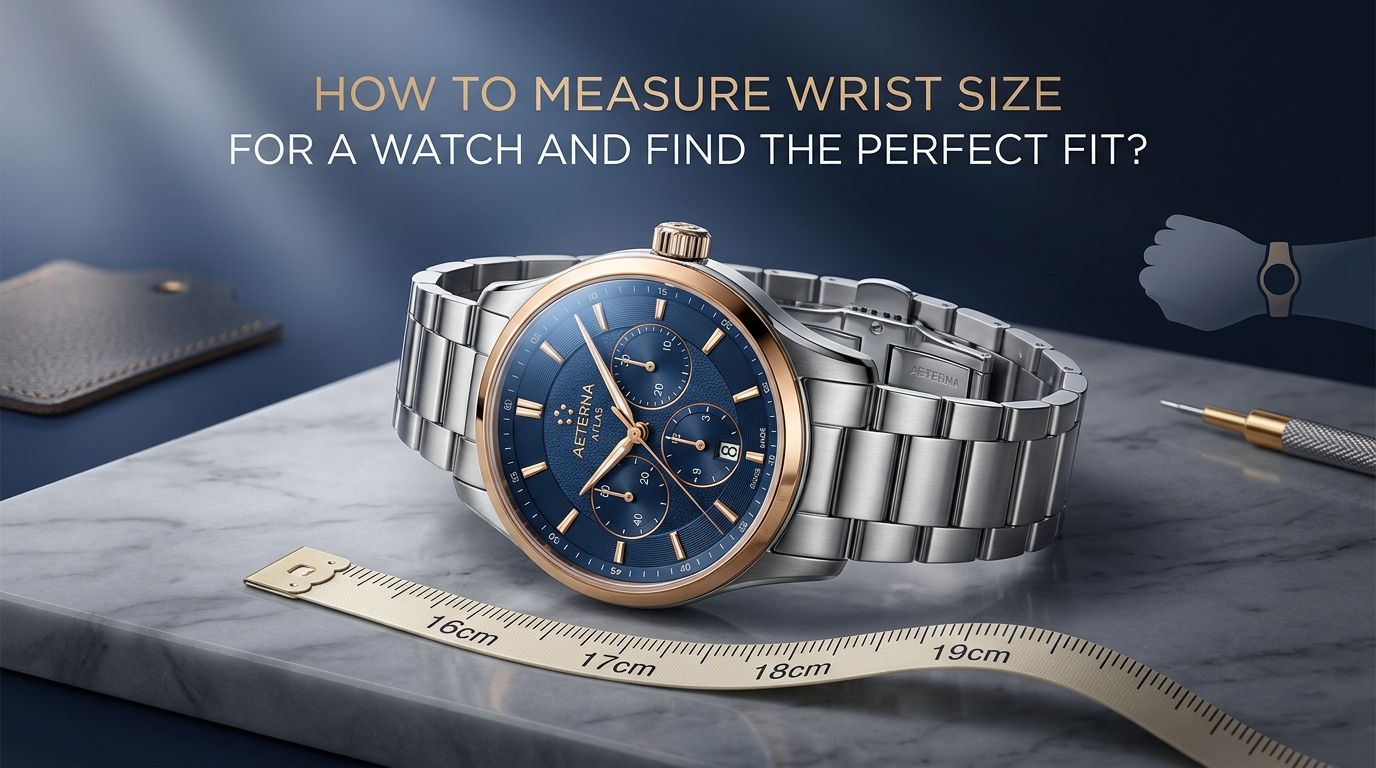
A flexible or soft tape measure is the easiest tool for this job. You can find one in most sewing kits. Wrap it around your wrist at the spot where you normally wear a watch. This is usually just below the wrist bone on the outer side of your arm.
Pull the tape snug against your skin but do not squeeze. You should be able to slide one finger underneath the tape. Read the number where the tape overlaps itself. Write it down in both inches and centimeters.
Pros: Fast, accurate, and easy to repeat. No math required.
Cons: Not everyone has a flexible tape measure at home.
This method gives you the circumference of your wrist. Most watch brands list their strap and bracelet sizes based on this number. Keep it saved in your phone so you have it ready for future purchases.
How to Measure Your Wrist with a Strip of Paper or String
If you do not own a tape measure, a strip of paper works perfectly. Cut a narrow strip about 10 inches long. Wrap it around your wrist at the same spot described above. Mark the paper where it overlaps with a pen or pencil.
Lay the paper flat on a table and measure the distance from the end to your mark using a ruler. This distance is your wrist circumference. You can also use a piece of string or a thin strip of fabric and follow the same process.
Pros: Uses items found in any home. Costs nothing.
Cons: Slightly less precise if you stretch the paper or string too tight. Requires a ruler for the second step.
Make sure the strip sits flat against your skin without twisting. A twist can add a few millimeters to the reading and throw off your measurement.
How to Understand Watch Case Diameter and Why It Matters
Watch case diameter is the width of the watch face measured in millimeters. This number plays a big role in how the watch looks on your wrist. A case that is too wide will overwhelm a small wrist. A case that is too narrow may look lost on a larger wrist.
Here is a general guide based on wrist circumference. Wrists under 6 inches suit cases between 28mm and 36mm. Wrists between 6 and 7 inches work well with 36mm to 42mm. Wrists between 7 and 7.5 inches look great with 42mm to 44mm. Wrists over 7.5 inches can handle 44mm to 46mm or larger.
These ranges are guidelines, not rules. Personal taste plays a big part. Some people prefer a larger watch for a bold look, while others like a minimal and slim profile. Try different sizes whenever possible before committing to a purchase.
How to Check Lug to Lug Distance for the Right Fit
Lug to lug distance is the measurement from the tip of one lug to the tip of the opposite lug. Lugs are the small arms that extend from the top and bottom of the case where the strap attaches. This measurement tells you how much of your wrist the watch will cover vertically.
The golden rule is simple. The lugs should not hang over the edges of your wrist. If they do, the watch is too large for you, even if the case diameter seems reasonable. A slight overhang of 2 to 3mm on each side is acceptable to some wearers, but anything more creates an awkward look and an uncomfortable fit.
To find the lug to lug distance of a watch you are considering, check the product specifications on the brand’s website. Compare this number to the flat width of your wrist, which you can measure by placing a ruler across the top of your wrist while your hand rests on a flat surface.
How to Measure Wrist Size for a Metal Bracelet Watch
Metal bracelet watches require a more precise fit than leather or rubber strap watches. A loose metal bracelet slides around the wrist and can scratch the watch or feel annoying. A tight one digs into the skin and restricts circulation.
Start by measuring your wrist circumference using one of the methods above. Most metal bracelets come with removable links that a jeweler or watch shop can add or remove. A properly fitted metal bracelet should allow about one finger of space between the bracelet and your skin.
Pros: Metal bracelets offer a secure and polished fit once adjusted.
Cons: You may need professional help to remove or add links. Some brands charge a fee for sizing.
It is a good idea to have the bracelet adjusted in person if you buy from a physical store. If you buy online, many sellers include a link removal tool in the box.
How to Measure Wrist Size for a Leather or Rubber Strap Watch
Leather and rubber straps use a buckle and hole system similar to a belt. This makes them more forgiving than metal bracelets. You choose the hole that gives you the best balance between comfort and security.
Measure your wrist circumference, then match it to the strap size chart provided by the brand. Leather straps often stretch slightly over time, so pick a snug fit on a new strap. It will loosen as the leather breaks in. Rubber and silicone straps do not stretch, so size them for immediate comfort.
Pros: Easy to adjust on your own. No special tools needed.
Cons: Leather wears out faster than metal. Rubber can trap sweat against the skin.
If your measurement falls between two hole positions, go with the tighter option for leather and the looser option for rubber.
How to Account for Wrist Swelling Throughout the Day
Your wrist size is not constant. It changes throughout the day based on temperature, physical activity, and how much water you have consumed. Most people experience slight swelling in the afternoon and evening.
For this reason, measure your wrist in the mid to late afternoon for the most realistic result. Measuring first thing in the morning may give you a slightly smaller number. Measuring right after a workout may give you a larger one.
If your wrist swells noticeably, consider a strap type with adjustable micro sizing. Some metal bracelets feature half link adjustments or micro adjust clasps that let you change the fit by a few millimeters. This feature is especially useful in warm climates where heat related swelling is common.
Planning for swelling prevents a watch from feeling perfect in the store but uncomfortably tight a few hours later.
How to Decide Between a Thick and Thin Watch Case for Your Wrist
Case thickness affects how a watch sits on your wrist and how it looks from the side. Thin cases, between 7mm and 9mm, slip under shirt cuffs easily and feel light on the wrist. Thick cases, between 12mm and 15mm, stand taller and draw more attention.
Smaller wrists generally pair better with thinner cases. A thick case on a slim wrist can look top heavy and feel unbalanced. Larger wrists have more surface area and can support thicker cases without any visual imbalance.
Consider your daily activities as well. If you wear dress shirts or work at a desk, a thin case is more practical. If you spend time outdoors or want a rugged sport watch, a thicker case provides more durability and water resistance.
There is no strict rule about case thickness. But trying a watch on your wrist before buying gives you the best sense of proportion and comfort.
How to Use Online Watch Size Calculators and Printable Guides
Several watch brands and third party websites offer free sizing tools. Online calculators ask you to enter your wrist circumference. They then recommend case diameters and strap lengths that will fit well. Some websites also provide printable templates you can cut out and wrap around your wrist.
These tools are helpful as a starting point, especially when you cannot try a watch in person. They take the guesswork out of online shopping and give you a visual reference for how different sizes will look.
Pros: Free, easy to use, and available from your computer or phone.
Cons: Not always perfectly accurate. Printer settings can affect the scale of printable guides.
Always double check that your printer is set to 100% scale with no “fit to page” option selected. Printing at the wrong scale defeats the entire purpose of the guide.
How to Choose the Right Watch Size for Women vs Men
Traditional sizing guidelines suggest 26mm to 36mm for women and 38mm to 46mm for men. However, these boundaries have blurred significantly in recent years. Many women prefer 38mm to 40mm watches for a modern oversized look. Many men enjoy 36mm vintage style pieces.
Your wrist measurement is more important than any gender based chart. A woman with a 7 inch wrist can comfortably wear a 42mm watch. A man with a 6 inch wrist may prefer a 36mm case.
Focus on your actual wrist circumference and how the watch proportions match your arm. The key indicators remain the same for everyone. Case diameter should be proportional. Lugs should not overhang. The watch should feel secure without squeezing.
Style is personal. Let your wrist measurement guide the fit, and let your taste guide the design.
How to Avoid Common Mistakes When Measuring Your Wrist for a Watch
Several mistakes can lead to an inaccurate measurement. The most frequent one is measuring too tightly. A tape or strip pulled too tight gives a smaller number and results in a watch that feels too snug. Always leave room for one finger.
Another common error is measuring in the wrong location. The wrist bone itself is wider than the area just below it. Always measure just below the bone, in the spot where a watch naturally sits.
Some people also rotate their forearm with the palm facing up while measuring. This position causes the radius and ulna bones to cross, which temporarily changes your wrist shape and size. Keep your palm facing down or to the side for the most accurate reading.
Finally, do not rely on memory. Write down your measurement immediately. A difference of even 5mm can change the strap size or bracelet link count you need.
How to Confirm Your Watch Fits Correctly After Purchase
Once your watch arrives, put it on and run through a quick fit check. The watch should sit flat on top of your wrist without rocking from side to side. The lugs should stay within the edges of your wrist.
Shake your arm gently. The watch should move slightly but not slide up and down your forearm. Rotate your wrist in all directions. The watch should stay in place without pinching or pulling.
Check the clasp or buckle position. It should rest on the bottom of your wrist, roughly opposite the watch face. If the clasp drifts to the side, the bracelet may be too loose.
If the fit is not right, do not force it. Most online retailers offer free returns or exchanges within a set period. Many local jewelers will resize a metal bracelet at minimal cost. Getting the fit right is worth the extra effort because a comfortable watch is one you will actually enjoy wearing every day.
Frequently Asked Questions
How do I measure my wrist for a watch without a tape measure?
Use a strip of paper, a piece of string, or even a phone charging cable. Wrap it around your wrist just below the wrist bone. Mark the overlap point, then lay the strip flat against a ruler or a rigid measuring tool. Record the length in inches or centimeters. This method is almost as accurate as using a tape measure.
What is the average wrist size for men and women?
The average male wrist circumference is about 7 to 7.5 inches (18 to 19cm). The average female wrist circumference is about 6 to 6.5 inches (15 to 16.5cm). These numbers vary widely based on body type, bone structure, and overall build. Always measure your own wrist instead of relying on averages.
How tight should a watch fit on your wrist?
A watch should fit snugly enough that it does not spin freely around your wrist. At the same time, you should be able to slide one finger between the strap and your skin. If the watch leaves a red mark or indentation after you remove it, the fit is too tight.
Does wrist shape affect which watch size I should choose?
Yes. Wrist shape matters. A flat and wide wrist can support larger case diameters and longer lug to lug distances. A round and narrow wrist looks better with smaller or mid sized cases. Measuring both your circumference and your flat wrist width gives you the most complete picture for choosing the right watch.
Can I measure my wrist with my phone?
Some watch brands offer AR (augmented reality) tools in their apps that let you see how a watch looks on your wrist through your phone camera. While these tools give a visual preview, they should not replace an actual physical measurement. Use them as a supplement, not as your only method.

Hi, I’m Lucy Jones, a dedicated watch enthusiast and reviewer. I spend my time hunting down, testing, and evaluating the most intriguing wristwatches on the market. My goal is to guide you through the overwhelming choices with honest, hands-on insights into every timepiece.