How To Clean A White Silicone Watch Band That Turned Yellow?
Your white silicone watch band looked clean and bright when you first got it. Now it has turned yellow, and it looks worn out even if the watch itself is fine.
This is a very common problem. UV exposure from sunlight is the main reason white silicone and rubber bands turn yellow over time. Sweat, oils, and everyday dirt can make it worse.
This article will walk you through exactly how to clean a white silicone watch band that has turned yellow. You will learn:
- Why yellowing happens in the first place
- The most effective cleaning methods, including a baking soda and hydrogen peroxide paste
- Common mistakes to avoid so you do not damage the band
- Simple tips to keep the band looking white for longer
Whether the yellowing is mild or heavy, these methods work. Follow each step carefully, and your band can look much closer to its original bright white.
In a Nutshell
- White silicone bands turn yellow mainly because UV light from the sun breaks down the material over time.
- Removing the band from your watch before cleaning is always the safest first step.
- A paste made from baking soda and hydrogen peroxide is the most effective solution for lifting yellow stains from silicone.
- Apply the paste, scrub very gently using soft circular motions with a toothbrush, then wipe clean with a damp cloth.
- Always allow the band to air dry completely before putting it back on your wrist. Skipping this step is a common mistake.
- Aggressive scrubbing damages the silicone surface, so gentle pressure is essential throughout the entire cleaning process.
Why Does Your White Silicone Watch Band Turn Yellow?
White silicone watch bands turn yellow for one main reason: UV light exposure from the sun. The ultraviolet rays gradually break down the silicone material over time, causing the bright white color to fade into a dull yellow or cream shade.
This happens naturally to all white silicone and rubber products. Your band doesn’t need to spend hours in direct sunlight for yellowing to occur. Even regular daily wear exposes the band to UV rays, and the damage builds up slowly over weeks and months.
The yellowing process is actually a form of material degradation. UV light causes the silicone polymers to oxidize. This oxidation changes the chemical structure of the surface layer, which alters how light reflects off the band and makes it appear yellow or discolored.
Environmental factors speed up the yellowing process. Bands worn during outdoor activities, beach trips, or sports get exposed to more intense UV rays. Humidity and heat can also accelerate the discoloration. Even storing your watch near a sunny window contributes to the problem.
The good news is that yellowing doesn’t mean your band is damaged beyond repair. The discoloration sits on the surface of the silicone. You can remove most yellow stains with the right cleaning methods and materials.
Understanding why yellowing happens helps you take better care of your band going forward. Once you clean away the yellow stains, you can take steps to slow down future discoloration. Simple prevention habits make a real difference in keeping your white silicone band looking fresh and bright for much longer.
What You Need Before You Start Cleaning
Before you start cleaning your yellow silicone watch band, gather the right supplies. Having everything ready makes the process faster and more effective.
Basic cleaning supplies are your foundation. You need a soft toothbrush with gentle bristles. A regular toothbrush works fine as long as the bristles are soft and won’t scratch the material. Grab a clean cloth or towel to lay your band on while you work.
You’ll need water for rinsing and soaking. Lukewarm water works best because it helps loosen dirt without damaging the silicone. Have a bowl or cup ready to hold your soaking water.
For the stain removal paste, you need baking soda and hydrogen peroxide. Baking soda is a mild abrasive that lifts stains gently. Hydrogen peroxide acts as a bleaching agent that targets yellow discoloration. Mix these two ingredients together until you get a thick paste that sticks to your brush.
Keep a damp cloth nearby for wiping away the paste after scrubbing. This cloth should be soft and won’t leave lint on your band.
Optional items include a small dish for mixing your paste and a timer to track soaking time. Some people like using an old toothbrush they don’t use anymore so they don’t mix it up with their regular one.
Make sure your workspace has good lighting. You need to see what you’re doing clearly. A paper towel or old newspaper underneath protects your surface from any spills.
The most important thing is having patience and gentle tools ready. Aggressive scrubbing damages silicone, so soft materials are essential throughout this entire process.
How To Remove Your Watch Band Safely Before Cleaning
Removing your watch band safely is the first step before any cleaning begins. This prevents water from reaching the watch mechanism and protects the internal components from damage.
Start by locating the spring bars or pins that hold your band to the watch case. These small metal rods slide through holes on both sides of the watch. Most watch bands use one of two attachment methods: spring bars with tiny buttons or fixed pins.
For spring bar bands, look for a small slot or opening on the underside of each bar. Use a spring bar tool or a small flathead screwdriver to gently press the button while sliding the band away from the watch case. Apply steady, even pressure without forcing the tool. Rushing this step can scratch your watch or bend the spring bars.
If your band uses fixed pins instead of spring bars, you’ll need to push the pins out from the inside using a small tool. Work from one side to the other, applying gentle pressure. Some pins may require a slight twisting motion to loosen them first.
Lay your watch on a soft cloth or padded surface while you work. This prevents accidental drops and protects the watch face from scratches. Keep all small parts like spring bars or pins in a safe location where you won’t lose them.
Take your time during removal. Patience here prevents accidents that could damage both your watch and band. Once the band is completely free, you’re ready to begin the cleaning process. Set your watch aside in a safe, dry place away from your cleaning area.
Step-By-Step: How To Clean A Yellowed White Silicone Watch Band
Start by placing your watch band on a clean, flat surface. Make sure you have good lighting so you can see what you’re working with.
First, remove the band from your watch if you haven’t already. This protects the watch case from getting wet during cleaning.
Next, soak your band in warm soapy water for about 10 to 15 minutes. This loosens dirt and prepares the silicone surface. Use mild dish soap mixed with lukewarm water in a small bowl.
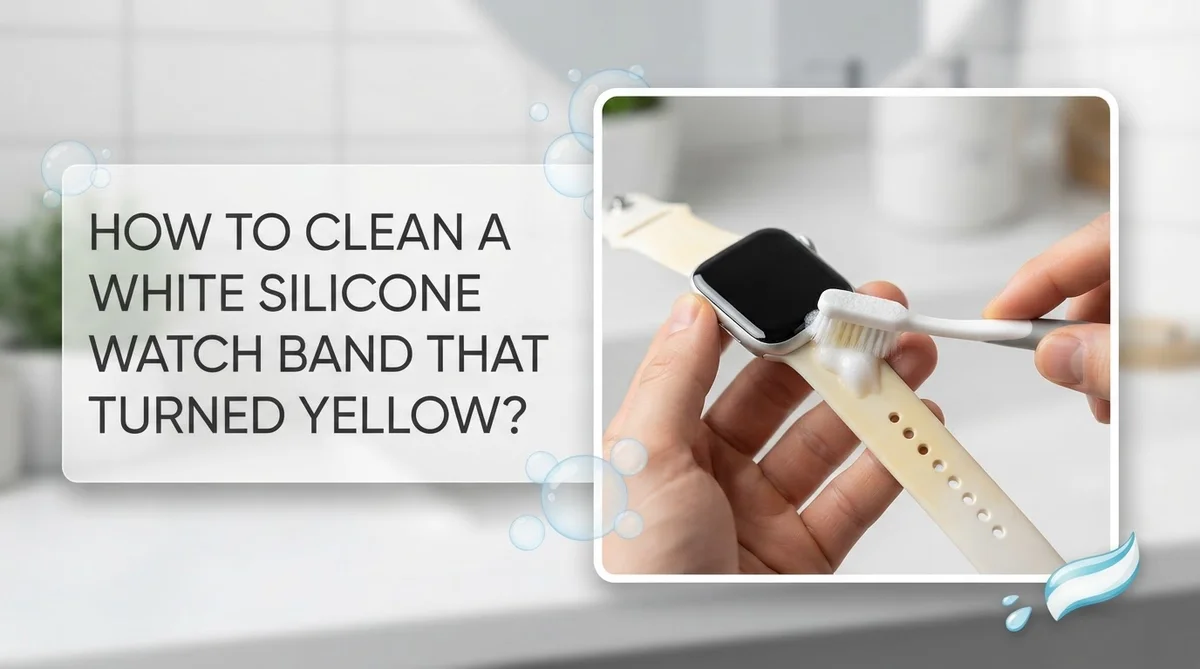
After soaking, gently scrub the band with a soft toothbrush using circular motions only. Focus on the yellowed areas. Never use aggressive scrubbing because it damages the silicone material. Light pressure is all you need.
For stubborn yellow stains, make a paste using baking soda and hydrogen peroxide. The ratio should be about three parts baking soda to one part hydrogen peroxide. Apply this paste directly to the yellow areas and let it sit for a few minutes.
Scrub very gently with your soft toothbrush again. Use the same circular motions. This paste works because it naturally whitens and lifts discoloration from the silicone.
Wipe away all the paste with a damp cloth or soft rag. Rinse thoroughly under clean running water to remove any remaining baking soda residue.
The drying step is absolutely critical. Lay your band flat on a clean cloth in a well ventilated area. Allow it to air dry completely for at least 24 hours before wearing it again. Moisture trapped inside can cause problems later.
Check that your band looks whiter and brighter. If some yellowing remains, you can repeat this process one more time for better results.
How To Make And Use A Baking Soda And Hydrogen Peroxide Paste
Making a baking soda and hydrogen peroxide paste is simple and effective for removing yellow stains from your white silicone watch band. This method works because both ingredients have natural whitening and oxidizing properties that lift discoloration without damaging the material.
Start by measuring out equal parts baking soda and hydrogen peroxide into a small dish. You can use about one tablespoon of each as a starting point, though you may adjust based on how much paste you need. Mix these two ingredients together with a small spoon until you create a thick, creamy paste that sticks to your brush without running off.
The consistency matters here. Your paste should be thick enough to stay on the band while you scrub, but not so dry that it becomes hard to apply. If your mixture looks too thin, add a bit more baking soda. If it seems too thick and crumbly, add one more drop of hydrogen peroxide.
Once your paste is ready, apply it directly to the yellowed areas of your watch band. Use your soft toothbrush to gently scrub in small circular motions. Press very lightly as you work. The goal is to let the paste do the cleaning work, not to force the bristles into the silicone.
Scrub for about two to three minutes on each stained section. You should see the yellow color beginning to fade as the paste works into the material. After you finish scrubbing, wipe away all remaining paste with a damp cloth or soft rag. Rinse thoroughly under cool running water until no paste residue remains on the band.
How To Dry And Reattach Your Watch Band Properly
After you finish scrubbing and rinsing your watch band, drying it properly is absolutely essential. Moisture left inside the band can damage your watch when you reattach it. Here’s how to do it right.
First, gently squeeze out excess water with a soft, clean cloth. Don’t wring or twist your band, as this can damage the silicone material. Pat the band dry on all sides, including the areas where the band connects to the watch case.
Next, lay your band flat on a clean, dry cloth in a well ventilated area. Make sure air can flow around all parts of the band. Leave it sitting for at least 24 hours before reattaching. This gives moisture time to evaporate completely from inside the material.
You can speed up drying by placing your band in a warm room away from direct sunlight. Avoid using heat sources like hair dryers or ovens, as high temperatures can warp silicone bands permanently.
Once your band is completely dry, inspect it carefully. Check that all the stains are gone and the band looks bright white again. Feel the band to make sure it’s not damp or tacky anywhere.
Now you’re ready to reattach your band. Line up the holes or slots on your band with the spring bars or pins on your watch case. Push the band firmly into place until you hear a click or feel it lock securely. Gently tug the band to confirm it’s attached properly and won’t slip off during wear.
Your freshly cleaned watch band is now ready to wear again.
Common Mistakes To Avoid When Cleaning Silicone Watch Bands
Cleaning your white silicone watch band requires a gentle approach. Many people make costly mistakes that damage the material permanently.
Aggressive scrubbing is the biggest error you can make. Hard scrubbing with force damages silicone fibers and creates permanent marks. Use only soft circular motions with light pressure. Your toothbrush should barely touch the surface. Think of it like cleaning a delicate fabric, not scrubbing a pot.
Rushing the drying process causes major problems. Your band must air dry completely before you wear it again. Putting on a damp band traps moisture inside. This moisture leads to mold growth and unpleasant odors. Set aside at least 6 to 8 hours for full drying in a warm, well ventilated area.
Using water that’s too hot damages silicone. Stick with warm water, not hot water. High temperatures can warp the band permanently. Your hand should feel comfortable holding the water.
Never use abrasive tools on your band. Rough brushes, scouring pads, or metal tools scratch and tear silicone. A soft toothbrush is your best option. Make sure the bristles are fine and gentle.
Skipping the initial soak is another common mistake. Soaking for 10 to 15 minutes in soapy water loosens dirt and grime. This step makes cleaning easier and gentler. You need less scrubbing force when you soak first.
Over applying cleaning paste creates buildup. Use just enough paste to cover stained areas. Too much paste requires excessive rinsing and extends drying time. A thin, even layer works best for removing yellow stains effectively and safely.
How To Prevent Your White Silicone Watch Band From Yellowing Again
Preventing yellowing from happening again is easier than fixing it after the damage occurs. UV light is the main culprit behind yellowing, so limiting sun exposure makes the biggest difference. Store your watch in a drawer, box, or dark bag when you’re not wearing it. This simple habit protects your band significantly.
When you do wear your watch outdoors, try to keep your wrist in the shade whenever possible. Long sleeves also help block UV rays from reaching the band. If you spend time at the beach or pool, remove your watch and store it safely indoors. Water combined with sun exposure speeds up yellowing.
Clean your band regularly to prevent dirt and oils from building up. Dirt traps moisture and creates an environment where discoloration spreads faster. A quick rinse with soapy water once a week keeps your band fresh. This maintenance stops problems before they start.
Dry your band completely after any contact with water or sweat. Moisture left on silicone promotes yellowing and material breakdown. Pat it dry with a soft cloth and let it air dry in a shaded area.
Consider rotating between multiple watch bands if you wear a watch daily. This gives each band recovery time away from UV exposure. Alternating bands extends the life of all your bands significantly.
Store your watch in a cool, dry place. Heat accelerates yellowing, so avoid leaving your watch in hot cars or direct sunlight on windowsills. A drawer at room temperature is ideal.
These prevention steps work together to keep your white silicone band looking bright and new for years. Consistency matters more than doing one thing perfectly.
Final Thoughts
A yellowed white silicone watch band is a common problem, but it is absolutely fixable with the right approach.
The key takeaway is simple. UV exposure and daily wear cause yellowing over time. Understanding this helps you clean smarter and prevent future damage.
The cleaning process works best when you stay gentle throughout. Soft circular motions and light pressure protect your band’s surface while still lifting stains effectively.
Baking soda and hydrogen peroxide paste remains the most effective combination for stubborn yellow stains. Apply it carefully, scrub lightly, and always rinse thoroughly afterward.
Never rush the drying step. A band that is not fully dry before wearing will attract more dirt and bacteria, which speeds up yellowing again.
Prevention is just as important as cleaning. Regular maintenance keeps stains from building deep into the silicone material.
Consistency matters more than intensity. A quick gentle clean every week beats one aggressive scrub every few months. Aggressive scrubbing damages silicone fibers and makes the problem worse over time.
Store your watch away from direct sunlight when you are not wearing it. UV rays are the leading cause of yellowing, so limiting sun exposure protects your band between wears.
The methods covered in this guide are straightforward and use simple household items. You do not need anything complicated to restore your band’s bright white appearance.
With the right technique and regular care, your white silicone watch band can stay clean and bright for a long time. Small consistent habits make the biggest difference in keeping your band looking fresh and new.
Frequently Asked Questions
Why does my white silicone watch band turn yellow?
White silicone bands yellow because of UV exposure from sunlight. When you wear your watch outside, the sun’s rays break down the silicone material over time. This natural process happens to all white rubber and silicone products. Sweat, dirt, and body oils can speed up the yellowing. The good news is that yellowing doesn’t mean your band is ruined.
What’s the best paste to remove yellow stains?
A baking soda and hydrogen peroxide paste works best for stubborn yellow stains. Mix these two ingredients until you get a thick, spreadable consistency. Apply the paste directly to the yellowed areas of your band. Let it sit for a few minutes, then gently scrub using soft circular motions with a soft toothbrush.
How long should I soak my band before cleaning?
Soak your band in warm soapy water for about 5 to 10 minutes before scrubbing. This softens any dirt and makes cleaning easier. Remove the band from your watch first to protect the watch face. Use regular dish soap mixed with lukewarm water for the best results.
Can I use regular bleach to whiten my band?
Avoid using bleach on silicone bands. Bleach is too harsh and can damage the material permanently. Stick with gentler options like hydrogen peroxide, which is much milder. The baking soda and hydrogen peroxide paste is safe and effective for silicone.
How long does the band need to dry after cleaning?
Allow your band to air dry completely for at least 2 to 4 hours before wearing your watch again. Don’t rush this step. Full drying prevents moisture from getting trapped inside the band. Place it on a clean cloth in a well ventilated area away from direct heat sources.

Hi, I’m Lucy Jones, a dedicated watch enthusiast and reviewer. I spend my time hunting down, testing, and evaluating the most intriguing wristwatches on the market. My goal is to guide you through the overwhelming choices with honest, hands-on insights into every timepiece.