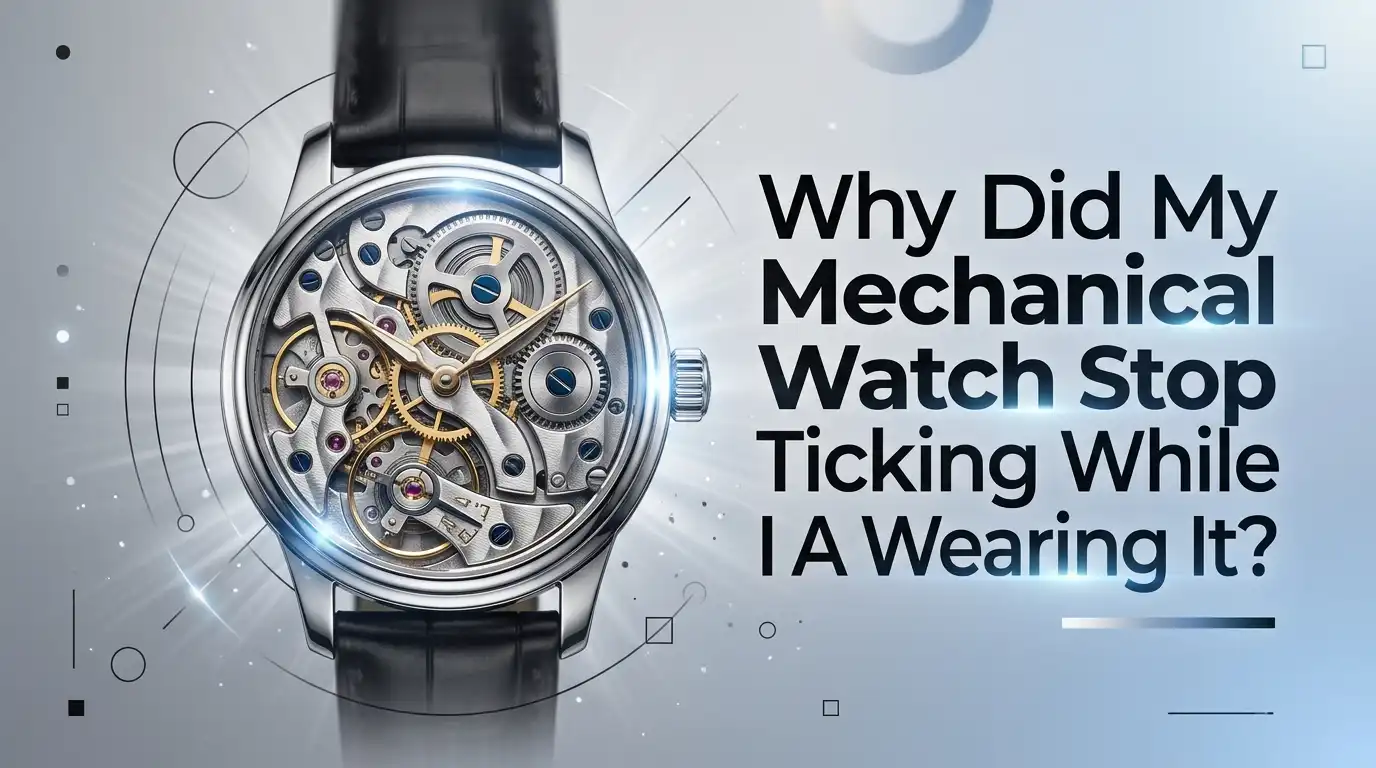
Why Did My Mechanical Watch Stop Ticking While I Am Wearing It?
A mechanical watch can feel alive on your wrist. That is why it can be so annoying when it suddenly stops while you are still wearing it. You look down, and the seconds hand is frozen.
Your first thought is often the worst one. Is the watch broken? Do you need an expensive repair? Did you damage it without knowing?
In many cases, the answer is much less scary. A stopped mechanical watch is often low on power, low on motion, or overdue for care. That means you can often find the cause with a few calm checks at home.
Key Takeaways
- Start with the simple cause first. Many watches stop on the wrist because they do not have enough stored power. This is very common with automatic watches during low activity days. It is also common if the watch was already low before you put it on. A full manual wind is often the first smart test.
- Know what kind of mechanical watch you own. A manual wind watch needs regular crown winding. Wearing it does not power it. An automatic watch can wind from wrist motion, but only if your day gives the rotor enough movement. If you sit at a desk most of the day, the watch may never build a full reserve.
- Power reserve matters more than many people think. Many modern automatic watches run for about 36 to 48 hours on a full wind. Some can run for about 64 hours. If your watch stops much sooner than its normal reserve after a full wind, that points to a real issue such as weak winding, old oil, or internal wear.
- Your habits can cause the stop without you doing anything wrong. A loose strap, limited arm movement, frequent watch rotation, magnets from phones or headphones, and even a recent knock can all affect performance. Small daily patterns can create a big watch problem.
- Home checks can save time and stress. You can test the power reserve, check the crown, review your activity level, and look for signs of magnetism before you book service. These steps help you separate a normal power issue from a true fault.
- Some signs mean it is time for a watchmaker. If the watch stops soon after a full wind, gains or loses a lot of time, feels rough when winding, shows moisture under the crystal, or recently took a hit, get it checked. A quick service at the right time can stop a bigger repair later.
What This Problem Usually Means
If your mechanical watch stops while you are wearing it, the watch is telling you one simple thing. It does not have enough usable energy to keep the movement going. That lack of energy can come from several causes, but they usually fall into a short list.
The first cause is low winding. This is the most common one. The second cause is poor winding efficiency. In that case, the watch is moving, but it is not building enough reserve. The third cause is internal trouble such as dried oil, dirt, magnetism, or worn parts.
The good news is this. A stopped watch does not always mean a broken watch. Many cases are routine and fixable.
It also helps to remember that a mechanical watch is not a quartz watch. It does not run from a battery. It runs from a mainspring that stores energy. Once that stored energy falls too low, the watch stops.
So before you panic, treat the stop as a clue. Start with power, then motion, then condition.
First Check If Your Watch Is Manual Wind or Automatic
This step is easy, but it matters a lot. Some people wear a manual wind mechanical watch and expect wrist motion to keep it alive. That will not happen. A manual wind watch needs crown winding by hand. Wearing it does not add power.
An automatic watch is different. It has a rotor inside. That rotor moves with your wrist and winds the mainspring as you go through the day. But even an automatic watch can stop if your movement is too limited.
If you do not know which type you own, check the model information before doing anything else. This one detail changes the whole answer.
Pros of identifying the movement type are clear. You avoid wrong fixes, save time, and stop blaming the watch for normal behavior. The only con is that you may need a few minutes to look up the model or read the manual.
Once you know the type, your next move becomes much easier and much more accurate.
Give the Watch a Proper Manual Wind Before You Assume the Worst
If the watch has stopped, give it a proper manual wind first. This is the fastest test you can do. For many automatic watches, about 20 to 30 slow crown turns is a useful starting point. For a manual wind watch, wind it until you feel normal resistance and then stop. Do not force it.
Turn the crown slowly and gently. Make sure the crown is in the normal position. If your watch has a screw down crown, unlock it first and lock it again after you finish.
Do not shake the watch hard to wake it up. That feels helpful, but it is not a good habit.
Pros of manual winding: it is quick, free, and often solves the problem right away. It also tells you whether the watch simply started the day with too little power.
Cons of manual winding: it does not fix deeper problems. If the watch stops again soon, the real issue is still there.
After winding, wear the watch and observe it for the rest of the day.
See Whether Your Day Has Enough Wrist Motion
Many people wear an automatic watch but live a low motion day. You may type, drive, sit in meetings, or work from home. In that kind of routine, your wrist may move less than you think. The rotor inside the watch may never build a healthy reserve.
This is why an automatic watch can stop while you are still wearing it. It is on your wrist, but your wrist is not doing enough.
Some watches need steady wear for 8 to 10 hours to stay well charged. If the watch was already low when you put it on, a quiet day may not save it.
Pros of using natural wrist motion: it is easy, normal, and built into how an automatic watch is meant to work. You do not need extra steps if your routine gives enough motion.
Cons: this method depends on your lifestyle. If your day is very still, the watch may keep living close to empty.
If your work keeps you seated, start the day with manual winding instead of relying on motion alone.
Run a Simple Power Reserve Test at Home
A power reserve test tells you a lot. Wind the watch fully, then take it off and let it sit in a safe place. Note the time when you set it down. Then see how long it runs before stopping.
Many automatic mechanical watches run about 36 to 48 hours on a full wind. Some run around 64 hours. Your watch should be somewhere near its stated reserve if the movement is healthy and fully wound.
If it dies far earlier than expected, that points to a real problem. The issue may be poor winding efficiency, dried lubrication, a weak mainspring, or another internal fault.
Pros of this test: it gives useful evidence, costs nothing, and helps you decide whether you need service. It also stops random guessing.
Cons: it takes time, and it only gives a clue. It does not tell you the exact part that failed.
Still, this is one of the best at home tests you can do before spending money.
Check the Fit of the Bracelet or Strap
A loose watch can look stylish, but it may hurt winding performance. If the case slides around too much, the rotor may not pick up wrist motion as well as it should. That can be enough to keep the watch under wound, especially if your daily activity is already low.
A better fit does not mean a tight fit. The watch should feel secure and comfortable. It should not spin around your wrist or hang too low on the hand.
A small fit change can make a real difference. This is one of the easiest fixes people miss.
Pros of adjusting the fit are simple. It is cheap, fast, and it improves both comfort and winding. You may also notice better time stability through the day.
Cons are also worth noting. If you make the strap too tight, the watch can become annoying to wear. A fit change also will not help if the real cause is inside the movement.
Still, this is a smart check because it affects how an automatic watch gathers energy every single day.
Watch for Magnetism Around Phones and Bags
Magnetism is a common troublemaker for mechanical watches. Phones, headphones, laptop covers, bag clasps, speakers, and other daily objects can expose the movement to magnetic fields. Once that happens, the watch may run very fast, act erratically, or stop.
The effect can remain even after the watch is moved away from the magnetic source. That is why some owners feel confused. The watch is no longer near the phone, but the timing is still wrong.
A magnetized watch can look broken when it is actually fixable.
Pros of checking for magnetism are clear. It helps explain strange behavior, and demagnetizing is often simple for a professional. In some places it is a quick job.
Cons are that magnetism is hard to confirm at home without tools, and similar symptoms can come from other issues too.
As a basic habit, keep your watch away from strong magnetic items. A little distance can prevent a lot of trouble.
Think About Drops, Shocks, and Sudden Impacts
Mechanical watches have tiny moving parts. A hard knock can upset that delicate system. Maybe the watch hit a door frame. Maybe it dropped on the floor. Maybe you wore it during rough activity. Even if the case looks fine, the inside may not be fine.
A shock can affect the balance, the rotor, the hands, or the movement alignment. Sometimes the watch stops right away. Sometimes it starts stopping later because the damage created extra friction inside.
If your watch stopped soon after an impact, do not ignore that timing. That clue matters.
Pros of tracing the problem back to a shock are practical. It gives you a strong reason to seek service early, and it helps the watchmaker inspect the right areas.
Cons are simple. You usually cannot fix shock damage at home, and continued wear may make it worse.
If a recent hit lines up with the first signs of trouble, stop testing and let a professional inspect it.
Review Crown and Date Setting Habits
User habits can also cause trouble. If the crown is not pushed in fully, the watch may not stay sealed well. On some models, poor crown handling can also affect winding or hand setting. If the watch has a screw down crown, leaving it unlocked is another easy mistake.
Date setting can matter too. Many watches should not have the date changed during the danger period around late evening and early morning, because the date system may already be engaged. If you force changes at the wrong time, you can strain the mechanism.
This does not mean you did something terrible. It just means the watch needs correct handling.
Pros of checking your own habits are clear. It costs nothing, builds confidence, and may stop repeat problems.
Cons are that habit fixes do not solve old wear or damage already inside the movement.
Still, a quick review of how you wind, set, and close the crown is always worth doing.
Consider Moisture, Dust, and Old Lubrication Inside the Movement
If the easy checks fail, think about the health of the movement itself. Mechanical watches need clean parts and fresh lubrication. Over time, oils dry out or spread away from where they should be. Dust and moisture can also get inside, especially in older watches or watches with poor seals.
Once friction rises, the watch can lose power faster than normal. That means it may stop even while you wear it. The movement is working, but it is wasting energy.
Watch for warning signs. The watch may feel rough when winding. It may run for much less than its normal reserve. You may see fog or moisture under the crystal. Accuracy may get much worse.
Pros of getting this issue fixed: a service can restore performance, improve reserve, and reduce wear on parts.
Cons: service costs money and takes time. But waiting too long can lead to bigger damage, which often costs more.
Decide When Home Fixes Are Enough and When Service Is Needed
Home fixes are useful, but they have limits. If the watch starts after a full wind and then runs close to its normal reserve, your problem may just be low power or low motion. In that case, better daily habits may solve it.
If the watch stops soon after a full wind, runs far below its normal reserve, gains or loses a lot of time, or behaves strangely after a magnet or impact event, it is time for service. The same is true if you feel grinding, stiffness, or roughness while winding.
Moisture under the crystal is another clear service sign. Do not wait on that one.
Pros of early service: the watchmaker can clean, oil, adjust, demagnetize, and catch wear before it spreads. You protect the movement.
Cons: you have cost, wait time, and the need to trust a skilled repair shop.
Even so, service is cheaper than avoidable damage. If the warning signs are clear, do not force the watch to keep going.
Daily Habits That Help Your Watch Keep Running Well
Good habits keep small issues from becoming big ones. If you wear an automatic watch, start it with a manual wind when it has been sitting for a while. If your days are quiet, do not assume desk work will keep it charged. Give it extra winding when needed.
Wear the watch for enough hours to build reserve. Keep it away from phones, headphones, magnetic bag clasps, and similar items. Wipe it clean before storing it. Store it in a safe, dry place. If you rotate several watches, remember that each one may spend more time near empty.
A watch winder is one option for some owners. Pros: it can keep an automatic watch running during rotation. Cons: it adds cost and is not needed for everyone. A simple manual wind often does the job.
Most of all, pay attention to changes. A watch usually gives small warnings before it gives a full stop.
FAQs
Can an automatic watch stop even if I wear it every day?
Yes. Daily wear does not always mean enough winding. If your day is quiet, your wrist may not move enough to build a full reserve. A loose fit can make this worse. Start with a manual wind and then watch how long it runs. If it still stops early, test the power reserve or get it checked.
How many turns should I give an automatic watch if it stops?
A common starting point is about 20 to 30 slow crown turns, unless your brand guide says otherwise. That usually gives the movement enough power to start building reserve. Do not rush the winding. Turn the crown gently and make sure the crown is in the correct position.
Is it bad to shake my watch to make it start again?
A gentle side to side motion may start some stopped watches, but hard shaking is a bad idea. It can stress the movement or cause a drop. Manual winding is the safer first step. If the watch needs violent shaking to wake up, that is a warning sign on its own.
How do I know if magnetism is the problem?
Magnetism often shows up as sudden bad accuracy, erratic running, or a watch that acts strangely after time near electronics or magnetic clasps. It can also lead to stopping. A watchmaker can usually confirm and correct it quickly. If the timing went bad for no clear reason, magnetism is worth checking.
How often should a mechanical watch be serviced?
Service timing depends on the movement, the brand, and how you use the watch. Many owners use a rough window of every few years, especially if the watch is worn often. But the real sign is performance. If accuracy drops, reserve gets shorter, or winding feels wrong, do not wait for a calendar date alone.
Should I stop wearing the watch if it keeps stopping?
Yes, if it keeps stopping after a proper full wind or if it recently had a shock, moisture exposure, or strong magnetic exposure. Continued wear can add more wear inside the movement. A short pause now can save a larger repair later.

Hi, I’m Lucy Jones, a dedicated watch enthusiast and reviewer. I spend my time hunting down, testing, and evaluating the most intriguing wristwatches on the market. My goal is to guide you through the overwhelming choices with honest, hands-on insights into every timepiece.