
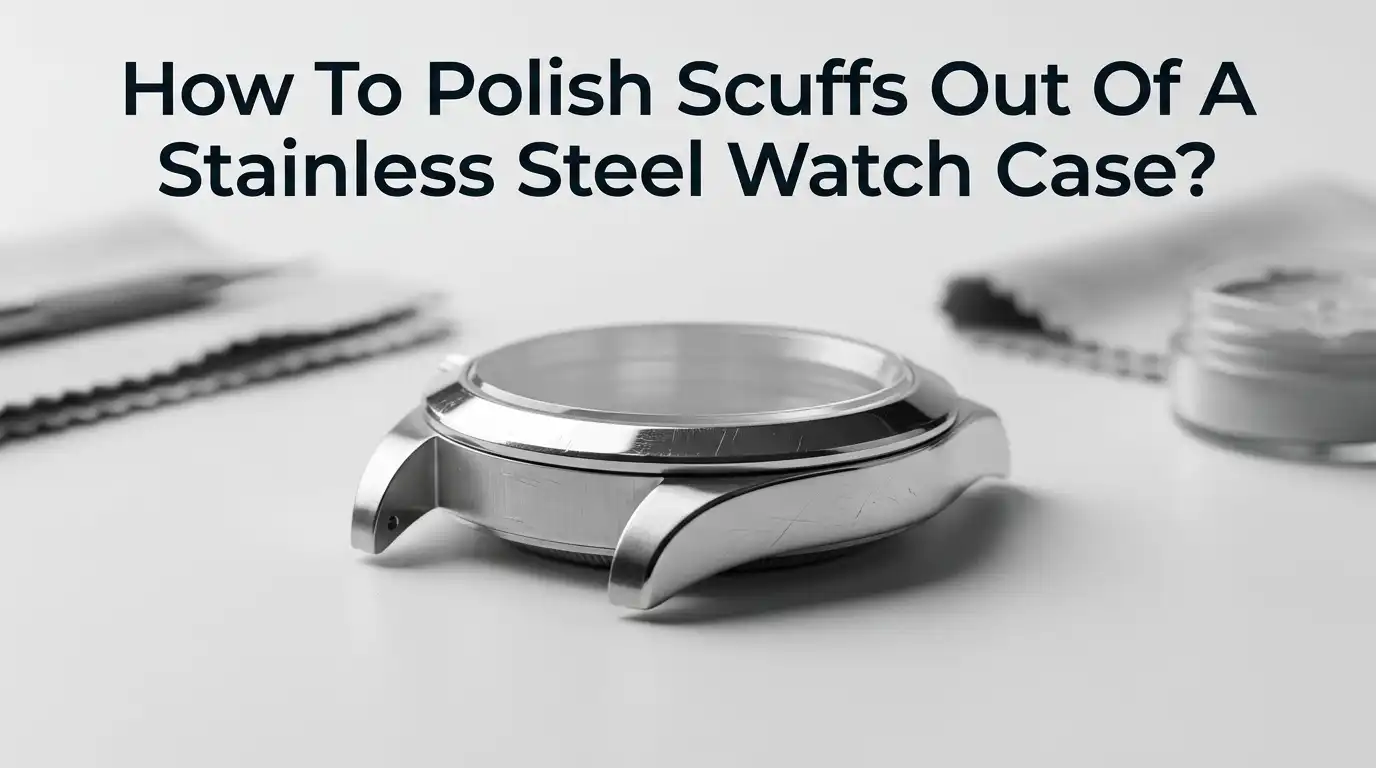
How To Polish Scuffs Out Of A Stainless Steel Watch Case?
Your stainless steel watch picks up scuffs fast. A desk edge, a doorframe, or a stray zipper can leave marks across the case. These tiny lines catch the light and dull the shine you love. The good news is simple.
You can fix most light scuffs at home. You do not always need a jeweler or a repair shop. You just need the right method, a few cheap tools, and a little patience.
This guide walks you through every step. You will learn how to read your watch finish, pick the right product, and polish scuffs out without making things worse. Let us bring back that fresh, clean look.
Key Takeaways
- Know your finish first. A polished case needs a polishing cloth or paste. A brushed case needs a refinishing pad. Using the wrong one ruins the surface fast.
- Mask everything you are not polishing. Cover the crystal, crown, and any opposite finish with painter’s tape. This single step protects your watch more than any product.
- Light scuffs lift easily. If your fingernail does not catch in the mark, you can likely remove it at home. Deep gouges need a professional.
- Always follow the grain on brushed steel. Move in straight lines, never circles. One wrong circular swipe leaves a permanent swirl.
- Polishing removes metal. Every pass shaves a thin layer off the case. Less is more, so polish only when you really need to.
- Skip DIY on vintage or valuable watches. Scratches add history and value to old pieces. Refinishing can drop the resale price.
Why Stainless Steel Watch Cases Get Scuffed So Easily
Stainless steel feels tough, but it is not scratch proof. Daily wear puts the case against many hard surfaces. Desk diving is the most common cause. You rest your wrist on a table and the case drags across the edge.
Door handles, keys, and gym equipment add more marks over time. The metal used in most watches sits around a 5 or 6 on the hardness scale. That means anything harder, like steel tools or stone, leaves a line.
Polished cases show scuffs the worst because the mirror surface reflects every flaw. Brushed cases hide light marks better, but deeper ones still stand out. Knowing this helps you set realistic goals. Some wear is normal on a watch you wear every day.
Polished Versus Brushed: Identify Your Finish First
This step matters more than any other. You must know your finish before you touch it. A polished finish looks like a mirror. It reflects your face and shines brightly. A brushed finish looks like fine, parallel lines running in one direction.
It has a soft, matte, satin look. Many watches use both on the same case. The top might be brushed while the sides stay polished. Look closely under good light to spot each area. Tilt the watch and watch how the light moves. A mirror reflection means polished.
Visible grain lines mean brushed. Getting this wrong creates a mess. A polishing paste on brushed steel turns it shiny in patches. A refinishing pad on polished steel turns it cloudy. Take a minute to study your case carefully.
Tools And Supplies You Will Need
You do not need an expensive kit. Most items cost very little and last a long time. For polished surfaces, grab a metal polishing cloth or a quality metal polish paste. A clean microfibre cloth helps buff afterward.
For brushed surfaces, you need a refinishing pad, also called a satin finish pad, or a fine grade abrasive pad. Painter’s tape or low tack masking tape is a must for both methods. It protects the parts you are not working on.
Add a soft toothbrush and mild soap for the cleaning step. Keep a few cotton swabs nearby for tight spots. Good lighting and a steady surface make the job easier. Gather everything before you start. Stopping mid task to find a tool leads to rushed, sloppy work.
Step One: Clean The Watch Case Thoroughly
Never polish a dirty watch. Grit and dust hide in the case. If you rub over them, you drag those particles across the metal. This creates fresh scratches instead of removing old ones. Start by mixing warm water with a drop of mild soap.
Dip a soft toothbrush in the mix. Gently scrub the case, paying attention to corners and the area around the bezel. Avoid soaking the watch unless you know it is water resistant.
Wipe the case with a damp cloth to lift the soap. Then dry it fully with a clean microfibre cloth. Check that no fibres or dust remain on the surface. A clean, dry case gives you a smooth base to work on. This simple prep step prevents most accidental damage.
Step Two: Mask Off The Areas You Want To Protect
Masking saves your watch. This is the step beginners skip and then regret. Take your painter’s tape and cover everything you are not polishing. Always protect the crystal first. A polishing cloth or pad will scratch glass and ruin acrylic.
Cover the crown, the bezel, and any opposite finish. If you polish a brushed top, tape over the polished sides. If you polish a polished side, tape over the brushed top. Press the tape down firmly so no edges lift. Use small pieces for curved areas and tight corners.
Take your time here, because this masking is what gives you a clean, professional result. Cotton swabs help you press tape into grooves. A well masked watch is half the battle won.
How To Polish Scuffs From A Polished Stainless Steel Case
Polished surfaces are the most satisfying to fix. Once masked, grab your polishing cloth or apply a small amount of metal polish to a microfibre cloth. Work in small, gentle circular motions.
Cover the scuffed area evenly without pressing hard. Let the product do the work, not your muscle. The mild abrasive in the cloth or paste smooths the top layer and blends the scuff away.
Check your progress often by wiping the area with a clean cloth. Repeat the motion until the mark fades. Finish by buffing with a dry microfibre cloth to bring back the mirror shine. For very light scuffs, a dedicated polishing cloth alone often does the trick. Deeper marks may need a paste and a few more rounds of buffing.
Pros And Cons Of Polishing A Polished Finish
Pros: This method is forgiving and easy for beginners. Circular motions are natural and need no special skill. Results look bright and even. The tools are cheap and reusable. You can fix a light scuff in just a few minutes. The mirror shine returns quickly and looks great.
Cons: Polishing always removes a thin layer of metal. Heavy use over time softens the sharp edges of the case. It can also create over polished spots that look too shiny next to worn areas. Deep gouges will not fully disappear. You risk dulling adjacent brushed sections if your tape slips.
How To Restore A Brushed Stainless Steel Case
Brushed finishes work differently. You are not buffing the surface smooth. You are re cutting the fine grain lines. A brushed finish is thousands of tiny parallel grooves.
A scuff cuts across those lines and breaks the pattern. After masking, take your refinishing pad. Find the direction of the original grain. It usually runs one straight way across the case. Hold the pad firmly and pull it in one long, straight stroke along that grain.
Never scrub back and forth. Lift the pad at the end of each stroke, return to the start, and repeat. Wipe away the fine dust with a microfibre cloth and check your work. The scuff blends into fresh, uniform brush lines. The goal is a matching satin look, not a perfect erase.
Pros And Cons Of Refinishing A Brushed Finish
Pros: This method restores the factory satin look fast. A refinishing pad blends scuffs cleanly into the grain. It hides light marks better than polishing hides them. The pads last for dozens of jobs. You get a crisp, uniform finish that looks brand new.
Cons: It demands more skill and patience. One circular swipe ruins the linear pattern and needs a pro to fix. Following the grain takes a steady hand.
Steel and titanium need different pads. Deep gouges still remain visible even after careful refinishing. Mistakes here are harder to undo than polishing errors.
Using A Polishing Cloth The Right Way
A treated polishing cloth is the safest tool for polished steel. It carries a mild polishing compound built into the fabric. You do not need water or extra paste. Fold the cloth to a comfortable size. Rub the scuffed area with light, steady pressure in small circles.
The cloth will turn black as it works, which is normal. That black is the lifted oxidation and removed metal. Do not wash this cloth, because washing removes the compound. Store it in a sealed bag to keep it fresh.
Use the inner cloth, if your cloth has two layers, to buff afterward. Watch closely around sharp case edges. These cloths can over polish corners and dull crisp lines. Work slowly and check often for the best result.
Handling Deep Scratches And Gouges
Not every mark comes out at home. Run your fingernail across the scuff. If your nail catches and stops, the scratch is deep. Light pressure polishing will not remove it. Removing a deep gouge means shaving away a lot of metal.
That can thin the case, soften edges, and change the shape. For these marks, you have two honest choices. You can blend the gouge so it looks less obvious but still shows faintly. Or you can send the watch to a professional refinisher.
A pro has the tools and skill to fill or grind safely. Trying to force a deep scratch out yourself often makes the area worse. Know your limit and stop before you cause real damage. Some scratches are simply part of the watch story.
Mistakes That Make Scuffs Worse
Avoid these common errors and you will protect your watch. Skipping the cleaning step drags grit across the metal and adds scratches. Forgetting to mask the crystal leaves cloudy haze on the glass. Using a refinishing pad on a polished side turns the mirror matte.
Polishing brushed steel in circles destroys the grain pattern. Pressing too hard removes too much metal at once. Mixing up the steel and titanium pads causes uneven color and shine. Trying to fully erase a deep gouge thins the case. Rushing the job leads to slips and tape failures.
Polishing too often wears down the sharp factory edges over the years. Keep your strokes light and your patience high. Slow, careful work beats fast, heavy work every time. When in doubt, do less and check more.
Caring For Your Watch To Prevent Future Scuffs
Prevention beats repair. A few simple habits keep your case clean longer. Take the watch off before tough tasks like gardening or moving boxes. Avoid resting your wrist hard on desk edges, which causes most scuffs.
Store the watch in a soft pouch or a padded box when you are not wearing it. Keep it away from keys, coins, and other metal in your pocket or bag. Wipe the case with a soft cloth at the end of each day. This lifts grit before it can grind in.
Rotate between watches if you own a few, so no single piece takes all the wear. Light surface marks are easier to buff out than deep ones. Catching scuffs early makes every future polish faster and safer.
When To Trust A Professional Instead
DIY works well for light scuffs, but some cases need an expert. Send your watch to a pro for deep gouges that catch your fingernail. Luxury and high value watches deserve professional care to protect resale value.
Vintage pieces should usually stay untouched, since collectors prize original wear. If your case mixes complex finishes, a pro keeps each section sharp and clean. Professionals use precise tools and replace finishes the way the factory did.
They also know when to stop, so the case keeps its shape and edges. The cost is worth it for a watch you care about deeply. Ask the service to confirm the finish before they start. A good refinisher will discuss your goals and set honest expectations.
Final Thoughts On Polishing Your Watch Case
You now have the full picture. Light scuffs on stainless steel are very fixable at home. The secret is simple. Identify your finish, mask the rest, and pick the matching method. Polished cases love a polishing cloth and gentle circles.
Brushed cases need a refinishing pad and straight strokes along the grain. Clean first, work slowly, and check often. Remember that polishing removes metal, so do it only when needed.
Save deep gouges and valuable watches for a professional. With a little practice, you can keep your watch looking sharp for years. Your watch tells your time and your story. A few minutes of care brings back the shine you fell in love with.
Frequently Asked Questions
Can I use toothpaste to polish scuffs out of my watch case?
Toothpaste contains a mild abrasive and can lift very light scuffs from polished steel. It works in a pinch, but results are uneven. A proper polishing cloth gives a cleaner, more reliable finish.
Will polishing remove the scratch completely?
It depends on the depth. Light surface scuffs usually disappear fully. Deep gouges that catch your fingernail will only fade, not vanish. Removing them completely would thin the metal too much.
How often should I polish my stainless steel watch case?
Polish only when you see scuffs that bother you. Every polish removes a thin layer of metal. Frequent polishing softens the sharp edges over time, so space it out and keep it minimal.
Can I polish a brushed and polished case at the same time?
No, you must work on each finish separately. Mask off one finish while you treat the other. Each needs a different tool, and mixing them up ruins the surface you are not working on.
Is it safe to polish a sapphire crystal with the same cloth?
No, never polish a crystal with a metal cloth. Metal polishing cloths can scratch or haze the glass. Always cover the crystal with tape, and use a separate product made for crystals.
Do I need different pads for titanium watches?
Yes, titanium is softer than steel and reacts differently to abrasives. A steel pad on titanium can cause uneven color or extra shine. Use a pad made for titanium to keep the finish consistent.

Hi, I’m Lucy Jones, a dedicated watch enthusiast and reviewer. I spend my time hunting down, testing, and evaluating the most intriguing wristwatches on the market. My goal is to guide you through the overwhelming choices with honest, hands-on insights into every timepiece.