How to Clean the Intricate Links of a Jubilee Watch Bracelet at Home?
Has your Jubilee bracelet lost its sparkle? That five-piece link design is one of the most beautiful bracelets in the watch world. The three polished center links catch light from every angle. The brushed outer links add a subtle matte contrast.
But those many small gaps between links are also perfect traps for dead skin, sweat, body oils, lotion, and dusty grime. Over weeks of daily wear, a dark, sticky residue builds up deep inside the links where your eyes cannot see.
You might notice the bracelet feels stiff when you bend it. The clasp might not snap shut as crisply as before. And from certain angles, you catch glimpses of black gunk squeezing out between the links.
Key Takeaways
- Regular cleaning prevents permanent damage. Trapped dirt and grit act like sandpaper between the links. Every wrist movement grinds those particles against the metal pins, slowly wearing them down. This leads to what watch experts call “bracelet stretch.” Cleaning every two to four weeks stops this damage before it starts.
- You do not need expensive gear to get great results. A soft bristle toothbrush, a few drops of mild dish soap, a bowl of lukewarm water, and a clean microfiber cloth are all you need for a routine clean. These household items are safe for stainless steel, gold, and two-tone bracelets when used gently.
- Always remove the bracelet from the watch head when doing a deep clean. Water and cleaning solutions can damage the movement, gaskets, and seals inside the watch case. Taking the bracelet off with a spring bar tool is the safest approach. If you must clean with the watch attached, make sure the crown is fully screwed down and your watch is genuinely water resistant.
- Avoid harsh chemicals at all costs. Bleach, ammonia, acetone, rubbing alcohol, and abrasive powders will strip protective coatings, dry out gaskets, and dull the polished finish. A tiny amount of mild, grease-cutting dish soap in water is the gentlest and most effective cleaning solution.
- An ultrasonic cleaner gives the deepest clean but demands caution. These machines use sound waves to create microscopic bubbles that blast grime out of the tightest crevices. Only place the detached bracelet inside the tank. Never submerge the watch head, as the vibrations can destroy the movement.
Understanding Why Jubilee Links Collect So Much Grime
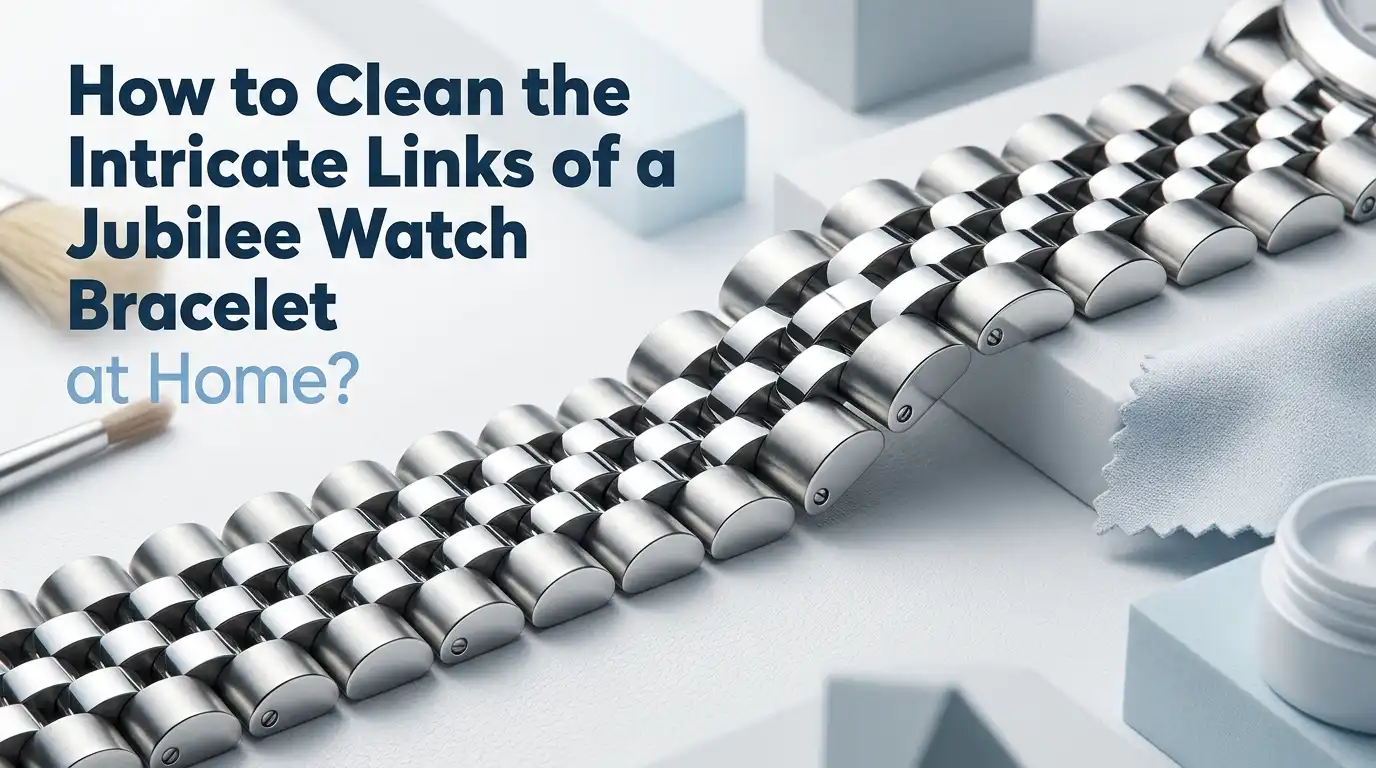
A Jubilee bracelet has a five-piece link construction. Each row has three small polished center links flanked by two larger brushed outer links. This creates more gaps, more edges, and more contact points than a simple three-link Oyster bracelet.
Every time you wear the watch, your skin sheds tiny dead cells. Natural oils and sweat mix with those cells and get pressed into the spaces between links. If you apply sunscreen, hand lotion, or cologne, those products add sticky residue to the mix.
The result is a black or gray paste that hardens over time. You might not see it at first because it hides in the underside of the bracelet where the links flex.
But when you fold the bracelet over at a sharp angle, the gunk becomes visible as it gets squeezed out from between the center and outer links. This buildup is not just ugly.
The abrasive particles inside that paste grind against the metal pins every time the bracelet moves on your wrist. Over months and years, those pins wear down. The holes in the links enlarge.
The Simple Soap and Water Method: Your Go-To Routine Clean
This is the method most watch owners and professional jewelers recommend for regular maintenance. It uses items you already have at home and takes less than fifteen minutes. Start by filling a small bowl with lukewarm water.
Add just two or three drops of a mild dish soap that is designed to cut grease. Dawn or similar clear liquid soaps work very well. Stir the water gently to dissolve the soap. If your watch is water resistant and the crown is screwed down tightly, you can clean the bracelet while it is still attached.
Place the watch bracelet side down into the bowl and let it soak for five to ten minutes. The warm soapy water loosens oils and softens hardened grime. After soaking, take a baby toothbrush or a brush with extra soft bristles and dip it into the soapy water.
Gently scrub every link, focusing on the underside, the clasp mechanism, and the areas where the links meet. Use light pressure and small circular motions. Never press down hard because stiff bristles or heavy pressure can leave tiny scratches on the polished center links.
Rinse the bracelet under a gentle stream of lukewarm running water. Make sure all soap residue washes away. Pat the bracelet dry with a clean microfiber cloth, then let it air dry completely before wearing it.
Pros: Fast, free or very low cost, completely safe for all metal types when done gently, no special equipment needed.
Cons: Cannot remove deeply embedded grime inside the tightest link crevices, requires the watch to be water resistant if cleaning while attached, may not restore full shine on heavily soiled bracelets.
The Overnight Soak for Stubborn Grime
When a quick soak does not get the job done, try an extended soak. This method works well for bracelets that have months or years of accumulated gunk. Fill a bowl with hot water from the tap. Make sure the water is hot but not boiling.
Add a few drops of dish soap and stir. Detach the bracelet from the watch head using a spring bar tool. Place only the bracelet into the solution. Let it sit overnight or for at least six to eight hours.
The extended contact time allows the warm soapy water to penetrate deep into the hidden gaps and dissolve the hardened paste that has built up over time. In the morning, you will often see a cloudy film of dissolved grime floating in the water.
Take the bracelet out and scrub it gently with a soft brush. You will notice the brush now picks up much more residue because the overnight soak has already loosened everything.
Rinse thoroughly under running water and dry with a microfiber cloth. Some watch owners swear by this method as their primary deep clean technique. It requires zero equipment beyond a bowl and some patience.
Pros: Extremely effective at dissolving old, hardened grime, requires no special gear, safe for all metal bracelet types, minimal scrubbing effort needed afterward.
Cons: Takes many hours, not suitable for leather, rubber, or fabric straps, cannot be done with the watch head attached, requires planning ahead.
The Windex Soak: A Popular Enthusiast Trick
You might be surprised to see Windex in a watch cleaning guide. Yet many seasoned Rolex owners use this method twice a year for a deep clean. The ammonia-free blue glass cleaner works as a powerful degreaser that breaks down body oils, sunscreen residue, and lotion buildup that ordinary soap cannot dissolve.
Spray a generous amount of Windex into a small plastic bowl until you have a shallow puddle. Place the detached bracelet into the puddle and let it soak for fifteen to twenty minutes. Every five minutes, gently swish the bracelet around to agitate the solution.
The Windex penetrates the microscopic spaces between links and lifts out the black gunk that toothbrushes cannot reach. After soaking, rinse the bracelet very thoroughly under running lukewarm water.
Use a soft brush to give it one more gentle scrub, then rinse again and dry with a microfiber cloth. Be absolutely certain to use only ammonia-free Windex or a similar gentle glass cleaner. Ammonia-based cleaners can damage metal finishes and dry out the rubber gaskets inside your watch case.
Pros: Cuts through stubborn oils and sunscreen residue effectively, reaches deep into link crevices, quick twenty minute process, widely available household product.
Cons: Must use only ammonia-free formulas, requires thorough rinsing to remove all chemical residue, only appropriate for detached bracelets, not recommended for gold-plated or delicate vintage pieces.
Dental Floss and Soft Picks for Spot Cleaning
Sometimes you notice grime in one specific area, like between two center links right near the clasp. For these targeted spots, waxed dental floss can be surprisingly effective. Cut a piece of floss about six inches long.
Gently work it into the tight gap between two links and slide it back and forth. The floss catches and pulls out the packed debris. Soft wooden toothpicks or interdental brushes with fine bristles also work well for picking out visible gunk from clasp crevices and the small recessed areas around the spring bar holes.
Always use gentle pressure and never force a tool into a tight space. The goal is to lift out debris, not to scratch the metal. After spot cleaning, give the bracelet a quick rinse and wipe down with a microfiber cloth.
This method is best used as a maintenance step between full cleanings, especially if you notice grime in a visible spot and do not have time for a full soak.
Pros: Precision cleaning for visible problem spots, quick and convenient, uses common household items, no water or chemical exposure needed for the watch head.
Cons: Only cleans visible areas, does not address deep internal grime, risk of scratching if too much pressure is used, time consuming for a full bracelet clean.
Using an Ultrasonic Cleaner for Deep Restoration
An ultrasonic cleaner uses high-frequency sound waves to generate millions of microscopic bubbles in a water bath. These bubbles form and collapse rapidly in a process called cavitation. The implosions create tiny shock waves that blast dirt, oil, and grime off every surface, even in the deepest crevices that no brush can reach.
For a Jubilee bracelet with years of embedded gunk, an ultrasonic cleaner can restore it to near-new condition in minutes. To use one safely, fill the tank with distilled water and add a few drops of a cleaning concentrate or clear dish soap.
Detach the bracelet from the watch head and place only the bracelet in the basket. Set the temperature to warm if your machine has that option, around forty to fifty degrees Celsius. Run the cycle for three to five minutes.
Check the bracelet and you should see a cloud of dirt settling at the bottom of the tank. Run another short cycle if needed, but do not exceed fifteen minutes total.
After cleaning, rinse the bracelet thoroughly under running water and dry it completely with a microfiber cloth. Let it air dry for at least an hour before reattaching it to the watch.
Pros: Removes up to ninety-five percent of deep seated grime, restores factory fresh shine, reaches areas impossible to clean by hand, fast and effortless process.
Cons: Requires purchasing a machine, risks loosening pins or damaging plating on older bracelets if overused, absolutely must never submerge the watch head, not suitable for leather or rubber straps.
Polishing and Restoring Shine After Cleaning
Once your bracelet is thoroughly clean and dry, you might want to bring back that mirror-like luster on the polished center links. A high-quality microfiber cloth designed for jewelry polishing works best. Use gentle, straight motions along the grain of the metal on brushed surfaces.
For polished surfaces, light circular buffing with a clean microfiber cloth removes water spots and light smudges. Avoid using metal polishes or abrasive compounds on your bracelet unless you are experienced.
Many polishing products remove a microscopically thin layer of metal, which over time can soften the sharp edges that give the Jubilee bracelet its crisp, defined look. A simple buff with a dry microfiber cloth is often all you need after a good clean.
If your bracelet has deeper scratches or the finish looks uneven, consider having a professional jeweler do a light refinishing. They have the right tools and experience to preserve the factory brushed and polished contrasts that make the Jubilee design special.
Pros: Restores visual brilliance with minimal effort, microfiber cloths are cheap and reusable, no chemicals needed, preserves the bracelet’s crisp factory look when done gently.
Cons: Over-polishing with compounds removes metal and softens edges, amateur polishing can create uneven surfaces, does not fix deep scratches, results are only cosmetic.
Cleaning the Clasp and Hidden Dirt Traps
The clasp on a Jubilee bracelet contains several moving parts, springs, and tight corners that trap an enormous amount of dirt. Most owners forget to clean the clasp thoroughly, focusing only on the visible links. Open the clasp fully and examine the underside.
You will likely see gray or black buildup around the folding mechanism, the safety catch, and the spring loaded components. Use a soft brush dipped in soapy water to scrub every fold and hinge. Get into the recessed areas where the clasp blades overlap.
A cotton swab dipped in the cleaning solution can reach into corners that a brush cannot. Dry the clasp completely with a microfiber cloth and let it air dry before closing it.
A clean clasp operates more smoothly, locks more securely, and reduces the risk of the spring mechanism failing. If the clasp feels gritty or does not snap shut with a satisfying click, it almost certainly needs a cleaning.
Pros: Improves clasp function and security, prevents spring mechanism failure, easy to do during any routine cleaning, eliminates hidden odor-causing bacteria.
Cons: Overlooked by most owners, requires careful drying to prevent internal corrosion, small parts can be hard to reach even with a brush.
What Never to Do: Common Cleaning Mistakes
Many well-meaning watch owners damage their bracelets by using the wrong products or techniques. Never use toothpaste on a watch bracelet. Toothpaste contains abrasive particles that will leave a haze of fine scratches on polished surfaces.
Never use baking soda, salt, or aluminum foil cleaning methods designed for silver jewelry. These chemical reactions can damage plated surfaces and leave permanent marks. Never spray brake cleaner, rubbing alcohol, or acetone onto a bracelet.
These harsh solvents strip protective coatings and can degrade the rubber gaskets inside your watch if any liquid seeps in. Never use a stiff brush, steel wool, or abrasive scrub pads. Even a standard adult toothbrush can be too harsh for the polished center links of a Jubilee bracelet.
Always choose a baby toothbrush or a brush specifically labeled as extra soft. Never submerge a watch in an ultrasonic cleaner unless you have completely removed the bracelet from the case. The vibrations will loosen screws, dislodge the hands, and destroy the delicate movement inside.
Pros of knowing what to avoid: Prevents irreversible damage, saves money on repairs, preserves the bracelet’s value and appearance for years.
Cons of ignoring these warnings: Scratched surfaces, stripped plating, damaged gaskets, loosened links, and costly professional repairs.
How Often Should You Clean Your Jubilee Bracelet
The ideal cleaning schedule depends on your lifestyle and environment. For a daily wear watch, a quick rinse with warm water and a wipe with a microfiber cloth should happen at least once a week. This prevents surface oils and dust from building up.
A proper soap and brush cleaning should happen every two to four weeks. This regular maintenance stops abrasive grime from accumulating deep inside the links. If you exercise with your watch, live in a hot and humid climate, or frequently apply sunscreen and lotion, you should clean the bracelet weekly.
Sweat and chemical residues from personal care products accelerate grime formation. For a watch worn only on special occasions or rotated with other pieces, a cleaning every two to three months is usually enough. The best indicator is visual.
When you bend the bracelet and see dark material squeezing out between the links, it is time for a deep clean. A professional service with full disassembly and ultrasonic cleaning is recommended every three to five years, or whenever you notice the bracelet developing noticeable stretch or the clasp losing its crisp action.
Storing Your Watch Properly to Reduce Future Buildup
Prevention is always easier than cleaning. When you take your watch off at night, give the bracelet a quick wipe with a dry microfiber cloth. This removes the day’s accumulation of skin oils and sweat before they can harden.
Store your watch in a watch box or soft pouch, not tossed on a nightstand or bathroom counter. Bathrooms are especially harmful because the humidity from showers promotes the mixing of dust and moisture into a sticky paste on your bracelet.
Keep your watch away from direct sunlight for extended periods, as heat can accelerate the breakdown of any residue trapped in the links. If you apply cologne, hairspray, or scented lotion, do so before putting on your watch.
Let these products dry completely on your skin first so they do not transfer onto the bracelet. These small daily habits can double or triple the time between needed deep cleanings and keep your Jubilee bracelet looking fresh for months.
Building a Simple Cleaning Kit for Your Watch
You can assemble a complete watch bracelet cleaning kit for very little money. Start with a spring bar tool so you can safely detach the bracelet from the watch head. A basic forked spring bar tool costs just a few dollars.
Add a baby toothbrush or a dedicated ultrafine soft brush for watch cleaning. Include a small bowl that you will use only for this purpose. Keep a bottle of mild, clear dish soap that cuts grease without leaving residue. Buy two or three high-quality microfiber cloths.
Use one for drying, another for final buffing, and keep a spare. If your budget allows, add a small ultrasonic cleaner designed for jewelry. These compact machines are widely available and pay for themselves quickly by reducing the need for professional cleaning services.
Store your kit in a drawer or cabinet where it stays clean and ready. Having these tools organized makes it easy to clean your bracelet regularly, and regular cleaning is the single most effective way to keep your Jubilee bracelet looking beautiful for decades.
FAQs
Can I clean my Jubilee bracelet without removing it from the watch head?
Yes, but only if your watch is genuinely water resistant and the crown is fully screwed down tight. Use a soft brush with soapy water, scrub gently, and rinse under a slow stream of lukewarm water. If your watch is older, has never been pressure tested, or you are unsure about its water resistance, remove the bracelet first. Water inside the case can destroy the movement and lead to expensive repairs.
Is it safe to use an ultrasonic cleaner on my bracelet?
Yes, for solid metal bracelets like stainless steel and gold Jubilee bracelets, an ultrasonic cleaner is safe when used correctly. Always detach the bracelet from the watch head first. Never put the watch case itself into the ultrasonic tank. Run short cycles of three to five minutes each and do not exceed fifteen minutes total. Older bracelets with worn pins or loose links may not tolerate ultrasonic vibrations well, so inspect the bracelet first and consult a professional if you have concerns.
Will dish soap damage the polished finish of my Jubilee bracelet?
No, a few drops of mild dish soap mixed with lukewarm water will not damage the polished or brushed surfaces of your bracelet. The key is to use a very small amount and rinse thoroughly. Soap residue left behind can attract new dirt and look cloudy. Always rinse under running water until no suds remain and dry completely with a microfiber cloth.
How do I know if my bracelet is developing stretch?
Bracelet stretch refers to the loosening of the links over time due to pin and hole wear. Hold the bracelet horizontally by the clasp and let the links hang. A bracelet with stretch will droop significantly and look uneven. If you can wiggle the links side to side more than a tiny amount, the pins are wearing. Regular cleaning removes the abrasive grime that accelerates this wear. A professional can tighten or replace worn pins during a service.
Can I use the baking soda and aluminum foil method to clean my Jubilee bracelet?
No, avoid this method for watch bracelets. The baking soda, salt, and foil reaction is designed for removing tarnish from solid silver jewelry. It can damage plated surfaces, leave patchy discoloration on two-tone bracelets, and is not effective on stainless steel. Stick to mild dish soap and water for safe, reliable results every time.

Hi, I’m Lucy Jones, a dedicated watch enthusiast and reviewer. I spend my time hunting down, testing, and evaluating the most intriguing wristwatches on the market. My goal is to guide you through the overwhelming choices with honest, hands-on insights into every timepiece.