How to Safely Remove a Stuck Screw From a Metal Watch Bracelet Link?
You just bought a beautiful metal watch bracelet. Or maybe you want to resize an old favorite. You grab your tiny screwdriver, line it up, and twist. Nothing happens.
The screw does not budge. You try harder. The screw slot starts to round off. Now your heart sinks because a simple five-minute task has turned into a stressful battle.
You are not alone in this. Watch bracelet screws get stuck all the time. Dirt, sweat, corrosion, factory thread locker, and even cross-threading can freeze a tiny screw in place.
Key Takeaways
- Always use a screwdriver that fits the slot perfectly. A loose or undersized blade is the number one reason screws strip. Test multiple blade sizes until you find one that fills the width and depth of the slot with zero wiggle room.
- Apply heat before applying torque. A hair dryer or a cup of hot water softens factory thread locker and expands the metal link slightly. This simple step solves most stuck screw problems in under a minute.
- Use penetrating oil for old or corroded screws. A drop of WD-40 or a 50/50 mix of automatic transmission fluid and acetone can seep into the threads and break down rust or grime. Let it soak for several hours or overnight.
- The rubber band trick saves lightly stripped screw heads. Place a thin piece of rubber band or cloth tape over the damaged slot. Press the screwdriver firmly into it. The rubber fills gaps and gives your driver enough grip to turn the screw.
- Drilling is a last resort, not a first step. Only reach for a micro drill bit when every other method has failed. Drilling requires a steady hand, a padded vise, and a clear exit strategy to avoid damaging the link threads.
- Prevention is simple and takes seconds. Add a tiny dab of silicone grease on the screw threads before you reassemble the bracelet. This prevents future corrosion and makes your next resizing job effortless.
First, Confirm You Are Dealing With Screw Links
Before you reach for any tool, pause and study your bracelet. Many metal watch bands use friction pins that look like screws. A friction pin has a slot on one end but no threads. You push it out with a pin punch, not a screwdriver. If you try to twist a friction pin, you will only chew up the slot and get nowhere.
Look at both sides of the bracelet link. A true screw link shows a clean slot on one side and a solid, smooth surface or another slot on the opposite side. Some bracelets use a double-screw system where two screws meet in the middle. Others use a single screw that threads directly into the link body.
If you see a slot on only one side and a plain hole on the other, you probably have a screw pin. Turn your screwdriver gently counterclockwise. If the pin rotates without loosening, stop.
You might have a friction pin instead. Push it out from the plain side using a pin removal tool. Knowing the difference saves you from stripping a perfectly good slot.
Gather the Right Tools Before You Start
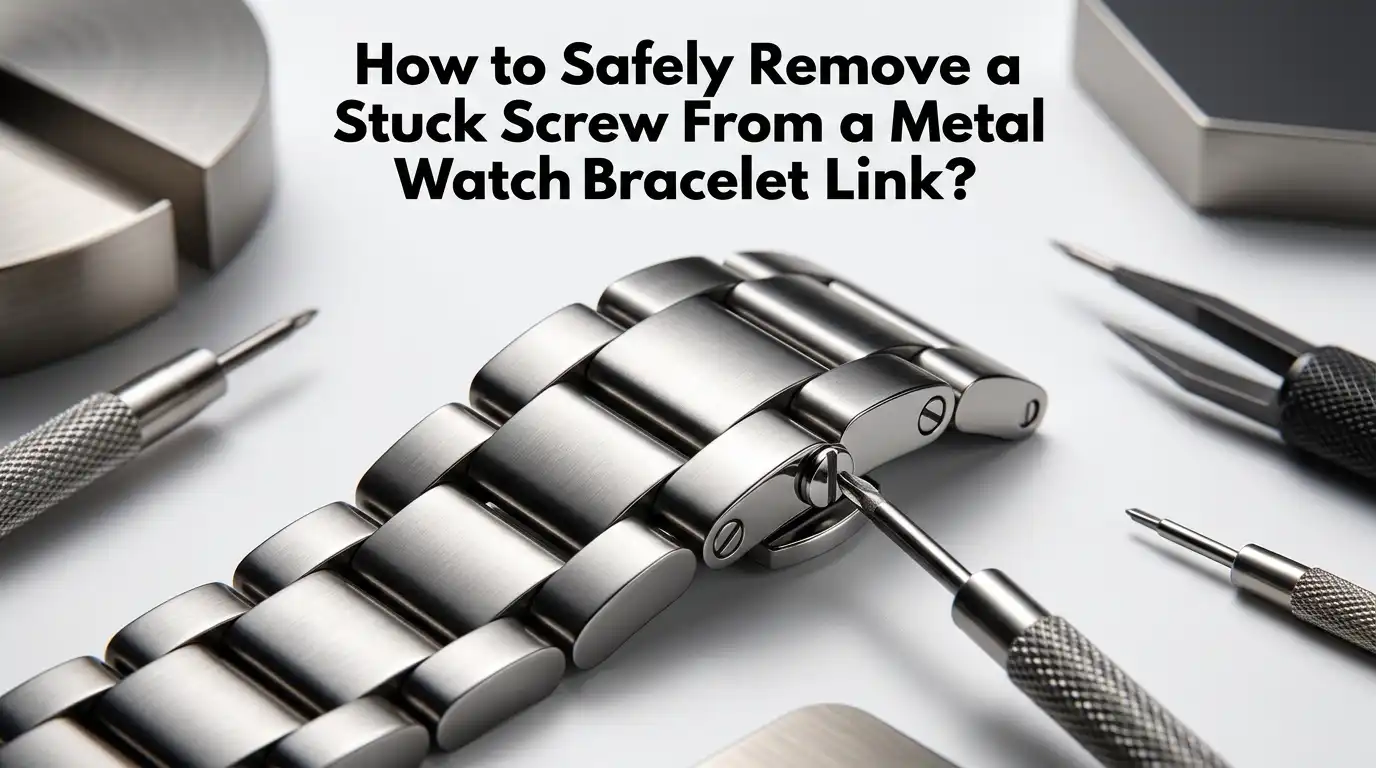
A stuck screw punishes poor preparation. You need a small set of watchmaker flathead screwdrivers with hollow-ground or precisely ground tips. The blade must fit the entire width and depth of the screw slot. A loose fit transfers torque to the top edges of the slot, which rounds them off fast.
You also need a watch band holder or a small padded vise. Holding the bracelet steady with one hand while turning a screwdriver with the other is a recipe for a slipped tool and a scratched link. A holder grips the bracelet firmly and keeps both hands free.
Other helpful items include non-magnetic tweezers to pick up tiny screws, a parts tray to hold removed components, and a magnifying lens or loupe.
The magnifier lets you inspect the screw head for damage and choose the best method to proceed with. Good lighting is just as important. Work near a bright desk lamp so you can see every detail of the screw slot.
Start With the Gentle Heat Method
Thread locker is the silent enemy of many watch bracelet screws. Factories often apply a small amount of adhesive to prevent screws from backing out during wear. Heat softens this adhesive quickly.
Remove the watch head from the bracelet if you can. Then direct a hair dryer at the stuck link on its highest heat setting for 30 to 60 seconds. Keep the nozzle about two inches away.
If you do not have a hair dryer, dip the bracelet section into a cup of hot water for one to two minutes. Dry it well before you proceed.
The heat expands the metal link slightly more than the screw itself, creating a tiny gap in the threads. This gap breaks the bond of any old thread locker or dried sweat.
Insert your properly fitted screwdriver, press down firmly, and turn slowly counterclockwise. Do not rush. Apply steady, even torque. In many cases, the screw will break free on the first gentle turn.
Pros and Cons of the Heat Method
Pros: It is free and uses items you already have at home. It softens factory thread locker without chemicals. Heat also expands the link metal and loosens the thread grip naturally. The method is completely safe for stainless steel bracelets.
Cons: It does not work on corrosion-seized screws. You must remove the watch head to avoid heat damage to the movement or gaskets. Hot water can leave water spots if you do not dry the bracelet right away.
Apply Penetrating Oil for Corroded or Rusted Screws
Old watches and bracelets worn in humid climates often develop corrosion inside the threads. Sweat, salt water, and time create a bond that heat alone cannot break. Penetrating oil seeps into microscopic gaps and lubricates the seized threads.
Place a single drop of penetrating oil like WD-40 or Liquid Wrench directly on the screw head. Tilt the bracelet so gravity helps the oil flow into the threads.
Let it sit for at least two hours. Overnight is better. For severe cases, remove the entire bracelet and soak the stuck section in a shallow dish of penetrating oil.
After the soak, wipe away excess oil. Insert your screwdriver into the slot. Apply firm downward pressure and turn slowly. If the screw does not move, apply one more drop and wait another few hours. Patience wins this battle. Rushing with force only strips the screw head.
Pros and Cons of Penetrating Oil
Pros: It tackles the root cause of corrosion-seized threads. It works deep inside the link where you cannot see or scrub. It rarely causes any harm to stainless steel or titanium bracelets.
Cons: It takes time. You cannot rush the soaking process. Some oils leave a residue that you must clean before wearing the watch. Oil can also seep into plated or coated finishes, so test a hidden spot first.
Try the Rubber Band Trick for a Lightly Stripped Slot
The screwdriver slipped. Now the slot has a rounded edge and your driver spins without grip. Do not panic. A thin rubber band or a small piece of cloth tape can bridge the gap between a worn slot and your screwdriver.
Cut a small square from a wide rubber band. Place it flat over the damaged screw head. Press your perfectly fitted screwdriver down onto the rubber, directly into what remains of the slot. The rubber compresses into the recess and fills the extra space. You now have enough friction to turn the screw.
Push down harder than you turn. The downward force keeps the rubber and blade seated. Turn slowly and evenly. If the rubber tears, replace it with a fresh piece. This trick works best on screws that still have at least half of their original slot depth. For fully rounded slots, you need a more aggressive approach.
Pros and Cons of the Rubber Band Trick
Pros: It costs nothing. You can try it right away with items in your desk drawer. It does not damage the screw or the bracelet. It works on many lightly stripped screw heads.
Cons: It fails on heavily stripped or completely round screw heads. The rubber can tear mid-turn and you need a fresh piece. It does nothing to loosen a seized thread, so combine it with heat or oil first.
Deep Cleaning the Bracelet in an Ultrasonic Bath
Sometimes dirt and grime inside the link threads act like glue. Sweat, skin oils, and dust accumulate over months of daily wear and harden into a stubborn paste. An ultrasonic cleaner shakes that grime loose in minutes.
Remove the bracelet from the watch head. Place the bracelet in the ultrasonic cleaner filled with warm water and a few drops of mild dish soap. Run the machine for a full cycle, usually three to five minutes. The high-frequency vibrations dislodge packed debris from the screw threads and link joints.
Take the bracelet out and rinse it with clean water. Dry it thoroughly with a soft cloth. Now try turning the screw again with your properly fitted screwdriver. The cleaning removes the gunk that was binding the threads. Many screws that felt hopelessly stuck will turn freely after a good ultrasonic bath.
Pros and Cons of Ultrasonic Cleaning
Pros: It cleans the entire bracelet, not just the stuck link. It removes hidden dirt, sweat residue, and light corrosion. It is non-invasive and completely safe for stainless steel.
Cons: You need access to an ultrasonic cleaner. Plated or gold-filled bracelets can suffer finish damage from aggressive cleaning solutions. The watch head must stay out of the bath to protect the movement and seals.
Freeze the Bracelet to Shrink the Screw
Heat gets all the attention, but cold can work just as well. When metal cools, it contracts. The screw and the link shrink at slightly different rates. This difference can break a light seizure.
Remove the watch head from the bracelet. Place the bracelet in a sealed plastic bag to protect it from moisture. Put the bag in your freezer for 20 to 30 minutes. Take it out and immediately try turning the screw with a fitted screwdriver.
The cold makes the screw shaft slightly smaller. This reduces the friction against the threads inside the link. Work fast because the metal warms up quickly in your hands. If the screw does not turn on the first try, return it to the freezer for another 15 minutes. This method pairs well with the rubber band trick if the slot is already damaged.
Pros and Cons of the Freezer Method
Pros: It is free and uses no chemicals. It cannot overheat or damage any part. It is safe for all metal types including plated finishes.
Cons: It only works on mild to moderate seizures. Heavy corrosion or thread locker will not respond to cold. Condensation forms as the metal warms, so you must dry the bracelet afterward.
Tap the Screw Gently to Break the Bond
A light mechanical shock can break a stuck screw free. Watchmakers use this technique often. You apply a small tapping force to the screw head while trying to turn it. The vibration disrupts the microscopic bond between the threads.
Secure the bracelet in a padded vise with the screw head facing up. Insert your screwdriver into the slot and apply moderate downward pressure. Now take a small jeweler’s hammer or the plastic handle of another screwdriver and gently tap the top of your screwdriver handle. Tap several times in quick, light succession while maintaining turning pressure.
Do not hit hard. You are not driving a nail. You are sending small shock waves through the screw shaft. These vibrations help break the static friction holding the threads. Try turning the screw after every few taps. This method works well with heat or penetrating oil applied beforehand.
Pros and Cons of the Tapping Method
Pros: It requires no special materials. It adds physical vibration to whatever chemical or thermal method you tried first. It can instantly free a screw that resisted everything else.
Cons: Too much force can bend the screw or damage the link. You need a stable vise or holder to do it safely. It does not help if the screw head is already stripped.
Create a Deeper Slot With a Micro File or Engraving Tool
When the screw slot is too damaged for a rubber band to help, you need to cut a new gripping surface. A diamond-coated micro file or a pen engraving tool with a fine conical tip can deepen the existing slot just enough to let your screwdriver bite again.
Secure the bracelet firmly in a padded vise. Use a magnifier to see the damaged slot clearly. Take your micro file or engraver and carefully run it along the original groove. Apply light pressure. Your goal is to clean up the walls of the slot and remove the rounded lip. You only need a fraction of a millimeter of fresh depth.
Work slowly and check your progress often. One slip of the tool can gouge the surrounding link surface. Place a piece of masking tape around the screw head to protect the bracelet finish while you file. Once the slot has clean edges, insert a freshly sharpened screwdriver and try again.
Pros and Cons of Re-cutting the Slot
Pros: It restores grip on a screw that would otherwise need drilling. It preserves the original screw for reuse. It requires no expensive specialty equipment.
Cons: It demands a very steady hand. A slip scratches the bracelet. You remove metal from the screw head, so there is a limit to how many times you can do this. Not practical for deeply recessed screws.
The Super Glue Method for a Ruined Screw Head
This method sounds strange but watch repair forums confirm it works. You sacrifice a cheap screwdriver by gluing it directly into a stripped screw head. The bond lets you turn the screw and remove it.
Clean the screw head with alcohol to remove any oil or dirt. Let it dry completely. Place a tiny drop of cyanoacrylate super glue into the stripped slot. Immediately press an old flathead screwdriver that fits the slot into the glue. Hold it steady and straight for two to three minutes while the glue cures.
Once the bond is solid, turn the screwdriver slowly counterclockwise. Apply gradual, even torque. Do not jerk or twist quickly. The screw should turn out with the driver attached. After removal, soak the screw and tool tip in acetone to dissolve the glue and separate them. Throw away the old driver or keep it as a dedicated extraction tool.
Pros and Cons of the Super Glue Method
Pros: It creates a temporary solid connection to a ruined screw head. It works when no other gripping method does. It is quick and uses household supplies.
Cons: Glue can spill onto the bracelet and mar the finish. You lose a screwdriver tip. The bond can snap under too much torque, leaving hardened glue in the slot. Acetone cleanup is messy.
Drilling Out the Screw as a Last Resort
When every method fails, you must remove the screw by destroying it. Drilling out a tiny screw requires patience, a steady setup, and the right bit size. This is not a casual task. You need a micro drill bit set with sizes around 0.8mm to 1.2mm and a pin vise or a rotary tool with very precise speed control.
Remove the bracelet from the watch head. Secure the stuck link in a padded vise with the screw head facing straight up. Choose a drill bit that is slightly smaller than the screw shaft diameter. You want to drill into the center of the screw without touching the link threads.
Start drilling slowly by hand with a pin vise if you can. A power tool at high speed generates heat and can wander off-center. Apply only light downward pressure. Stop every few seconds, clear the metal shavings, and check your depth.
When the screw head separates from the shaft, you can push the remaining shaft through the link from the opposite side. Clean the threads inside the link with a small brush before inserting a new screw.
Pros and Cons of Drilling Out the Screw
Pros: It is a guaranteed way to remove any stuck screw. It preserves the bracelet link if done carefully. It gives you a fresh start with a new screw.
Cons: It destroys the original screw. A wandering drill bit can ruin the link threads permanently. It requires micro drill bits and a very stable work holding setup. One mistake and you need a new bracelet link or a visit to a jeweler.
Know When to Visit a Professional Watchmaker
There is no shame in handing off a difficult job to an expert. A professional watchmaker sees stuck and stripped screws every week. They own precision extractors, micro drills, and years of muscle memory that make the job look easy.
Visit a jeweler or watch repair shop if the screw slot is completely gone and every home method has failed. Also go if the screw connects the bracelet to the watch case itself. A case screw sits near the movement and gaskets. One slip with a drill can send metal dust into the movement, turning a small problem into an expensive repair.
The cost of a professional extraction is modest. It saves you hours of frustration and the risk of permanently damaging your bracelet. You also walk away with a perfectly sized bracelet and a fresh replacement screw properly seated with a tiny dab of anti-seize lubricant.
Pros and Cons of Professional Help
Pros: The screw comes out cleanly with zero risk to the bracelet. The watchmaker installs a new screw and sizes the bracelet to your wrist. You save time and avoid costly mistakes.
Cons: You pay a service fee. You must leave your watch at the shop for a day or two. Not every town has a skilled watchmaker nearby.
How to Prevent Stuck Screws in the Future
You never want to fight a stuck screw again. Good habits make that possible. Every time you resize your bracelet, follow these simple steps.
Use a screwdriver that fits the slot exactly. This single rule prevents almost all stripped screw heads. If you feel any wiggle, try the next blade size. Lubricate the threads before reassembly.
A tiny dab of silicone grease or watchmaker’s sealing grease on the screw tip stops corrosion and makes future removal smooth. Do not use thread locker unless your bracelet manufacturer requires it. Most bracelets stay secure without it.
Clean your bracelet regularly. Rinse it with fresh water after exposure to salt water or heavy sweat. Dry it completely.
An occasional ultrasonic clean keeps grime from building up inside the link threads. Do not overtighten. Stop turning the screw the moment it seats flush with the link surface. Extra torque crushes the threads and deforms the slot.
Final Tips for a Stress-Free Bracelet Resizing
Set up your workspace before you touch a single screw. Good lighting, a stable holder, and a clean surface make every step easier. Lay down a soft cloth or a silicone mat so dropped screws do not bounce onto the floor and disappear forever.
Work on one link at a time. Remove the screw, take out the link, and immediately reinsert the screw into the bracelet or place it in a parts tray. Loose screws are tiny and vanish in a heartbeat.
Take breaks if you feel frustrated. Frustration leads to rushed movements and slipped tools. A scratched bracelet hurts more than a ten-minute pause. Step away, breathe, and come back with steady hands. Your watch bracelet will thank you for your patience.
Frequently Asked Questions
Why Do Watch Bracelet Screws Get Stuck in the First Place?
Sweat, skin oils, and dirt seep into the tiny gaps between the screw threads and the link body. Over time this mixture hardens and acts like glue. Factories also apply thread locker adhesive to prevent screws from loosening during shipping and wear. Corrosion from humidity or salt water exposure creates rust that physically binds the screw and link together.
Can I Use WD-40 on My Watch Bracelet?
Yes. A single drop on the screw head is completely safe for stainless steel bracelets. WD-40 is a light penetrating oil that breaks down minor corrosion and lubricates threads. Wipe away all excess before wearing the watch. Avoid soaking plated or coated bracelets for extended periods. Always test a hidden spot first.
What If the Screw Spins but Does Not Come Out?
A screw that spins freely without backing out has stripped threads inside the link or a broken screw shaft. Stop turning it. Apply gentle upward pressure with tweezers while turning the screw counterclockwise. The upward pull helps the remaining threads catch. If this fails, push the screw shaft through from the opposite side using a pin punch.
Is It Safe to Use a Hair Dryer on My Watch Bracelet?
Yes, as long as you remove the watch head first. Direct the heat only at the metal bracelet link. Keep the hair dryer nozzle two inches away and heat for 30 to 60 seconds. The metal link gets warm but not hot enough to cause damage. Never heat the watch case because the internal movement and rubber gaskets can suffer.
How Do I Know If My Watch Has Screws or Push Pins?
Look at both sides of the link. A screw link has a defined flat slot on one end that matches a flathead screwdriver. A push pin has a slot that is often shallower and more decorative. The other side of a push pin is a smooth pin end with no threads. When you try to turn a push pin, nothing happens. It only moves when pushed out with a pin removal tool.
Can I Replace a Damaged Bracelet Screw?
Absolutely. You can order replacement screw pins from watch parts suppliers or ask a local jeweler. Bring the original screw to match the thread diameter, length, and head style. Keep the extra links and screws from your original bracelet sizing. They serve as perfect replacement parts down the road.

Hi, I’m Lucy Jones, a dedicated watch enthusiast and reviewer. I spend my time hunting down, testing, and evaluating the most intriguing wristwatches on the market. My goal is to guide you through the overwhelming choices with honest, hands-on insights into every timepiece.