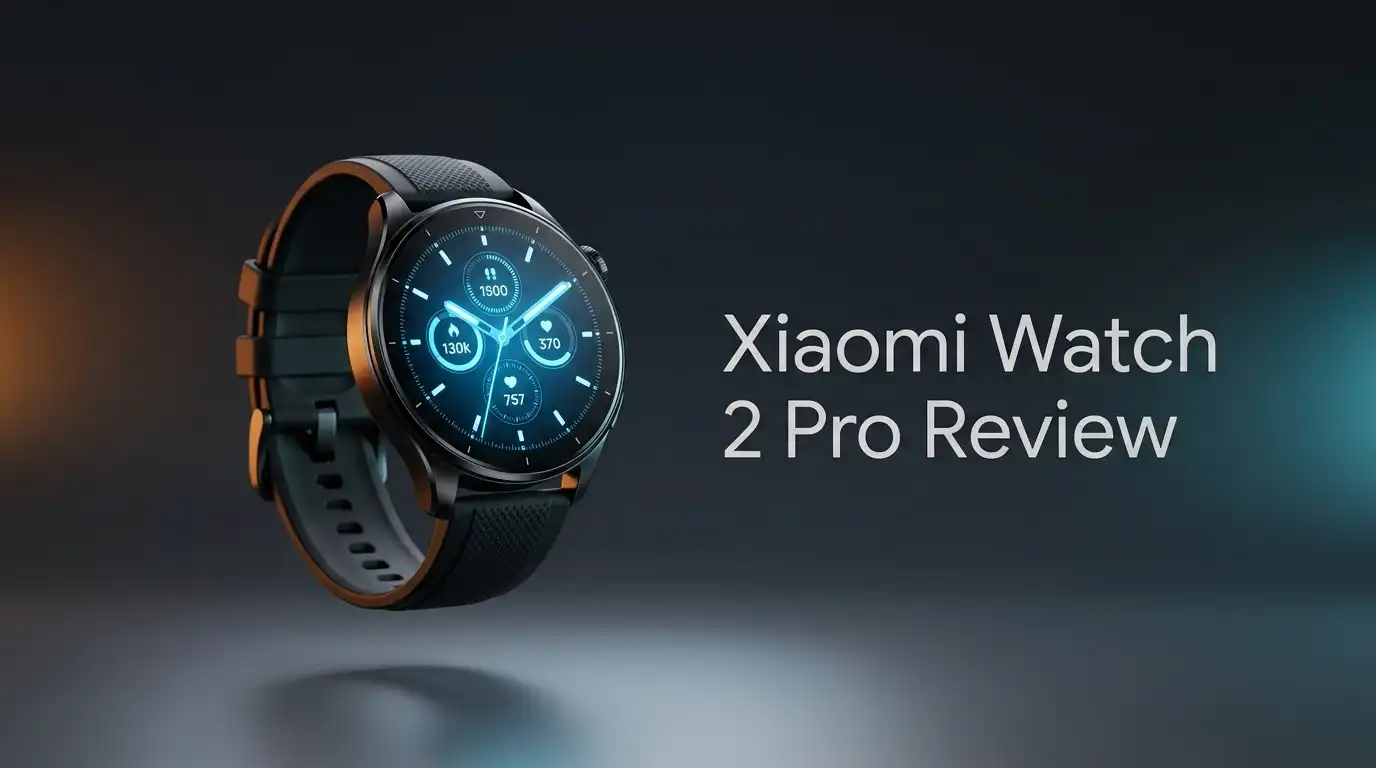
Xiaomi Watch 2 Pro Review 2026: Still Worth It?
The Xiaomi Watch 2 Pro arrived as Xiaomi’s first serious attempt at a flagship Wear OS smartwatch, and it still sits on shelves at tempting prices in 2026.
It pairs a stainless steel body with a bright AMOLED screen, a fast Qualcomm chip, and battery life that beats most Google powered rivals. That combination sounds great on paper. Real daily use tells a slightly messier story, because the software has never been as polished as the hardware.
I spent weeks living with this watch, sleeping in it, running with it, and taking calls on it. This review covers everything from the unboxing moment to the bugs nobody mentions in the marketing copy.
In a Nutshell:
- Hardware feels premium for the price. The 46mm stainless steel case, the 1.43 inch AMOLED panel at 466 x 466 pixels, and the rotating crown give this watch a proper wristwatch character that plastic rivals cannot match.
- Battery life is a real strength. Xiaomi quotes up to 65 hours in light use. In heavy real use with the always on display and constant tracking, expect about two days plus a night, which is strong for Wear OS.
- Performance never stutters. The Snapdragon W5 Plus Gen 1 chip with 2GB RAM and 32GB storage keeps apps opening fast, even after a year of use.
- Software bugs are the weak point. Step counts freeze, alarms occasionally skip, and automatic workout detection rarely fires. A restart usually fixes things, but you should not need restarts.
- Health features have gaps. There is no ECG and no blood pressure reading, and heart rate accuracy during intense exercise drifts low compared with a chest strap.
- Value in 2026 is the main reason to buy. Discounted pricing makes it a sensible pick for Android users who want Google Wallet, Google Maps, and real apps without paying flagship money.
Xiaomi Watch 2 Pro: Quick Overview

Last update on 2026-11-11 / Affiliate links / Images from Amazon Product Advertising API
The Xiaomi Watch 2 Pro is a 46mm Wear OS smartwatch built around a stainless steel case and a circular AMOLED display. Xiaomi sells it in a black version with a rubber strap and a silver version with a brown leather strap. A separate model adds eSIM support for standalone 4G calls and data.
Inside sits the Qualcomm Snapdragon W5 Plus Gen 1, paired with 2GB of memory and 32GB of storage. You also get NFC for Google Wallet, a speaker, a microphone, 5ATM water resistance, and dual frequency satellite positioning. The watch only works with Android phones, so iPhone owners should stop reading here.
Think of it as flagship hardware wearing a mid range price tag. That framing explains both its appeal and its compromises.
Unboxing Experience and First Impressions
The box is small, white, and classic Xiaomi. Lift the lid and the watch sits face up in a foam cradle, already looking heavier and more serious than photos suggest.
Underneath you find the magnetic charging cradle with two metal pins, a short USB cable, and a thin paper manual. There is no power brick in the box, which feels cheap on a watch at this price.
Picking it up for the first time, the weight registers immediately. It is 78 grams with the strap and 53 grams without. That heft reads as quality rather than burden. The crown clicks with a satisfying detent, and the decorative bezel catches light nicely.
Setup took under ten minutes. The phone detected the watch, prompted the Mi Fitness app install, and walked through Google sign in. Smooth start, no drama.
Design and Build Quality
The stainless steel case mixes polished and brushed finishes, and the ribbed bezel borrows from classic dive watch styling. It looks far more expensive than it costs. The bezel does not rotate, which disappoints anyone expecting a Samsung style control ring. It is purely decoration.
Two buttons and a rotating crown sit on the right edge. The buttons feel firm. The crown has a little wobble and sticks out far enough that it presses into your wrist and triggers accidental inputs. You can flip the screen orientation in software to fix this.
The 22mm strap swaps without tools thanks to quick release pins, so third party bands fit easily. Water resistance of 5ATM covers swimming and showers. My only durability complaint after months of wear was light scratching on the underside.
Display Quality and Readability
The 1.43 inch AMOLED panel delivers 326 pixels per inch, and text looks genuinely sharp. Colors pop, blacks are deep, and watch faces look rich. Measured peak brightness lands around 684 nits, which keeps the screen readable in direct sunlight without squinting.
That number sits below the brightest rivals. A Samsung Galaxy Watch gets dramatically brighter, and so does a Pixel Watch. For most situations the Xiaomi screen is bright enough, but cyclists in harsh midday glare will notice the gap.
Touch response is good for tiles and apps, yet typing on the small keyboard feels imprecise and frustrating. One technical note matters for sensitive eyes: the panel dims using pulse width modulation at roughly 80Hz, a low frequency that can trigger eye strain or headaches for some people.
Top 3 Alternative for Xiaomi Watch 2 Pro

Last update on 2026-11-11 / Affiliate links / Images from Amazon Product Advertising API
Xiaomi Watch 2

Last update on 2026-11-13 / Affiliate links / Images from Amazon Product Advertising API
Google Pixel Watch 3


Last update on 2026-11-13 / Affiliate links / Images from Amazon Product Advertising API
Amazfit GTR 4
Wear OS Software and Everyday Use
Wear OS is the headline upgrade over older Xiaomi watches. You get the Play Store, WhatsApp, Spotify, Google Maps, Google Wallet, and Google Assistant on your wrist. This app access is the single biggest reason to pick this watch over cheaper Xiaomi models.
Xiaomi layers its own interface on top. Swiping down opens notifications, swiping up opens quick settings, and side swipes move through tiles for activity, weather, heart rate, sleep, and blood oxygen. You rearrange everything in the Mi Fitness app.
One quirk annoys former Samsung owners: Xiaomi reverses the usual swipe directions, so muscle memory fights you for the first week. You adapt, but it feels like change for the sake of change. The Mi Fitness app itself is clean and easy to read.
Performance and Speed
Performance is where this watch quietly excels. The Snapdragon W5 Plus Gen 1 is the strongest Qualcomm wearable chip of its generation, and benchmark results put the Watch 2 Pro ahead of the Pixel Watch 2 and far ahead of Samsung’s Exynos powered models in browser tests.
Real use matches the numbers. Apps open instantly, animations stay smooth, and switching between several open apps causes no slowdown. Scrolling a long notification list never stutters. Two years after launch, the watch still feels quick.
The 32GB of storage deserves credit too. You can download hours of offline Spotify or YouTube Music, load dozens of apps, and never think about space. For a watch priced in the mid range, this is generous and genuinely useful during phone free runs.
Battery Life and Charging Speed
The 495mAh battery is large by smartwatch standards, and it shows. With every sensor active, the always on display enabled, notifications flowing, and an eSIM connected, the watch reliably lasted two full days and the night in between before needing power.
Turn off the always on display and you stretch that to roughly two days and two nights. Push it hard with long tracked workouts and no paired phone and you still clear 24 hours. Those are excellent numbers for a Wear OS device, where one day endurance is still common.
Charging is fast. The watch refills from 6 percent to full in about 35 minutes with a 12W adapter. The catch is the proprietary pin cradle. There is no Qi wireless charging, so forget your phone’s charging pad.
Health Tracking and Body Composition
The sensor list covers heart rate, blood oxygen, stress, skin temperature trends, and body composition through bioelectrical impedance. Place two fingers on the electrodes and the watch estimates water, fat, muscle mass, protein, and bone mass. It is a fun feature, though you should treat the readings as rough trends rather than clinical data.
Stress scoring runs from 0 to 100 and pairs with guided breathing exercises. The Mi Fitness dashboard presents daily, weekly, and monthly views that are easy to understand.
Accuracy is mixed. Resting heart rate tracked within roughly one beat per minute of a chest strap, which is very good. During intense exercise the watch read around 10 percent low, partly because the slippery case shifts on the wrist. Blood oxygen readings also landed slightly under a dedicated pulse oximeter.
Workout Tracking and Sports Modes
Xiaomi lists over 150 workout modes, and the in workout screens are genuinely well designed. Heart rate appears as a number with color coded zones, and you can set distance or time goals per sport. Interval training works, and runners get preloaded training plans for different fitness levels.
Data output after a session is detailed. You see pace, distance, altitude, cadence, stride length, training effect, training load, and a suggested recovery window. Results sync to Strava and Google Fit without fuss.
Automatic workout detection is listed in the menu but almost never worked for me. Walks, runs, and gym sessions went unrecorded unless started manually. Route export also requires a workaround through Strava, which feels clumsy in 2026.
GPS and Navigation Performance
Satellite performance is a genuine highlight. The watch supports dual band L1 plus L5 positioning along with GPS, Galileo, GLONASS, BeiDou, and QZSS. That hardware normally appears on far more expensive running watches.
Lock on takes a little patience indoors or in doorways, sometimes close to a minute. Once connected, the signal holds firmly. Compared against a Garmin on the same bike ride, the recorded route matched closely, including tight corners and roundabouts where cheap trackers wander across buildings.
Turn by turn navigation works through Google Maps on the wrist. With the LTE model you can navigate, stream music, and take calls with no phone in your pocket. This independence is the clearest advantage the Wear OS platform brings to Xiaomi’s lineup.
Calls, Notifications, and LTE Connectivity
Call quality through the built in speaker and microphone is solid. Voices come through clearly in a quiet room, and the speaker gets loud enough for normal street noise. Background sound does reach the other person, so busy cafes are not ideal. The eSIM version handles calls with no phone nearby.
Notifications arrive reliably and group by app. Emojis and images display properly, long emails get trimmed, and you can reply using voice input, emoji, or a full keyboard. WhatsApp voice messages from the wrist work well.
Google Assistant responds quickly and reads answers aloud. Alexa can be installed from the Play Store, though only Assistant launches with a button press. For most Android owners, notification handling here is dependable.
Sleep Tracking Accuracy
Sleep tracking is surprisingly thorough. The watch logs light, deep, and REM phases, catches wake periods accurately, and displays everything on a clear timeline with both minutes and percentages for each stage.
The app adds average heart rate, average blood oxygen, and breathing quality points, then combines them into a sleep score out of 100. It even compares your score against other users in your age bracket. Over weeks, the trend data becomes genuinely useful for spotting bad habits.
Comfort matters here, and at 78 grams the watch is noticeable on the wrist overnight, especially for side sleepers. One missing feature stings: there is no smart alarm that wakes you during light sleep, a basic function that cheaper fitness bands include.
What the Xiaomi Watch 2 Pro Does Not Do Well
Honesty time. The software is buggy in ways that a flagship should not be. Step tracking froze on several days, showing zero movement by afternoon until a restart fixed it. The alarm silently stopped working once. On another occasion the watch began shouting workout announcements with no workout running.
Health gaps are real too. There is no ECG and no blood pressure measurement, both of which competitors include. Exercise heart rate accuracy trails Samsung and Google noticeably.
Other misses add up. No wireless charging, no iPhone support, no rotating bezel despite the look, no on wrist route export, and a keyboard that fights your fingertips. The low frequency screen dimming may bother sensitive eyes. These flaws will not ruin daily use, but pretending they do not exist would be dishonest.
Pros and Cons
Pros
- Fast performance from the Snapdragon W5 Plus Gen 1 chip, with no lag even after long term use
- Strong battery life for Wear OS, reaching two days plus a night in heavy use
- Premium stainless steel build that looks far more expensive than the price suggests
- Excellent dual band satellite accuracy that rivals dedicated running watches
- Full Play Store access, Google Wallet, Google Maps, and WhatsApp on the wrist
- Fast charging from near empty to full in roughly 35 minutes
- Generous 32GB storage for offline music and apps
Cons
- Frequent small software bugs affecting steps, alarms, and workout announcements
- No ECG and no blood pressure monitoring
- Exercise heart rate accuracy drifts low versus a chest strap
- No wireless charging, so you must carry the proprietary cradle
- Android only, with zero iPhone compatibility
- Automatic workout detection rarely triggers
- Screen dimming at 80Hz may cause eye strain for sensitive users
Price and Value in 2026
The Watch 2 Pro launched around 270 euros for the Bluetooth model and roughly 330 euros with LTE. By 2026 the picture changed completely. Retailer discounts and newer Xiaomi releases pushed street prices well below launch, and that shift transforms the value equation.
At full launch price, the bugs and missing ECG made it hard to recommend over a Galaxy Watch. At a discount, you get stainless steel, dual band satellites, and a top tier chip for the price of a plastic mid ranger. That is a genuinely attractive deal.
Check current pricing carefully before buying, since the gap between the Watch 2 Pro and newer Xiaomi models has narrowed. Software updates have smoothed some rough edges, though not all of them.
Who Should Buy the Xiaomi Watch 2 Pro
Buy this watch if you use an Android phone, want real Wear OS apps, and refuse to charge a smartwatch every single night. The combination of Google Wallet, Maps, WhatsApp, and two day battery suits commuters and casual fitness users very well.
It also suits anyone who values looks. The stainless steel case genuinely passes as a traditional watch in an office or at dinner, which many sporty smartwatches cannot claim.
Skip it if you need ECG readings, precise exercise heart rate, or iPhone support. Serious runners and anyone tracking a heart condition should spend more elsewhere. Buyers who hate troubleshooting should also look at a Samsung or Google option, because occasional restarts come with this territory.
Final Verdict
Last update on 2026-11-11 / Affiliate links / Images from Amazon Product Advertising API
The Xiaomi Watch 2 Pro is a watch of two halves. The hardware is excellent, from the steel case and sharp AMOLED screen to the quick chip, big battery, and impressive satellite tracking. Hold it, wear it, and you will struggle to believe the price.
Then the software reminds you what you paid. Small bugs appear often enough to irritate, health features lag behind rivals, and polish is clearly missing. None of these issues break the watch, yet together they stop it reaching greatness.
My verdict is straightforward. At a discounted 2026 price, this is a smart buy for Android users who want premium feel and long battery life. At full price, better rounded options exist. Buy it for the hardware, and accept the software as it is.
Frequently Asked Questions
Does the Xiaomi Watch 2 Pro work with iPhone?
No. The Watch 2 Pro requires an Android phone running a recent version of Android. Setup needs both the Mi Fitness app and a Google account, and neither pairing path supports iOS. iPhone owners should look at an Apple Watch or a Garmin instead.
How long does the Xiaomi Watch 2 Pro battery really last?
Xiaomi advertises up to 65 hours. In realistic daily use with the always on display active, all sensors running, and notifications enabled, expect roughly two days plus the night in between. Disabling the always on display pushes this closer to two days and two nights. Heavy workout tracking with LTE drops it to about 24 hours.
Does the Xiaomi Watch 2 Pro have ECG?
No. The watch measures heart rate, blood oxygen, stress, and body composition, but it cannot record an ECG and cannot estimate blood pressure. If atrial fibrillation detection matters to you, choose a Samsung Galaxy Watch, a Google Pixel Watch, or an Apple Watch.
Can you use the Xiaomi Watch 2 Pro without a phone?
Yes, if you buy the LTE model with eSIM support. That version makes calls, sends messages, streams music, and runs Google Maps navigation with no phone nearby. The Bluetooth only version needs your phone for data, though offline music and standalone satellite tracking still work.
Is the bezel on the Xiaomi Watch 2 Pro rotating?
No. The ribbed bezel is purely decorative and does not turn. You navigate the interface using the touchscreen, the two side buttons, and the rotating crown. The crown scrolls lists and menus smoothly, which covers most of what a rotating bezel would do.
Does the Xiaomi Watch 2 Pro support wireless charging?
No. Unlike the older Xiaomi Watch S1, this model drops Qi wireless charging and uses a proprietary cradle with two metal pins. Charging is fast at roughly 35 minutes for a full refill, but you must carry the cradle when traveling.

Hi, I’m Lucy Jones, a dedicated watch enthusiast and reviewer. I spend my time hunting down, testing, and evaluating the most intriguing wristwatches on the market. My goal is to guide you through the overwhelming choices with honest, hands-on insights into every timepiece.