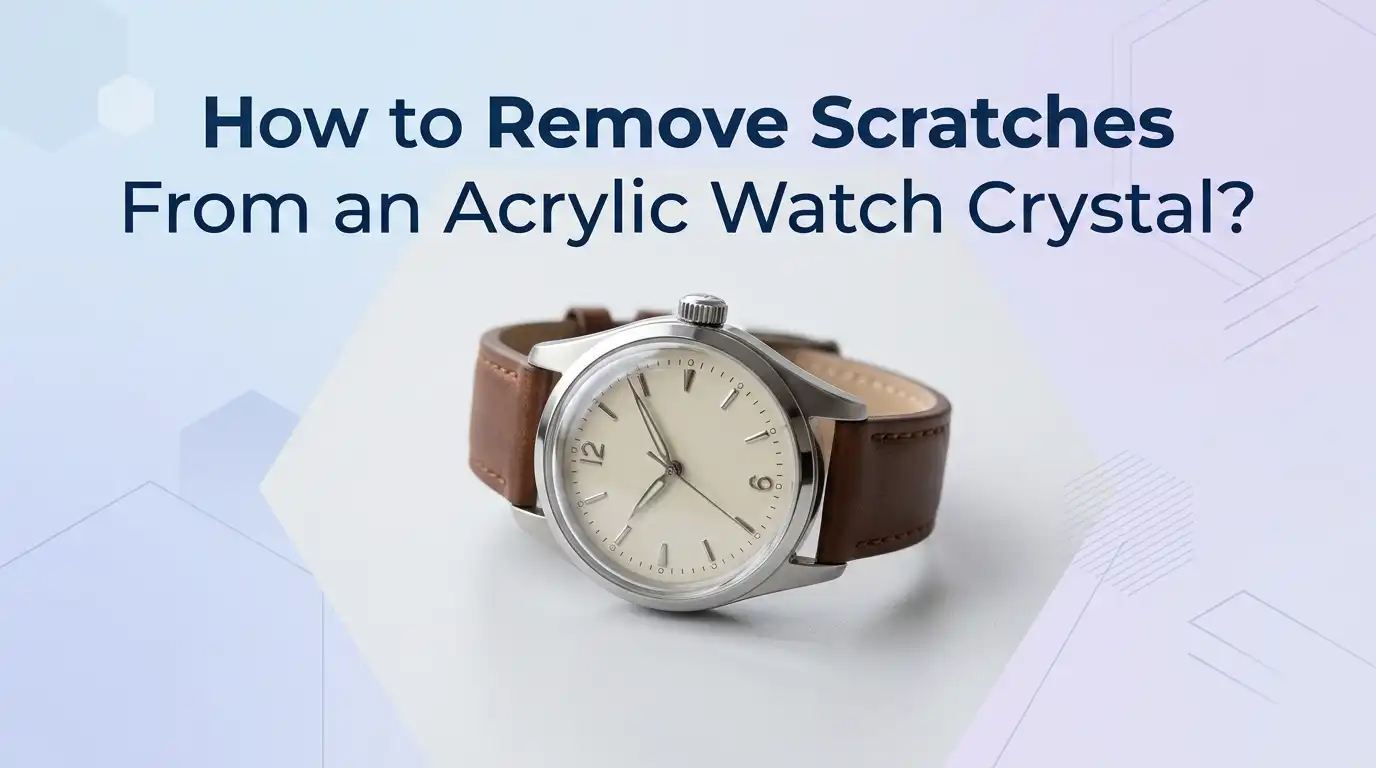
How to Remove Scratches From an Acrylic Watch Crystal?
A scratched acrylic watch crystal can make a good watch look tired fast. The good news is simple. Acrylic is the easiest watch crystal material to fix at home. In many cases, you can clear light marks in a few minutes and make the dial look sharp again.
This guide gives you a clear plan. You will learn how to spot the scratch level, choose the right method, protect the case, polish safely, and decide when replacement makes more sense than repair.
The goal is simple. Help you get a better result without wasting time, money, or the crystal itself.
Key Takeaways
- Acrylic crystals scratch more easily than mineral or sapphire, but they are much easier to restore. That softness is the main reason many owners can fix light damage at home. A few minutes of careful polishing often improves small marks enough to make the watch look clean again.
- You need to match the method to the scratch depth. A light surface mark usually responds well to plastic polish and a soft cloth. A deeper groove needs a more direct plan with fine abrasive steps first, then polish. If you choose a method that is too mild, you will waste effort. If you choose one that is too aggressive, you can create haze or shape loss.
- Preparation matters as much as polishing. Tape around the bezel and case. Work on a clean surface. Use a clean cloth. Keep dust away. Most bad results happen before polishing starts, not after. Dirt on a cloth or exposed metal near the crystal can create fresh damage very fast.
- Polishing compounds are best for light scratches and regular upkeep. They are easy to control and friendly for beginners. Wet sanding is stronger, but it removes more material and needs a steady hand. This makes sanding useful for deeper marks, but less forgiving.
- Not every crystal should be repaired. If the crystal is cracked, chipped, loose, or badly warped, polishing will not solve the real problem. In that case, a replacement is usually the smarter path. A clear view is important, but sealing and safety matter too.
- Good aftercare keeps the crystal clear longer. Store the watch away from loose metal items. Wipe it with a soft cloth after wear. Take it off before rough work. Acrylic can stay looking good for years if you treat it with a little care and touch up small marks before they build into deep ones.
What Makes Acrylic Watch Crystals Easier to Repair
Acrylic watch crystals are made from a clear plastic material. That material is softer than mineral glass and sapphire. Because it is softer, it picks up scratches more easily. The upside is important. The same softness makes the surface much easier to polish back to clarity.
This is why many vintage watch owners still like acrylic. It can take impact well, and it is less likely to shatter than harder crystal types. A scratch is annoying, but it is often fixable.
That does not mean every mark disappears with one quick rub. A light scuff and a deep groove are very different problems. Still, acrylic gives you room to work. You can remove a small amount of material from the top surface and level it out without needing a full replacement in many cases. That is the basic reason home repair works so well here.
Make Sure Your Watch Really Has an Acrylic Crystal
Before you polish anything, make sure the crystal is actually acrylic. If your watch has mineral glass or sapphire, the repair plan changes a lot.
Acrylic can often be polished. Mineral usually needs replacement when scratched. Sapphire resists scratches well, but if it does get damaged, home polishing is usually not the answer.
Acrylic often feels slightly warmer and lighter than glass. It can also have a softer look from the side, especially on older domed crystals. Vintage watches and many retro style watches often use acrylic.
If you are unsure, check the watch specs from the maker. That is the safest route. You can also look for terms like acrylic, plexi, plexiglass, or hesalite. Do not guess and start sanding. A wrong first step can turn a small problem into a much bigger one, especially if the watch uses mineral crystal.
Read the Scratch Before You Touch the Crystal
A good result starts with a simple check. Look at the crystal under bright light and tilt it slowly. This helps you tell the difference between a surface scuff and a deeper cut. If the scratch is visible only at certain angles, it may be light enough for polish alone. If you can feel it clearly with a fingernail, it is deeper.
This quick test saves time. Light haze, hairline marks, and shallow rub lines usually improve with polish. A sharp groove may need fine abrasive work first.
Also look for cracks, chips, or missing pieces near the edge. Those are warning signs. Polishing will not rebuild missing material. If the crystal is cracked or chipped, stop and plan for replacement. A smooth finish will not fix structural damage, and a damaged crystal can let in moisture or dirt later.
Gather the Right Tools Before You Start
You do not need a huge repair kit, but you do need the right basics. For light scratches, get a clean soft cloth, painter tape or masking tape, and a plastic polish made for clear plastic surfaces. For deeper scratches, add fine wet sanding papers or Micro Mesh style abrasives in several grades.
Keep the setup simple. A clean cloth matters more than a fancy table. If the cloth holds grit or dust, you can add fresh scratches while trying to remove old ones.
A bright lamp helps a lot. So does a small bowl of water if you plan to wet sand. Work with patience, not force. Strong pressure and random tools create uneven results. Avoid rough shop rags, paper towels, or dirty polishing cloths. They are common causes of haze. The cleaner your tools are, the better your final finish will be.
Protect the Watch Case and Set Up a Safe Work Area
Before you polish, protect everything around the crystal. Use tape to cover the bezel and the top edge of the case. If the watch has a strap that gets in the way, remove it first. This small step prevents accidental damage and gives your fingers more room to move.
Work on a steady table with good light. Put down a soft towel so the watch does not slide. If you rush this part, the repair gets harder later. A stable watch is easier to polish evenly.
Make sure the crystal is clean before you start. Dust or grit on the surface can act like sand. Wipe the crystal gently with a soft cloth first. Then inspect it again. Many people skip this second look, but it helps you choose the right method with more confidence. A clean, taped watch is safer to handle and much easier to restore well.
Use Plastic Polish for Light Scratches
Plastic polish is the first method to try for light scratches. Put a small amount on the crystal, then rub with a clean soft cloth using firm, even pressure. Small circles work well. You can also use short back and forth strokes if you keep the pressure even. Keep working for a few minutes before judging the result.
This method is best for fine marks, light scuffs, and everyday wear lines. It is simple, low risk, and easy to repeat. Many owners stop too early and think it failed, when the crystal just needed more steady rubbing.
Wipe the area clean and inspect under bright light. If the scratch is still there but softer, repeat the process. If it looks unchanged after a fair effort, the damage is probably deeper. Do not jump to heavy force. Change methods instead. Controlled repetition gives better results than one hard polishing session.
Pros and Cons of the Plastic Polish Method
The biggest advantage of plastic polish is control. It removes very little material at a time, so it is friendly for beginners. That makes it the safest starting point for most acrylic crystals. It also helps preserve the original shape of a domed crystal, which matters on vintage watches.
Another plus is speed. For light scratches, the result can come fast. A short polishing session may be enough to clear the view and bring back shine.
There are limits, though. Plastic polish is not strong enough for every problem. Deep grooves can stay visible even after several rounds. It can also hide how serious a scratch really is, because the area may look better before it looks fully fixed.
Pros include ease, safety, and a better finish on light marks. Cons include slower results on deeper damage and limited cutting power.
Use Fine Wet Sanding for Deeper Scratches
If the scratch is deep enough to catch a fingernail, fine wet sanding is often the better method. This sounds harsh, but it works because you level the whole top surface down to the bottom of the scratch, then refine the finish until it turns clear again. The key is gradual progress through finer grades.
Start with the mildest abrasive that can actually affect the scratch. Sand the entire crystal surface evenly, not just the damaged spot. This protects the shape and avoids low areas. Use light pressure and keep the surface damp.
After the scratch fades, move through finer grades step by step. Each stage should remove the marks from the stage before it. Finish with plastic polish to restore full clarity. If you stop too early, the crystal may look cloudy. The clear finish usually comes back at the polishing stage, not at the first sanding stage.
Pros and Cons of Wet Sanding and Multi Step Polishing
Wet sanding is powerful. It can rescue a crystal that looks far beyond a simple polish fix. That is the main advantage. If a scratch is too deep for compound alone, sanding gives you a real path forward.
It also offers control if you use several fine grades and inspect often. Many bad looking crystals improve a lot with careful, even sanding followed by polish. This method can save a vintage watch from looking worn out.
The downside is clear too. You are removing more material. That means there is more risk of haze, flat spots, edge distortion, or loss of the original dome if you sand unevenly. It also takes longer.
Pros include stronger scratch removal and better results on deep marks. Cons include more skill, more time, and more room for mistakes. If you feel unsure, stop early and get help before the crystal shape changes.
Avoid the Mistakes That Cause Haze and Distortion
Most poor results come from a few common mistakes. The first is sanding or polishing one small spot too much. That creates a dip in the surface and can distort the dial view. Always work the whole crystal evenly, especially on a domed shape.
The second mistake is using a dirty cloth or rough paper product. Acrylic scratches easily, so trapped grit can undo your progress fast. Use only clean soft cloths and fresh abrasives.
Another common problem is skipping abrasive steps. If you jump from a rough grade to final polish too soon, the crystal can stay cloudy. The polish is not magic.
It cannot erase every sanding mark by itself. Heat is another risk. If you use a powered tool or rub too hard for too long, the crystal can warm up, soften, and distort. Slow work with frequent checks almost always gives a cleaner finish.
Know When Replacement Is the Smarter Fix
Sometimes the best repair is no repair. If the acrylic crystal is cracked, chipped, loose in the case, or badly yellowed, polishing may improve the look but still leave a real problem behind. In these cases, replacement is often the safer and cleaner solution.
This is also true if the scratch sits right at the edge and has damaged the seal area. A watch can look better and still be less secure than it should be. Clarity is only one part of the job. The crystal also protects the dial and movement.
Replacement makes sense if repeated polishing has already thinned the crystal over time. It also makes sense if you own a valuable watch and want the shape preserved exactly. A good rule is simple. If repair changes the crystal more than the scratch did, stop and consider a new crystal instead.
Keep the Crystal Clear After the Repair
Once the crystal looks good again, a few habits can help it stay that way. Keep the watch away from coins, keys, tools, and metal bracelets when you store it. Most new scratches happen off the wrist, not during normal time checks.
Wipe the crystal with a soft cloth after wear. This removes grit, skin oil, and dust that can build into light rub marks. Small care steps make a real difference over time.
If you wear the watch during rough tasks, take it off first. Acrylic handles impact well, but it still scratches easily on hard surfaces. Touch up light marks early with plastic polish instead of waiting until the whole surface looks tired.
That is often the best long term plan. Small, careful maintenance is easier than deep restoration, and it helps the watch keep its clear, warm vintage look.
FAQs
Can I use toothpaste on an acrylic watch crystal?
You can try it in a pinch, but it is not the best option. Some toothpastes are too mild to help, and others can leave uneven haze. A plastic polish is the safer choice because it is made for clear surfaces. If toothpaste is all you have, test gently and keep expectations low.
How long does it take to remove scratches from acrylic?
Light scratches may improve in a few minutes with plastic polish. Deeper ones can take much longer because sanding and polishing happen in stages. The real answer depends on depth. A short job can take five minutes. A deeper restoration can take much more time if you want an even finish.
Will polishing ruin the dome shape of the crystal?
It can if you work one spot too much. That is why you should polish or sand the whole crystal surface evenly. Keep the motion balanced and check often. Light polish on shallow scratches usually keeps the shape safe. Deep sanding carries more risk and needs more care.
Can I repair the crystal while the watch movement is still inside?
For light polishing, many people do. Still, you should protect the case well and keep moisture away. For deeper sanding or any work near the crystal edge, extra caution is smart. If you are unsure, do less, not more. The goal is a clear crystal without creating a bigger repair.
How often can I polish an acrylic crystal?
You can polish it from time to time, but every repair removes a small amount of material. That means moderation matters. Light touch ups are fine. Heavy sanding should stay rare. It is better to maintain the crystal with small early fixes than wait and do one large repair later.
Is acrylic better than mineral or sapphire for daily wear?
That depends on what matters most to you. Acrylic scratches faster, but it is easier to repair and less likely to shatter. Mineral resists scratches better than acrylic but usually needs replacement once damaged. Sapphire is hardest to scratch, yet it can cost more to replace. There is no single winner. The best choice depends on use, budget, and style.

Hi, I’m Lucy Jones, a dedicated watch enthusiast and reviewer. I spend my time hunting down, testing, and evaluating the most intriguing wristwatches on the market. My goal is to guide you through the overwhelming choices with honest, hands-on insights into every timepiece.