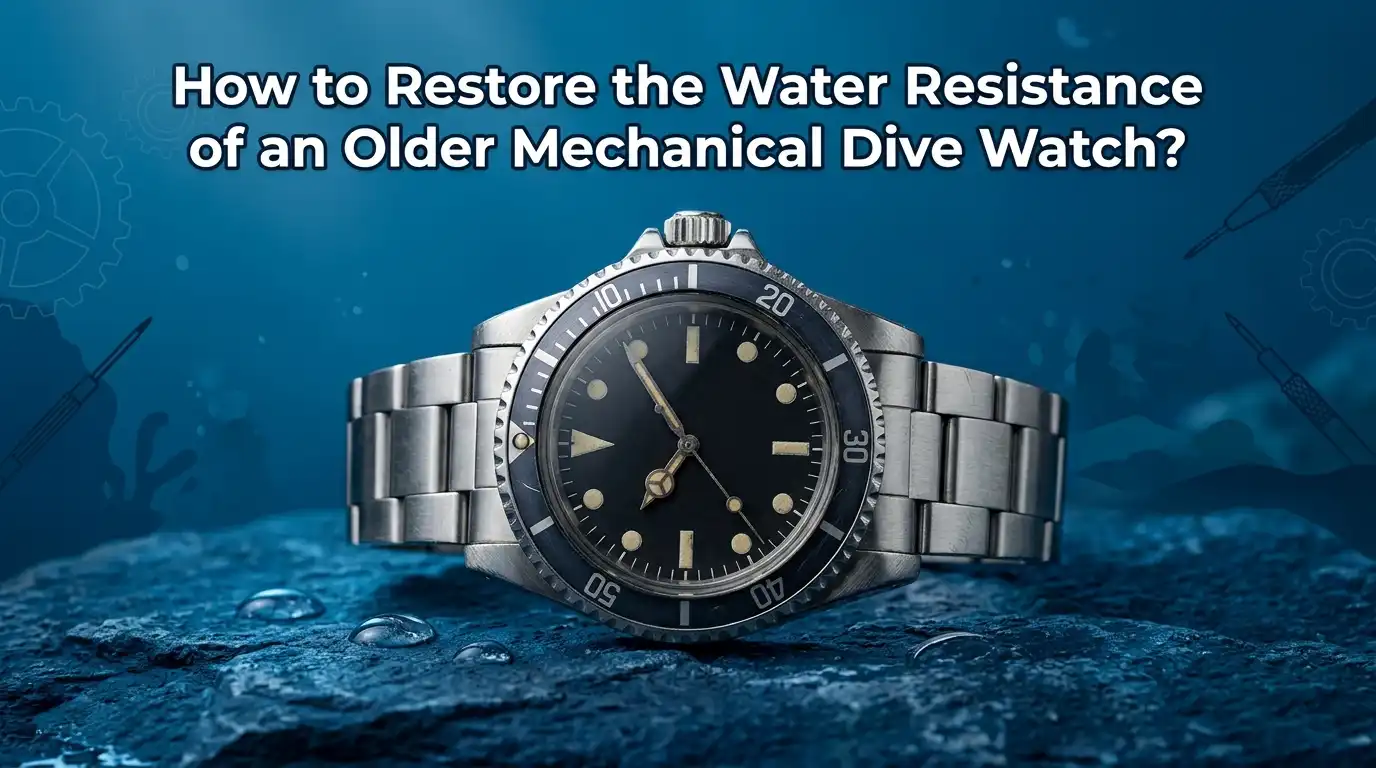
How to Restore the Water Resistance of an Older Mechanical Dive Watch?
You love your old dive watch. It has traveled with you for years. You trust it. But lately something feels off. Maybe you noticed a tiny fog under the crystal after a swim.
Maybe you just feel nervous about getting it wet at all. You are right to be cautious. An older mechanical dive watch loses its water resistance over time. The seals inside age. They dry out.
They crack. The good news is that you can restore that lost protection. This guide will walk you through exactly how to bring your watch back to its former glory. No fluff. Just practical steps that work.
Key Takeaways:
- The real enemy is aging gaskets, not the watch case itself. Rubber and silicone seals naturally harden, flatten, and crack over 3 to 5 years regardless of how often you wear the watch.
- A pressure test is mandatory before you trust any restored watch near water. Without a wet pressure test, you are guessing. A condensation test at home can catch big leaks but cannot confirm depth-rated safety.
- You have three paths to restoration. The professional service route costs $120 to $200 for a gasket overhaul plus pressure testing. The DIY route costs under $30 but requires careful hands. The hybrid route lets you clean and lubricate accessible gaskets yourself and leave critical seals to a watchmaker.
- Lubrication is just as important as the gasket itself. A brand new gasket installed dry will fail much faster. A thin, even film of silicone grease keeps the rubber flexible and helps it fill microscopic gaps in the metal.
- Water resistance ratings degrade silently. A watch rated at 200 meters twenty years ago may only survive a rain splash today. Manufacturers recommend annual pressure checks and seal replacement every 2 to 3 years for dive watches that actually touch water.
What Makes an Older Dive Watch Lose Its Water Resistance
An older mechanical dive watch loses its water resistance mainly because the rubber seals inside have degraded. These seals, also called gaskets, sit at every joint in the case.
You find them under the case back, around the crown stem, and beneath the crystal. They work by compressing between two metal surfaces to block water from sneaking in.
Over time these gaskets harden. Exposure to sweat, skin oils, soaps, and temperature swings speeds up the aging. Even a watch that sat in a drawer for ten years can have brittle gaskets.
Rubber loses its elasticity naturally as the years pass. Once a gasket cannot bounce back and fill the tiny gap it is supposed to seal, water finds a way in.
The crown gasket is usually the first to fail. You twist the crown every time you wind or set the watch. This friction grinds the rubber down faster than anywhere else.
If you left your crown unscrewed even once near water, you may have already let moisture slip inside. The sad truth is that a vintage watch with a 200 meter depth rating on the dial often cannot handle a shower today.
How to Inspect Your Dive Watch Before Restoring Seals
Before you do any restoration work, you need to inspect your watch carefully. Start with a bright light. Tilt the crystal at different angles and look for tiny fog patches or water droplets underneath. Fogging means the seal has already broken. Moisture has entered the case. This is a red flag that demands immediate attention.
Check the crown area next. Pull the crown out to the time setting position. Look at the stem. See any greenish corrosion or dark residue? That signals past water intrusion or gasket breakdown.
Push the crown back in and screw it down fully. It should seat firmly and evenly. A wobbly or loose crown often points to internal thread wear or a crushed gasket.
Examine the case back edges with a magnifying glass. Look for gaps, dents, or signs of prying. Someone may have opened the watch before and damaged the sealing surface.
A scratched gasket channel will never seal properly. Finally, turn the bezel. If it feels gritty or stiff, sand and salt crystals may have worked their way under the bezel ring and dried out the bezel gasket underneath.
Professional Restoration vs DIY: What You Must Know
You have to decide who will do the work. A professional watchmaker brings expertise and proper equipment. They replace every gasket in the case, lubricate each one correctly, and run a calibrated pressure test afterward.
The cost typically ranges from $120 to $200 for a full gasket overhaul on a standard dive watch. The price climbs higher if the movement also needs cleaning from prior moisture damage.
The benefits of professional service are clear. You get a documented pressure test result. You get genuine or correctly matched gaskets. You get peace of mind when you jump into the ocean with the watch on your wrist. The downside is cost and wait time. Some watchmakers keep watches for two to four weeks during busy seasons.
The DIY path costs far less. You can buy a set of assorted O-rings and silicone grease for under thirty dollars. You learn a skill. You bond with your watch. But the risks are real.
A poorly seated gasket, over-lubrication that attracts debris, or a scratched sealing surface can leave your watch worse than before. DIY works best if you are willing to practice on cheaper watches first.
The DIY Method: Replacing the Case Back Gasket Step by Step
You want to try this yourself. Start by gathering the right tools. You need a case back opener that matches your watch, a pair of non-magnetic tweezers, a digital caliper to measure the old gasket, and a small container of pure silicone grease. Work on a clean desk with good lighting.
Remove the case back slowly. Note how tight it was so you can replicate that pressure later. Do not let dust or lint fall into the movement while the back is off. Slide the old gasket off with your tweezers.
It may be stiff and brittle. If it crumbles, clean out every tiny shard from the gasket channel using a wooden toothpick and an air blower. Debris left behind will prevent the new gasket from seating flat.
Measure the old gasket or the channel. You need the inner diameter and the cross-sectional thickness. Order a replacement that matches exactly. A gasket that is slightly too thin will not compress enough, and a gasket that is too thick may prevent the case back from closing fully.
Once the new gasket arrives, apply a very thin, even film of silicone grease to it using a toothpick or your fingertip. Slip it over the case back lip and press it evenly into the channel. Reassemble the case back and tighten it firmly.
Replacing and Lubricating the Crown Gasket
The crown gasket often hides inside the crown itself or sits inside a crown tube pressed into the case. This tiny seal takes more abuse than any other gasket in the watch.
You must release the stem from the movement first. Most mechanical dive watch movements have a small release button or lever near where the stem enters. Press it gently with tweezers and pull the crown and stem free.
Look inside the crown. You may see a small black ring. That is the gasket. If it is cracked or flattened, remove it with a fine needle. Some watches also have one or two tiny O-rings on the stem inside the crown tube. Replace all of them.
Lubricate lightly. Excess grease inside the crown tube can gum up the winding and setting mechanism. A micro dab on the tip of a toothpick is enough for each gasket.
Slide the stem back in carefully. Test the winding and time setting before closing the case. The crown should screw down with smooth resistance. If it feels gritty, open it back up and clean the threads.
How to Clean and Maintain the Bezel Gasket
The rotating bezel on your dive watch has its own gasket underneath. This one does not keep water out of the case but it keeps sand, salt, and grit from locking up the bezel movement. A seized bezel is a common problem on older dive watches that were never rinsed after ocean use.
Remove the bezel carefully. Some pop off with a thin case knife applied at the edge. Others need a specialized bezel removal tool. Work slowly and cover the blade tip with plastic to avoid scratching the case. Once off, you will see a flat or round gasket sitting in a groove inside the bezel. Lift it out.
Wash the gasket with warm water and mild soap. Dry it fully. Clean the bezel groove and the metal ring around the crystal with a soft brush.
Apply a thin silicone grease film to the gasket and press it back into the groove. Pop the bezel back on with firm, even pressure around the entire ring. It should rotate with a satisfying click and no gritty feel.
Why Lubrication Makes or Breaks the Seal
Many people skip lubrication. They think a new gasket alone does the job. It does not. Dry rubber against dry metal creates friction that can pinch, twist, or shear the gasket during assembly. A gasket that twisted during case back tightening will leak even though it looks fine from the outside.
Silicone grease serves three purposes. First, it lubricates the gasket during assembly so it slides into the correct position without damage.
Second, it fills microscopic surface imperfections in the metal, closing paths that water molecules could travel through. Third, it conditions the rubber, slowing down the hardening and drying process.
Use only pure silicone grease made for watchmaking or plumbing. Petroleum based products will swell and destroy rubber gaskets within days. Apply it sparingly. You want a glossy sheen, not a thick glob. Wipe away any excess that squeezes out during assembly with a clean cloth.
How to Pressure Test Your Watch After the Restoration
You replaced the gaskets. You lubricated everything. Now you must prove the seal works. A pressure test is the only reliable way. Watchmakers use a wet pressure tester.
They place your watch in a chamber, pressurize it with air, then submerge it in water. As they release the pressure, any internal air escaping from a leak shows up as a stream of tiny bubbles.
You can buy a basic home pressure tester for around $80 to $150. These typically reach 6 bar, which is enough to simulate 60 meters of depth.
That is not enough for serious diving certification but it proves the watch can handle swimming and snorkeling. Follow the manufacturer instructions closely. Never skip the dry pressurization step before lowering the watch into water. This prevents an explosive decompression that can pop the crystal out.
If you do not own a pressure tester, you can try a simple condensation test. Seal the empty case without the movement and submerge it in warm water for a few minutes.
Remove it, dry the outside completely, and place an ice cube on the crystal. Fog forming inside the case signals a leak. This test catches big failures but cannot confirm depth rated safety.
When You Must Visit a Professional Watchmaker Instead
Some situations demand a professional. If you see rust inside the movement, stop. Rust means water has already damaged the mechanical heart of the watch. Replacing gaskets now will not fix the internal corrosion. The watch needs a full service including movement cleaning and possibly part replacement.
If your watch has a monobloc case where the movement comes out through the crystal, leave it to a professional. These designs require specialized tools and skills. Similarly, if your crown tube threading is stripped or the stem is corroded, you need a watchmaker with a lathe to cut a new crown tube seat.
Vintage watches with original radium lume also belong in professional hands. Opening the case can release radioactive dust particles. Finally, if your watch has high sentimental or financial value, the professional fee buys you the confidence that the job was done right and tested properly.
Pros and Cons of Each Restoration Approach
Let us break down the trade offs clearly.
Professional Service: Pros include guaranteed pressure test results, proper tools, genuine parts, and no risk of DIY damage. Cons are the cost, typically $120 to $200, and the wait time of several weeks. You also lose the hands-on satisfaction.
Full DIY Restoration: Pros are low cost and the deep learning experience. You understand your watch intimately afterward. Cons are the real risk of damaging the movement with dust, scratching the case, or installing a gasket incorrectly. Without a pressure tester, you never truly know if the seal holds.
Hybrid Approach: Pros let you save money by doing easy tasks like the bezel gasket and external cleaning, while a watchmaker handles the critical crown and case back gaskets plus pressure testing. Cons require you to clearly communicate with the watchmaker about what you already did, and some professionals prefer to do the entire job themselves.
How Often You Should Service the Seals to Maintain Water Resistance
Dive watch manufacturers recommend replacing gaskets every two to three years. If you actually dive with your watch, aim for an annual pressure test and inspection. A simple pressure test at a watchmaker costs far less than a full gasket replacement. Catching a weak seal early prevents a flooded movement.
The environment matters. Chlorine pools and salt water accelerate rubber breakdown. Rinse your watch with fresh water after every exposure. Turn the bezel while rinsing to flush out grit. Store the watch in a dry, room temperature place. Avoid leaving it in a hot car or a steamy bathroom.
Even if your watch passes a pressure test today, that certification has an expiration date. Gaskets do not fail on a fixed calendar schedule. They degrade gradually. The watch that survived a dive last summer may leak on a shallow snorkel next month. Stay vigilant.
Common Mistakes People Make When Restoring Water Resistance
The most frequent mistake is over tightening the case back. Crushing a gasket with excessive force deforms it permanently. The seal fails not because the gasket was bad but because you flattened it beyond recovery. Hand tight plus a quarter turn with the case back wrench is enough for most screw down backs.
Using the wrong lubricant ranks second. WD-40, motor oil, and petroleum jelly destroy rubber gaskets. Only use silicone based watch grease. Another common error is mixing up gaskets during reassembly. The crystal gasket, case back gasket, and crown gasket have different dimensions. Swapping them guarantees a leak.
Skipping the final test is the costliest mistake. You invested time and money in new seals. You assume the watch is water tight. You jump into the pool. That assumption can destroy a movement worth hundreds of dollars. Never trust a restored seal without testing it first.
Caring for the Restored Watch to Protect the Work You Did
Your watch now has fresh seals. Protect your investment. Always screw the crown down fully before you go near water. If your watch has chronograph pushers, never press them underwater unless the manual explicitly states they are designed for it. Most pushers compromise the seal when depressed.
Rinse the watch with fresh water after swimming in the ocean or pool. Dry it with a soft cloth. Once a month, inspect the crystal for fogging in the morning or after a shower. Early detection saves the movement. If you feel the crown getting harder to screw down over time, the threads or the gasket may be drying out.
Store the watch in a cool dry drawer, not on a bathroom shelf. Steam and humidity seep into cases over months even with good gaskets. A small silica gel pack in your watch box costs nothing and helps absorb ambient moisture.
Budget Friendly Alternatives When a Full Service Costs Too Much
Not everyone can spend $200 on a gasket service right now. That is okay. You still have options. Buy a basic case back opener, a set of assorted O-rings, and silicone grease for around thirty dollars combined. Practice opening and closing the case on a junk watch first. Then replace only the case back gasket on your dive watch yourself. This single seal accounts for many leak failures.
Skip the crown gasket replacement if it looks intact and the crown screws down smoothly. Simply apply a tiny amount of fresh silicone grease to the existing crown O-rings from the outside using a toothpick. This buys you a few more months of protection.
Accept the limitations. A watch with old, unconfirmed seals should not go swimming. Wear it as a daily watch away from water. Save up for a professional service next season. In the meantime, keep the crown screwed down and rinse the watch only with a damp cloth, never under a running tap.
FAQs
Can I swim with my vintage dive watch after replacing the gaskets myself?
Only if you pressure test it afterward. Even a well installed gasket can have a hidden pinch or twist that leaks under pressure. A home condensation test catches big failures but cannot simulate depth. Swim only after a wet pressure test at a watchmaker confirms the seal holds at the target depth.
How do I know if my watch gaskets are bad before opening the case?
Look for fogging under the crystal after temperature changes. Check if the crown feels loose or gritty when screwing down. Examine the case back seal area for any green or white powdery residue. If the watch is over three years old and has never had a gasket change, assume the seals are degraded and need replacement.
What type of silicone grease should I use on watch gaskets?
Use pure silicone grease labeled for watchmaking, diving equipment, or food grade plumbing applications. Avoid anything containing petroleum distillates. These will swell and destroy rubber gaskets within days. A small five gram tub costs a few dollars and lasts for dozens of watches.
Is a pressure test really necessary, or is a visual inspection enough?
Visual inspection is never enough. A gasket can look perfect and still leak under pressure because of a microscopic tear or a speck of dirt in the channel. A pressure test is the only way to confirm the seal actually works. Without it, you are gambling with your movement.
Can an old dive watch ever be as water resistant as it was when new?
Yes, in most cases. The water resistance comes from the seals, not from some magic in the metal case. As long as the sealing surfaces are clean and undamaged, fresh gaskets and proper lubrication can restore the watch to its original depth rating. A professional pressure test confirms the result.

Hi, I’m Lucy Jones, a dedicated watch enthusiast and reviewer. I spend my time hunting down, testing, and evaluating the most intriguing wristwatches on the market. My goal is to guide you through the overwhelming choices with honest, hands-on insights into every timepiece.