How to Replace a Broken Spring Bar on a Vintage Leather Watch Strap?
You just noticed your vintage watch strap dangling from one side. The spring bar snapped, and your beloved timepiece is one bump away from hitting the floor.
This is a common problem that many watch owners face, and it can feel urgent. A broken spring bar on a vintage leather watch strap puts your watch at real risk. The good news is that you can fix this yourself at home with the right knowledge and a few simple tools.
This guide walks you through the entire process of replacing a broken spring bar on a vintage leather watch strap. You will learn how to identify the correct spring bar, remove the broken one safely, and install a new one without scratching your watch case.
In a Nutshell
- Identify the correct spring bar size first. Measure your lug width carefully. Common sizes include 18mm, 20mm, and 22mm. The bar diameter also matters, with 1.5mm and 1.8mm being the most common options for standard and vintage watches.
- Use a proper spring bar tool whenever possible. A dedicated spring bar tool has a forked end for leather straps and a pin end for drilled lugs. This tool gives you the best control and reduces the chance of scratching your vintage watch case.
- Choose between standard and quick release spring bars. Standard spring bars offer a secure, traditional fit preferred by vintage watch collectors. Quick release bars allow tool free strap changes but may not suit every vintage watch style.
- Protect your watch lugs during the process. Vintage watch cases are often irreplaceable. Use tape or a soft cloth around the lugs to prevent accidental scratches during removal and installation.
- Always test the fit before wearing your watch. Give both ends of the strap a gentle tug after installation. The spring bar should click firmly into both lug holes without any wobble or play.
- Replace spring bars regularly as preventive maintenance. Even bars that look fine can lose tension over time. Swapping them out every year or two keeps your vintage watch safe on your wrist.
What Is a Spring Bar and Why Does It Matter
A spring bar is a thin metal rod with spring loaded tips on both ends. These tips compress inward when you push them, allowing the bar to fit between the lugs of a watch case. Once released, the tips expand into small holes inside the lugs and lock the strap in place.
On a vintage leather watch strap, the spring bar does all the heavy lifting. It is the only thing keeping your watch attached to your wrist. A worn or broken spring bar can fail without warning, and your watch could drop onto a hard surface.
Vintage watches often have softer case materials like gold or chrome plated brass. This makes the lug holes more sensitive to damage from poorly fitting spring bars. Choosing the right bar and handling it carefully is even more important with older timepieces.
Think of spring bars like lug nuts on a car. They are small, they are unglamorous, but if they fail, everything falls apart. Paying attention to these tiny components can save you from a very expensive accident.
Signs That Your Spring Bar Needs Replacement
Not every spring bar fails dramatically. Sometimes the signs are subtle, and catching them early can save your watch from damage. Here are the most common warning signals to watch for.
The strap feels loose on one side. If one end of your leather strap shifts or wobbles slightly, the spring bar on that side may have lost tension. A healthy spring bar holds the strap firmly with zero play.
You hear a faint clicking sound when you move your wrist. This can indicate that a spring bar tip is not fully seated in the lug hole. The bar may be worn down or slightly bent.
The strap has popped off before. Even if you managed to push it back in, a spring bar that has released once is likely to do it again. The internal spring may have weakened permanently.
You notice visible rust or corrosion on the bar. Vintage watches often sit in storage for years. Moisture exposure can corrode spring bars and weaken their holding power significantly.
Tools You Will Need for the Job
Gathering the right tools before you start makes the entire process smoother and safer. You do not need a professional workshop, but a few key items will make a big difference.
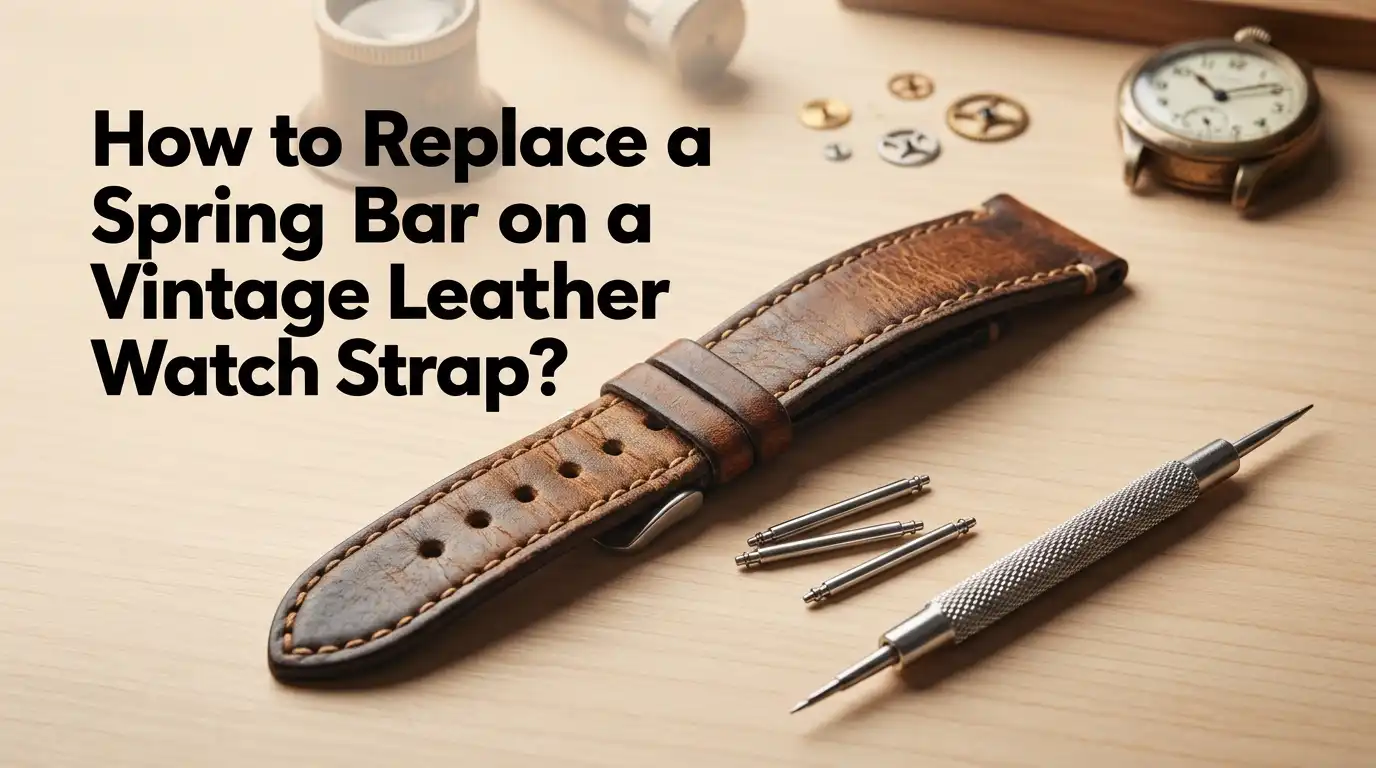
A spring bar tool is the most important item. The best ones have a forked end on one side for working with leather straps and a pin end on the other side for drilled lugs. This dual design covers most vintage watch configurations.
A soft cloth or microfiber towel protects your work surface. Place your watch face down on this cloth while you work on the spring bars. It prevents scratches on the crystal and case back.
Painter’s tape or masking tape is helpful for covering the inside of the lugs. This creates a barrier between your tool and the polished or brushed surfaces of your vintage case.
A small pair of tweezers helps you handle spring bars without dropping them. These tiny bars love to fly across the room when they pop free, so work over a contained area. A white towel or shallow tray works well as a catch surface.
How to Measure Your Spring Bar Correctly
Getting the right size spring bar is essential. An incorrect size can damage your lug holes or fail to hold your strap securely. Here is how to measure properly.
The two main measurements are length and diameter. Length refers to the distance between the insides of your watch lugs. Common lug widths for vintage watches are 16mm, 18mm, 19mm, 20mm, and 22mm. Use a digital caliper or a small ruler to measure this gap precisely.
The spring bar itself will be slightly longer than the lug width. A 20mm spring bar might measure about 22mm to 23mm at full extension. This extra length ensures the tips have enough reach to lock into the lug holes.
Diameter matters just as much as length. Most standard spring bars have a body diameter of 1.5mm, while heavier duty bars measure 1.8mm. Vintage watches with smaller lug holes often work best with 1.5mm bars. If the bar feels too tight going into the lug hole, do not force it. A friction fit can seize the bar in place and make future removal very difficult.
Types of Spring Bars Explained
Not all spring bars are the same. Understanding the different types helps you pick the right one for your vintage watch and leather strap combination.
Double flange spring bars are the most common and versatile type. They have two small raised ridges near each tip. These flanges allow a spring bar tool’s forked end to grip and compress the bar from behind the strap. Double flange bars work on both solid and drilled lugs, making them a safe default choice.
Double shoulder spring bars have smooth, straight tips without flanges. These bars are designed specifically for watches with drilled lugs. You push them in from the outside using the pin end of a spring bar tool through the small hole on the outer lug surface.
Quick release spring bars feature a small lever that lets you compress one tip with your fingertip. They require no tools at all for removal and installation.
Pros of quick release bars: fast strap changes, no risk of tool scratches, and great for people who rotate straps often. Cons: they may look less traditional on a vintage piece, and cheaper versions can have weaker springs. For a vintage leather strap, double flange bars are usually the best choice because they provide a very secure hold and work with all lug types.
How to Remove the Broken Spring Bar Safely
Removing a broken spring bar requires patience, especially on a vintage watch. Rushing this step is the most common way people scratch their cases. Follow this process carefully.
Step 1: Place your watch face down on a soft cloth. Make sure the cloth is clean and free of debris that could scratch the crystal.
Step 2: Apply small strips of tape along the inner sides of the lugs. This protects the case finish from accidental contact with your tool.
Step 3: Take your spring bar tool and position the wider forked end between the leather strap and the inside of the lug. Slide the fork under the strap until it catches on the spring bar’s flange.
Step 4: Gently press inward to compress the spring bar tip. Use your other hand to guide the strap away from the lug as the bar releases. Move slowly and keep a finger over the bar so it does not fly away.
If the spring bar is truly broken, one side may already be loose. In that case, carefully remove the loose end first. Then use the tool to compress and release the other side. Broken bars can have sharp edges, so handle them with care.
How to Install a New Spring Bar Step by Step
Installation is the reverse of removal, but it requires a steady hand and good alignment. Take your time with each step to avoid lug damage.
Step 1: Slide the new spring bar into the leather strap. Most leather straps have a small channel or holes on each end where the bar sits. Push the bar through so equal amounts stick out on both sides.
Step 2: Hold the strap at an angle to the watch case. Insert one tip of the spring bar into one lug hole first. Press it in firmly so it clicks into place.
Step 3: Use your spring bar tool to compress the other tip inward. While holding the tool against the bar, lower the strap into position and align the compressed tip with the opposite lug hole.
Step 4: Release the tool slowly. You should hear or feel a small click as the spring bar tip pops into the lug hole. Give the strap a firm tug to confirm it is locked on both sides.
Repeat this process for the other half of the strap. Always tug test both sides before putting the watch on your wrist. A bar that is not fully seated can release unexpectedly.
Can You Replace a Spring Bar Without a Tool
Yes, you can replace a spring bar without a dedicated tool, though it requires more caution. Several household items can work as substitutes in an emergency.
A small flat head screwdriver is the most popular alternative. Choose one with a very thin blade and use it the same way you would use the forked end of a spring bar tool. Position the blade between the strap and the lug, then push inward to compress the spring bar tip. The risk here is scratching the lug surface, so use tape generously.
Dental floss can remove a spring bar without touching the case at all. Thread the floss through the gap between the strap and the lug, loop it around the top of the spring bar, and pull downward. The downward force compresses the bar and releases it from the lug hole. This method works surprisingly well and leaves zero marks.
A thin razor blade can also substitute for a spring bar tool, but this option carries the highest risk of damage to both you and the watch. Handle it with extreme care.
Pros of DIY methods: no need to buy a tool, immediate fixes possible. Cons: higher risk of scratches, less control, and more time consuming. For a vintage watch with significant value, investing in a proper spring bar tool is always the better choice.
Common Mistakes to Avoid During Replacement
Even experienced watch enthusiasts make errors during spring bar replacement. Knowing these pitfalls ahead of time can save you from costly damage to your vintage piece.
Using the wrong size spring bar is the number one mistake. A bar that is too short will not reach both lug holes securely. A bar that is too long will not compress enough to fit. Always measure your lug width before purchasing replacement bars.
Forcing a spring bar with thick tips into small lug holes can damage the holes permanently. Vintage watch cases made from gold or plated brass are especially vulnerable. If the bar does not slide in smoothly, check the tip diameter.
Skipping the tape protection step leads to scratched lugs. One slip of a spring bar tool can leave a visible mark on polished metal. This damage is permanent on many vintage cases.
Reusing an old, worn spring bar is a false economy. Spring bars lose tension over time. A bar that still looks fine may have a weakened spring inside. Always install a fresh bar when you replace a strap.
Working over a hard surface means a dropped watch could crack its crystal. Always use a padded workspace.
How to Care for Your Vintage Leather Strap
A new spring bar deserves a well maintained strap. Vintage leather straps require a bit of attention to stay supple, comfortable, and long lasting.
Keep your leather strap dry whenever possible. Water is the biggest enemy of leather. If your strap gets wet, pat it dry with a soft cloth immediately and let it air dry away from direct heat. Never use a hair dryer or place it on a radiator.
Rotate between straps if you can. Giving your leather strap a day of rest between wears lets it release moisture and return to its natural shape. This simple habit can double the lifespan of a good leather strap.
Store your strap flat or gently curved. Folding a leather strap sharply can crack the surface over time. A watch roll or a soft pouch keeps the strap in good condition during storage.
Clean the strap occasionally with a damp cloth and a tiny amount of leather conditioner. This prevents drying and cracking, which can weaken the areas around the spring bar holes. A strap that cracks near the spring bar can fail just as easily as a broken bar itself.
When to Seek Professional Help
Sometimes a spring bar replacement is best left to a professional watchmaker. Knowing your limits protects your vintage watch from accidental damage.
If your watch has sealed or very tight lugs without drilled holes, a professional has the precision tools to work safely in that small space. Vintage cases with worn or oversized lug holes may need additional attention that goes beyond a simple spring bar swap.
Watches with significant monetary or sentimental value deserve extra caution. A watchmaker can assess the condition of your lugs, recommend the exact spring bar specifications, and install everything without leaving a mark.
If you have already tried to replace the bar and something feels wrong, stop and consult a professional. A spring bar that will not seat properly, a lug hole that seems too large, or a case that shows signs of stress all require expert evaluation.
Most watch repair shops charge a small fee for spring bar replacement. This cost is minimal compared to the expense of repairing scratched lugs or a damaged case on a vintage watch.
Preventive Tips to Avoid Future Spring Bar Failures
Prevention is always cheaper and easier than repair. A few simple habits can keep your spring bars healthy and your vintage watch secure on your wrist.
Replace your spring bars on a schedule. If you wear your watch daily, consider swapping the bars every 12 to 18 months. If you change straps frequently, replace them even more often because each compression weakens the internal spring slightly.
Buy quality spring bars from reputable watch parts suppliers. Cheap spring bars from unknown sources may use inferior steel that corrodes or loses tension quickly. Good spring bars cost very little but provide much greater reliability.
Avoid pulling or tugging on your strap during daily wear. The repeated lateral force can shift a spring bar out of alignment over time. Remove your watch by unclasping the buckle, not by pulling the strap over your hand.
Inspect your spring bars whenever you remove your strap. Look for rust, bending, or reduced spring tension. A bar that feels easy to compress by hand has likely lost its holding strength and should be replaced immediately.
Store spare spring bars with your watch. Keep two or three extras in your watch box so you always have a replacement ready when needed.
Frequently Asked Questions
What size spring bar do I need for my vintage watch?
Measure the distance between the inside edges of your watch lugs using a caliper or ruler. Common sizes are 18mm, 20mm, and 22mm. The bar diameter is usually 1.5mm for most standard watches. Always check the lug hole size to make sure the spring bar tips fit smoothly without forcing them in.
How often should I replace the spring bars on my watch?
A good rule is to replace spring bars every 12 to 18 months with regular daily wear. If you change straps frequently, the bars lose tension faster and may need replacement sooner. Always inspect the bars for rust, bending, or reduced spring force whenever you remove the strap from your watch.
Can I use quick release spring bars on a vintage watch?
Yes, quick release spring bars fit most standard lug widths and work fine on vintage watches. However, some vintage watch collectors prefer traditional double flange bars for a more authentic look and feel. Quick release bars are convenient for strap swapping but make sure the width and tip diameter match your specific watch.
What happens if I use the wrong size spring bar?
A spring bar that is too short can pop out of the lug holes unexpectedly, dropping your watch. A bar with tips that are too thick can get stuck inside the lug holes and become very difficult to remove. Tips that are too thin can cause the lug holes to wear and become oval shaped over time, creating a progressively worse fit.
Is it safe to replace a spring bar without a spring bar tool?
You can use a thin flat head screwdriver or dental floss as emergency alternatives. However, these methods carry a higher risk of scratching your watch case, especially on vintage pieces with soft metal finishes. A proper spring bar tool costs very little and gives you much better control and safety during the process.
How do I know if my spring bar is broken or just loose?
Remove the strap and examine the bar closely. A broken spring bar will have a visibly damaged or missing tip on one side. A loose bar will still look intact but may feel soft or easy to compress. Test the tension by pressing the tips. If they do not snap back firmly, the internal spring has weakened and the bar needs replacement.

Hi, I’m Lucy Jones, a dedicated watch enthusiast and reviewer. I spend my time hunting down, testing, and evaluating the most intriguing wristwatches on the market. My goal is to guide you through the overwhelming choices with honest, hands-on insights into every timepiece.