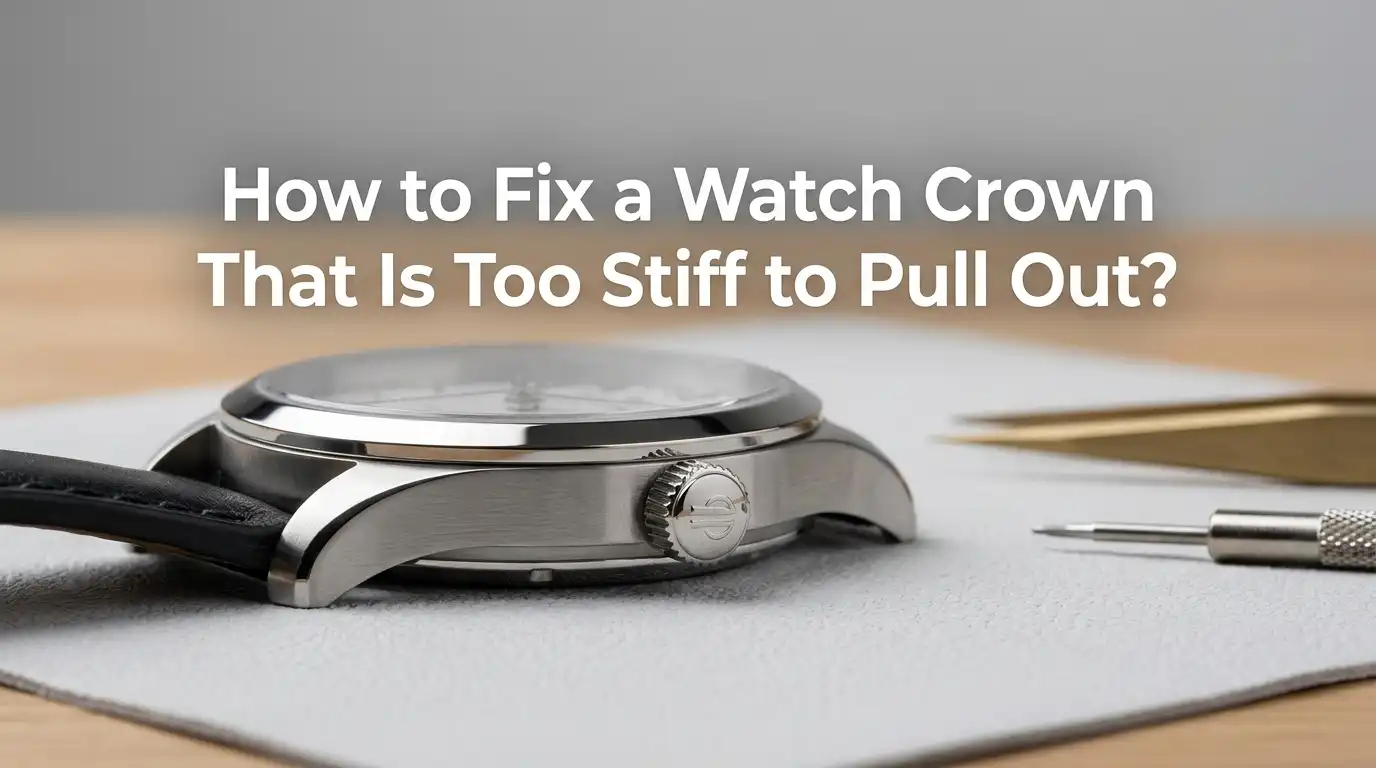
How to Fix a Watch Crown That Is Too Stiff to Pull Out?
A watch crown should feel firm, but it should not feel locked in place. If you have to pinch hard, twist with force, or stop because it feels wrong, your watch is telling you something.
The cause may be simple dirt around the crown. It may also be dried lubricant, worn seals, thread trouble, or rust starting inside the case.
The good news is that you can check several safe fixes at home before you risk damage. The key is to move slowly and use light pressure. A stiff crown often gets worse when people rush. A patient approach gives you a better chance of freeing it without harming the stem, crown, or movement.
Key Takeaways
- Check the crown type before doing anything else. Many watches use a screw down crown. That crown must be unscrewed before it can be pulled out. If you skip this step, you may think the crown is stuck when it is actually still locked. This is the first thing to rule out.
- Use gentle motion, not force. A light back and forth twist while pulling can help a snug crown move. A hard yank can bend the stem, strip threads, or harm the sealing parts. If resistance stays strong, stop and move to cleaning and inspection.
- Start with outside cleaning only. Dirt, sweat, and dried grime often collect around the crown and case opening. A soft cloth and a soft brush can remove surface buildup. This is low risk and often helps. It also lets you see if rust or moisture is present.
- Avoid random oils and sprays. Household oil can trap dirt and may damage seals or spread grime deeper inside the watch. A stiff crown is often a repair issue, not a spray issue. If cleaning from the outside does not help, inside service is usually the real fix.
- Watch for warning signs. Gritty motion, green residue, fog under the crystal, a crown that will not stay in, or a crown that feels loose can point to stem, tube, or water damage. These signs mean home fixes should stop.
- Know when a watchmaker is the best answer. If the crown stays stiff after safe cleaning and gentle testing, a professional service can clean, lubricate, replace seals, and check the stem and tube. That costs more than a quick home try, but it can prevent a much bigger repair later.
Understand Why a Watch Crown Gets Stiff
A stiff watch crown usually has a physical cause. Dirt can build up in the threads or around the crown tube. Old lubricant can dry out and turn sticky. Seals can age and drag against the stem. In some watches, the crown threads wear down or catch. If moisture got inside, rust can start and make the crown feel rough or stuck.
The feel of the crown gives you clues. If it feels gritty, dirt or rust may be present. If it feels tight but smooth, dried lubricant or seal friction may be the issue. If it moves a little but will not reach the setting position, the stem or keyless parts may be out of line.
This matters because the right fix depends on the cause. A simple cleaning can help surface grime. Internal rust or part damage needs repair. Do not guess and force it. A crown is small, but it connects to delicate parts inside the watch.
Confirm Whether Your Watch Has a Screw Down Crown
Before you try to pull the crown out, check if your watch uses a screw down crown. This type locks into the case to help water resistance. You cannot pull it straight out from the locked position. You must first turn it counterclockwise until it releases. After that, it should sit in its normal operating position and can then be pulled to the setting position.
This step solves many false alarms. People often think the crown is jammed when it is still threaded in. If your watch is a diver style or sport model, a screw down crown is very common.
Look closely at how the crown behaves. If it turns a few times and springs outward slightly, it is likely a screw down design. If it does not thread at all, it may be a push pull crown. Pros: This check is quick and safe. Cons: If the threads are dirty or damaged, even unscrewing can feel rough, so do not push past resistance.
Prepare the Watch and Your Hands Before You Try Anything
A clean setup lowers the risk of slips and scratches. Take the watch off your wrist. Dry your hands fully. If your fingers slip on the crown, wrap the crown lightly with a soft dry cloth for grip. Set the watch on a folded microfiber cloth so the case does not slide.
Good light helps more than people think. You can spot grime, green residue, or moisture near the crown. You can also tell whether the crown is sitting fully in, partly unscrewed, or slightly crooked. That saves guesswork.
Do not use pliers. Do not use a knife. Do not press random buttons on the movement side. Those actions create damage fast. If your watch has been in water recently, wait until the case is fully dry on the outside before touching the crown.
Pros: Preparation costs nothing and prevents mistakes. Cons: It will not fix the root problem by itself, but it makes every next step safer and more accurate.
Try the Gentle Twist and Pull Method
If the crown is not threaded down, try a gentle back and forth twist while pulling outward with light pressure. The goal is not to force the crown free. The goal is to help small internal parts line up while you apply a steady pull. Use your thumb and index finger only. If your hand starts to tense up, you are already using too much force.
Think small movement, not strong movement. Twist a little left, then a little right, while keeping a mild outward pull. Pause after a few seconds. If the crown moves out, stop at the first click and check whether it now turns normally.
This method can help when the crown is snug but not damaged. It is often useful on watches that have not been adjusted in a long time.
Pros: It is simple, tool free, and low risk when done gently. Cons: It will not solve corrosion, damaged threads, or bent stem parts. If the crown does not respond quickly, stop instead of repeating harder.
Clean the Crown Area From the Outside
Surface dirt is a common reason for a crown that feels sticky or hard to move. Wipe the case side and crown with a soft microfiber cloth. Then use a soft bristle brush, kept dry or only slightly damp, to clean around the base of the crown. Brush lightly to lift dirt from the gap where grime likes to collect.
Keep moisture under control. If your watch is not clearly water resistant, stay with a dry cloth and dry brush only. If it is water resistant and the crown is fully secured, a slightly damp cloth can help remove sweat and oil from the outside.
After cleaning, dry the area well and try the crown again. Sometimes the fix is that simple. Other times the crown improves a little, which still tells you surface grime was part of the issue.
Pros: This is one of the safest home methods and works well for dirt buildup. Cons: It only reaches the outside. Internal dried lubricant or rust will remain untouched.
Use Body Warmth and Patience Before Trying Again
Cold grime and stiff seals can feel worse than they are. Before your next attempt, hold the watch in your clean hand for a few minutes. Your body warmth can slightly soften old residue on the outer parts and make the crown feel less stubborn. Then try the crown again with the same gentle motion.
Do not use a hair dryer or hot water. Heat can damage seals, affect adhesives, and create moisture trouble. Mild warmth from your hand is enough. The point is to reduce stiffness a little, not to heat the watch.
This step helps most when the crown feels tight but not gritty. It is also a good pause that stops you from getting impatient. A short break often prevents the mistake that causes real damage.
Pros: This method is free, easy, and very low risk. Cons: The effect is mild. It will not fix thread damage, rust, or a bent stem. Still, it is safer than jumping to tools or lubricant.
Work the Crown in Short Motions if It Partly Moves
Sometimes a crown will unscrew and move slightly, but it will not fully pull to the setting click. In that case, use short, controlled motions. Pull lightly until you meet resistance, release, then repeat once or twice while rotating the crown a tiny amount. This can help if dried grime is making the action uneven.
Less is more here. If the crown gives you a first click, do not rush for the second. Test whether it turns smoothly in that position. If it still feels stiff, push it back in gently and stop for a moment.
This method works best for a crown that is sticky from lack of use. It does not work well for true mechanical damage.
Pros: It can free a crown that is only mildly stuck and gives you useful feedback. Cons: Repeating it too many times can wear parts or tempt you to use more force. If progress is tiny, move on instead of fighting it.
Avoid Household Oil, Spray Lubricant, and Heavy Force
A stiff crown makes people want a fast fix. The usual bad idea is oil. Another bad idea is spray lubricant. These products seem helpful, but they can carry dirt deeper into the watch, affect seals, and leave residue where you do not want it. In many cases, they hide the problem for a short time and make later service harder.
Force is even riskier. A crown sits on a thin stem. That stem connects to parts that control winding and setting. If you yank hard, you can bend the stem, damage threads, or disturb the internal setting parts.
If you are not trained to open and service watches, keep lubrication off your home fix list. Surface cleaning is fair. Internal oil is not. Pros: Skipping oil avoids extra damage and keeps the watch cleaner for proper repair. Cons: It means accepting that some crowns need a real service rather than a quick home shortcut.
Check for Moisture, Rust, or Green Residue
A stiff crown can be your first warning that water got in. Look for fog under the crystal. Check the crown area for rust color, green residue, or chalky buildup. Smell can also tell you something. A musty odor after water exposure can signal trapped moisture around the seals or inside the case.
These signs change the plan right away. If moisture or corrosion is present, stop all home adjustment attempts. Every extra movement can grind rust deeper into moving parts. Dry the outside of the watch and keep the crown secured if possible.
This is no longer a simple stuck crown problem. It becomes a moisture control and repair problem. The watch may need new seals, a stem check, crown tube work, and internal cleaning.
Pros: A visual check is fast and can save the movement from worse harm. Cons: It does not fix anything, and rust can exist inside even if the outside looks normal. If you suspect water damage, act early.
Do Not Remove the Stem or Open the Case at Home
Many people search for a stem release button and think they can remove the crown assembly in a few minutes. That is risky. The release point differs by movement, and pressing the wrong area can damage the setting mechanism. Opening the case also exposes the watch to dust, lint, and finger oils. If the gasket is old, sealing it again correctly may also be a problem.
A stuck crown is not a good beginner repair. It looks simple from the outside, but the inside parts are small and easy to upset. Even if you manage to remove the stem, putting everything back right is another job.
Leave internal disassembly to a watchmaker unless you already repair watches. Pros: Avoiding home disassembly protects the movement and seals. Cons: You may not get an instant answer, but you greatly lower the chance of turning a small issue into a larger repair.
Learn the Signs of Stem, Crown, or Tube Damage
Some crown problems are not about dirt at all. They are part failure. If the crown feels loose from side to side, the tube may be worn. If the crown will not stay pushed in, the stem or setting parts may be damaged. If the crown threads feel rough every time you screw them down, the crown or case tube threads may be stripped or dirty. If the crown pulls out too far or feels crooked, the stem may be bent.
These signs point past cleaning. A damaged crown system rarely improves with repeated home tries. It usually gets worse over time, especially if water resistance is already weak.
Once you notice looseness, gritty threading, or failure to stay seated, stop forcing the watch into daily use. A crown that does not seal well can let in moisture even during normal wear. That turns a small repair into a movement service.
Know When Professional Repair Is the Smartest Fix
If the crown is still stiff after safe checks and outside cleaning, professional repair is the next move. A watchmaker can remove the stem, inspect the crown and tube, clean the setting parts, replace seals, and lubricate the correct points. If threads are damaged, they can replace the crown, stem, or tube instead of guessing around the issue.
This is often the cheapest long term choice. A small crown repair is usually far easier than repairing rust, a broken stem, or damaged setting parts. A professional can also pressure test the watch if water resistance matters to you.
Pros: You get the real cause, the right fix, and a better chance of keeping water resistance. Cons: It costs more than a home try and may take a few days. Still, once force and surface cleaning fail, repair is the safer path.
Prevent the Problem From Coming Back
A crown lasts longer when you treat it gently. Clean the outside of your watch every few weeks with a soft cloth. If dirt collects around the case, use a soft brush on the exterior. Always make sure the crown is pushed in, or screwed down if your watch uses that system, after you finish setting the time.
Use the crown with calm hands. Quick, rough adjustments wear threads and seals faster. Try not to set the watch while walking, driving, or rushing out the door. Small slips happen more often then.
Keep the watch dry if the seal condition is unknown. If you wear the watch often, plan regular service based on the maker’s guidance and your use. A serviced watch crown usually feels smooth, even, and secure. That smooth feel is the best prevention.
FAQs
Can I use WD 40 or cooking oil on a stiff watch crown?
No. These products are poor choices for a watch crown. They can trap dirt, affect seals, and move grime deeper inside the case. A watch crown needs the right service, not a random liquid. If surface cleaning and gentle motion do not help, a watchmaker is the safer answer.
Why does my crown unscrew but still not pull out?
The crown may be sticky from dried grime, seal drag, or lack of use. It may also point to a stem or setting part issue. Try a gentle back and forth twist with light pull after outside cleaning. If it still resists, stop before you bend something.
Is a stiff crown a sign of water damage?
It can be. If you see fog under the crystal, rust color, or green residue near the crown, water may have entered the case. That is a repair warning. Secure the crown if possible, avoid more adjustment, and have the watch checked soon.
How much force is too much for pulling a watch crown?
If your fingers tense up, the watch slips in your hand, or you feel tempted to grab tools, you are using too much force. A normal crown should respond to light finger pressure. A crown that needs a hard pull usually needs a safer method or a professional repair.
Should I keep wearing the watch if the crown feels stiff?
That depends on the symptoms. If the crown is only a little snug and otherwise works, you can pause use until you clean and test it. If the crown feels gritty, loose, wet, or hard to secure, stop wearing it. A poor seal can let in more moisture and dirt.

Hi, I’m Lucy Jones, a dedicated watch enthusiast and reviewer. I spend my time hunting down, testing, and evaluating the most intriguing wristwatches on the market. My goal is to guide you through the overwhelming choices with honest, hands-on insights into every timepiece.