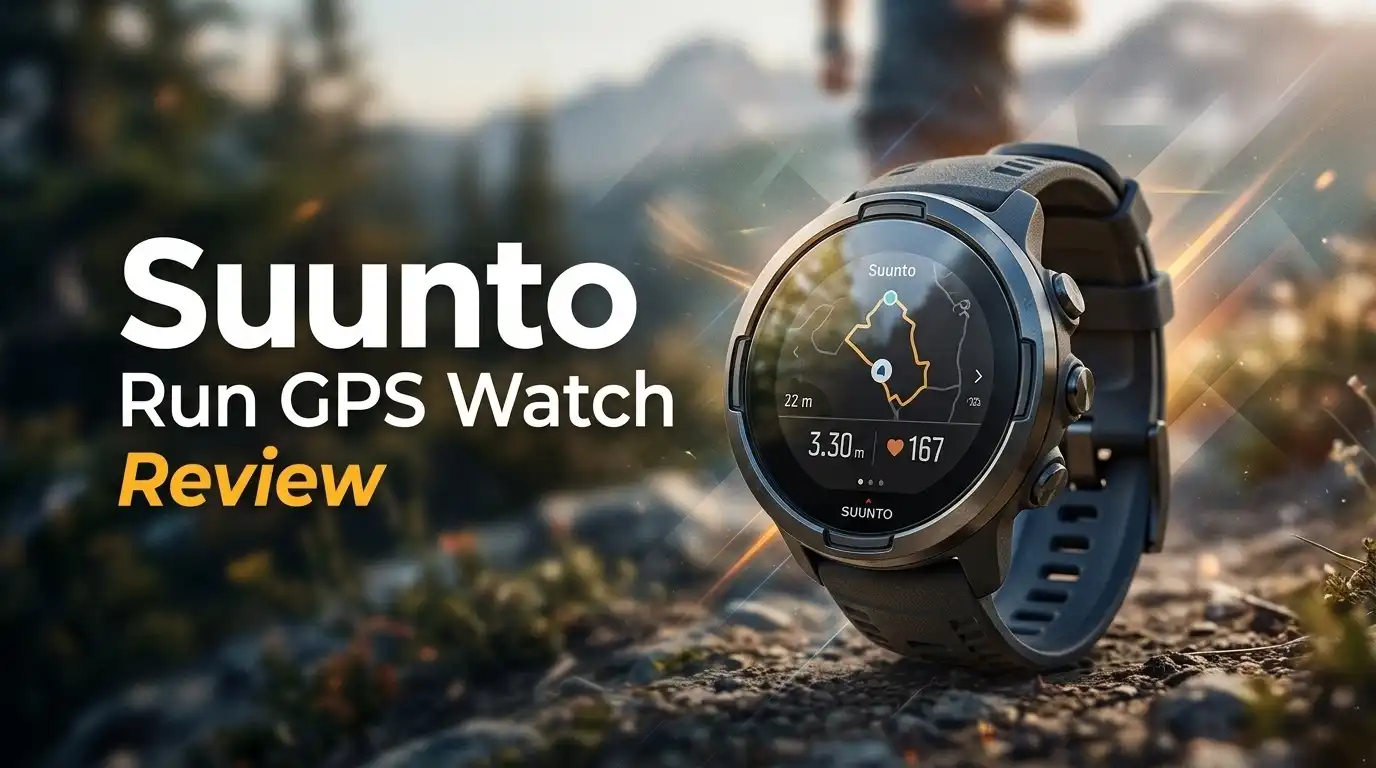
Suunto Run GPS Watch Review 2026: Still Worth It?
Running watches keep getting more expensive every year. The Suunto Run went the other way. It landed at around 249 dollars, packed a dual frequency GPS chipset inside, and asked serious questions of brands charging twice as much.
Now that the watch has lived through several firmware updates and a full year of real training, the picture is clearer.
This review covers what the Suunto Run gets right, where it stumbles, and whether it deserves your money in 2026. No marketing talk. Just how the watch behaves on roads, tracks, trails and sleepy Sunday mornings.
In a Nutshell:
- The price is the headline. The Suunto Run sits near 249 dollars, and it often drops lower during sales. You get a 1.32 inch AMOLED screen, a stainless steel bezel, and a dual frequency GPS chipset. Watches with that spec sheet usually cost 350 dollars or more.
- GPS accuracy is genuinely excellent. Tree cover, cliff edges and city blocks barely bother it. Distance and pace stay consistent run after run, which is the one thing a running watch must get right.
- The wrist heart rate sensor is the weak spot. Steady runs look fine. Hard intervals, downhill cycling and indoor trainer sessions show wobble. Pair a chest strap if your training depends on precise heart rate data.
- Battery life is good but not class leading. Expect roughly four to five days of real use with daily workouts and the always on screen enabled. Turn gesture wake on and you will stretch past a week. GPS training time sits around 20 hours at full accuracy.
- It skips offline maps and the SuuntoPlus app store. Breadcrumb route navigation works well, but trail runners who want topographic maps need to look at the Race S instead.
- Weight is a quiet superpower. At roughly 36 grams with the fabric strap, you forget it is there during long runs.
Suunto Run GPS Watch

Last update on 2026-11-12 / Affiliate links / Images from Amazon Product Advertising API
The Suunto Run is a running first sports watch built around a 1.32 inch AMOLED touchscreen with 466 by 466 resolution. It weighs about 36 grams with the fabric strap and measures 11.5mm thick.
Three physical controls handle everything, including a digital crown that clicks with real satisfaction. Suunto gave it 34 sport profiles, 4GB of music storage, and a dual frequency GNSS chipset that normally shows up on pricier hardware.
This is not a shrunken adventure watch. Suunto built it for people who run, then added enough swimming, cycling and gym profiles to cover the rest of the week.
The stainless steel bezel keeps it from feeling cheap. The software runs on a newer platform than other Suunto models, which explains both its speed and a few of its gaps.
The Unboxing Experience
The box is small and sensible. Lift the lid and the watch sits face up in a cardboard tray, already looking lighter than you expected. Underneath you find paperwork, the charging cable, and a genuinely nice surprise.
Suunto includes two strap sizes in the box. One shorter band and one longer band, so almost any wrist gets a clean fit without buying extras. Very few brands bother with this at any price.
The charging cable is where goodwill fades. It uses USB C on one end and a magnetic puck on the other. The magnet is weak. Nudge the watch on your desk and the cable falls off. It also only attaches in one orientation, and nothing on the puck tells you which one.
First boot takes about a minute. Pairing with the Suunto app went smoothly on both iPhone and Android during testing.
Design and Comfort on the Wrist
The Suunto Run disappears on your arm. That is the best compliment you can give a running watch. At 36 grams it sits lighter than most competitors, and the fabric strap breathes well in heat. Sweat does not pool under the sensor the way it does with thick silicone bands.
The 11.5mm case profile keeps it from catching on sleeves. Side sleepers will not wake up with a dent in their wrist. The stainless steel bezel adds a premium edge that plastic cased rivals cannot match.
One honest warning. That bezel scratches. A single knock against a wall or pavement leaves a visible mark. The screen held up better than the metal during testing. A thin screen protector is cheap insurance if you work with your hands or climb.
Color options cover black, orange and a few softer tones. All look fine off the trail.
Top 3 Alternative for Suunto Run

Last update on 2026-11-11 / Affiliate links / Images from Amazon Product Advertising API
Garmin Forerunner 165

Last update on 2026-11-11 / Affiliate links / Images from Amazon Product Advertising API
COROS PACE 3

Last update on 2026-11-12 / Affiliate links / Images from Amazon Product Advertising API
Polar Pacer Pro
Display and Everyday Smartwatch Use
The AMOLED panel is the star of daily life. Colors pop, text stays sharp, and direct sunlight does not wash it out. Touch response feels fluid, closer to a mainstream smartwatch than a traditional sports watch.
You choose between always on display and gesture wake. Always on looks better and costs battery. The wrist raise detection is quick during normal days but slightly slow mid run, which is mildly annoying when you want a split at speed.
Widgets scroll below the watch face. Here Suunto made two odd choices. The control panel always sits first and cannot be moved. You also only get six pinned widgets, which fills up fast.
Phone notifications arrive, but the implementation is thin. Messages often appear without showing who sent them, and emoji support is patchy. Buy this for running, not for notifications.
GPS Accuracy on Road, Trail and Track
This is where the Suunto Run earns its reputation. The dual frequency chipset locks on in seconds and holds the line in places that usually confuse budget watches. Dense forest, canyon walls and tall buildings produced clean tracks during testing.
Pace stability deserves special mention. Instant pace settles quickly instead of bouncing between wild numbers, which matters enormously during interval work.
Track mode is a welcome addition. You pick your lane, run two calibration laps, and the watch locks distance to the oval. After calibration, 400m splits line up almost perfectly. The traced shape of the track can look slightly skewed on the map, but the distances themselves are accurate.
Open water swimming is the one failure. GPS traces came out messy and unreliable. Pool swimming works fine. Triathletes should look elsewhere for swim data.
Heart Rate Accuracy and Where It Slips
Honest reviews talk about weaknesses, so here is the big one. The optical sensor on the Suunto Run is average.
Easy runs and steady efforts track well. Compared against a chest strap, the numbers stay close through most road sessions. Trail running results were also strong, matching reference sensors through climbs and descents.
Then the cracks appear. Hard intervals show lag at the start of each effort. Indoor trainer rides drifted away from the reference strap for no obvious reason. Downhill cycling, where vibration spikes and effort drops, produced the worst results.
The fix is simple. The watch supports external heart rate straps over Bluetooth. Pair one for key workouts and the data problem disappears entirely. Competitors at this price have caught up on sensor quality, and Suunto still has work to do here.
Battery Life in Real Training Weeks
Suunto quotes up to 12 days of daily use and 20 hours of training with full accuracy GPS. Lower power GPS modes stretch training time toward 40 hours.
Real numbers look different, as they always do. With the always on display active and roughly one hour of exercise per day, testing produced about four days per charge. Switch to gesture wake and you comfortably cross seven days.
For most runners this means charging once or twice a week. A marathon takes a small bite out of the battery. A long ultra at full GPS accuracy will not finish on one charge for slower runners.
Charging is fast, going from empty to full in roughly an hour. Just remember that floppy magnetic cable. Check that it actually connected before walking away.
Training Features and Recovery Tools
Suunto loaded this watch with more coaching than the price suggests. You get training load numbers including CTL, TSB and TSS, plus a consolidated recovery widget that blends sleep, heart rate variability and training balance into one score.
Structured workouts sync from the Suunto app. Build intervals on your phone, send them over, and the watch guides each step with vibration alerts. Marathon mode predicts your finish time while you race, which is either motivating or cruel depending on the day.
Smaller touches add up. A metronome helps cadence work. Hydration and nutrition reminders fire during long efforts. Voice feedback plays straight to your headphones without needing your phone.
One irritation remains. Training load resets every Monday morning, so a huge Sunday long run vanishes from the view that should warn you about fatigue.
Offline Music and Headphone Pairing
The Suunto Run includes 4GB of storage for offline music. Plug it into a computer and it appears as a normal USB drive. Drag MP3 files across. No clunky transfer software required, which beats several bigger brands.
Bluetooth headphone pairing worked first time with mainstream earbuds during testing. Audio quality is fine and the connection held steady across long runs.
Here is the catch. This only plays your own MP3 files. There is no Spotify, no Apple Music, no Amazon Music, and no podcast support. In 2026, very few runners keep an MP3 library.
Playlist management inside the app is also clumsy. Folders are ignored and tracks list in no sensible order. Treat offline music as a bonus feature, not a reason to buy.
Navigation Without Offline Maps
The Suunto Run follows routes, but it does not display maps. You get a breadcrumb line, a direction arrow, distance remaining and off course alerts.
Building routes is easy. Draw one in the Suunto app, or import from Strava and Komoot, then sync it across. For road running and familiar trails, breadcrumb navigation is completely adequate.
The limitation shows up on unfamiliar mountain terrain. Without a map underneath, you cannot see which fork actually leads where. You only see that you drifted off the line.
One small frustration: routes do not sync automatically. You must toggle each one manually before it reaches the watch.
If maps matter to you, the Suunto Race S costs roughly 100 dollars more and includes full offline topographic mapping. That upgrade is worth considering for dedicated trail and ultra runners.
What the Suunto Run Does Not Do Well
Every review should list the sore spots plainly, so here they are.
The optical heart rate sensor struggles during hard and variable efforts. Open water swim GPS is poor enough that regular swimmers should skip this watch. Notifications arrive incomplete, often without sender names.
There is no SuuntoPlus app store on this model. That removes TrainingPeaks workout syncing, ZoneSense and various community apps available on other Suunto watches.
The charging cable magnet is weak and the connection orientation is unclear. The widget system caps you at six items and forces the control panel into first place.
There is no WiFi, so all syncing runs through your phone. Some in run fonts use pale grey text that becomes invisible in bright sunlight. None of these are deal breakers for a road runner, but you deserve to know before buying.
Pros and Cons of the Suunto Run
Pros
- Excellent dual frequency GPS accuracy on road, trail and track, matching watches that cost far more
- Very light at roughly 36 grams, with a comfortable fabric strap and two strap sizes in the box
- Bright 1.32 inch AMOLED screen that stays readable in full sunlight
- Fluid software with crisp physical buttons and a responsive digital crown
- Strong training tools including training load, recovery scoring and structured workouts
- Two strap options, stainless steel bezel and a premium feel at a budget price
- Track running mode delivers precise lap distances after a short calibration
Cons
- Wrist heart rate accuracy falls behind rivals during intervals and cycling
- Open water swim tracking is unreliable
- No offline maps, only breadcrumb route navigation
- Offline music supports MP3 files only, with no streaming services
- Weak magnetic charging cable that detaches easily
- Phone notifications lack sender names and full detail
- No SuuntoPlus apps or direct TrainingPeaks workout sync
Who Should Buy the Suunto Run
Last update on 2026-11-12 / Affiliate links / Images from Amazon Product Advertising API
This watch suits a very specific runner, and it serves that person brilliantly.
Buy it if you mainly run on roads and tracks. Buy it if you want reliable GPS, honest pace data and real training metrics without spending 400 dollars. Buy it if screen quality and low weight matter to you.
It also works well for new runners stepping up from a basic fitness band. The interface is simple, the coaching tools are useful, and nothing feels overwhelming.
Skip it if you swim in open water regularly. Skip it if you need offline topographic maps for mountain adventures. Skip it if you refuse to wear a chest strap and demand perfect wrist heart rate during intervals.
Triathletes and ultra runners will outgrow it. Everyone else gets remarkable value.
Price and Value in 2026
The Suunto Run launched near 249 dollars and that remains its typical price. Sale periods push it noticeably lower, and discounts below 200 dollars appear often enough to wait for.
At that figure the value is hard to argue with. A dual frequency GPS chipset at this price was unheard of until recently. Add the AMOLED panel, steel bezel and full training metrics, and the package overdelivers.
Competitors have responded. The Garmin Forerunner 165 offers a stronger ecosystem and better heart rate accuracy. The COROS PACE 3 delivers far longer battery life. The Polar Pacer Pro brings excellent training guidance.
Suunto wins on screen quality, build feel and raw GPS performance. Choose based on which weakness you can live with, because every watch in this bracket makes a compromise somewhere.
Final Verdict
The Suunto Run is one of the smartest buys in running tech right now. It nails the fundamentals. Distance is accurate, pace is stable, the screen is beautiful, and the watch is so light you stop noticing it.
The compromises are real but predictable. You trade wrist heart rate precision, offline maps and swim tracking for a price that undercuts almost everything comparable.
Firmware updates have improved it since launch, including power meter support and various refinements. Suunto has treated this model seriously rather than abandoning it.
If you are a road or track runner hunting for a capable watch under 250 dollars, this belongs on your shortlist. Pair it with a chest strap for hard sessions and you have a setup that performs like gear costing twice the money.
Frequently Asked Questions
Is the Suunto Run waterproof?
Yes. It carries a 50m water resistance rating, so swimming and showering are fine. Pool swim tracking works well. Open water GPS tracking is the weak area, not the waterproofing itself.
How long does the Suunto Run battery last?
Suunto claims up to 12 days of daily use and 20 hours of full accuracy GPS training. Real world use with the always on screen and daily workouts delivers roughly four to five days. Gesture wake mode pushes that past a week.
Does the Suunto Run have offline maps?
No. It offers breadcrumb route navigation with off course alerts, but no topographic map display. The Suunto Race S adds full offline maps for about 100 dollars more.
Can the Suunto Run play Spotify?
No. It stores 4GB of your own MP3 files and plays them through Bluetooth headphones. No streaming service support exists on this model.
Is the heart rate monitor accurate?
For steady runs, yes. For hard intervals, indoor cycling and downhill efforts, accuracy drops. Pairing an external Bluetooth chest strap solves this completely.
Does the Suunto Run work with Strava?
Yes. Activities sync automatically through the Suunto app to Strava. You can also import Strava routes into the watch for navigation.
Is the Suunto Run good for beginners?
Yes. The interface is simple, the price is reasonable, and the training guidance is helpful without being overwhelming. It is one of the friendliest entry points into serious running watches.

Hi, I’m Lucy Jones, a dedicated watch enthusiast and reviewer. I spend my time hunting down, testing, and evaluating the most intriguing wristwatches on the market. My goal is to guide you through the overwhelming choices with honest, hands-on insights into every timepiece.