Google Pixel Watch 2 Review 2026: Worth It?
The Google Pixel Watch 2 has quietly become one of the most interesting bargains in the smartwatch market. It launched back in October 2023 as Google’s second attempt at a wearable.
Now, in 2026, the price has dropped hard while the watch itself still works beautifully on your wrist. That combination raises an honest question. Should you spend your money on a watch that is three generations old, or does age finally catch up with it?
I wore this watch daily, slept with it, swam with it, and pushed its battery until it begged for the dock. This review covers what the Pixel Watch 2 still does brilliantly and where it falls short in 2026. No fluff, no marketing talk, just the real picture before you tap buy.
In a Nutshell:
- The price is the main attraction. The Pixel Watch 2 now sells for a fraction of its original $349 launch price. You get a premium aluminum smartwatch for mid range money, which makes it one of the best value Wear OS devices available today.
- Battery life is genuinely good, but not great. Expect a full 24 hours with the always on display active. Heavy GPS workouts will cut that down. The fast charger refills the watch from empty to half in roughly 30 minutes.
- Fitbit health tracking is the real strength. The multi path heart rate sensor, the cEDA stress sensor, skin temperature readings, and sleep scores all work well. The data feels trustworthy during both rest and exercise.
- Software support officially ended in October 2026. Google guaranteed three years of Wear OS updates from launch. The watch still runs fine and receives security patches through its window, but new feature drops will slow down or stop.
- The 41mm size is the biggest limitation. There is no larger option. Anyone with big wrists or tired eyes may find the screen cramped compared to newer models.
- Buy it if you want cheap, polished Wear OS. Skip it if you need the brightest display, the longest battery, or many more years of updates.
What Is the Google Pixel Watch 2?

Last update on 2026-10-11 / Affiliate links / Images from Amazon Product Advertising API
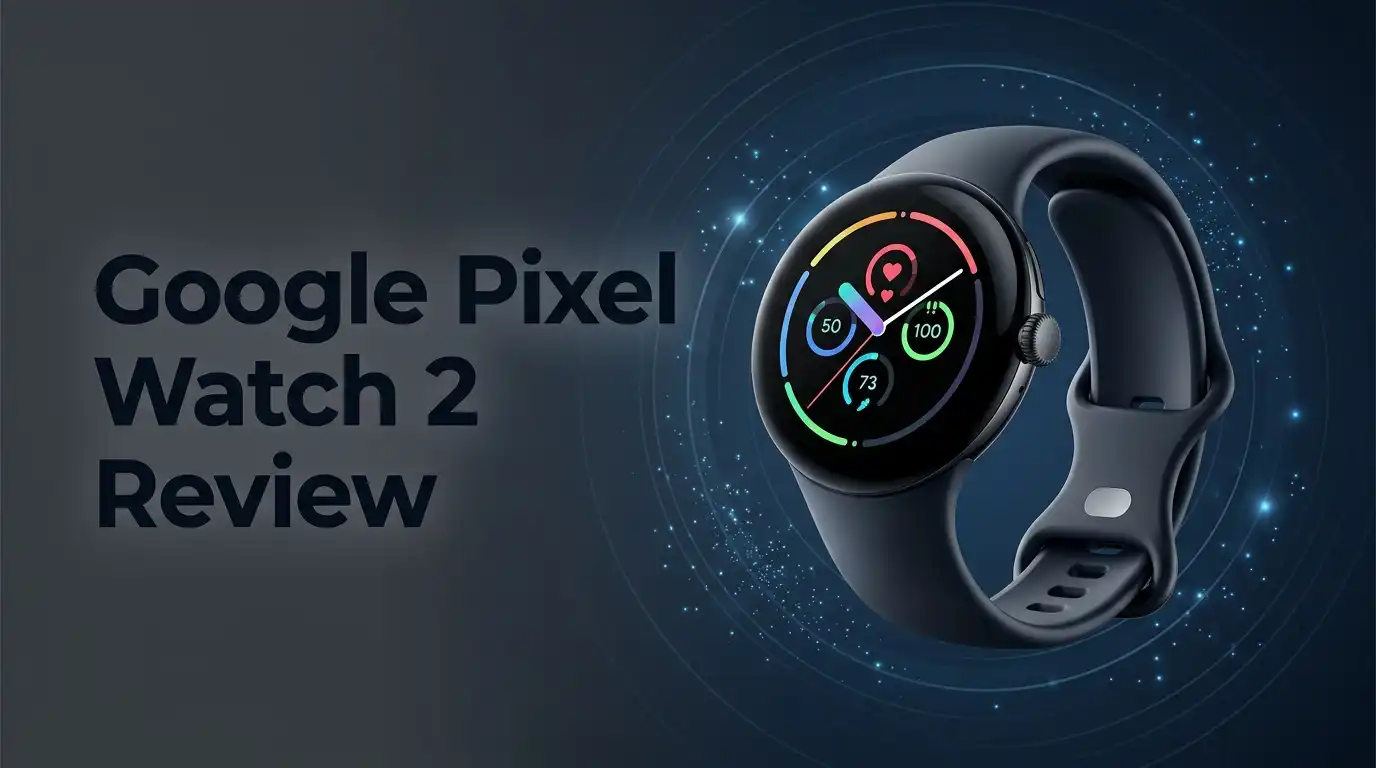
The Pixel Watch 2 is Google’s second generation Android smartwatch. It pairs Google software with Fitbit health tracking inside a smooth, domed aluminum case.
The watch runs on a Qualcomm Snapdragon W5 Gen 1 chip with a Cortex M33 co processor, backed by 2GB of RAM and 32GB of storage. The circular display measures 1.2 inches, pushes 384 x 384 pixels, and peaks around 1000 nits of brightness.
It only comes in one case size, 41mm, with Wi Fi or LTE versions. The design is deliberately minimal. There are no sharp corners, no chunky bezels, and no aggressive sports styling. Google aimed for a watch that looks like jewelry first and a gadget second. That restraint is exactly why the design still holds up in 2026.
The Unboxing Experience
Google keeps the packaging simple and clean. The box is small, white, and made from recycled material. Lifting the lid reveals the watch sitting face up in a molded tray, screen protected by a thin film. It looks expensive the moment you see it.
Underneath the tray you will find the magnetic pogo pin charging cable, a quick start leaflet, and a second band size. Google includes both small and large fluoroelastomer straps in the box, which is a thoughtful touch many brands skip. The band attachment uses a twist and click mechanism that feels fiddly on your first try.
My honest first impression was surprise at how light it feels. At 31 grams without the strap, the watch almost disappears on the wrist. Setup took about eight minutes through the Google Pixel Watch app on my phone.
Design and Build Quality
The Pixel Watch 2 keeps the rounded pebble shape that defines the whole lineup. The curved Gorilla Glass 5 front melts into the aluminum case with no visible seam. It is the sort of design that gets compliments from people who normally ignore smartwatches.
Google switched the rear housing to recycled aluminum on this model, down from stainless steel. That change makes the watch lighter and cooler against skin. The crown spins smoothly and clicks with a satisfying snap. A side button sits above it for the app drawer.
Water resistance is rated at 5ATM, so showers and pool swims are fine. Durability is average rather than tough. The domed glass sticks out, and it will collect scratches if you knock it against door frames. This is not a rugged watch, and Google never pretended otherwise.
Top 3 Alternative for Google Pixel Watch 2
If the Pixel Watch 2 does not fit your needs, these three are the strongest options to compare right now.
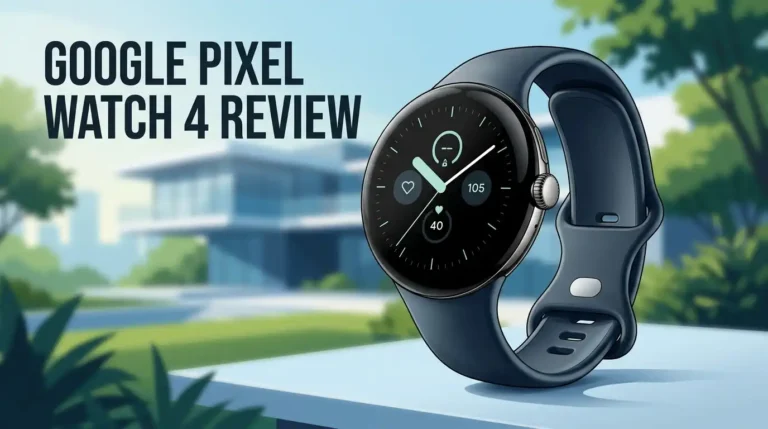
Google Pixel Watch 4 (41mm)

Last update on 2026-10-10 / Affiliate links / Images from Amazon Product Advertising API
Samsung Galaxy Watch 7 (40mm)
![Samsung Galaxy Watch 7 40mm Bluetooth AI Smartwatch w/Energy Score, Wellness Tips, Heart Rate Tracking, Sleep Monitor, Fitness Tracker, 2024, Cream [US Version, 1Yr Manufacturer Warranty]](https://smartwristvault.com/wp-content/plugins/aawp/public/image.php?url=YUhSMGNITTZMeTl0TG0xbFpHbGhMV0Z0WVhwdmJpNWpiMjB2YVcxaFoyVnpMMGt2TkRGTmIwRlpUR1pMYUV3dWFuQm58MTc5MTg4MDI1NA=)
Last update on 2026-10-11 / Affiliate links / Images from Amazon Product Advertising API
Apple Watch SE (2nd Gen)

Last update on 2026-10-11 / Affiliate links / Images from Amazon Product Advertising API
Display Quality in Daily Use
The 1.2 inch AMOLED panel produces deep blacks and punchy colors. Text looks crisp thanks to the 320 pixels per inch density. Watch faces with dark backgrounds blend into the bezel, which creates the illusion of an edge to edge screen.
Brightness is where age shows. The 1000 nit peak was competitive in 2023 but looks modest in 2026. Newer watches hit 2000 to 3000 nits. In direct summer sunlight, you will raise your wrist and squint. Indoors and at night, the screen is flawless.
The always on display dims to a low power state and keeps the time visible. Auto brightness responds quickly and rarely overshoots. The bezel around the panel is thicker than I would like, especially next to the newer domed displays. For reading notifications and checking stats, though, the screen does its job well.
Performance and Wear OS Software
The Snapdragon W5 Gen 1 chip is not new, but it handles Wear OS without stuttering. Apps open fast, swipes feel fluid, and the watch rarely pauses to think. The Cortex M33 co processor runs background sensor tasks so the main chip can sleep, which protects battery life.
Google Assistant responds in about two seconds. Tiles scroll smoothly. Google Maps, Wallet, Keep, and Calendar all run natively and sync instantly with an Android phone. Gemini features arrived through later updates and work on this model, though responses feel slower than on newer hardware.
The watch received Wear OS 4, then 5, and eventually the newer builds Google pushed to eligible devices. Official update support ended on October 1, 2026, exactly three years after launch. The watch keeps working normally, but you should not expect major new features going forward.
Battery Life and Charging Speed
Google promised 24 hours with the always on display enabled, and the watch actually delivers that. My typical day started at 7am and ended around 11pm with 20 to 30 percent remaining. That included notifications, a 40 minute outdoor run with GPS, and sleep tracking the night before.
GPS workouts are the biggest drain. A one hour run with LTE active can pull 15 percent. Turn off the always on display and you can stretch past 36 hours comfortably.
Charging is a highlight. The magnetic pogo pin dock replaced the slower inductive charger from the first generation. Empty to 50 percent takes about 30 minutes, and a full charge takes roughly 75 minutes. A quick top up while you shower keeps the watch alive through the night for sleep tracking. That workflow matters more than raw endurance.
Fitness Tracking and Fitbit Features
Fitbit powers everything health related here, and that integration is excellent. The watch tracks over 40 exercise modes, automatically detects walks and runs, and logs Active Zone Minutes instead of generic step goals.
Built in GPS locks on within 10 to 20 seconds outdoors. Distance readings tracked within about 2 percent of my phone across several runs. Pace data is steady rather than jumpy, which makes mid run glances useful.
Fitbit Premium unlocks the deeper insights, including the Daily Readiness Score and the full sleep breakdown. Google originally bundled six months free with the watch. The ongoing subscription cost is a genuine downside for anyone who hates recurring fees. Core tracking still works without Premium, so you are not locked out of the basics. Runners who want structured training plans will likely outgrow it.
Heart Rate and Stress Sensor Accuracy
The multi path heart rate sensor was the headline upgrade on this generation. It uses several LED paths and a machine learning model to filter out motion noise. In practice, the improvement is real.
During steady runs, readings matched my chest strap within two or three beats per minute. High intensity interval training is where it still lags. Sudden spikes take five to ten seconds to register, so sprint intervals show smoothed peaks rather than sharp ones.
The cEDA sensor measures tiny changes in skin conductance to detect stress responses. It nudges you with a Body Response alert when it spots a spike. The alerts are surprisingly accurate, though they cannot tell excitement from anxiety. A skin temperature sensor tracks nightly baselines, which helps spot illness or cycle changes early.
Sleep Tracking Quality
Sleep tracking is one of the strongest reasons to pick this watch. Fitbit has refined this for over a decade and it shows. The watch logs light, deep, and REM stages, plus restlessness, oxygen saturation, breathing rate, and skin temperature variation.
Each morning you get a Sleep Score out of 100 with a clear breakdown. The sleep stage detection matched my own sense of how rested I felt far more often than competing watches. It also catches naps automatically.
Comfort matters here, and the light 31 gram body makes overnight wear easy. I never woke up aware of it. The only friction is charging logistics, since 24 hour battery life means you must plan a daily top up. Build the habit of charging during your morning routine and sleep tracking becomes effortless.
Safety and Emergency Features
Google loaded this watch with safety tools that genuinely add peace of mind. Fall detection senses hard impacts and starts a countdown before calling emergency services. Emergency SOS triggers with a long press of the side button.
Safety Check lets you start a timer before a run or late walk home. If you do not confirm you are safe when it expires, the watch shares your location with chosen contacts. Emergency Sharing sends your live location to friends or family with one tap.
The LTE model takes this further. It can call emergency services without your phone nearby, which is the main argument for paying extra for cellular. Loss of Pulse Detection, a later Google feature, is not available on this model. For a watch at this price, the safety package remains impressive.
Pros and Cons
Pros
- Excellent price in 2026, often far below the original $349 launch cost
- Light, comfortable 31 gram design that stays unnoticed during sleep
- Accurate Fitbit health tracking covering heart rate, stress, temperature, and sleep
- Fast magnetic charging, with roughly 50 percent in 30 minutes
- Smooth Wear OS performance with deep Google app integration
- Strong safety suite including fall detection, Safety Check, and Emergency SOS
- 5ATM water resistance that handles swimming and showers
Cons
- Only one 41mm case size, which looks small on larger wrists
- Peak brightness of 1000 nits struggles under direct sunlight
- Official software update support ended in October 2026
- Battery lasts 24 hours, meaning daily charging is required
- Fitbit Premium subscription locks the most useful insights
- Thick display bezels compared to current models
- Protruding domed glass scratches more easily than flat designs
What the Pixel Watch 2 Does Not Do Well
Honest reviews name the weak spots, so here they are. The single 41mm size is the biggest flaw. Google did not offer a 45mm option until the next generation. If you have wrists above 7.5 inches, this watch will look undersized and the text will feel tight.
Battery anxiety is real for multi day travelers. You cannot leave the charger at home. There is also no onboard music storage flexibility beyond YouTube Music and Spotify downloads, which annoys people with local libraries.
Third party app selection on Wear OS remains thinner than watchOS. Serious athletes will miss advanced metrics like running power, training load, and route navigation that Garmin provides. Finally, the update window has closed. The watch is safe and functional today, but it will drift further behind each year.
Pixel Watch 2 vs Pixel Watch 4
The comparison is less lopsided than the three year gap suggests. The Pixel Watch 4 wins on raw numbers. It offers a brighter Actua 360 domed display, slimmer bezels, a 45mm size option, and up to 40 hours of battery life on the larger model. It also adds repairability and newer Gemini features.
The Pixel Watch 2 counters with price. You can often buy two Pixel Watch 2 units for the cost of one Pixel Watch 4. Core health tracking, GPS accuracy, and sleep scoring are close enough that most casual users will not notice a difference.
My simple rule is this. If battery life and screen brightness frustrate you, pay for the Watch 4. If you mainly want notifications, fitness data, and a handsome design, the Watch 2 saves you serious money.
Price and Value in 2026
This is where the Pixel Watch 2 shines. It launched at $349 for Wi Fi and $399 for LTE. Today you will find new and open box units for well under half that, and refurbished models for even less. Retailers clearing old stock push prices lower still.
At that level, the value equation changes completely. You are buying premium aluminum build quality, legitimate Fitbit health sensors, and polished Google software for budget tracker money. Few rivals at the same price offer that combination.
The counterpoint is lifespan. With updates finished, you are buying a device at the end of its official life. I would plan on two to three more years of comfortable use before replacement feels necessary. If the price is low enough, that math still works in your favor.
Who Should Buy the Pixel Watch 2?
This watch suits specific people very well. Android users who want a stylish smartwatch without spending much will love it. It pairs perfectly with Pixel and Samsung phones, delivers notifications reliably, and handles Google Wallet payments flawlessly.
It also works for anyone focused on health data rather than athletic performance. Casual walkers, gym goers, and people tracking stress or sleep get excellent information for the money. Smaller wrists benefit most from the compact 41mm case.
Skip it if you are a serious endurance athlete, an iPhone owner, or someone who hates charging devices daily. Also skip it if long term software support is a priority for you. Anyone who upgrades gadgets rarely should spend more on a newer model instead.
Final Verdict
The Google Pixel Watch 2 in 2026 is a smart purchase for the right buyer at the right price. It remains comfortable, attractive, and genuinely useful. The Fitbit sensors deliver trustworthy health data, the charging speed solves most battery complaints, and Wear OS still feels fast on this hardware.
The flaws are real, though. One size, a dim screen in sunlight, and a closed update window all count against it. Those limits are easy to accept when the price falls below half of what it once cost. They are harder to accept at full retail.
My recommendation is simple. Buy it as a bargain, not as a flagship. If you find a good deal, you are getting one of the best value Wear OS watches on the market.
Frequently Asked Questions
Is the Pixel Watch 2 still worth buying in 2026?
Yes, if the price is low. The watch performs well, tracks health accurately, and looks great. The main caution is that official Wear OS updates ended in October 2026, so treat it as a value buy rather than a long term investment.
How long does the Pixel Watch 2 battery actually last?
Expect around 24 hours with the always on display enabled. Turning that feature off can push you past 36 hours. GPS workouts and LTE use drain it faster. Charging from empty to 50 percent takes about 30 minutes.
Does the Pixel Watch 2 work with iPhone?
No. The Pixel Watch 2 requires an Android phone running Android 9.0 or newer. There is no iPhone support, and Google has never offered an iOS companion app for the Pixel Watch lineup.
Do I need Fitbit Premium with the Pixel Watch 2?
No, but it adds value. Basic tracking for steps, heart rate, sleep stages, and workouts works without a subscription. Premium unlocks the Daily Readiness Score, deeper sleep analysis, and guided programs.
Can I swim with the Pixel Watch 2?
Yes. The watch carries a 5ATM water resistance rating, so pool swimming and showering are fine. Avoid high pressure water jets, hot tubs, and saltwater without rinsing it afterward.
Does the Pixel Watch 2 come in a larger size?
No. Google only released the Pixel Watch 2 in a single 41mm case. Larger 45mm options arrived with the Pixel Watch 3 and continued in later generations.

Hi, I’m Lucy Jones, a dedicated watch enthusiast and reviewer. I spend my time hunting down, testing, and evaluating the most intriguing wristwatches on the market. My goal is to guide you through the overwhelming choices with honest, hands-on insights into every timepiece.