Bulova Archive Series Lunar Pilot Chronograph Review 2026
The Bulova Archive Series Lunar Pilot Chronograph carries a story almost no other affordable watch can claim. A prototype version of this watch went to the Moon on Apollo 15 in 1971, strapped to the wrist of Commander David Scott after his issued chronograph crystal popped off.
That single event turned a forgotten Bulova prototype into a legend, and the modern reissue lets you wear that story for a fraction of what a Swiss moonwatch costs.
This review covers the unboxing, the dial, the movement, the real weaknesses, and who should skip it entirely.
Key Takeaways:
- Real space history, real value. The Lunar Pilot reissue follows the 1971 Apollo 15 prototype closely, including the barrel case shape and the chronograph layout. You get genuine heritage without a four figure price tag.
- The 262 kHz Precisionist movement is the headline feature. It runs at eight times the frequency of standard quartz, which produces accuracy near ten seconds per year and a smooth sweeping chronograph seconds hand that fools people into thinking it is mechanical.
- Size is the biggest decision point. The classic 45mm version wears large with a 52mm lug to lug span. The newer 43.5mm version drops to roughly 13.2mm thick and a 51mm lug span, which suits most wrists far better.
- Build quality beats the price. Sapphire crystal, stainless steel case, screw back with engraving, and 50 meters of water resistance give it a solid tool watch feel.
- It is not perfect. The lume is weak, the pushers feel plasticky to some owners, dial and bezel alignment can be slightly off, and the watch is thick for a quartz piece.
- Street price matters more than list price. List figures look high, but real prices often land far lower, and that gap decides whether this watch is a bargain or an overpay.
Bulova Archive Series Lunar Pilot Chronograph: First Impressions


Last update on 2026-11-19 / Affiliate links / Images from Amazon Product Advertising API
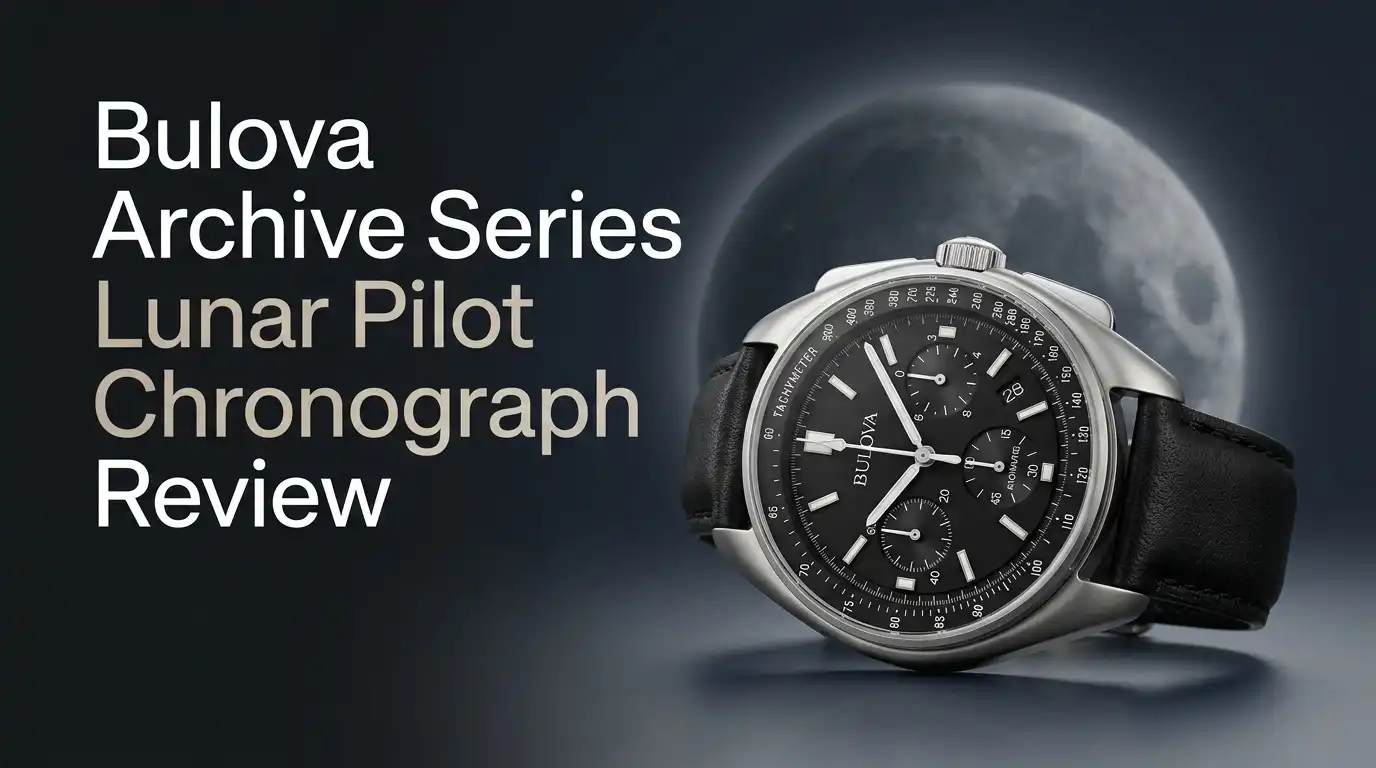
The Lunar Pilot makes an impression the second you pull it from the box. The case is wide, flat, and barrel shaped, with brushed surfaces that catch light in a soft way rather than flashing like polished steel.
It feels dense. The weight sits around what you expect from a full steel chronograph, which adds to the tool watch character.
The dial is where it wins people over. The three register layout is clean, the printing is crisp, and the subdials sit slightly recessed for depth. Nothing about it looks cheap in hand.
My first reaction was surprise that a quartz watch at this price felt this substantial. My second reaction was that it is tall, and that thickness becomes a talking point later in this review.
The Apollo 15 Story Behind the Design
Bulova built this watch because of a failure. During Apollo 15, Commander David Scott found his issued chronograph crystal had come loose, so he wore his personal Bulova prototype on the lunar surface instead.
That made Bulova the only other brand with a watch worn on the Moon. The original piece later sold at auction for over 1.5 million dollars, which pushed Bulova to revive the design.
The reissue keeps the dial layout, the case silhouette, and the mission inspired strap options. Bulova did not invent a story for marketing here.
The heritage is documented and verifiable, which is rare in a category full of homage watches pretending to have a past. That authenticity explains much of the enthusiasm around this model.
Unboxing Experience: What Arrives in the Box
The packaging feels considered. My version arrived in a wooden presentation box rather than the usual cardboard sleeve, and lifting the lid revealed the watch seated on a cushion with the manual and warranty card tucked underneath.
Some sets include both the steel bracelet and a secondary strap, which immediately doubles the look of the watch.
Peeling the protective film off the case back revealed the engraved lunar motif, and that moment is genuinely fun. The bracelet on my unit used a quick release system, so swapping straps took under a minute with no tools.
That single feature removes the usual frustration of spring bar fiddling. Setting the time took seconds because the crown pulls out smoothly with clear detents. The whole experience felt closer to a premium brand than a budget one.
Case Size, Thickness and Wrist Fit

Last update on 2026-11-19 / Affiliate links / Images from Amazon Product Advertising API
This section decides the purchase for many buyers. The original reissue measures 45mm wide, roughly 13.5mm thick, with a 52mm lug to lug span. That is large by any standard.
The newer version shrinks to 43.5mm with about 13.2mm of thickness and a 51mm lug span, which matches the original 1971 prototype more closely.
The flat case back and short lugs help more than the numbers suggest. The watch sits stable rather than rocking. Wrists under 6.75 inches will still feel the overhang on the 45mm model.
I would recommend the 43.5mm version to almost everyone unless you specifically want maximum presence. Thickness remains the honest complaint. A quartz chronograph this tall will catch on shirt cuffs.
Top 3 Alternatives for Bulova Lunar Pilot Chronograph

Last update on 2026-11-19 / Affiliate links / Images from Amazon Product Advertising API
Seiko Prospex Speedtimer Solar Chronograph

Last update on 2026-11-19 / Affiliate links / Images from Amazon Product Advertising API
Citizen Eco Drive Chronograph Watch

Last update on 2026-11-19 / Affiliate links / Images from Amazon Product Advertising API
Casio Edifice Chronograph Watch
Dial Design and Everyday Legibility
The dial uses a layered construction that adds subtle texture, and some versions apply a surface finish that mimics lunar terrain. Markers are applied and filled, not simply printed, which gives the face depth under angled light. The hands are wide, flat, and easy to read at a glance.
Legibility is excellent in daylight. The contrast between the matte dial and the bright hands means you read the time instantly, even while driving or walking. The minimal text keeps the layout clean, with only the brand name, the movement frequency, and the model designation present.
My one nitpick is that the chronograph minute register can be hard to parse quickly because the markings are small. The panda variants improve this slightly through stronger subdial contrast.
The 262 kHz Precisionist Movement Explained
Standard quartz oscillates at 32,768 cycles per second. The Precisionist movement inside the Lunar Pilot runs at 262,144 cycles per second, eight times faster.
That higher frequency delivers accuracy rated near ten seconds per year rather than per month, which places it ahead of most mechanical watches costing ten times more.
The practical benefit shows in the seconds hand. It sweeps in small smooth steps rather than ticking once per second, so the watch does not read as obviously quartz from across a table.
The chronograph measures in fractions of a second and runs to 60 minutes before stopping automatically to preserve battery life.
My unit gained under two seconds across several months of wear, which is remarkable consistency for any watch at any price.
Chronograph Function in Real Daily Use
The chronograph works through two pushers flanking the crown. Press the top pusher to start, press again to stop, and press the lower pusher to reset.
Resistance feels firm enough that accidental activation never happened during my testing, including while carrying bags or typing.
The 60 minute auto stop is a thoughtful touch because it prevents the movement from draining the battery when you forget to reset it. Timing anything longer than an hour is not possible, which matters if you planned to use it for long workouts or flights.
Reset snaps the hands back crisply. One known quirk is that the chronograph seconds hand sometimes fails to return exactly to zero, though the crown allows manual realignment with a short procedure from the manual.
Bracelet, Strap and Clasp Quality
The steel bracelet uses solid links with a butterfly clasp that closes flush and disappears under the wrist. It feels secure and comfortable once sized, though the butterfly design offers no micro adjustment, so you are locked into half link increments.
The nylon or leather strap options transform the watch. Fitting it on a fabric strap shaves visual bulk and nods to the original mission setup, which many owners prefer for daily wear.
The quick release spring bars make switching effortless, and that flexibility is one of the best things about owning this model. My honest criticism is that the clasp stamping feels a step behind the case finishing. It works well, but it does not feel as refined as the rest of the watch.
Lume Performance After Dark
Here the Lunar Pilot disappoints. The luminous material on the hands and markers charges slowly and fades quickly.
After a few minutes under bright light, you get a short period of readable glow, then the brightness drops off sharply. By the middle of the night, reading the time in a dark room becomes guesswork.
Owners discuss this openly in forums, and it is one of the few consistent complaints across every version of the watch. Dive watches at half the price outperform it here by a wide margin.
If you need reliable night legibility for work or travel, factor this in. For most buyers who check the time in lit environments, it will never become an issue, but calling the lume acceptable would be generous.
Water Resistance and Build Durability
The Lunar Pilot carries a 50 meter water resistance rating. That covers rain, hand washing, and accidental splashes. It does not cover swimming laps, diving, or high pressure water exposure.
The crown does not screw down, which explains the modest rating on a watch that otherwise looks rugged.
Sapphire crystal with antireflective coating protects the dial, and after months of wear mine showed no scratches despite several door frame encounters. The stainless steel screw back adds structural confidence and carries attractive engraving referencing the lunar mission.
The brushed case finish hides minor marks well, which suits a watch you intend to wear rather than display. For a chronograph in this bracket, the durability package is genuinely strong.
Battery Life, Warranty and Ownership Costs
The high frequency movement consumes more power than standard quartz, so battery life sits shorter than you might expect. Most owners report roughly two to three years between replacements, with some stretching to four.
Budget for a professional battery swap and gasket check rather than a kitchen table attempt, because the case back is screwed down and water resistance depends on proper resealing.
Bulova backs the watch with a three year limited warranty covering the movement, though batteries, straps, and crystals fall outside coverage.
Ownership costs remain low overall. No winding, no regulation, no five hundred dollar mechanical service. That is the quiet advantage of quartz, and it makes this watch easy to live with for a decade or more.
What the Lunar Pilot Does Not Do Well
Honest reviews name faults, so here they are. The watch is thick, and no amount of clever case design hides 13mm on a quartz chronograph.
The lume underperforms badly. Bezel and dial alignment can be slightly imperfect on individual units, and some owners notice the tachymeter markings not lining up exactly with the 12 position.
The pushers and crown feel slightly less premium than the case. The 50 meter rating limits water activity, and the butterfly clasp offers no on the fly sizing.
List prices also look inflated compared to real street prices, which creates confusion about actual value. None of these faults ruin the watch. All of them matter if you expect flawless execution at this price point.
Pros and Cons
Pros
- Genuine Apollo 15 heritage that no other affordable chronograph can match.
- 262 kHz Precisionist movement delivering accuracy near ten seconds per year.
- Smooth sweeping seconds hand that disguises the quartz movement beautifully.
- Sapphire crystal, solid steel case, and an engraved screw back.
- Quick release strap system that makes changing the look effortless.
- Excellent daylight legibility with a layered, textured dial.
- Three year warranty and low long term ownership costs.
Cons
- Weak lume that fades fast and disappoints at night.
- Thick case that catches on shirt cuffs.
- 45mm version wears too large for slim wrists.
- Only 50 meters of water resistance with no screw down crown.
- Occasional alignment imperfections on bezel and dial.
- Butterfly clasp lacks micro adjustment.
- Chronograph stops automatically at 60 minutes.
Price and Value in 2026
List prices for the Lunar Pilot look intimidating, often sitting high above what anyone actually pays. Real selling prices frequently land several hundred dollars lower, and sale events push them lower still. That gap defines the value conversation entirely.
At full list price, the competition gets interesting fast. At discounted street prices, almost nothing competes. You get sapphire, steel, space history, and the most accurate quartz movement in the price bracket.
My advice is to watch pricing for a few weeks before buying, because patience saves real money here. Anyone paying close to list should compare the Seiko and Citizen options carefully. Anyone catching a strong discount is getting one of the best value chronographs available.
Who Should Buy the Lunar Pilot
Buy this watch if you love space history and want a conversation piece that holds up to close inspection. Buy it if you want chronograph accuracy without mechanical servicing costs. Buy it if you enjoy swapping straps, because few watches change character so dramatically.
Skip it if you have a wrist under 6.5 inches and cannot find the 43.5mm version. Skip it if night legibility matters to your job. Skip it if you swim regularly or want a watch for water sports.
Skip it if thin and dressy describes your preferred style. This is a bold, chunky, purposeful watch with a story attached, and it appeals most to buyers who want exactly that.
Final Verdict
The Bulova Archive Series Lunar Pilot Chronograph remains one of the smartest buys in affordable watches in 2026. The movement accuracy is outstanding, the heritage is real, and the build quality punches above the price.
The smaller 43.5mm case solved the largest complaint about earlier versions and made the watch wearable for a much wider audience.
It is not flawless. The lume frustrates, the thickness persists, and small alignment issues appear on some units. Those faults are easy to forgive at the right price.
I enjoyed wearing it more than several watches costing considerably more, mostly because it feels like an object with purpose rather than a product. For buyers wanting moon history on a realistic budget, it still earns the recommendation.
Frequently Asked Questions
Did the Bulova Lunar Pilot really go to the Moon?
A prototype version did. Commander David Scott wore his personal Bulova chronograph during Apollo 15 after his issued watch suffered a crystal failure. The modern Archive Series recreates that prototype design closely, though the current model uses quartz rather than the original mechanical movement.
How accurate is the 262 kHz movement?
The Precisionist movement is rated near ten seconds of deviation per year. That is roughly eight times more precise than standard quartz and dramatically better than any mechanical chronograph in this price range. My test unit stayed within a couple of seconds over several months.
Which size should I choose?
Choose the 43.5mm version unless you specifically want a large watch. It measures closer to the original prototype, sits around 13.2mm thick, and spans roughly 51mm lug to lug. The 45mm version suits wrists above 7.25 inches far better.
Can I swim with the Lunar Pilot?
No. The 50 meter rating covers rain, hand washing, and splashes only. The crown does not screw down, so submersion is not advisable. Have the gaskets tested and resealed whenever the battery gets replaced to maintain the existing rating.
How often does the battery need replacing?
Expect roughly two to three years, sometimes longer. The high frequency movement draws more power than standard quartz. Use a professional service so the case back is resealed correctly and water resistance stays intact after the swap.
Is the lume good enough for night use?
Not really. The lume charges slowly and fades within a short period. It works briefly after bright light exposure but will not stay readable through the night. This is the most common complaint among owners and the watch’s clearest weakness.

Hi, I’m Lucy Jones, a dedicated watch enthusiast and reviewer. I spend my time hunting down, testing, and evaluating the most intriguing wristwatches on the market. My goal is to guide you through the overwhelming choices with honest, hands-on insights into every timepiece.