Polar Grit X Pro Review 2026: Still Worth It?
Outdoor watches get louder every year. Bigger screens. Brighter colors. More noise. The Polar Grit X Pro takes the opposite path. It sits quietly on your wrist, tracks your heart with real science behind it, and refuses to die on a long day in the mountains.
I wore this watch for weeks of trail runs, hikes, gym sessions, and ordinary office days. I wanted to know one thing. Does a 2021 watch still make sense in 2026, now that it sells for a fraction of its launch price?
The answer surprised me. This review covers the good parts, the weak parts, and the parts Polar would rather you skip over.
In a Nutshell:
- Build quality leads the class. Sapphire glass, a stainless steel bezel, and MIL STD 810G testing make this watch feel like gear, not jewelry. It survives rock scrapes that would leave marks on cheaper screens. Water resistance reaches 100 meters, so swimming and rain cause zero worry.
- Battery life handles ultra distances. Polar rates 40 hours of training with GPS and heart rate running together. Power save mode stretches that to roughly 100 hours. Daily smartwatch use lands near six or seven days. My real tests landed close to those numbers, which is rare.
- Navigation works, but there are no real maps. You get breadcrumb routes, elevation profiles, slope angles, and three ways back to your start point. You do not get full color topo maps on screen.
- Recovery tools are the quiet superpower. Nightly Recharge, Sleep Plus Stages, and Training Load Pro give clear daily guidance instead of vague scores.
- The price in 2026 changes everything. The watch launched at $499. It now sells far below that. At current street prices it becomes one of the best value outdoor watches you can buy.
- It is not for everyone. The MIP screen looks dull next to AMOLED rivals. The touchscreen lags. There is no music storage and no contactless payment.
Polar Grit X Pro: The Short Verdict

Last update on 2026-10-27 / Affiliate links / Images from Amazon Product Advertising API
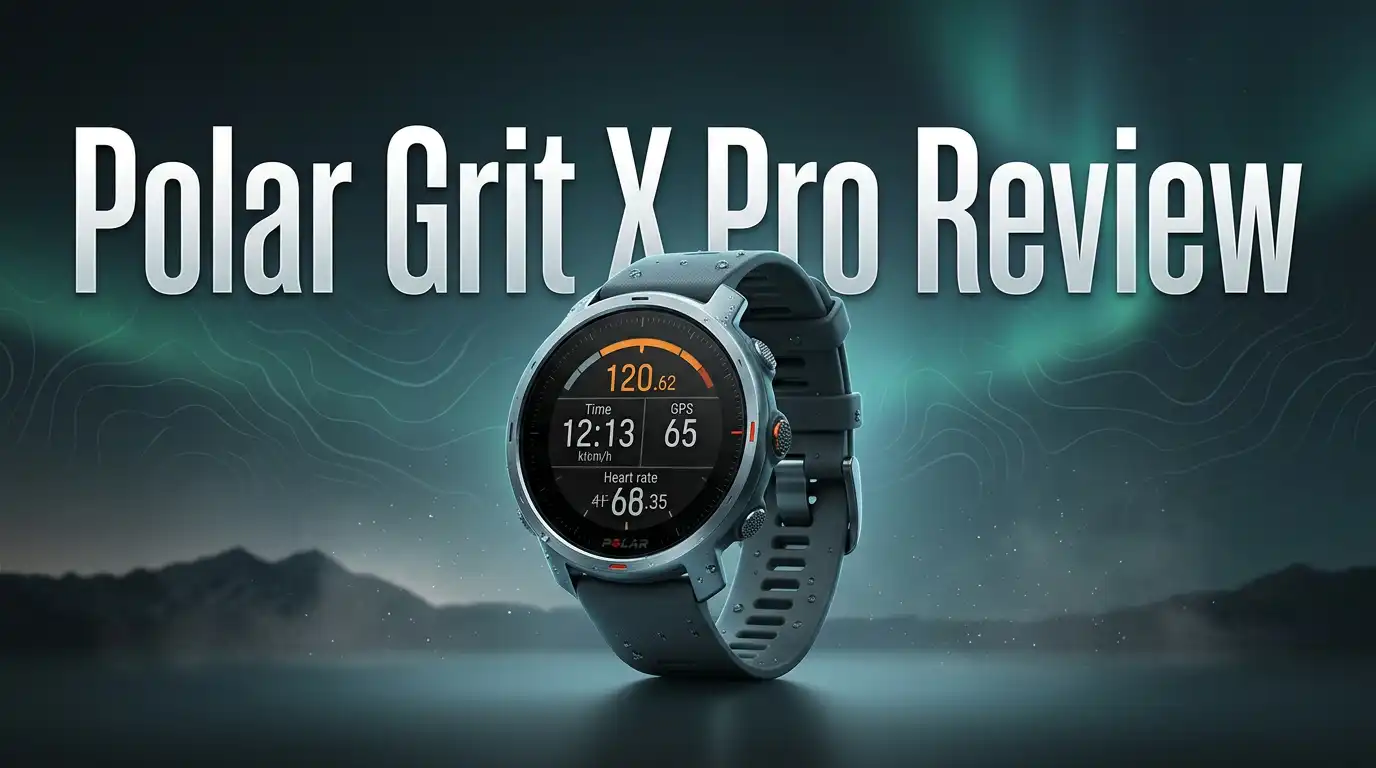
The Grit X Pro is a serious training tool wrapped in a rugged case. Polar built it for trail runners, hikers, and multisport athletes who care more about data quality than screen glitter.
The watch measures 47mm wide and 13mm thick. It weighs 79 grams with the silicone band, which sounds heavy but wears lighter than the number suggests.
What you get here is accuracy first, flash never. The heart rate sensor uses Polar Precision Prime, which blends optical readings with skin contact sensors to cut out motion noise. The GPS pulls from GPS, GLONASS, Galileo, and QZSS. The barometric altimeter tracks climbs honestly.
The main appeal in 2026 is simple. You pay mid range money for premium materials and training software that still beats most rivals on recovery guidance. That trade works for a specific kind of athlete.
Unboxing Experience: What Arrives in the Box
The box is small, white, and plain. Polar does not chase theater here. Lift the lid and the watch sits face up in a foam cradle, screen protected by a thin film. Under the cradle you find a folded quick start guide and the charging cable.
The cable is the first thing that annoys owners. It uses a proprietary clip with two small pins and a magnet free design. It attaches to the back of the case and holds firmly, though it only works in one orientation. Lose it on a trip and you cannot borrow a cable from a friend.
The silicone band feels soft and slightly tacky, in a good way. It grips skin without sweat slip. Pick up the watch for the first time and two things stand out. The bezel has real metal weight. The buttons click with a firm mechanical snap. It feels expensive in hand, which matters more than box art.
Design and Build Quality: Tough Where It Counts
Polar chose a polymer case with a stainless steel bezel and sapphire glass lens. That mix keeps weight down while protecting the parts that take hits. Sapphire ranks just under diamond for hardness. After weeks of rock scrambling and doorframe collisions, my lens showed no marks at all.
The watch passed several MIL STD 810G tests. Those cover drops, dust, humidity, salt fog, and temperature extremes. The stated operating range runs from 20 below zero to 50 degrees Celsius. Polar notes that battery performance drops below 10 below zero, which is honest labeling.
Five physical buttons surround the case. Two on the left, three on the right. You can run the entire watch with gloves on, which is the point. The raised sensor pod on the back pushes the optical reader into your skin without strapping the band painfully tight.
One honest note: the case is chunky. Smaller wrists will notice.
Top 3 Alternative for Polar Grit X Pro

Last update on 2026-10-28 / Affiliate links / Images from Amazon Product Advertising API
Garmin Instinct 2 Solar

Last update on 2026-10-27 / Affiliate links / Images from Amazon Product Advertising API
Suunto 9 Peak Pro

Last update on 2026-10-27 / Affiliate links / Images from Amazon Product Advertising API
COROS APEX 2 Pro
Display and Daily Use: Function Over Beauty
The screen is a 1.2 inch MIP panel at 240 by 240 pixels. MIP stands for memory in pixel. It reflects sunlight instead of fighting it, so the display gets more readable as conditions get brighter. On a bright summer ridge the screen looks perfect without a backlight.
Indoors tells a different story. Colors look washed and flat. Next to a modern AMOLED watch, the Grit X Pro looks like a calculator from 2008. That is the honest trade for battery life and sunlight performance.
Touch works for scrolling menus and panning route screens. It feels sluggish. Taps sometimes register late or not at all. I ended up using the buttons for almost everything, which worked fine. The wrist raise gesture for the backlight also misses more often than it should.
The display is a tool, not a showpiece.
Battery Life: How Long It Really Lasts
Polar lists 40 hours in performance training mode with full GPS and wrist heart rate active. Eco mode reaches roughly 100 hours. Watch mode with continuous heart rate tracking runs about six to seven days.
My results tracked close. A four hour trail run with GPS at one second recording and heart rate on pulled roughly 10 percent of the battery. That maths out near 40 hours. Switching GPS recording to lower rates and turning off the optical sensor pushed estimates past 90 hours, which covers a hundred mile race with margin.
Daily wear with sleep tracking, notifications, and one hour of training landed near six days. Charging from empty takes about two hours.
Cold weather costs you battery. A winter hike below freezing drained faster than the same effort in summer. Plan for that honestly. The 346 mAh cell still outlasts most AMOLED rivals by a wide margin.
GPS Accuracy on Real Trails
Satellite performance is solid, with a clear ceiling. The watch supports four satellite systems and uses assisted GPS for fast locks. Standing outside, my lock times averaged under 10 seconds once the cache was fresh.
Open terrain tracks look clean. Road runs, fields, and ridge lines plot almost perfectly against known distances. Tree cover tells a mixed story. Under dense canopy I saw mild corner cutting and occasional drift of a few meters. Switchbacks on steep forested climbs get smoothed rather than drawn exactly.
The important context is this. The Grit X Pro uses single frequency GPS. Newer rivals use dual frequency multiband chips that handle canyons and forests better. If you run technical forest trails constantly, newer hardware tracks tighter.
For general trail, hiking, and road use, accuracy is good enough that distance totals stay trustworthy.
Heart Rate Tracking: Precision Prime Tested
Polar built its name on heart rate accuracy, and the Grit X Pro protects that reputation. The Precision Prime sensor combines optical measurement with bone contact detection. When the watch senses the sensor lifting off skin, it adjusts rather than reporting nonsense.
Steady state running produced heart rate data within a few beats of my chest strap for the full session. Hiking, cycling, and rowing matched well too. This is one of the better optical sensors on any watch at this price.
Interval work exposes the limits. Hard sprint starts show a delay of five to fifteen seconds before the reading catches the real effort. Heavy strength training with gripping and wrist flexion produces the usual optical errors. Every wrist sensor shares these problems.
Pair a Polar H10 chest strap for interval days. The watch connects by Bluetooth instantly and the combination produces lab grade data.
Navigation Tools: Breadcrumbs, Not Maps
Navigation is where expectations need managing. The Grit X Pro shows route breadcrumbs, a compass arrow, distance to destination, and a live elevation profile. It does not show streets, contours, or terrain shading.
Routes come from komoot, which Polar bundles with free region access. Build a route in komoot, sync it to Polar Flow, and the watch delivers turn by turn prompts with voice style alerts. That system works well for planned hikes and rides.
Three return options genuinely help. Track Back retraces the path you actually walked. Reverse Route flips a planned course. Beeline points you straight home. I used Track Back after getting turned around on an unmarked forest junction and it worked exactly as advertised.
The outdoor dashboards round things out with altimeter, compass, coordinates, weather, and sunrise and sunset times. Useful, practical, and never flashy.
Training Features That Earn Their Place
Polar packs real sport science into this watch. Training Load Pro separates cardio load from muscle load and adds your own perceived effort rating. The result tells you whether you are building fitness, holding steady, or digging a hole.
Hill Splitter automatically detects every climb and descent using GPS speed and barometric altitude. After a trail run you see how many meters you climbed, how fast you covered each hill, and where you faded. Trail runners love this one.
FuelWise sends carbohydrate and drink reminders during long sessions based on your effort and duration. Set it before an ultra and it nags you at the right moments.
Wrist based running power works without a foot pod or chest strap. Over 130 sport profiles cover almost anything you do. Running performance tests and the cycling threshold test keep your zones honest over time.
Sleep and Recovery: The Quiet Strength
This part of the watch impressed me most. Sleep Plus Stages tracks light, deep, and REM sleep automatically and produces a Sleep Score out of 100. Nightly Recharge then measures how well your autonomic nervous system calmed down in the first hours of sleep.
Every morning you get a plain language status. Your body recovered well, or it did not, with a reason attached. The advice stays practical. Polar avoids turning recovery into a mystery number.
Serene adds guided breathing at six breaths per minute, which genuinely slows a racing mind before bed. The Leg Recovery Test checks whether your legs have bounce before a speed session, and it takes only a couple of minutes.
Recovery Pro and the Orthostatic Test unlock with an H10 strap. Serious athletes should budget for that accessory.
Polar Flow App and Platform Experience
Polar Flow comes in two parts, a phone app and a web service. The web version holds more depth, including sport profile editing, training planning, and long range progress charts. Syncing happens over Bluetooth and takes seconds.
Flow analyses data beautifully. You get clean graphs, training load history, sleep trends, and honest coaching text. Partner connections include Strava, TrainingPeaks, komoot, and MyFitnessPal. Setup takes a few taps in the partners menu.
The weak point is polish. The app design feels dated next to Garmin Connect or the COROS app. Some settings live only on the web service, which means opening a laptop for tasks that should be simple. New users will feel mildly lost for the first week.
The data quality still beats the interface awkwardness. Once you learn the layout, Flow becomes genuinely useful.
What the Polar Grit X Pro Does Not Do Well
Honest reviews list the gaps. Here are mine after weeks of wear.
There is no onboard music storage. You control your phone playlist and nothing more. There is no contactless payment, so leave your card in your pocket. No SpO2 sensor, no ECG, and no skin temperature reading, which newer watches include at similar prices.
The touchscreen lags often enough to frustrate. The wrist raise backlight misses. There is no full map display, only breadcrumbs. GPS uses single frequency, so dense forest and city canyons produce mild drift.
The case is large and the bezel is thick, which bothers slim wrists. The proprietary charger cannot be replaced on the road. Polar has also slowed feature updates now that the Grit X2 Pro carries the flagship role.
None of these break the watch. They do explain why the price fell.
Pros and Cons
Pros
- Sapphire glass and MIL STD 810G testing deliver durability that survives real abuse without a scratch on the lens.
- Battery life reaches 40 hours with full GPS and roughly 100 hours in power save mode, which covers ultra events comfortably.
- Precision Prime heart rate tracking stays close to chest strap data during steady efforts, which is unusual for a wrist sensor.
- Recovery tools give clear daily guidance through Nightly Recharge, Sleep Plus Stages, and Training Load Pro.
- Sunlight readability is excellent thanks to the MIP display that uses bright light instead of fighting it.
- Current 2026 pricing makes it a bargain compared to its original $499 launch cost.
Cons
- The MIP screen looks dull indoors and cannot compete with AMOLED rivals on visual appeal.
- No offline maps, only breadcrumb routes with elevation profiles.
- No music storage and no contactless payment, which limits daily smartwatch use.
- The touchscreen lags and the wrist raise gesture often fails to trigger.
- Single frequency GPS drifts under heavy tree cover and tall buildings.
- The proprietary charging cable has no easy replacement when you travel.
Polar Grit X Pro Titan: Worth the Upgrade?

Last update on 2026-10-27 / Affiliate links / Images from Amazon Product Advertising API
The Titan version swaps the stainless steel bezel for aerospace titanium and drops total weight to 53 grams with the perforated leather band. It also ships with two straps, leather and FKM, instead of one silicone band.
Everything else matches the standard model. Same sensor, same GPS chip, same display, same software, same battery. You pay purely for materials and comfort.
Is it worth it? If you wear the watch all day and night, yes. Titanium feels lighter on the wrist during sleep tracking, and the leather band dresses up for work. If you only strap the watch on for training, the standard version saves money with zero performance loss.
Titanium also resists corrosion better in salt water. Ocean swimmers and coastal hikers will notice that over several years.
Who Should Buy the Grit X Pro in 2026
This watch fits a clear profile. Trail runners, hikers, ultra athletes, and multisport trainers who value accurate heart rate data, honest recovery guidance, and a case that survives rocks. If you train outdoors and hate charging devices, the fit is excellent.
Skip it if you want offline topographic maps, music on your wrist, payment from your watch, or a bright AMOLED screen. The COROS APEX 2 Pro offers maps and longer battery. The Suunto 9 Peak Pro offers a slimmer case. The Garmin Instinct 2 Solar offers solar charging and a deeper app ecosystem.
Buy the Grit X Pro for its strengths, not as a do everything smartwatch. At 2026 prices, those strengths cost far less than they did at launch, which makes the value argument easy.
Frequently Asked Questions
Is the Polar Grit X Pro still worth buying in 2026?
Yes, for the right user. The hardware remains durable and the heart rate accuracy still competes with newer watches. The price has dropped well below its $499 launch figure, which creates strong value. You give up maps, AMOLED brightness, and dual frequency GPS to get there.
How long does the Polar Grit X Pro battery actually last?
Expect around 40 hours of training with GPS and wrist heart rate active. Power save settings stretch that near 100 hours. Daily use with sleep tracking and one workout per day lands near six days. Cold weather below freezing shortens these numbers noticeably.
Does the Polar Grit X Pro have maps?
No. It shows breadcrumb route lines, a compass, elevation profiles, and slope angles. It does not display streets, trails, or terrain shading. Routes come from komoot and sync through Polar Flow for turn by turn guidance.
Can you store music on the Polar Grit X Pro?
No. The watch controls playback on your phone only. You can play, pause, skip tracks, and adjust volume. You cannot load songs onto the watch or connect headphones directly to it.
Is the Grit X Pro accurate for heart rate during intervals?
It performs well in steady state training but lags during sharp interval starts. The reading typically catches up within five to fifteen seconds. Pair a Polar H10 chest strap for precise interval and strength training data.
What is the difference between Grit X Pro and Grit X2 Pro?
The Grit X2 Pro adds a 1.39 inch AMOLED touchscreen, offline color maps, a built in flashlight, SpO2 and ECG sensors, and dual frequency GPS. It also costs considerably more. The Grit X Pro keeps the MIP screen, longer training battery life, and a lower price.
Does the Polar Grit X Pro work with Strava?
Yes. Connect your accounts in the Polar Flow partners menu and workouts upload automatically after each sync. Polar also bundles trial access to Strava, komoot, and TrainingPeaks with the watch.

Hi, I’m Lucy Jones, a dedicated watch enthusiast and reviewer. I spend my time hunting down, testing, and evaluating the most intriguing wristwatches on the market. My goal is to guide you through the overwhelming choices with honest, hands-on insights into every timepiece.