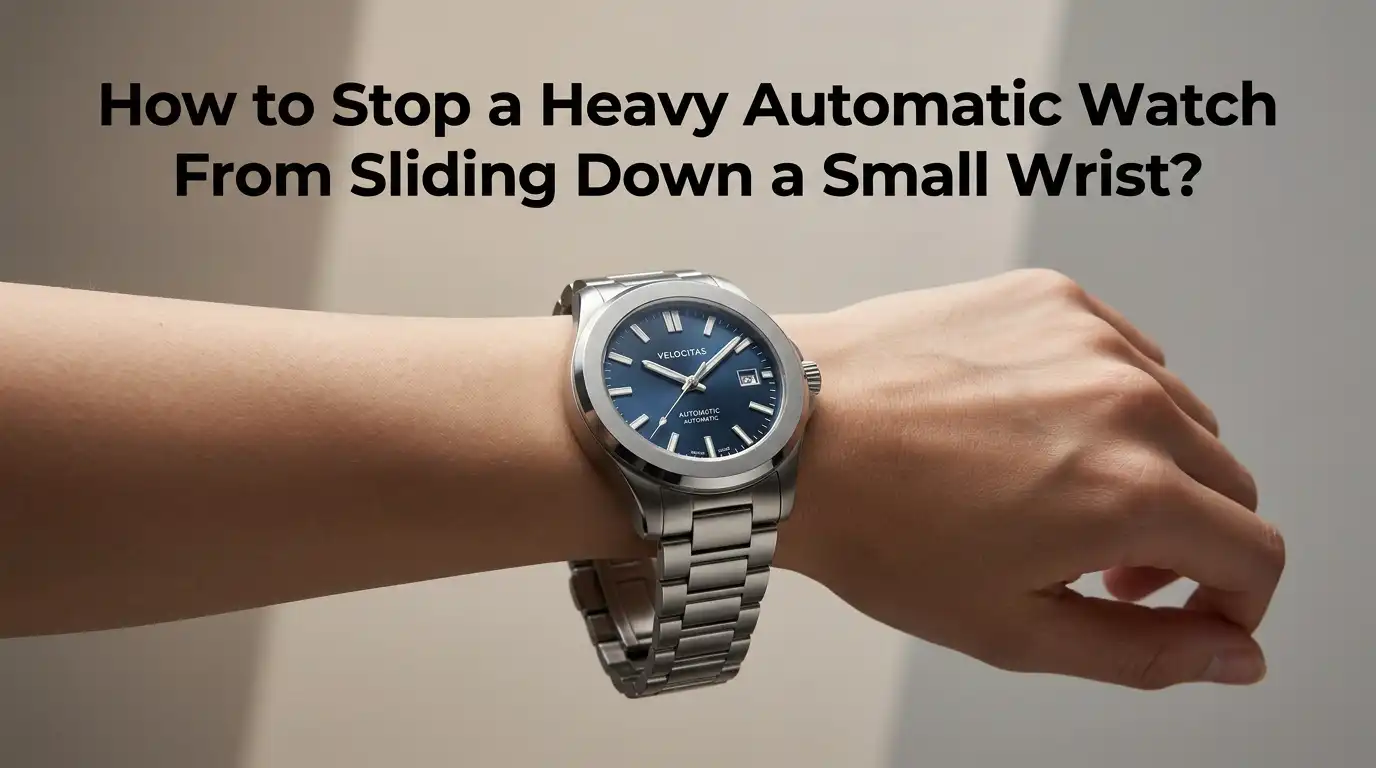
How to Stop a Heavy Automatic Watch From Sliding Down a Small Wrist?
A heavy automatic watch on a small wrist often behaves like a ring of butter on a warm pan. It slips. It spins. It flips upside down at the worst moments.
You glance at your wrist to check the time, and the dial is hiding under your palm. Many watch lovers with slim wrists face this daily struggle, and it can make a beautiful timepiece feel more like a burden than a joy.
This guide walks you through every practical solution, from strap swaps to clever hacks. Let us help your watch sit where it belongs.
In a Nutshell
- Strap choice matters most. Switching from a metal bracelet to a rubber, silicone, or NATO strap often solves the sliding problem in minutes. Grippy materials hold the watch in place far better than smooth ones.
- Proper sizing beats every other trick. A strap that fits the shape of your wrist, with the right number of links removed or holes punched, stops most movement before it starts. Most sliding happens because the strap is too loose, not because the watch is too heavy.
- Wrist anatomy plays a big role. Small wrists often taper sharply, so the watch slides toward the narrow part. Using a tapered or shaped strap fights this natural slope.
- Simple add-ons can help fast. Watch strap keepers, friction tape, and silicone grip inserts cost very little and work right away.
- Wearing position changes everything. Moving the watch higher on the wrist, closer to the forearm, gives it a wider and more stable resting spot.
- Custom straps are the final answer for tricky wrists. When nothing else works, a made to measure strap shaped to your exact wrist size and curve will end the battle for good.
Understand Why Heavy Watches Slide on Small Wrists
A small wrist is almost never a perfect cylinder. It tapers from the forearm down to the hand, often quite sharply. Gravity pulls the heavy watch head toward the narrow part of your wrist. The watch then slides until it hits the wrist bone or your hand.
The heavier the watch case, the stronger this pull becomes. A 150 gram dive watch on a 6 inch wrist behaves very differently from the same watch on a 7.5 inch wrist. The smaller surface area also gives the strap less grip to hold onto.
Knowing the cause helps you pick the right fix. Most solutions in this post target one of three things: weight balance, strap grip, or wrist shape. Once you understand which one is your biggest issue, the fix becomes obvious.
Measure Your Wrist the Right Way
Before you change anything, grab a flexible tape measure and check your wrist size. Wrap the tape around the spot where you normally wear the watch, just behind the wrist bone. Note the number in both inches and millimeters.
A wrist under 6.5 inches counts as small, while anything under 6 inches is very slim. Knowing your exact size helps when ordering straps or asking a jeweler to size a bracelet.
Also measure the flat top width of your wrist. This number tells you the maximum lug to lug length your watch should have. If the watch lugs hang over the edge of your wrist, it will rock and slide much more. A good fit keeps the lugs inside the flat zone.
Switch From a Metal Bracelet to a Rubber or Silicone Strap
Metal bracelets look great, but they are often the worst choice for a heavy watch on a small wrist. The hard links slide easily on skin, and they cannot grip like soft materials can. Rubber and silicone straps change the game.
Silicone and FKM rubber straps have a soft, slightly tacky surface that holds onto skin. They flex with your wrist as you move, and they do not collect sweat the way metal does. The added grip alone can stop most sliding.
Pros: Excellent grip, lightweight, comfortable in heat, easy to clean, and budget friendly.
Cons: Less formal look, can attract lint, and some cheap rubber smells funny when new.
Try a NATO or Single Pass Strap
A NATO strap is a single piece of nylon that passes under the watch case and wraps around your wrist twice. This double wrap adds friction and spreads the weight of the watch across a wider area of skin.
The hardware on a NATO strap also acts like a small anchor, keeping the watch from sliding even if the band loosens slightly. You can adjust the fit in tiny steps thanks to the many holes along the strap.
Pros: Highly adjustable, very secure, affordable, and available in countless colors. Even if a spring bar fails, the watch stays on your wrist.
Cons: Adds bulk under the case, which can make a thick watch feel even taller. The casual look may not suit dress watches or formal outfits.
Use a Perlon Strap for Endless Adjustment
Perlon straps are woven from braided nylon threads. The buckle pin can pass through any point in the weave, not just preset holes. This gives you almost infinite sizing options, which is perfect for small wrists that need a precise fit.
The woven texture also creates natural friction against skin, helping the watch stay in place. Perlon dries quickly after sweat or water, so it works well in summer.
Pros: Endless sizing, breathable, lightweight, and quick drying. The unique look adds character to vintage style watches.
Cons: Not as plush as leather or rubber, and the weave can snag on rough surfaces. Some people find the texture less comfortable for long hours of wear.
Get a Tapered Strap to Match Your Wrist Shape
A tapered strap is wider at the lugs and narrower at the buckle. This shape follows the natural taper of a small wrist, which means the strap sits flush against your skin all the way around.
A flat or non tapered strap leaves gaps near the buckle on a slim wrist, and those gaps let the watch slide. A proper taper closes the gaps and locks the watch in place.
Pros: Better fit, cleaner look, and more even pressure around the wrist. The watch feels balanced instead of front heavy.
Cons: Tapered straps cost a bit more than flat ones. You also need to know your exact lug width and preferred buckle width before ordering.
Resize Your Metal Bracelet Correctly
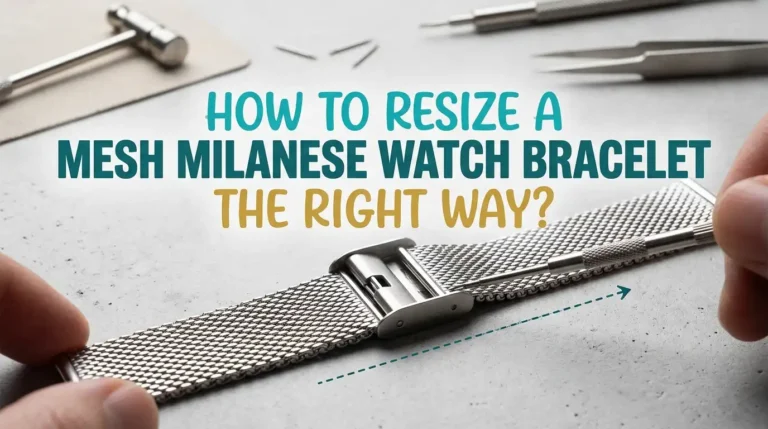
If you love the look of a metal bracelet, do not give up yet. The trick is to size it so that it fits snug but not tight. A well sized bracelet sits close to the skin with no large gaps, even when your arm is hanging straight down.
Remove links one at a time and test the fit between each removal. Many bracelets also have half links and micro adjustment slots in the clasp. Use these features to dial in the perfect fit.
A good test is to slide one finger between the bracelet and your wrist. If the bracelet falls off when you turn your hand upside down, it is still too loose.
Pros: Keeps the original look, very durable, and easy to clean.
Cons: Hard to get a perfect fit without half links, and metal still slides more than rubber.
Add a Watch Strap Keeper or Floating Loop
A strap keeper is a small loop that holds the loose end of your strap in place. On a small wrist, the extra strap length can flop around and pull the watch off center. A keeper, especially a floating one that is not fixed in position, stops this.
You can also use the keeper to pin the strap against the underside of your wrist, which adds a tiny bit of extra grip.
Pros: Very cheap, easy to add, and works with most strap types. Some keepers are made of rubber for extra friction.
Cons: Only helps a little on its own. It works best combined with other fixes like a tapered strap or grippy material.
Use Friction Tape or Silicone Grip Hacks
Here is a clever trick from the watch community. Cut a small piece of clear silicone tape or even the protective tape that comes on a new bracelet, and stick it to the inside of the strap or bracelet. The tape adds friction without being visible.
This hack works very well on metal bracelets, which usually slide the most. You can also find silicone grip pads made just for watch straps.
Pros: Cheap, invisible, and very effective. Easy to remove if you change your mind.
Cons: The tape can wear out over time and may need replacing. Some adhesives leave residue on the bracelet, so test a small area first.
Wear the Watch Higher on Your Forearm
Many people wear their watch right against the wrist bone. On a small wrist, this is the narrowest point, which makes sliding worse. Try moving the watch up about half an inch, closer to your forearm.
The forearm is wider and more cylindrical, so the watch has a stable platform to rest on. This small shift can stop the watch from dropping onto your hand every time you move.
Pros: Costs nothing, works instantly, and reduces pressure on the wrist bone.
Cons: Some people find this position less comfortable for typing or desk work. The watch may also press against shirt cuffs more often.
Pick a Lighter Watch or Balance the Weight
Sometimes the watch is just too heavy for the wrist. A 200 gram chronograph on a 6 inch wrist will always be a struggle, no matter what strap you use. If you love heavy watches, consider how the weight is balanced.
A bracelet spreads the weight around the whole wrist, which can feel lighter than a strap with all the weight on top. Heavier clasps and end links also act as counterweights that keep the watch from flipping over.
Pros: Better balance means less sliding and less fatigue.
Cons: Adding weight to the strap side raises the overall weight of the watch, which some people dislike. Lighter watches may not feel as premium.
Order a Custom Made Strap for Your Wrist
When nothing off the shelf works, a custom strap is the final solution. A skilled strap maker can build a strap shaped to your exact wrist measurements, with the right taper, padding, and hole spacing.
Custom straps often include a curved shape that matches the natural bend of your wrist, which removes pressure points and stops sliding completely. You can also choose grippy linings like Alcantara or rubber backed leather.
Pros: Perfect fit, premium materials, and a strap that lasts for years. Great for unusual wrist shapes.
Cons: Much more expensive than ready made straps, and the wait time can be several weeks. You also need to provide accurate measurements.
Care for Your Strap and Skin to Keep the Grip
Even the best strap will slide if it gets coated in lotion, sweat, or dirt. Clean your strap regularly with a soft cloth and mild soap. Let it dry fully before wearing it again.
Skin oils break down rubber and leather over time, reducing grip. A clean strap holds onto a clean wrist much better than a greasy one. Rotate between two or three straps so each one gets time to rest and dry.
For leather straps, use a light conditioner once or twice a year. For rubber, a quick wipe with rubbing alcohol restores the grip. Good care extends strap life and keeps your watch firmly in place.
FAQs
How tight should a watch be on a small wrist?
Your watch should be snug enough that you can slide one finger between the strap and your skin, but no more. It should not leave deep marks when you take it off. A watch that moves about half an inch up and down the wrist is usually well fitted.
Can a heavy automatic watch damage a small wrist over time?
Wearing a very heavy watch all day can cause mild wrist fatigue or pressure marks, but it rarely causes lasting harm. If you feel pain or numbness, loosen the strap or switch to a lighter watch. People with joint issues should be extra careful.
Is it better to wear a heavy watch on a strap or a bracelet?
Both can work, but straps usually grip better on small wrists. A well sized bracelet with proper micro adjustments can also be excellent. Rubber and NATO straps offer the most grip, while bracelets offer the best weight distribution.
Why does my watch always flip to the side of my wrist?
This happens when the watch head is heavier than the strap side, and the strap is too loose. Tighten the fit, add a heavier clasp, or switch to a grippy strap material. Wearing the watch higher on the forearm also helps a lot.
Are NATO straps good for heavy watches?
Yes, NATO straps work very well with heavy watches because the double wrap design adds security and grip. The extra layer of fabric under the case also raises the watch slightly, which some people prefer for thick automatic movements.
How often should I replace my watch strap?
Replace leather straps every one to two years if worn daily. Rubber and silicone can last three to five years. NATO and nylon straps last until they fray. A worn out strap loses grip and can let the watch slide more.

Hi, I’m Lucy Jones, a dedicated watch enthusiast and reviewer. I spend my time hunting down, testing, and evaluating the most intriguing wristwatches on the market. My goal is to guide you through the overwhelming choices with honest, hands-on insights into every timepiece.