What Is the Best Watch Size and Case Shape for Exceptionally Flat Wrists?
Flat wrists create a unique fitting challenge. The bone sits close to the skin, the surface stays wide, and most watches feel either oversized or unbalanced. You may have tried a 42mm diver only to see the lugs hang over the edges.
You may have worn a thick dress watch that wobbled with every hand movement. The good news is that flat wrists actually offer one big advantage. They provide a stable, even surface for the right watch to sit beautifully.
This guide breaks down the exact sizes, shapes, and proportions that work best. You will learn what to measure, what to avoid, and how to match a case to your wrist shape. Read on to find the perfect fit for your flat wrist profile.
Key Takeaways
- Case diameter matters less than lug to lug length. For exceptionally flat wrists, aim for a lug to lug measurement between 44mm and 48mm so the watch sits cleanly without overhanging.
- Round and cushion shapes wear best on flat wrists because they distribute weight evenly. Tonneau and rectangular cases also work well thanks to their curved profile.
- Thinner is better. A case thickness under 11mm prevents the watch from looking top heavy and stops it from rocking during arm movement.
- Lug design changes everything. Short, downward curved lugs hug a flat wrist far better than long, straight ones.
- Strap choice can rescue or ruin a fit. Tapered straps and soft leather work well, while stiff rubber may lift the watch off the surface.
- Proportions beat brand names. A well sized 36mm watch always looks better than a poorly fitted 42mm one, no matter how famous the maker.
What Counts as an Exceptionally Flat Wrist
A flat wrist is one where the top surface stays wide and even rather than rising into a pronounced curve. If you place a ruler across your wrist bone, it touches more skin than a typical wrist. This shape is common in slim wrists but also appears on larger wrists with low profiles.
The flat surface gives watches more space to land. The watch case sits squarely instead of tilting. This means you can wear styles that would look awkward on a domed wrist. However, the flat shape also exposes any sizing mistake. Lugs that hang over the edge become very visible.
Measure your wrist circumference first. Then check the flat area width with a ruler. Both numbers guide your case choice.
Why Lug to Lug Length Beats Case Diameter
Most buyers focus only on case diameter. That is the biggest sizing mistake. The lug to lug measurement is the true indicator of how a watch will wear. It tells you how far the case stretches across your wrist from top to bottom.
A 40mm watch with 50mm lug to lug feels huge. A 42mm watch with 46mm lug to lug feels neat and balanced. For flat wrists, aim for a lug to lug that equals 75 to 90 percent of your wrist width.
Pros of focusing on lug to lug: You get a true comfort prediction, fewer return issues, and better proportion every time.
Cons: Brands rarely list this number on their websites, so you may need to ask sellers or check forums for accurate figures.
Ideal Case Diameter for Flat Wrist Sizes
Case diameter still matters, just not as much as people think. For a flat wrist measuring 6 to 6.5 inches around, the sweet spot sits between 36mm and 39mm. For a flat wrist between 6.5 and 7 inches, you can comfortably go up to 40mm or 41mm.
Vintage style dress watches at 34mm to 36mm also look stunning on flat wrists. The dial appears larger than the case suggests, thanks to thin bezels common on those designs.
Pros of smaller diameters: Better proportion, classic appearance, and more comfort under shirt cuffs.
Cons: Some sport watch fans feel smaller cases lack wrist presence, and dive watch options become more limited below 40mm.
Why Round Cases Are the Safest Choice
Round cases remain the most versatile shape for flat wrists. They focus visual weight on the center of the dial rather than pushing it outward into corners. This creates a balanced look that suits both casual and formal outfits.
Round watches also offer the widest variety in styles, complications, and prices. From field watches to chronographs, almost every design language exists in a round case. The shape also pairs well with both leather straps and metal bracelets.
Pros of round cases: Universal style, broad selection, and easy strap swaps.
Cons: They can feel predictable, and certain large round sport watches still overhang flat wrists if the lugs run long. Always check the lug to lug spec before buying.
Cushion Cases for Soft Visual Balance
Cushion cases sit between square and round. They have curved sides with gentle corners. This shape wears slightly larger than a round case of the same diameter because the corners extend the visual footprint. That trait can actually help a flat wrist look more filled out.
Cushion shapes work beautifully on flat wrists with medium width because the rounded corners soften the line where the case meets the skin. Vintage divers, pilot inspired models, and modern dress watches all use this case style.
Pros of cushion cases: Distinctive look, comfortable feel, and good wrist coverage without bulk.
Cons: They appear larger than the listed diameter, so a 38mm cushion may wear like a 40mm round. Choose carefully to avoid overhang.
Tonneau and Barrel Shapes for Flat Wrist Comfort
The tonneau, named after the French word for barrel, has long curved sides. This shape was originally created to follow the natural curve of the wrist. On a flat wrist, a tonneau case wraps the surface beautifully because the curved sides reduce visible overhang.
Tonneau watches often sit lower on the wrist than round cases of similar size. This makes them ideal for slim cuffs and dressier outfits. Brands like Cartier, Franck Muller, and many independents use this shape with great success.
Pros of tonneau cases: Excellent ergonomics, refined style, and a unique silhouette.
Cons: They suit formal looks more than sporty ones, and the curved lugs limit strap options to the brand’s specific designs in many cases.
Rectangular Cases for an Elegant Flat Wrist Look
Rectangular watches draw the eye vertically rather than horizontally. That trait makes them perfect for flat wrists that need visual balance. The elongated shape lengthens the wrist line and creates a refined silhouette.
Classic examples include the Cartier Tank and the Jaeger LeCoultre Reverso. Both designs have proven that rectangular cases pair perfectly with smaller and flatter wrists. The flat surface of your wrist also keeps these watches stable without rocking.
Pros of rectangular cases: Dressy appearance, vintage character, and excellent fit on flat wrists.
Cons: They suit formal wear better than casual outfits, and water resistance is usually limited. Sport activity is not their strength.
The Sweet Spot for Case Thickness
Thickness is the most overlooked dimension. A thick case on a flat wrist looks top heavy and feels unstable during movement. For flat wrists, target a case thickness between 7mm and 11mm. Anything thicker creates a clunky profile.
Ultra thin watches at 6mm to 8mm look spectacular on flat wrists. They slide effortlessly under shirt cuffs and feel almost weightless. Dive watches usually run 12mm to 15mm thick, which is why they often look awkward on smaller flat wrists.
Pros of thinner cases: Better comfort, smoother dress fit, and a more elegant profile.
Cons: Thinner watches typically have lower water resistance ratings, and some lack the visual presence sport watch fans enjoy.
Lug Design and Curvature
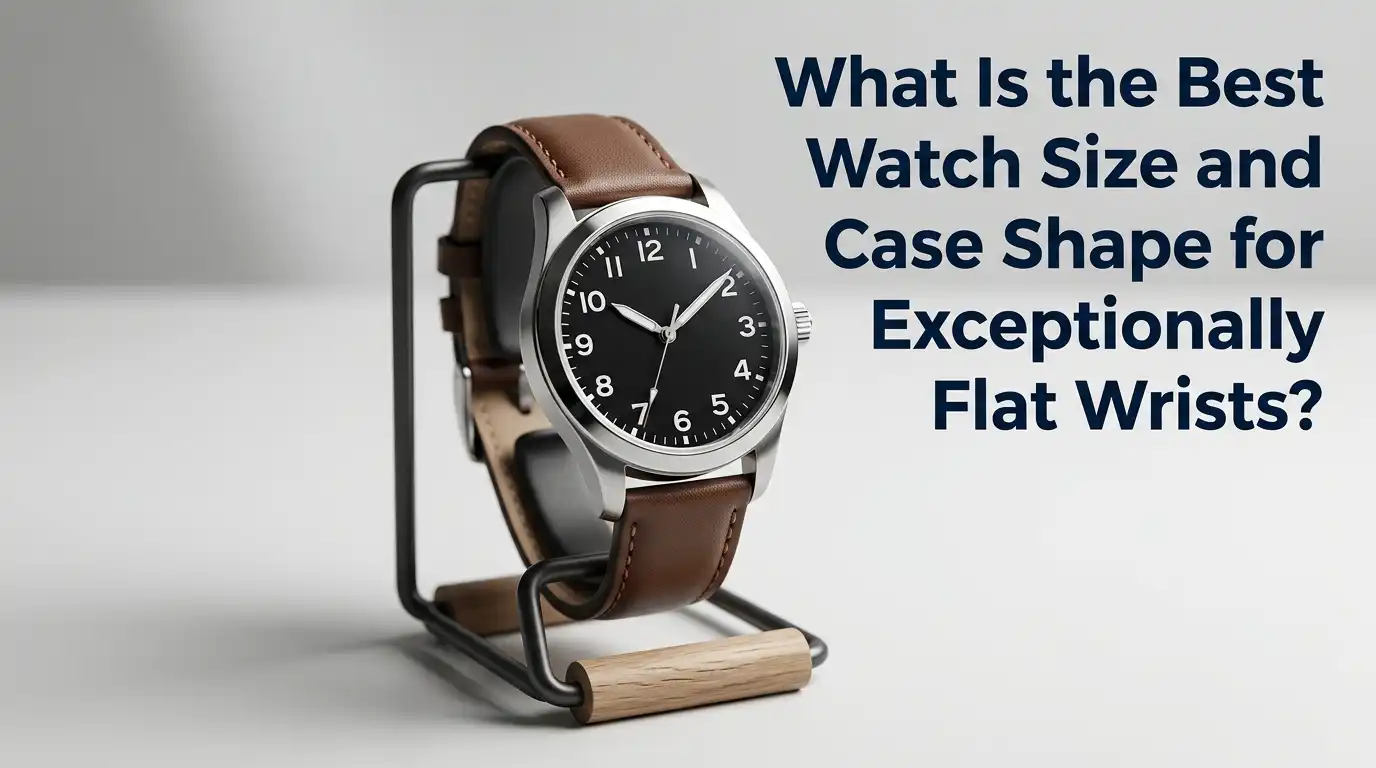
Lugs make or break the fit on a flat wrist. Short, downward curved lugs hug the wrist surface. Long, straight lugs create a gap and make the watch float above the skin. Always check lug shape before buying.
Drilled or curved lugs at a steep angle work best. They guide the strap tightly against the wrist, removing any visible gap between case and skin. Vintage watches often have this feature, which is one reason they wear so well on flat wrists.
Pros of short curved lugs: Tight wrap, no overhang, and clean side profile.
Cons: Some users find the smaller lug area harder to use with thick aftermarket straps. Strap selection becomes a bit more limited.
Strap and Bracelet Choices That Improve Fit
The strap shapes the entire wearing experience. A tapered strap that narrows toward the buckle flatters a flat wrist. It draws the eye inward and reduces visual bulk. Wide, straight straps make a flat wrist look overpowered.
Soft leather, suede, and single pass nylon straps contour around the wrist easily. Stiff rubber and integrated bracelets without micro adjustments can lift the watch off the surface. Always test the strap material if possible.
Pros of tapered soft straps: Better contour, easy size adjustment, and improved comfort.
Cons: Leather wears out faster than metal, and some sport watches do not come with leather options from the factory. You may need to buy aftermarket straps separately.
How to Measure Your Flat Wrist Correctly
Accurate measurements prevent costly mistakes. Use a soft measuring tape and wrap it around the widest part of your wrist, where you would normally wear a watch. Note the circumference in millimeters.
Next, measure the flat top surface width using a ruler. Place the ruler across the top of your wrist and check the distance between the two sides where the surface starts to curve down. This number tells you the maximum comfortable lug to lug length.
Pros of measuring carefully: Confident online purchases, better fitting watches, and fewer returns.
Cons: It takes a few minutes and a basic tool, but the time investment pays off every time you shop for a watch.
Trying On Before You Commit
Whenever possible, try the watch in person before buying. Photos and product pages can hide the true fit. A 5 minute try on at a boutique reveals problems no spec sheet can show.
If in person visits are not possible, print a paper template at the correct size. Many enthusiast sites offer printable cutouts for popular models. Tape the cutout to your wrist and check the lug overhang in a mirror.
Pros of trying first: Real world fit confirmation, color and finish check, and confidence in your purchase.
Cons: Boutique access is limited in many areas, and paper templates miss the weight and texture of the actual watch. Still, they help avoid the worst sizing mistakes.
Common Mistakes to Avoid With Flat Wrists
The biggest mistake is chasing trends. Oversized 44mm sport watches dominate marketing, but they rarely suit flat wrists under 7 inches. Buy what fits, not what is popular.
Another mistake is ignoring case thickness. A thin 40mm watch wears far better than a thick 38mm one. Many buyers focus only on diameter and end up disappointed when the watch arrives.
Avoid stiff straps, long lugs, and oversized crowns. Crowns that stick out far can dig into the back of your hand when you bend your wrist. Always check crown size and position in product photos before ordering.
These small details separate a great fitting watch from a frustrating one.
Frequently Asked Questions
What size watch looks best on a 6.5 inch flat wrist?
A case diameter between 36mm and 39mm usually looks best. Pair it with a lug to lug measurement of around 44mm to 47mm. Keep the thickness under 11mm for the most balanced appearance.
Are square watches good for flat wrists?
Yes, square and cushion watches work very well on flat wrists. The flat surface keeps them stable, and the corners add visual width that fills out slim wrists nicely. Just check that the lug to lug stays within your wrist width.
Can I wear a 42mm watch on a flat wrist?
You can if the lug to lug is short, the case is thin, and the lugs curve downward. A 42mm watch with 46mm lug to lug and 10mm thickness can fit a flat 7 inch wrist comfortably. Avoid 42mm cases with 52mm or longer lug to lug specs.
Do rectangular watches make wrists look thinner?
Rectangular watches draw the eye vertically and create an elongated line. This often makes the wrist appear more refined rather than thinner. Models like the Tank and Reverso are classic examples that flatter slim flat wrists.
Is case thickness more important than diameter?
For flat wrists, case thickness affects comfort and visual balance just as much as diameter. A thick watch sits high and looks bulky. Always check both numbers, along with the lug to lug, before making a final choice.
What strap material works best on a flat wrist?
Soft leather, suede, and single pass nylon straps contour well to flat wrists. They tapered design reduces visual bulk and improves comfort. Stiff rubber can lift the watch off the surface and feel awkward.

Hi, I’m Lucy Jones, a dedicated watch enthusiast and reviewer. I spend my time hunting down, testing, and evaluating the most intriguing wristwatches on the market. My goal is to guide you through the overwhelming choices with honest, hands-on insights into every timepiece.