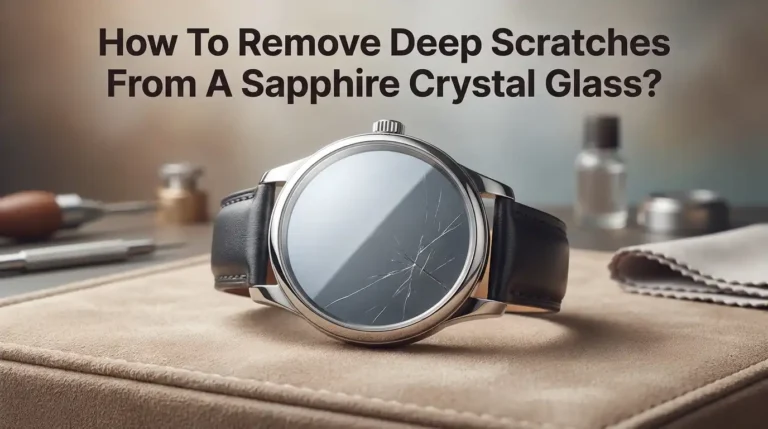
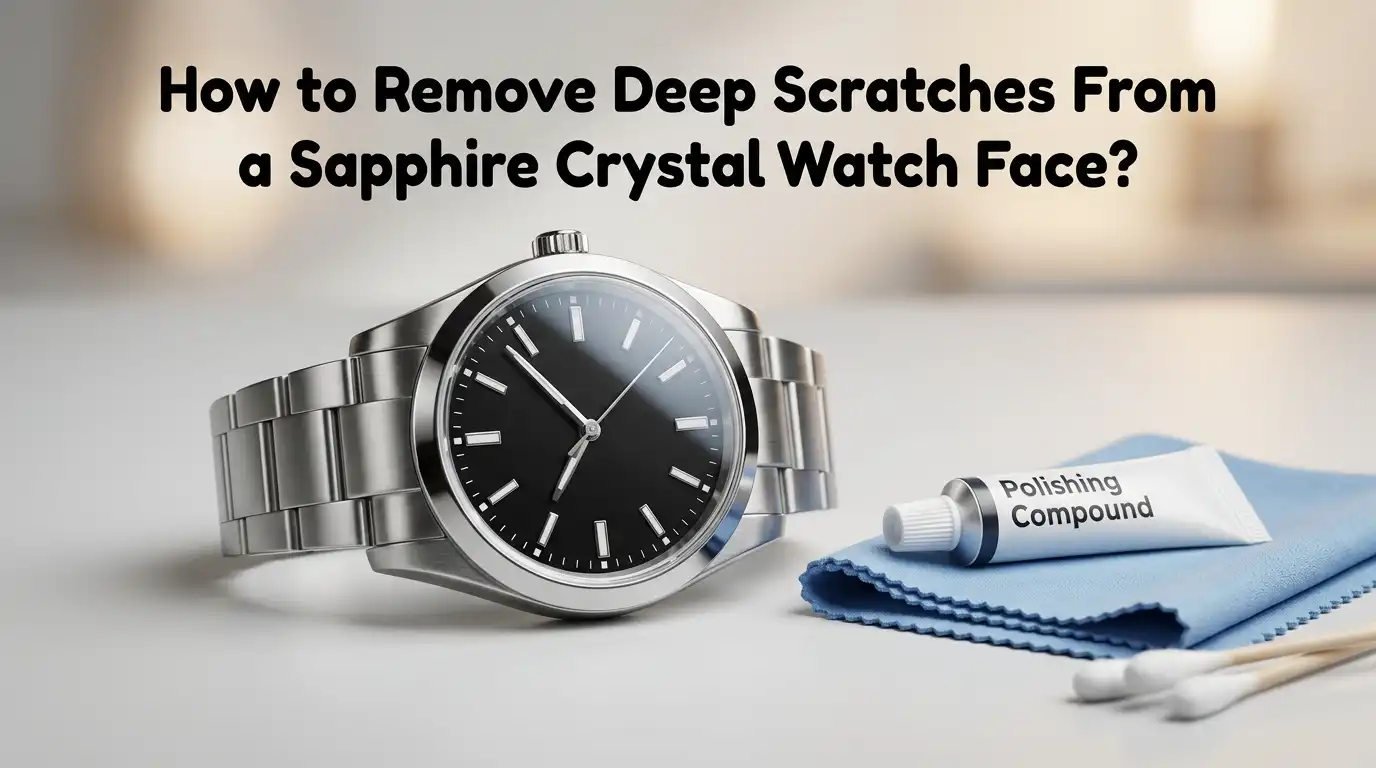
How to Remove Deep Scratches From a Sapphire Crystal Watch Face?
A deep scratch on a sapphire crystal watch face can feel awful. Sapphire is strong, clear, and hard to mark, so damage usually stands out right away.
The hard part is this. A true deep scratch on sapphire is very hard to remove at home, and the wrong fix can make the crystal look worse.
The good news is that you still have a smart path forward. In some cases, the mark sits on the anti reflective coating, not in the sapphire itself. In other cases, a shallow surface mark can improve with careful polishing.
In a Nutshell
- Sapphire crystal is very hard, which is why it resists daily wear so well. That same hardness also makes scratch removal difficult. A soft home remedy like toothpaste will usually do nothing useful on real sapphire. Deep marks need a realistic plan, not a quick hack.
- The first job is diagnosis. Many people think the sapphire is scratched, but the damage may be sitting on the outer anti reflective coating. That coating is much softer than sapphire. If the mark changes under light, vanishes when wet, or feels more like a haze than a groove, the coating may be the real issue.
- A true deep scratch usually does not polish out well at home. You may improve a very shallow surface mark with diamond paste, patience, and careful masking. But deeper scratches can leave distortion, uneven shine, or a warped viewing area. That is why many watchmakers prefer replacement over aggressive polishing.
- Some methods make things worse fast. Toothpaste, baking soda, rough cloths, random metal polish, and hard pressure can damage coatings, the bezel, and even the crystal edge. If your watch has water resistance, careless work can also create new problems around the seals and case.
- Professional repair is often the best answer for deep damage. A trained watchmaker can inspect the crystal, confirm whether the damage is in the coating or the sapphire, and decide if replacement is the safer route. For valuable or luxury watches, this is often the smartest move.
- Prevention matters after the fix. Clean the crystal with a soft cloth, rinse off grit before wiping, and take the watch off during rough work. Sapphire is tough, but sharp contact, abrasive dust, and direct impact can still leave a mark. A little care now can save you a big repair bill later.
Why Sapphire Crystal Is So Hard to Repair
Sapphire crystal is popular because it is extremely scratch resistant. It ranks very high on the Mohs hardness scale, which means everyday items do not mark it easily. That sounds great until a deep scratch actually appears.
The problem is simple. A material that resists scratching also resists polishing. If the scratch cuts into the sapphire, you need an abrasive hard enough to remove part of the surface around that mark. That usually means diamond based polishing, careful control, and a lot of patience.
This is why deep sapphire scratches are different from scratches on acrylic or mineral glass. Acrylic scratches easily, but it also polishes easily. Sapphire does the opposite. Pros: it stays clear for years. Cons: once it gets a real deep scratch, home repair becomes limited and risky. That is why the goal is not to rush. The goal is to confirm what kind of damage you actually have.
Check If the Scratch Is Real or Only on the Coating
Before you try any fix, check whether the scratch is in the sapphire or in the anti reflective coating. This matters a lot. A damaged coating can look like a deep scratch, but the crystal under it may still be fine.
Start with bright light and a clean crystal. Tilt the watch slowly under a lamp. If the mark looks cloudy, rainbow tinted, or changes a lot at different angles, you may be seeing coating damage. Put one drop of water on the mark. If the scratch seems to fade while wet, that is another clue that the coating is involved.
You can also use your fingernail very gently. Do not press hard. If the line feels sharp and catches clearly, the scratch may be deeper. If it looks ugly but feels shallow, coating damage is more likely. Pros of this check: it saves time and bad decisions. Cons: it is still a visual test, so it cannot replace a professional inspection on an expensive watch.
Judge the Depth Before You Start
You need a simple rating system before you touch the crystal. A light hairline mark sits on the surface and is hard to feel. A medium scratch shows clearly and may catch a nail slightly. A deep scratch catches the nail easily, looks white or dark from several angles, and can distort the dial under it.
This step helps you avoid false hope. Very shallow marks may improve. True deep scratches rarely disappear cleanly at home. If the watch crystal also has a chip, crack, edge damage, or loose fit, stop right there. That is no longer a polishing job. That is a repair or replacement job.
Take close photos under indoor light and outdoor light. Compare how the mark looks from the front and side. If the scratch seems worse near the crystal edge, be extra careful. Pros of grading first: you choose the right method. Cons: people often underestimate damage because they want a quick fix. Be honest with what you see.
What You Should Never Put on the Watch Face
A lot of popular internet tricks are bad for sapphire. Toothpaste is one of the biggest myths. It may help soft acrylic in some cases, but real sapphire is far too hard for that method to do much. At best, you waste time. At worst, you smear residue into the edges and coat the bezel with a mess.
Avoid baking soda paste, rough polishing cloths, generic sandpaper, random car compounds, and strong pressure with a rotary tool. These can scratch coatings, round crystal edges, scuff the bezel, or create uneven shine. A bad repair can look worse than the original scratch.
Also avoid harsh chemicals unless you know exactly what coating is on the crystal. Some products can damage seals or surface treatments. Pros of skipping these hacks: you protect the watch. Cons: it can feel frustrating because the safe path is slower. Still, slow and safe beats fast and ruined every time.
Clean and Prepare the Watch Before Any Fix
A proper cleaning step is not optional. Tiny grit on the crystal can act like an abrasive and create new marks while you polish. Rinse the watch gently with clean water if the watch is water resistant and the crown is fully secured. If you are unsure about water resistance, skip the rinse and use a lightly damp microfiber cloth.
Dry the watch fully. Then tape the bezel and case area around the crystal with painter tape or low tack masking tape. This protects polished metal, brushed metal, and any coating on nearby parts. Place the watch on a soft towel so it does not slide.
Keep your tools simple and clean. Use a fresh cloth, good lighting, and steady hands. Preparation is part of the repair. Pros: you reduce the risk of new damage. Cons: it takes a few extra minutes, but those minutes can save the finish on the rest of the watch.
Method One Use Diamond Paste for Very Shallow Surface Damage
If the mark is shallow and you believe it is in the sapphire surface, you can try a careful hand polish with fine diamond paste. This is the only home method that has a real chance on sapphire, and even then, results vary. Start with a very small amount on a soft cloth. Rub in small circular motions on the scratch only.
Work for a short session, then stop and inspect. Wipe the surface clean before checking progress. If you see mild improvement, continue slowly. If you see no change after a reasonable effort, stop before you create a dull patch. Finish with an ultra fine diamond paste only if the first stage worked.
This method is for very shallow damage, not true deep scratches. It can help reduce visibility, but it may not restore a factory look. Pressure should stay light and controlled. Patience matters more than force.
Pros and Cons of the Diamond Paste Method
Pros: This method is low cost, simple, and possible at home. It can reduce a faint surface mark and restore some clarity if the damage is very minor. If you catch the scratch early, you may avoid a full replacement.
Cons: It works poorly on true deep scratches. It can also remove coating, change the surface finish, or leave a distortion zone if you polish one spot too much. If you use too much pressure, you can end up with a lens effect that bends the dial view under bright light.
The biggest risk is false confidence. People keep polishing because they think one more minute will fix it. Then the whole area turns hazy. My rule is simple. If the scratch is still obvious after careful short sessions, stop. A method that shows no clear progress early is unlikely to give you a clean result later.
Method Two Remove a Damaged Outer Anti Reflective Coating
If the sapphire itself is fine and the outer anti reflective coating is scratched, you have another option. You can remove the damaged outer coating across the entire visible surface so the crystal looks even again. This is a cosmetic fix, not a sapphire repair.
The key idea is balance. A partly scratched coating looks patchy because one area reflects light differently. If you remove the outer layer evenly, the ugly line may disappear. But the crystal may reflect more light afterward. That is the trade.
Use a very cautious approach and confirm first that the coating is on the outside. Some watches use internal coating, and that is a different situation. Do not try this unless you accept the chance of losing some glare control. For many owners, an even clear crystal with more reflection looks better than a scratched coating that catches the eye all day.
Pros and Cons of Coating Removal
Pros: If the scratch sits on the outer coating, this can be one of the most effective cosmetic fixes. It can make the crystal look much cleaner without replacing the whole part. It also solves the patchy look that often bothers people more than the line itself.
Cons: You may lose some anti reflective performance. The crystal can reflect more light after the coating is removed. If you remove the layer unevenly, you may trade one visual problem for another. There is also a risk of touching nearby surfaces with the wrong compound.
This method makes sense only if the coating is the problem. It does not remove a true deep sapphire scratch. If you are unsure whether the mark is coating damage or crystal damage, stop and get a watchmaker to inspect it first. Guessing here is how people ruin a good crystal.
Method Three Choose Professional Repair or Full Replacement
If the scratch is deep, catches your nail, or distorts the dial view, professional help is the best path. A watchmaker can inspect the crystal under magnification, confirm whether the issue is coating, surface damage, or deep crystal damage, and tell you whether repair makes sense at all.
For many deep scratches, full replacement is the clean fix. This gives you a fresh crystal, preserves the original shape, and avoids the distortion that can happen after heavy spot polishing. On water resistant watches, professional service also allows pressure testing and seal checks after the work.
Pros: best cosmetic result, lower risk, better protection for valuable watches. Cons: higher cost and more wait time. Still, a clean replacement often beats an imperfect rescue, especially on luxury or sentimental watches. If the watch is from a major brand, an authorized or highly trusted service center is the safest choice.
Decide Whether Repair or Replacement Makes More Sense
Here is a simple rule. Try home polishing only if all three points are true. The scratch is shallow. The watch is not highly valuable. You accept the chance of an imperfect result. If even one point is false, replacement usually makes more sense.
Replacement becomes the better choice when the scratch is deep, close to the edge, paired with a chip, or clearly visible from normal wearing distance. It is also the better choice if the crystal has special shape, heavy coating, or strong sentimental value. You do not want to experiment on something you cannot replace easily.
Think about the final look, not just the process. A reduced scratch that leaves haze may still annoy you every day. A new crystal solves the issue fully. Pros of replacement: clean finish and predictable result. Cons: higher cost. But in deep scratch cases, it is often the most honest solution.
How to Prevent New Damage and Keep the Crystal Clear
After the repair, keep the crystal clean the right way. Use a soft microfiber cloth for daily wiping. If the watch picks up dust, sand, salt, or grit, rinse that off first if the watch is safely water resistant. Dry dirt can drag across the surface and damage coatings.
Take the watch off during rough work, gym sessions with metal contact, home projects, and any task that puts the wrist near stone, tile, concrete, or steel edges. Store the watch face up or in a soft pouch when you are not wearing it. Small habits prevent expensive mistakes.
Sapphire is tough, but it is not magic. It resists normal wear very well, yet strong impact and abrasive contact can still leave a mark. The smartest answer to deep scratches is simple. Diagnose first, avoid fake fixes, try only safe methods for shallow damage, and choose replacement for true deep cuts.
FAQs
Can toothpaste remove deep scratches from a sapphire crystal watch face?
No. Toothpaste is far too mild for real sapphire. It may help with acrylic in some situations, but sapphire is much harder. On a sapphire watch face, toothpaste usually wastes time and can leave messy residue around the bezel and crystal edge. If the scratch is deep, toothpaste will not solve it.
Can a jeweler polish a sapphire crystal instead of replacing it?
Sometimes, yes, but only for very shallow surface damage. Even then, the work usually requires diamond based polishing and careful control. Many professionals still prefer replacement for deep scratches because heavy polishing can create distortion or uneven shine. For a true deep scratch, replacement is often the cleaner result.
How do I know if the scratch is only in the anti reflective coating?
Look at the mark under bright light from several angles. If it appears cloudy, rainbow tinted, or changes a lot as you tilt the watch, the coating may be damaged. If the line seems to fade with a drop of water, that is another clue. A watchmaker can confirm this more accurately.
Will a deep scratch affect the watch beyond appearance?
It can. A deep scratch can weaken the crystal surface, and any chip or edge damage raises more concern. If the crystal is cracked, chipped, or seated poorly, water resistance may also become a risk. That is why deep scratches deserve a careful check, especially on dive watches or daily wear pieces.
Is full crystal replacement worth it on an expensive watch?
Yes, in most cases. A quality replacement gives the watch a clean look again and avoids the visual distortion that can follow aggressive polishing. It also protects value better than a poor home repair. If the watch is expensive, sentimental, or built for water resistance, professional replacement is usually the best move.

Hi, I’m Lucy Jones, a dedicated watch enthusiast and reviewer. I spend my time hunting down, testing, and evaluating the most intriguing wristwatches on the market. My goal is to guide you through the overwhelming choices with honest, hands-on insights into every timepiece.