Hamilton Khaki Navy Scuba Automatic Review 2026
Are you looking for a tough dive watch that still looks great off the water? The Hamilton Khaki Navy Scuba Automatic may be the answer. It mixes field watch style with modern Swiss engineering.
Many watch fans love the look. The bronze tones and black dial turn heads in person. Yet this watch also feels ready for real adventures.
Inside, you find a genuine Swiss automatic movement. The Hamilton caliber runs on its own power and holds up to 80 hours of power reserve. Its Nivachron balance spring also resists magnetic fields.
In a Nutshell
- Two sizes to choose from: The 40mm case offers a smaller option. The 43mm reference adds more presence on the wrist.
- Long power reserve: The Hamilton H-10 movement runs for about 80 hours. You can take it off for a long weekend and still find it ticking.
- Deep water resistance: The rubber strap model handles 100m. The 43mm reference goes down to 300m and uses a screw down crown.
- Anti magnetic balance spring: The Nivachron spring helps the watch resist magnetism. This helps near phones, speakers, and other everyday gadgets.
- Great looks in person: Many reviewers praise how the watch looks in real life. The bronze GMT case with a black dial and NATO strap gets special mentions.
- Things to weigh: The case feels large and heavy for some wearers. A few users also dislike the wire lugs, and Tissot’s 40mm model is a common rival in buying guides.
Case Size and Wearability


Last update on 2026-11-25 / Affiliate links / Images from Amazon Product Advertising API
Case size shapes how this watch feels on your wrist. Many shoppers wonder if the larger version suits their frame. The right choice depends on wrist size, sleeve habits, and personal taste.
Wrist size matters most. Smaller wrists often look best with the 40mm case. Larger wrists usually carry the 43mm model with ease. Measure your wrist width before you decide.
The 22mm lug width opens up strap choices. You can swap in a NATO, rubber, or leather strap with little effort. A new strap can change how the watch sits and feels.
Case thickness adds another layer to comfort. A thicker case sits higher on the wrist. It can catch on shirt cuffs or jacket sleeves. Many wearers notice this most during desk work.
The wire lugs deserve a closer look too. Some people find them less comfortable on thin straps. Test the fit with the exact strap you plan to wear every day.
Diving adds a practical twist. A wetsuit sleeve can slide over a large case during a dive. A snug fit keeps the watch secure under bulky gear. Check the fit with thick neoprene in mind.
Give the watch a full afternoon on your wrist. Weight often feels different after several hours. A short trial helps you judge comfort honestly before you commit.
Watch the position on your wrist too. Placing the case slightly off the wrist bone can reduce bulk. Many owners find the crown side sits more comfortably after a small adjustment.
Friends and family often notice the watch first. Ask for honest opinions on how it looks on your wrist. Outside feedback can reveal proportions you may miss.
Small changes can make a big difference. Try different strap lengths and positions. A better fit often turns a heavy feeling into a comfortable one.
Dial, Bezel and Legibility
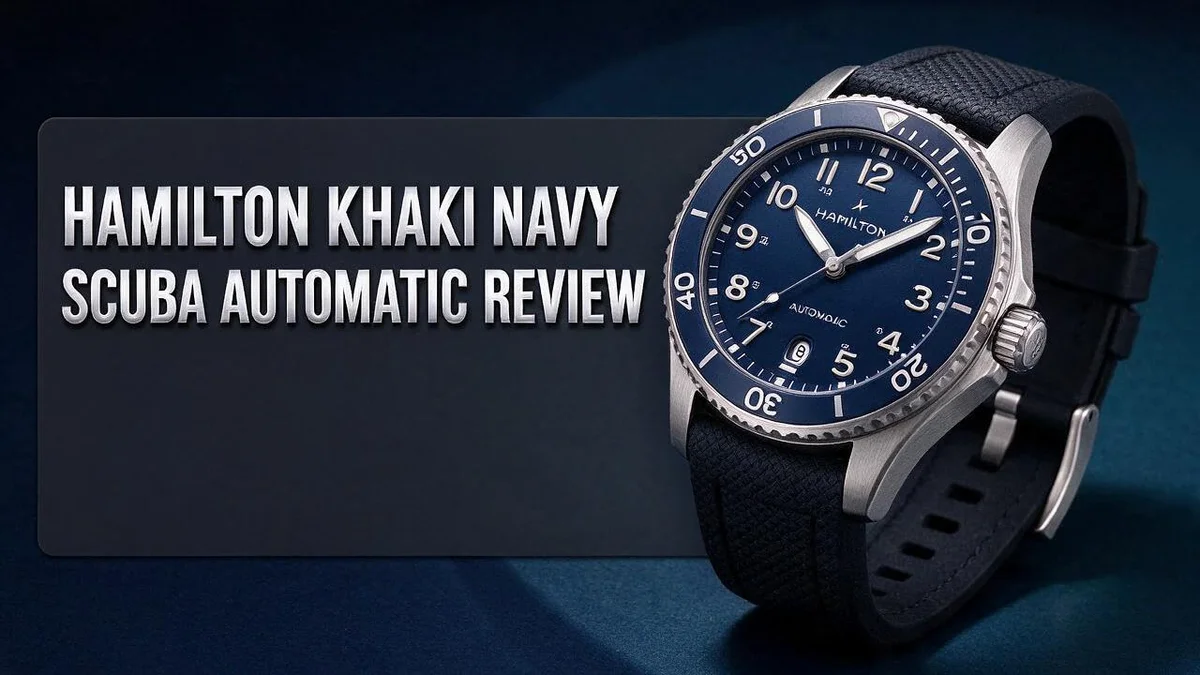
When you glance at a dive watch, the dial and bezel do the real work. The Hamilton Khaki Navy Scuba Automatic aims to keep the time easy to read.
The crystal carries an anti reflective coating on top of the dial. This layer cuts down on glare from bright sunlight. Reflections can hide the hands on a shiny face, so this detail helps.
Good legibility starts with contrast. The hands, the markers, and the background should stand apart. A clear layout lets you read the time in a single look.
On the rubber strap model, the ceramic bezel adds another useful layer. Ceramic tends to hold its finish well over the years. It also gives the watch a sharp, modern edge.
The bezel also serves a practical purpose underwater. A dive bezel helps you track elapsed time during a dive. Always check how the bezel turns before you rely on it.
Legibility shifts with the light around you. Indoors, the dial can look softer. Outdoors, the same face often looks bold and crisp.
Try a simple test at home. Hold your wrist at a few angles. Check the time near a window, under a lamp, and in shade. Note which view feels easiest for you.
Look closely at the bezel markings, too. Clear numbers and tick marks make turning the bezel feel natural. Good markings also help you line up a reading quickly.
Many people find strong contrast easier during busy mornings. A quick glance matters when you hold a coffee cup or grip a steering wheel. That everyday ease is where this watch shines.
In short, the dial and bezel focus on clear reading. The anti reflective coating, the ceramic bezel on the rubber strap model, and a simple layout work together for quick, confident checks.
Movement and Power Reserve
The Hamilton H10 powers this diver. It is a self winding movement that never needs a battery. Your wrist motion does most of the work.
Every swing of your arm winds the mainspring. A rotor inside the case spins with each step you take. Over time, the watch stores energy for daily wear.
The movement beats at 3.5 Hz, which equals 21,600 vibrations per hour. A faster beat rate lets the second hand sweep smoothly. It also helps the watch keep steady timing.
The H10 contains 25 jewels. Jewels are tiny synthetic gems that reduce friction between moving parts. Less friction means less wear over the years.
Hand winding works too. Gently turn the crown a few times in the morning. This gives the mainspring a quick boost. It helps most on days when the watch sits unworn.
Power reserve matters when you travel. A watch left in a drawer can stop after a few days. Keep it on your wrist or use a winder to avoid restarting it.
Wearing the watch daily keeps it wound without effort. Many people wear it at work and on weekends. Your daily routine decides how often the rotor turns.
Stopping the watch can happen during long vacations. Wind it fully before you leave, then set it again when you return.
Setting the time is simple. Pull the crown out to move the hands. Push it back in before you enter the water.
Even with a strong balance spring, keep the watch away from speakers and magnets. Magnetic fields can still affect timing.
Service matters over the long run. A watchmaker should check the lubrication and seals every few years. Regular care keeps the movement running smoothly.
Pay attention to how the watch runs after a service. Check the accuracy over several weeks to confirm everything works well.
In short, the H10 offers steady timekeeping with simple daily habits.
Top 3 Alternatives
Seiko Prospex Diver

Last update on 2026-11-25 / Affiliate links / Images from Amazon Product Advertising API
Seiko makes some of the most trusted dive watches in the world. The Prospex Diver line uses automatic movements that run without batteries. Many models carry 200 meters of water resistance. Luminous hands and markers help you read the dial in dark water.
Wearers often praise the comfortable bracelet. The case feels solid on the wrist. Seiko also offers many dial colors, so you can pick a style that suits you.
Orient Ray

Last update on 2026-11-23 / Affiliate links / Images from Amazon Product Advertising API
Orient Ray watches bring dive style to everyday wear. Orient builds its own automatic movements, so you get reliable timekeeping without a battery. The Ray line often includes a 200 meter depth rating.
It suits anyone who wants a clean, sporty look. Its bold markers stay easy to read. Many people choose it as a first automatic watch.
Citizen Promaster Diver

Last update on 2026-11-25 / Affiliate links / Images from Amazon Product Advertising API
Citizen Promaster Diver watches use Eco Drive technology. Light from the sun or indoor lamps charges the battery. You rarely need to change the battery. Many models meet ISO diver standards for water resistance.
The Promaster line feels rugged yet refined. It works well for swimming, snorkeling, and daily use. A secure crown and strong lume help you check the time in low light.
Strap Options and Lug Design
The strap changes how this diver looks and feels every day. Many owners treat it as a second style choice. The right strap fits both the job and the wardrobe.
Rubber straps handle water and sweat with ease. They suit the dive side of the watch. Soft rubber also rests well under a wetsuit cuff. Rinse the strap with fresh water after salt exposure to keep it supple.
NATO straps bring a relaxed, casual feel. Reviewers have praised how this watch looks on a NATO strap in person. These straps dry fast and swap easily. The thin fabric also softens over time.
Leather straps feel dressier for office days. Pick a strap with a tapered end for a cleaner fit under the case. Leather needs more care around water, so save it for dry days.
The lug ends decide how a strap sits against the case. Some straps leave a small gap near the case, which can catch dust or lint. Check the fit before you buy a new strap.
Spring bars matter too. A worn or weak bar can let a strap rattle or pop loose. Replace worn bars with a spring bar tool, and tug the strap gently after each change.
Metal bracelets add a polished finish and a solid feel. They also add weight to a case that already feels substantial. Wear a bracelet for a full day before you decide if it suits you.
If your strap uses quick release pins, swapping takes only seconds. This makes it easy to move from rubber to leather on the same day. Keep a spare strap in a drawer for travel or sudden plan changes.
Rotating straps through the week spreads wear across each one. Clean leather with a dry cloth and let it air out after a rainy walk. Test each strap for a full day. Notice any pressure points, heat, or sliding. A good strap feels easy to forget on the wrist.
Water Resistance and Dive Use
Water resistance tells you how much pressure the case can handle. The rubber strap model carries a 100m rating. That number suits swimming and snorkeling well. It does not make the watch a deep diving tool.
The 43mm reference steps up to 300m. It adds a screw down crown that seals the case tightly. Scuba divers often prefer this kind of seal. A rating is a limit, not a promise, so respect it.
Always check that the crown sits fully screwed down before any swim. A loose crown lets water inside. This habit matters on every model.
Pushers need the same care. Avoid pressing buttons underwater on any model. Water can sneak in during the press.
Hot water also puts stress on the seals. A warm shower or hot tub changes the air pressure inside the case quickly. Let the watch cool before you rinse it.
Cool tap water works best after a shower at the beach. Salt water is the other enemy. Rinse the watch with fresh water after every sea swim.
Dry the case with a soft cloth. Salt left in the gaps can dull the finish and irritate the skin. Sand causes harm too. Grit can scratch the case and wear down the crown threads over time.
Give the watch a gentle rinse after every beach day. Small habits protect the seals for years.
Service keeps the gaskets in good shape. A watchmaker can test the seals and check pressure resistance. Ask for a pressure test whenever the watch goes in for service.
Look for cracks or flattening in the gasket too. Replace worn gaskets right away. A fresh seal gives you more confidence on every wet adventure.
Water can also enter through a cracked crystal. Check the glass after any knock or hard fall. Never test the seal at home with a kitchen sink or bathtub. Use a professional tool instead.
Make the check part of your routine. Each trip gives you a chance to review the watch.
Pros and Cons
Pros
- Genuine Swiss automatic movement gives real mechanical heritage.
- The Nivachron balance spring helps resist magnetism.
- The bronze GMT case with a black dial looks great in person.
- Field watch cues make it feel ready for rough days.
- The 43mm version reaches 300m for serious water fans.
Cons
- The case feels large and heavy on smaller wrists.
- Wire lugs bother some owners.
- Choosing between the 40mm and 43mm sizes takes some thought.
Who Should Buy It
This watch suits people who want their first real Swiss mechanical watch. Many buyers grow tired of quartz models. They want a movement that feels alive and rewards careful attention.
Outdoor lovers and people who work with their hands also make good owners. Hikers, sailors, and tradespeople need a watch that handles daily action. This diver offers a sturdy look that suits muddy trails and salty decks.
Vintage fans may enjoy the military roots. The Khaki Navy line draws on the look of old service watches. Collectors who love history often connect with that story.
Fans of dive watches will feel at home here. Divers want a watch that looks ready for the sea, even if they never leave dry land. This model delivers that look with a clear purpose.
Gift shoppers may find it a strong choice. A watch with a real Swiss movement tells a story that a plain quartz model cannot. The bold look also sparks conversations at dinners and weekend meetups.
Students and young professionals may like it too. They can wear it on weekend hikes and still look sharp in a casual office.
Shoppers who want a dressy watch should look elsewhere. The design leans rugged, so a slim dress watch will suit them better. Buyers who want a pilot or three-hander style can explore options from brands like Steinhart, Laco, or Orient. Tissot offers a similar 40mm size for those who want a close match.
Buyers should think about their daily routine first. Ask whether the watch will suit a busy schedule, outdoor hobbies, and a taste for rugged styles. If those answers point to yes, this model deserves a place on the shortlist.
Final Verdict
The Hamilton Khaki Navy Scuba Automatic earns a strong place on the wrist. It offers a real Swiss heart, a tough diver style, and a look that turns heads. It is not the perfect pick for everyone, though.
Size is the biggest question. If your wrists are small, a lighter watch may suit you better. Try it on before you decide. A fit test tells you more than any spec sheet can.
This model shines for people who spend time outside. Hikers, sailors, and tradespeople get a watch that handles rough days with ease. The dial stays easy to read in bright sun.
Strap choice matters too. The rubber option feels comfortable in warm weather. A metal bracelet gives a more polished finish. Either way, the watch moves smoothly from the beach to a casual dinner.
The long power reserve adds real everyday value. An 80 hour reserve keeps the watch running after a long weekend away. You can take it off on Friday and find it ready on Monday.
Who should buy it? First time mechanical owners will feel rewarded by the movement. Vintage military fans will enjoy the historic roots. Diver fans who never leave the shore will still love the look.
Who should look elsewhere? Shoppers who want a slim, light daily watch may find this one heavy. Anyone who dislikes wire lugs should try the case in person first.
Compare the 40mm and 43mm versions side by side. Each size suits a different wrist and a different purpose. Take your time, and trust how the watch feels on your arm.
Overall, this watch delivers real Swiss character with a rugged diver look. Its strengths outweigh its drawbacks for the right owner. It deserves a place on your shortlist if you want a true companion.
Frequently Asked Questions
What water resistance does the 40mm model have?
The rubber strap model is rated to 100m. That rating suits swimming and snorkeling. Deeper dives call for a watch with a higher rating.
Does the crystal scratch easily?
The watch uses a sapphire crystal with an AR coating. Sapphire resists scratches far better than mineral glass. The coating also cuts glare in bright sunlight.
What do the 25 jewels and 3.5 Hz beat rate mean for you?
The jewels reduce friction inside the movement. The balance beats at 21,600 vibrations per hour. A faster beat gives the second hand a smooth sweep.
Do the wire lugs cause problems?
Some owners dislike the wire lugs. They can make strap changes feel fiddly. Try your favorite strap on the lugs first to check the fit.
Is the ceramic bezel durable?
Yes, ceramic bezels resist scratches and fading from sun exposure. The bezel keeps its color for years of regular wear.

Hi, I’m Lucy Jones, a dedicated watch enthusiast and reviewer. I spend my time hunting down, testing, and evaluating the most intriguing wristwatches on the market. My goal is to guide you through the overwhelming choices with honest, hands-on insights into every timepiece.